Most interview advice covers your resume, your answers, and your outfit. Hair barely gets a mention, yet it is the thing you touch, fix, and worry about in the elevator. A style that falls in your face or needs constant adjusting pulls your attention away from the conversation.
The good news is that job interview hairstyles do not need to be fancy. They need to do three jobs. They stay put through a handshake and a long chat. They keep hair off your face so people can see you. And they look tidy from the front and from behind, because the interviewer also watches you walk to the room.
This list covers 15 styles for short, long, straight, wavy, curly, and braided hair. Each one comes with a quick way to get it done, one thing to watch for, and a note on who it suits best. Pick two, practice them once before the big day, and save the one that feels most like you.
1. Low Sleek Bun With a Center Part
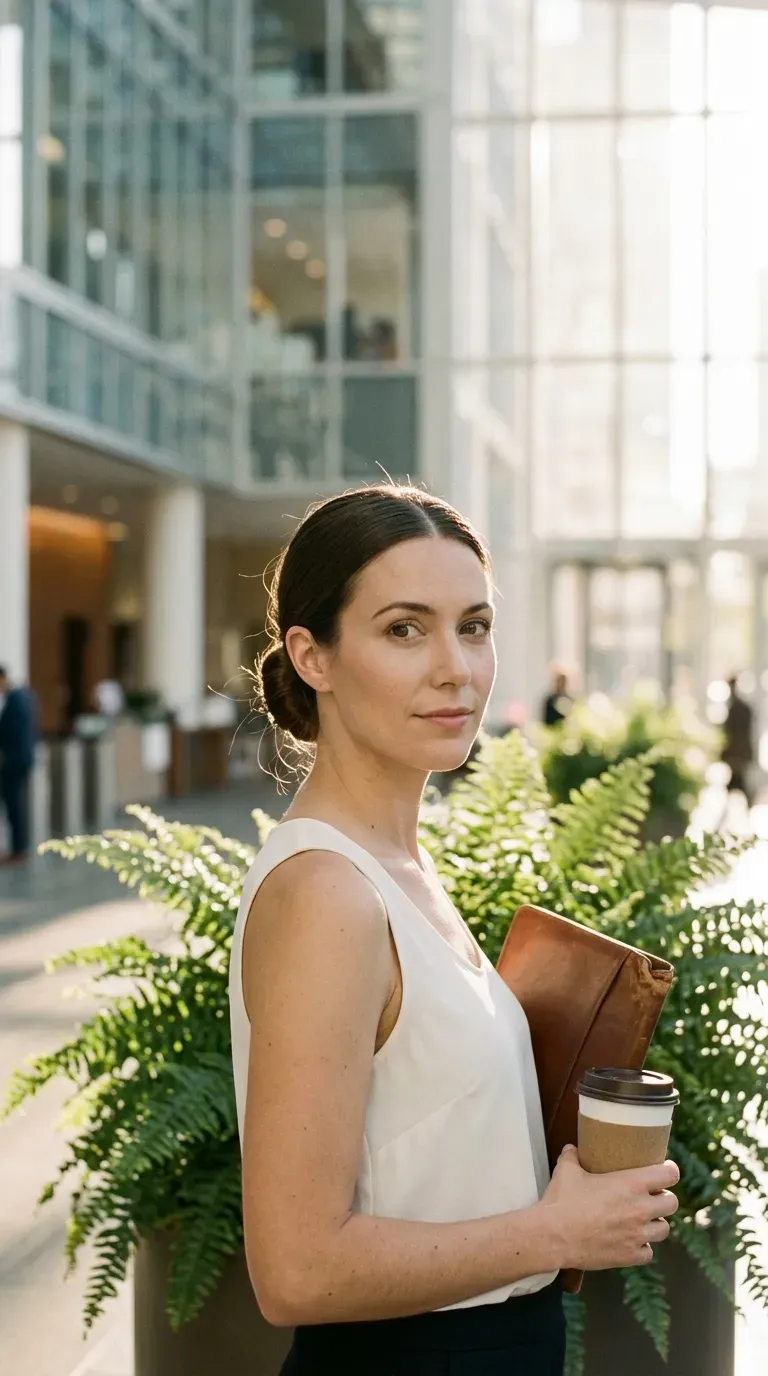
A low bun reads as calm before you say a single word. Keep the part crisp and the surface smooth, and it looks planned instead of rushed.
- Brush in a little smoothing cream before you pull hair back
- Gather at the nape, not the crown
- Wrap, then pin in a cross pattern so it does not slide
Start with the part. Run a comb tip straight back from the arch of your brow, then clip one side away so you can see the line clean.
Quick tip: Press a damp palm over the surface once the bun is pinned. It flattens the stray bits that show up under office lights.
2. Side Swept Low Ponytail That Stays Put
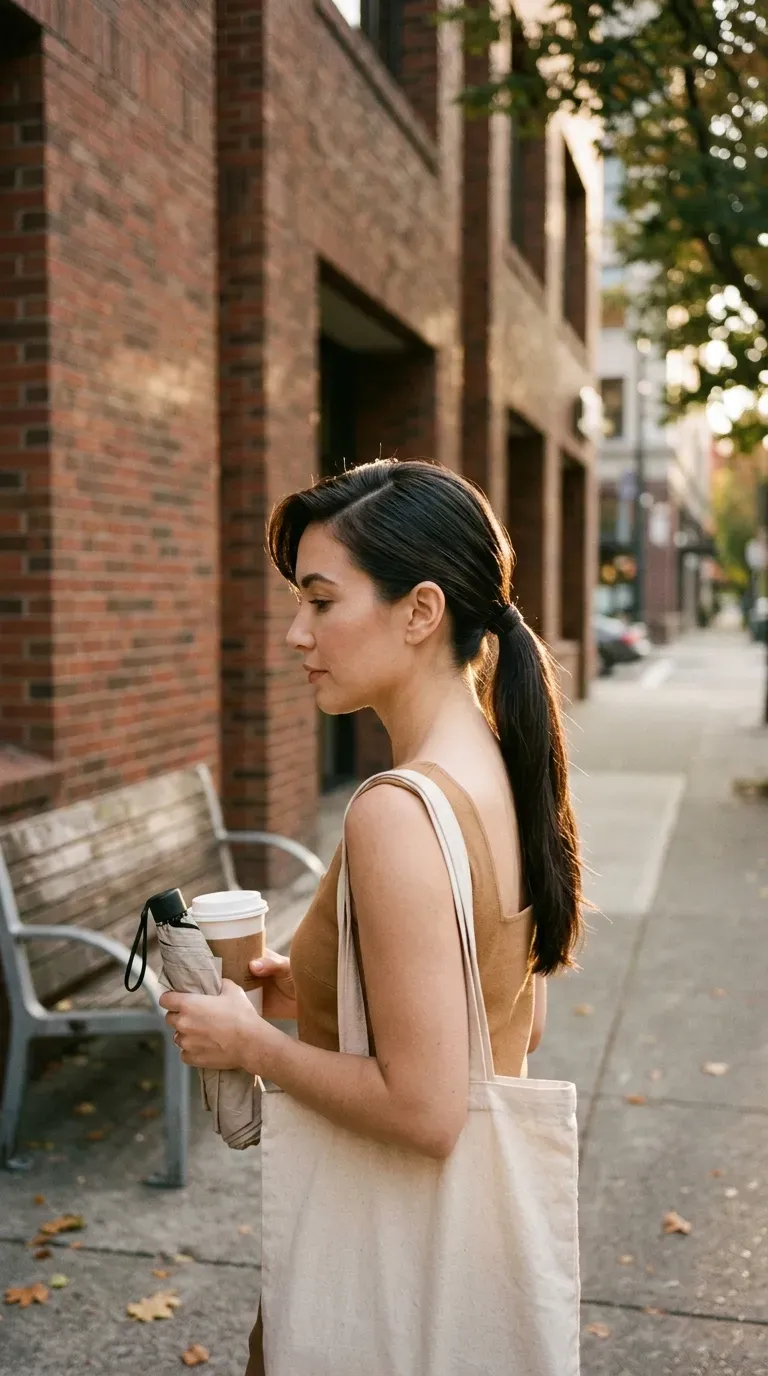
Bad ponytails slip by lunchtime. Fix that at the start with the tie, not the brush.
- Part your hair deep on one side.
- Sweep the longer section across your forehead and behind the ear.
- Gather everything low, just beside the nape.
- Wrap a thin strand around the elastic and pin it underneath.
A little hold spray on your palm, smoothed over the top, keeps the sweep from drifting forward when you nod. This one suits medium to long hair and anyone with a rushed morning.
3. Twisted Low Chignon

The twist is what makes this look finished. Instead of a round bun, hair is rolled into a loose knot that sits low and a little off center.
Here is how it goes:
- Gather a low ponytail but do not tie it tight
- Twist it into a rope, then fold it up toward your nape
- Tuck the ends inside and pin both sides
Leave two thin pieces out near your ears if your face feels bare. Curl them lightly or keep them straight.
It holds well on fine hair that gets heavy in a tight bun. Quick tip: use pins that match your hair color so nothing flashes in the light.
4. Half Up Half Down With a Smooth Crown
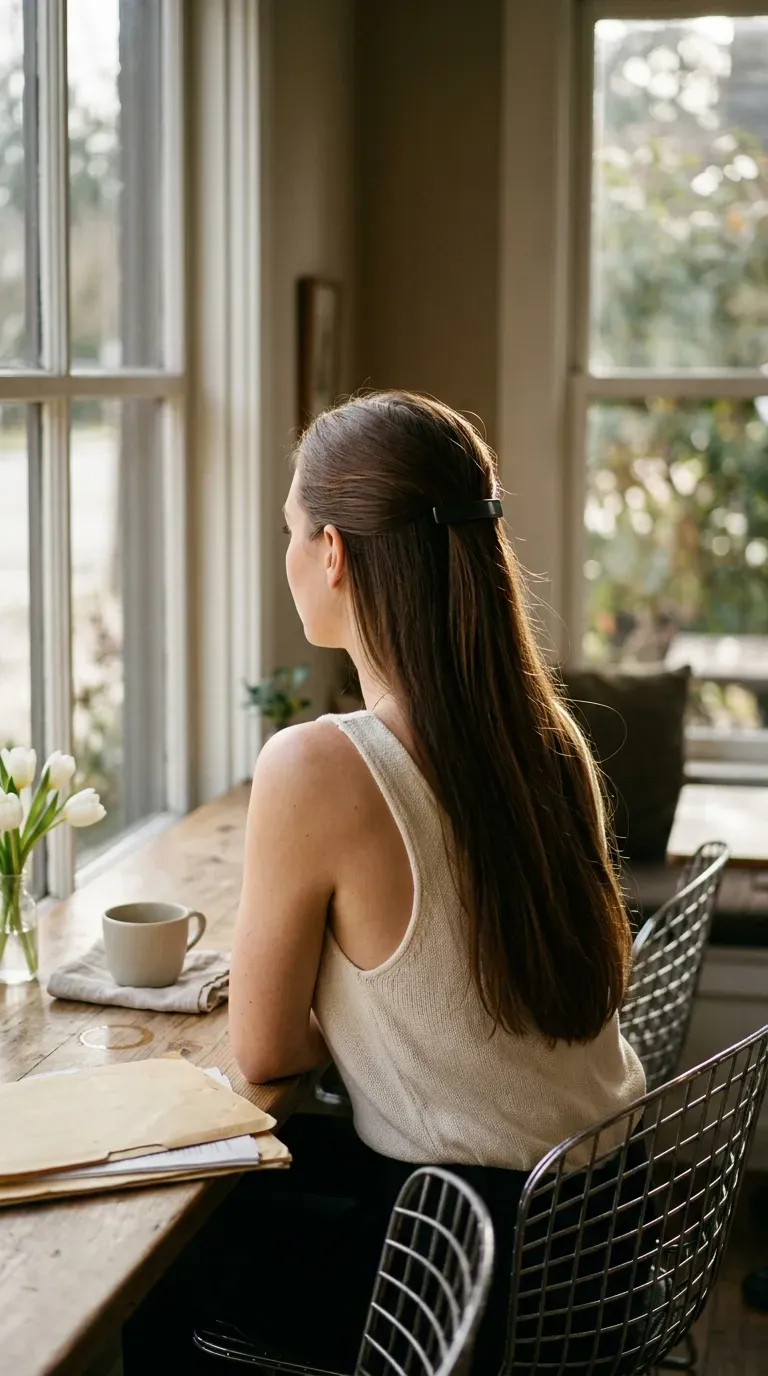
Wearing your hair down in an interview often means pushing it back every two minutes. Half up fixes that without giving up your length.
Take the top section across the crown between your temples and smooth it back. Secure it with a small clear elastic at the back of the head, then cover the elastic with a thin strand or a plain barrette.
Why it works:
- Hair stays off your eyes and cheeks
- The lengths hang in one clean sheet
- It suits a collared blazer or a scoop neckline
Skip teasing at the crown. A slight lift is fine, but a tall poof looks more party than panel.
5. Polished Waves Tucked Behind the Ears
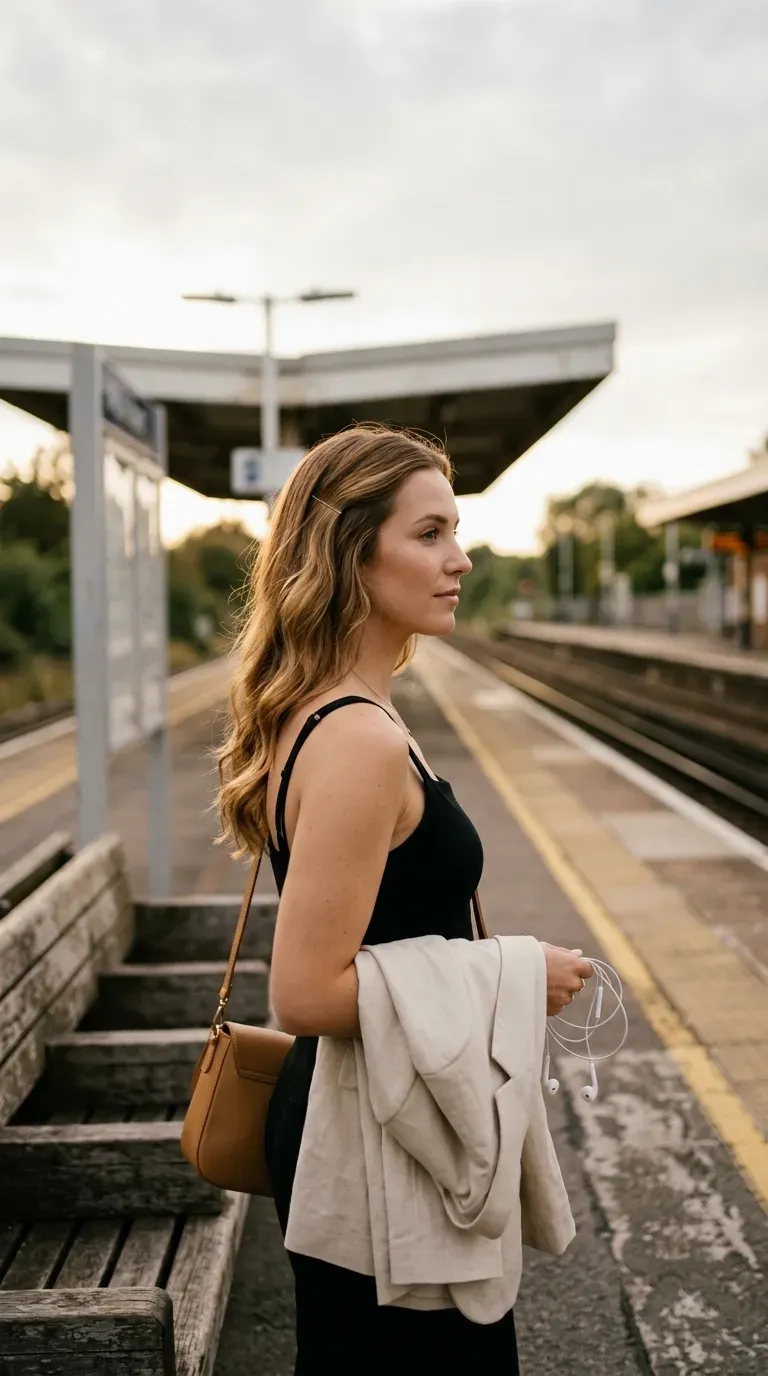
Loose waves are not off limits for interviews. The mistake is leaving them wild.
Set the waves with a medium barrel iron, then brush through once so they blend into soft bends instead of separate coils. Tuck both front sections behind your ears and add one pin on each side if they slip.
- Curl away from your face
- Let each section cool before touching it
- Brush once, then tuck
Finish with a light shine spray, not a heavy one. The tuck keeps waves from covering your face when you look down at your notes.
Waves swing into your face every time you turn, and you keep brushing them back mid answer.
Waves brushed once, tucked behind both ears, and pinned. Your hands stay still and your face stays clear.
6. Classic French Twist
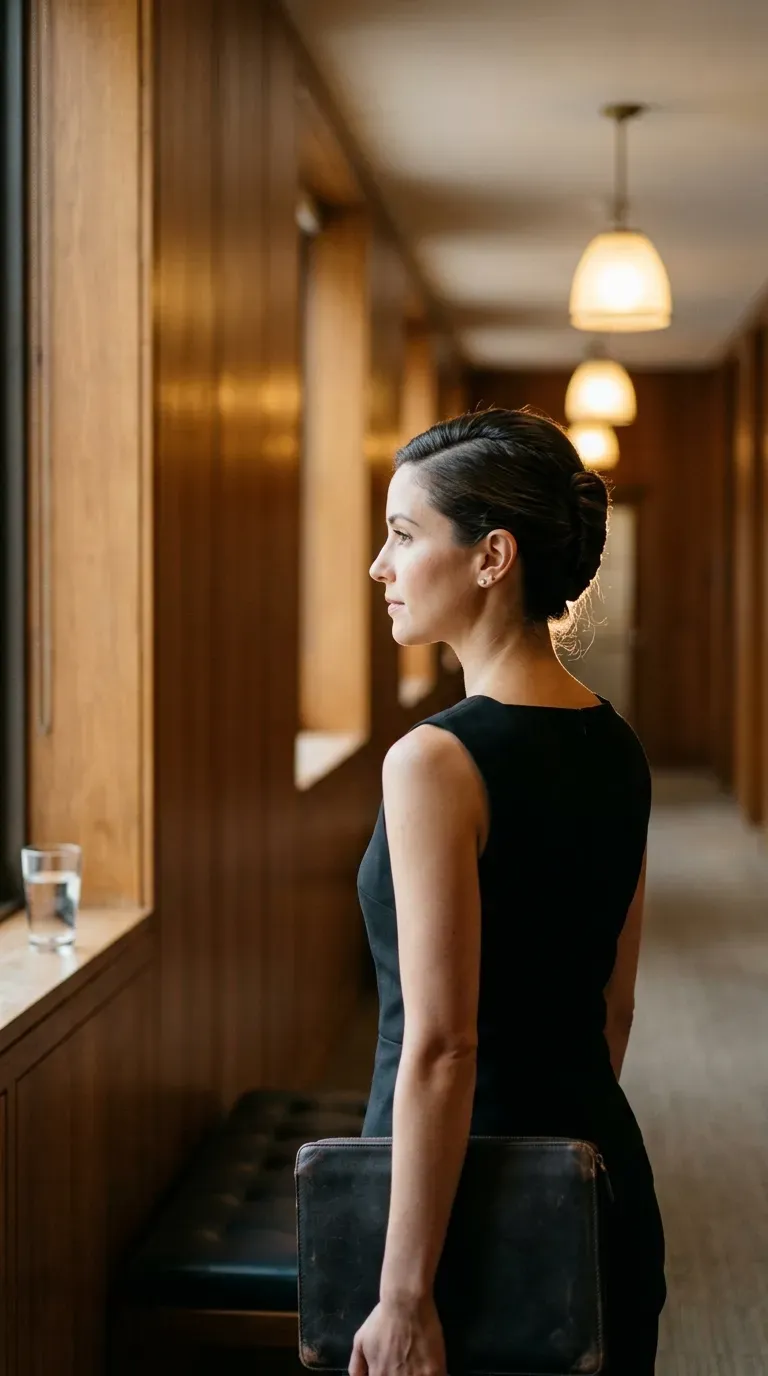
Some interviews, like law firms, banks, and hospitals, lean traditional. A French twist fits that room without looking dated.
- Brush hair back into a low ponytail without tying it
- Twist it upward along the back of your head
- Fold the ends in and pin along the seam
Slide pins in at an angle, then turn them back toward the scalp so they grip. About six pins hold most medium hair.
Watch for lumps. If the twist bulges, loosen it and roll again rather than adding more pins. It works best on hair past the shoulders.
7. Low Side Braid Over One Shoulder
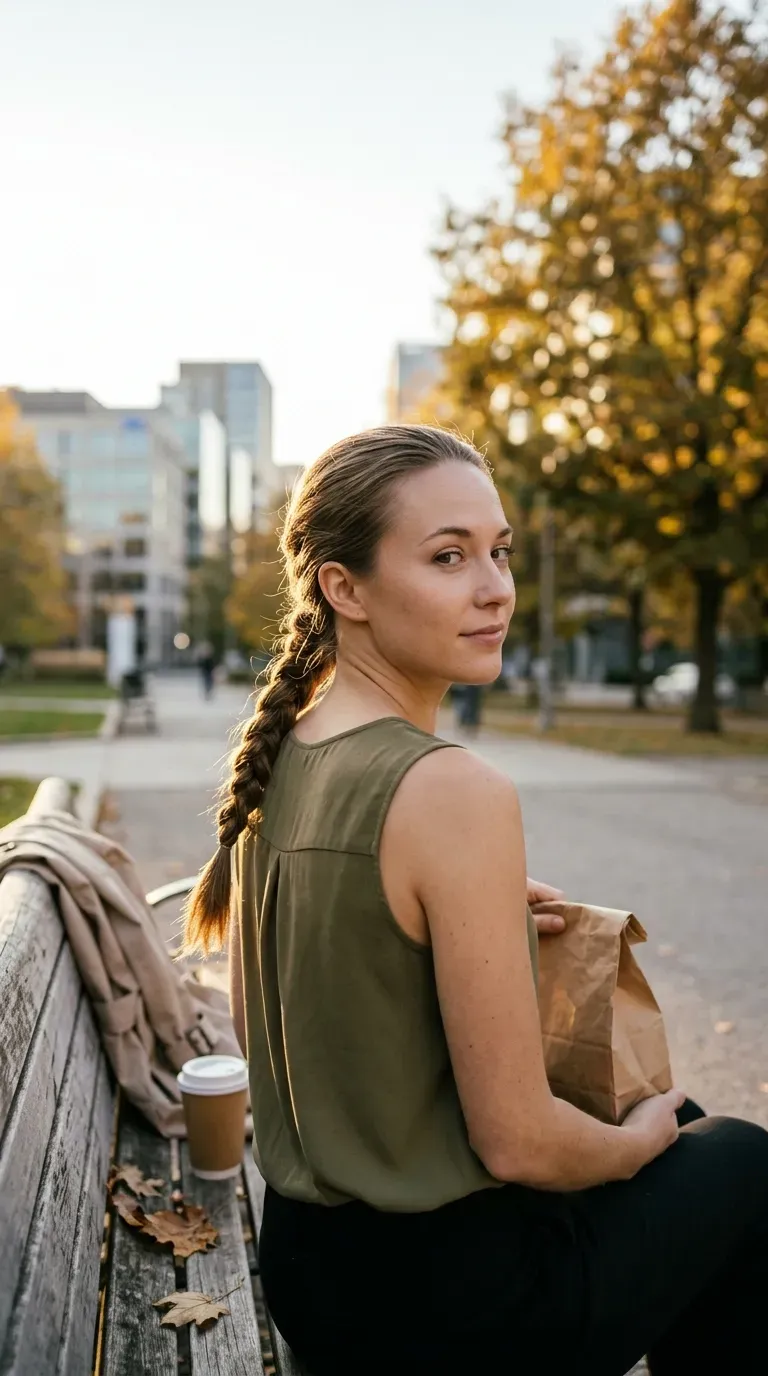
Across the table, a braid is the one style that does not shift. It stays tidy through a long answer and a quick glance at your resume.
Keep it neat:
- Braid a bit tighter than usual
- Pull the sides gently to flatten the plaits
- Finish with a plain elastic hidden by a wrapped strand
Start the braid at the nape instead of the crown so it looks work ready, not weekend ready. Smooth the front with a bit of balm so the hairline looks clean.
It suits medium to long hair, and anyone who fidgets.
8. Blunt Shoulder Length Bob

A blunt bob needs almost no styling, which is its whole appeal. Layered cuts need volume and bend, while a blunt edge only needs to look smooth and even.
Do this the morning of:
- Blow dry with a paddle brush, ends tucked under slightly
- Tuck one side behind your ear to show your face
- Add a drop of shine serum to the ends
Quick tip: Check the back in a hand mirror. Bobs get lopsided at the nape after sleeping, and one quick pass with a flat iron fixes it.
9. Defined Curls Pinned Back at the Sides

Curls do not need to be tamed into straight lines. They need to be defined and kept out of the face.
Work on damp hair. Scrunch in curl cream, then let it dry with a diffuser or in the air. Once dry, pin the sides back with two flat clips or bobby pins in a matching shade, leaving the top and back full.
Small habits that help:
- Refresh with a spray bottle, not a brush
- Skip finger combing after it dries
- Keep the pins above the ears so the curls stay visible
Full curls read as confident, and pinned sides keep the look professional.
10. Low Ponytail Wrapped in Its Own Strand

Hide the elastic. It is the quickest way to make a basic ponytail look intentional.
- Gather hair low and tie it
- Take a thin section from underneath
- Wrap it around the elastic three or four times
- Pin the end under the wrap
The wrap adds a polished detail without extra product. Slide the ponytail slightly to one side for a softer look.
Heads up: a thick wrap looks bulky. Keep the strand thin, about the width of a pencil.
11. Smooth Mid Height Ponytail
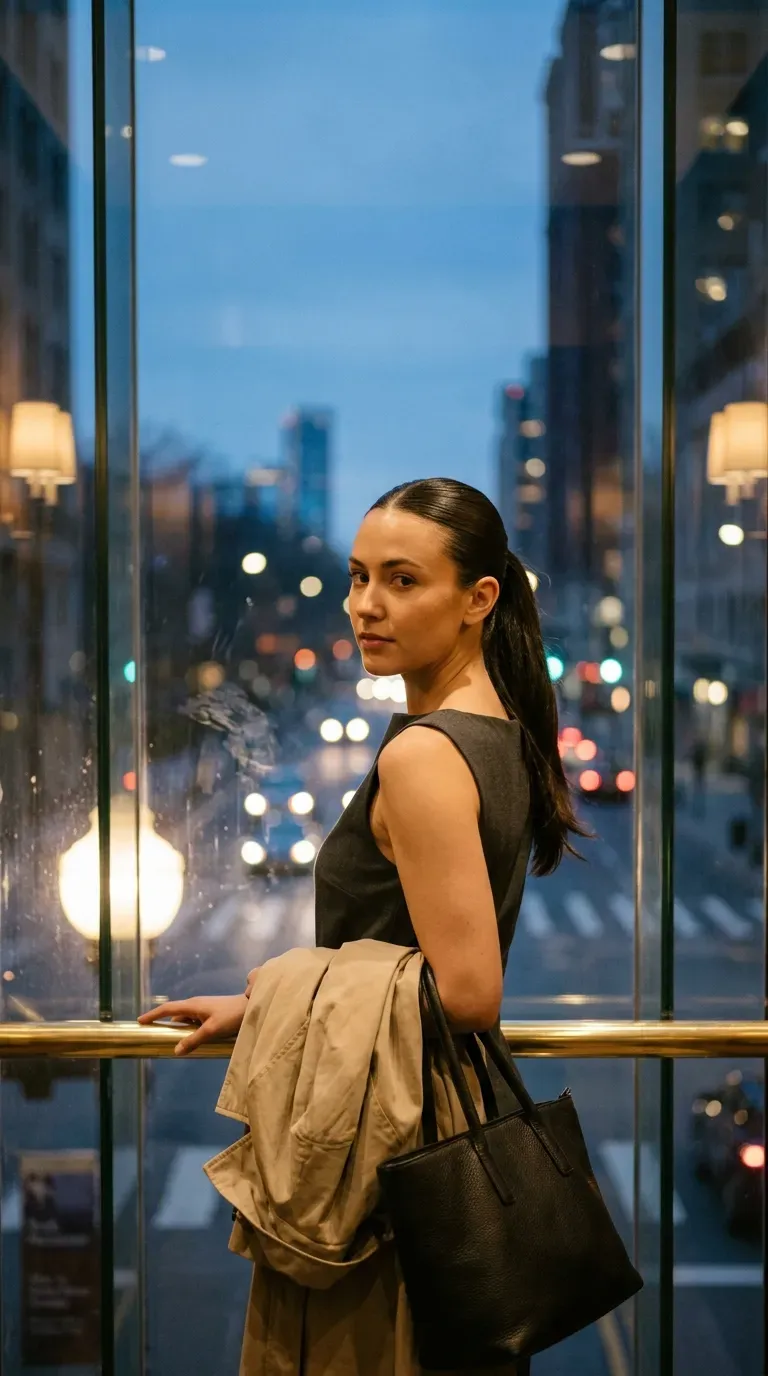
The most common mistake with a ponytail is the bump at the front. It makes hair look rushed.
Brush hair upward from the nape, then smooth the top with a flat brush before the elastic goes in. Place it at the middle of the back of your head, level with your ears. Pull the ponytail through once more and tighten it a little so the surface stays flat.
Quick tip: If you have layers, mist a little hold spray on a clean toothbrush and tame the short bits along the hairline.
Smooth the top before you tie it.
Set the tie level with your ears.
Tying over a bump at the front.
Pulling so tight you get a headache.
12. Knotless Braids in a Low Bun
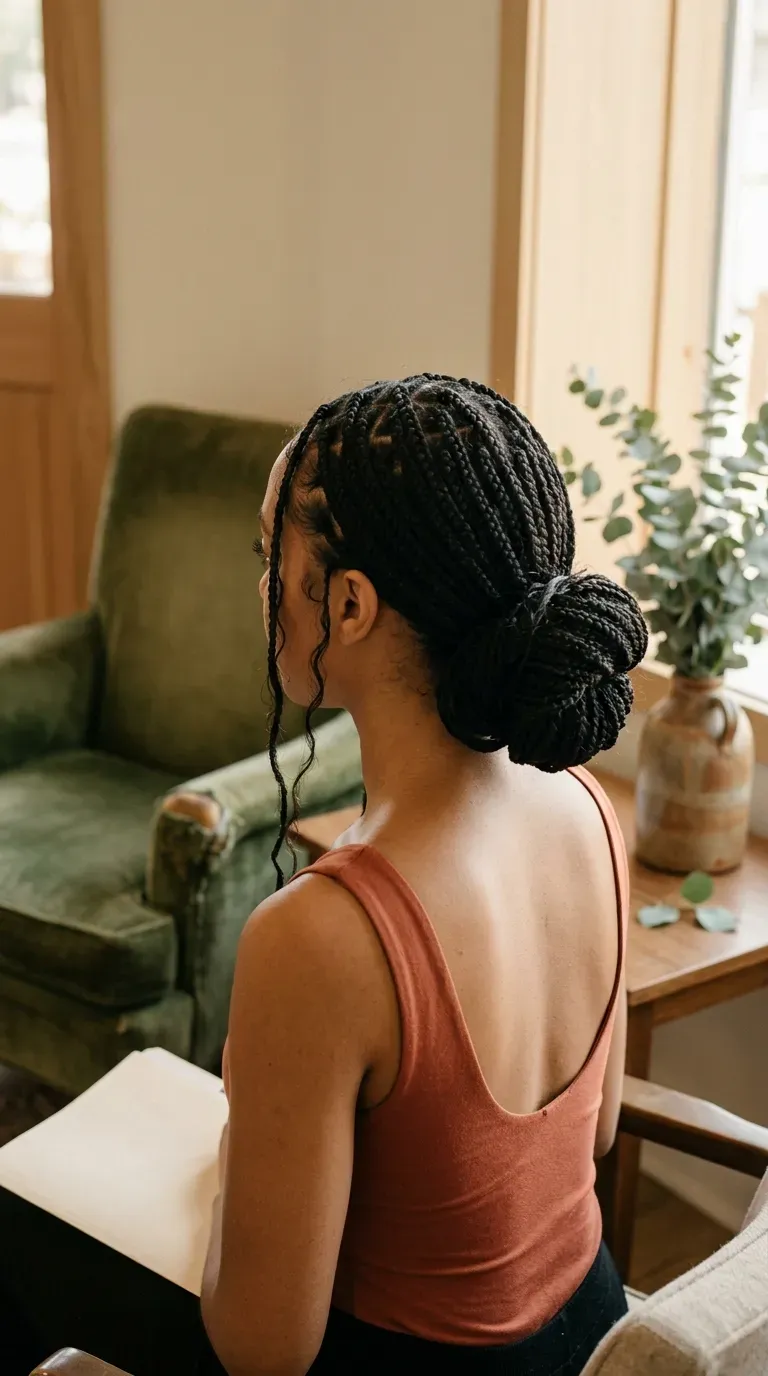
Braids you wear for weeks mean one less decision on interview morning. Gather them low and the style looks made for a blazer.
- Divide the braids into three loose bundles
- Twist each bundle once
- Wrap them into a bun at the nape
- Secure with a few large pins or a thick scrunchie in a neutral shade
Leave out a few front braids if you like a soft frame.
Lengths past the waist are heavy, so keep the bun low to avoid tugging at the scalp. A snug but comfortable bun lasts through a long day.
13. Side Part With One Barrette
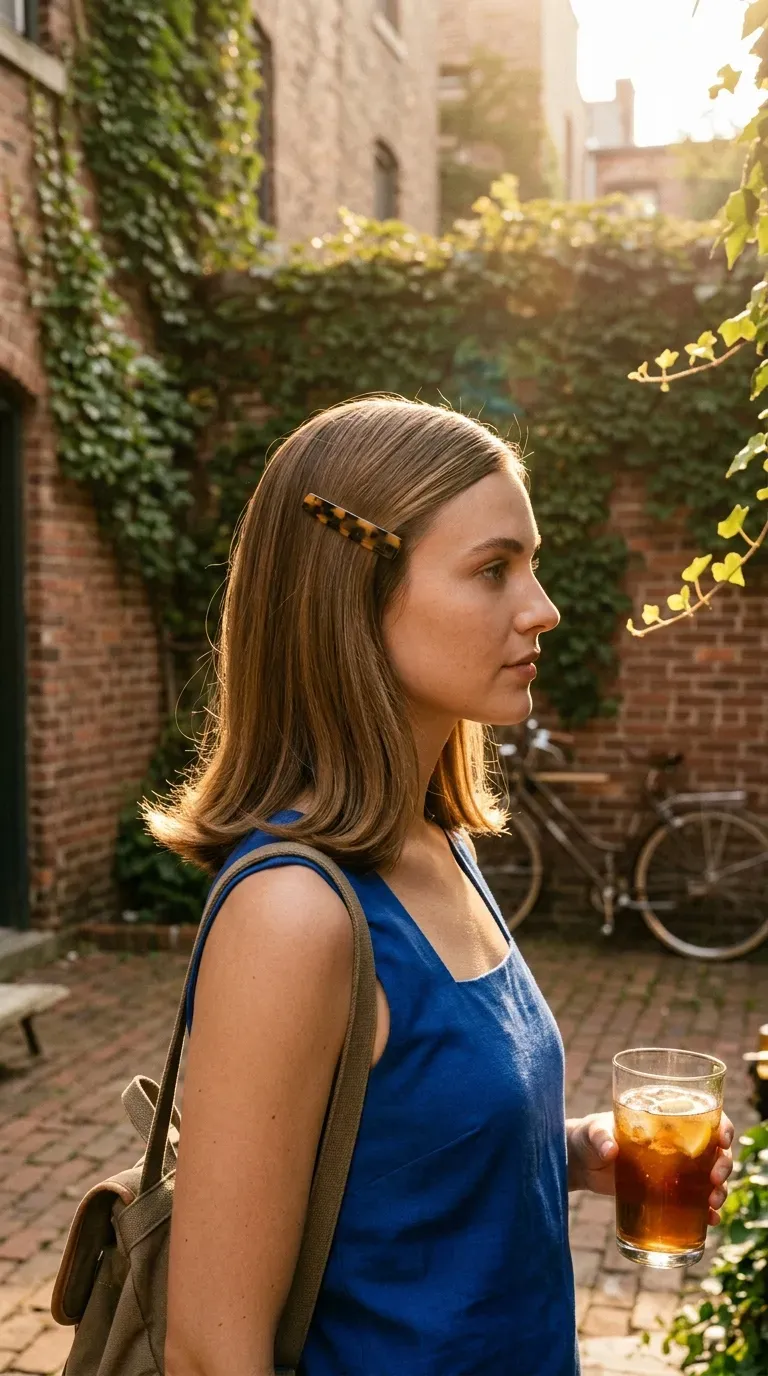
One barrette can change the whole look. Choose a flat metal or tortoise style, nothing sparkly, and place it just above the ear.
Do it in three moves:
- Make a deep side part
- Smooth the heavier side behind your ear
- Clip it flat, hair running in the same direction
It is the easiest pick for short and medium hair that sits straight. A slightly turned under blow dry gives it body.
Quick tip: Carry a second barrette in your bag. They have a habit of disappearing.
14. Tapered Pixie With Soft Texture
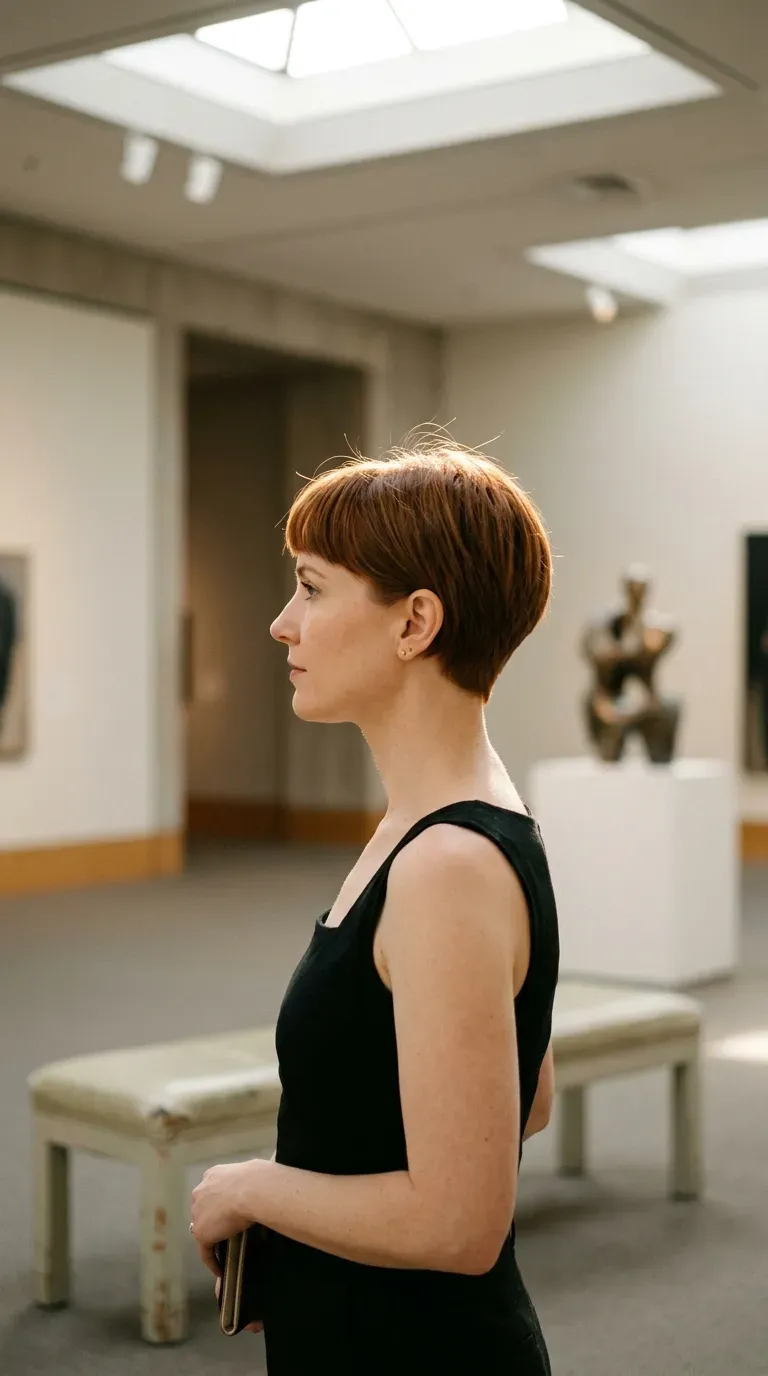
A short cut already does most of the work. All that is left is a tidy finish.
Rub a pea size amount of paste between your palms and run it through from the back to the front. Then press the fringe flat with your fingers.
Check these before you leave:
- The neckline is clean, with no stray length
- The sides lie smooth over the ears
- The top has a little lift, not spikes
Book a trim about a week before the interview so the edges look fresh but not brand new.
Short hair looks polished when the neckline and edges are clean, so the trim matters more than the styling.
15. Curtain Bangs With a Neat Low Twist
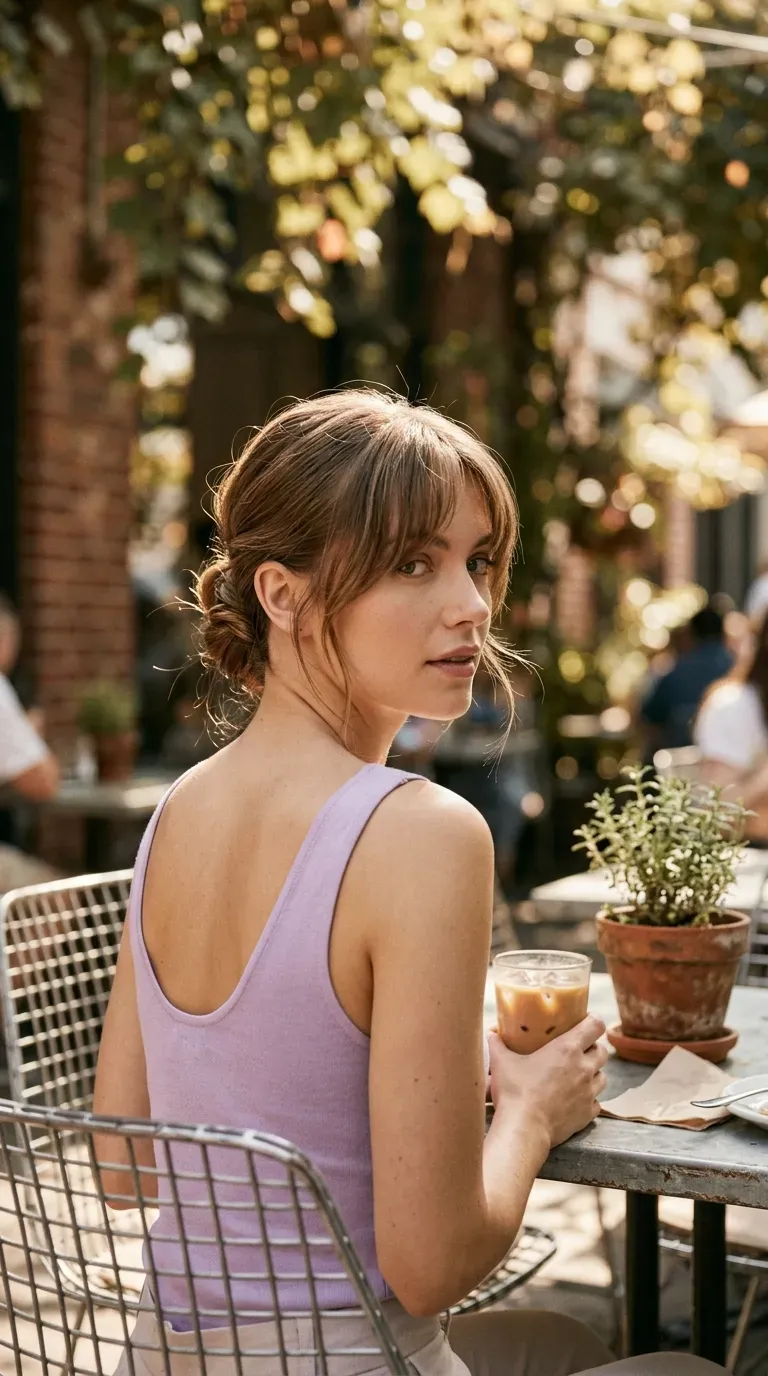
Bangs can look messy in a hurry, so give them a plan. Blow dry them over a round brush, sweeping them out to each side, then lock the shape with a cool burst of air.
Pull the rest of your hair into a low twist at the back. A few thin face framing pieces stay out, but nothing that covers your eyes.
Three habits to lean on:
- Dry shampoo on the bangs the night before
- A small comb in your bag
- Pins behind each ear for when they flop
Best for people who already wear bangs and want a tidier version.
Final Thoughts
The best interview hairstyle is the one you stop thinking about after you leave the house. Choose a look you can wear without checking it, practice it once, and keep two spare pins in your bag. With these job interview hairstyles, you have options for every hair length and texture, so you can match your style to the room you are walking into.
Calm hair does not get you the job, but it frees your attention for the answers that do.
Save this list to a board for the night before your next interview so your plan is ready.