
Thick wavy hair has a habit of growing sideways. It looks fine for two weeks after a cut, then the waves start stacking on top of each other and the whole shape spreads out at the bottom like a tent. Flat on top, wide at the ends. The dreaded triangle.
Most people blame the waves. The real problem is usually the cut. A blunt, one length hemline keeps every bit of weight sitting at the ends, so each wave pushes the next one outward.
Thinning shears are the usual fix, and they rarely last. The short snipped hairs pop up through the top layer, add frizz, and make the triangle fuzzy instead of smaller.
What actually works is taking weight out in the right places. Under the top layer. At the nape. Through the middle of each wave, so it can sit closer to your head.
These haircuts for thick wavy hair all do that in different ways. Some keep your length, some go short, and a few are low effort enough to leave alone for months. Each one comes with what to ask for and how it behaves after it dries.
1. Long Layers Carved From the Inside

Long hair does not have to mean heavy hair.
The trick here is internal layering. Your stylist lifts the top section out of the way and cuts shorter, hidden layers underneath. The top layer stays long and smooth, so nobody sees choppy bits. What they do see is waves that finally sit flat at the root and fall straight down instead of out.
Ask for:
- Long layers on top, starting below the chin
- Internal or hidden layers cut through the middle section
- Ends softened with point cutting, not thinning shears
Quick tip: Ask to see the underneath section once it is cut. If it looks noticeably shorter than the top, the stylist actually removed weight.
2. Shoulder Length Shag With Curtain Bangs

Shags were made for thick waves. All those short, stacked layers break up the weight so each wave has room to bounce instead of getting crushed under the hair above it.
The curtain bangs matter more than they look. They pull attention to the middle of your face and stop the shape from looking wide at the jaw.
- Ask for the shortest layers at the crown, around cheekbone length.
- Keep the perimeter at the shoulders so it can still go up in a clip.
- Have the bangs cut longer than you think, past the brows.
Air dry with a scrunch of mousse. A shag looks better a little messy, which is good news on rushed mornings.
3. Wavy Lob With a Hidden Nape Undercut

Here is the sneaky one. A small section at the nape gets clipped short, about the width of your palm, and the rest of the lob falls right over it.
Nobody sees it when your hair is down. But the bottom of the cut loses a whole layer of bulk, and that is exactly where the triangle starts.
What you get:
- Faster drying, since the densest hair is gone
- A hemline that swings instead of puffing out
- A cool surprise when you put it in a high bun
It works best on hair that is thick all the way through. If yours is only full on top, skip the undercut and go for internal layers instead.
4. Round Layers Cut Dry, Wave by Wave

Wet hair lies. Thick waves can shrink up an inch or more as they dry, and every wave springs up at a slightly different spot. A stylist cutting wet is guessing.
A dry cut takes the guessing away. Your hair is styled the way you wear it, and the stylist trims each wave where it naturally falls, building rounded layers that follow the shape of your head.
What changes:
- No surprise short pieces after the first wash
- The outline curves in instead of flaring out
- Waves clump together better because they are not cut through the middle
Show up with clean, dry hair styled your usual way. No ponytail dent, no heavy oil.
Flat at the crown, wide at the jaw. Weight piles up at the ends, waves push each other outward, and the shape turns into a triangle within a few weeks.
Lift at the roots, a soft curve around the sides, and ends that turn in. Each wave is trimmed where it really lands, so the outline holds as it grows.
5. Butterfly Cut With Short Crown Layers

Think of it as two haircuts in one. Short layers around the face and crown, long layers underneath that keep your length.
On thick waves, those short top layers do real work. They take away the heavy hair that usually flattens your roots, so the top gets lift and the bottom gets lighter at the same time.
Ask your stylist to start the shortest layer around the cheekbones and blend down to your full length. Keep the back layered too, not just the front.
Styling is easy. Rough dry the front pieces away from your face and leave the rest alone. The cut makes the shape for you.
6. Collarbone Cut With Slide Cut Ends

Blunt ends on thick waves look sharp for about a day. After that, they become a shelf.
Slide cutting fixes that. The stylist glides open shears down the hair shaft, taking out weight in a smooth taper toward the ends. It is quieter than texturizing, with no short, spiky bits left behind.
The shape:
- Length right at the collarbone
- A soft side part
- Ends that thin out gently so waves curl under
Fair warning, not every stylist does this well. Ask how often they slide cut before you sit down. The wrong hands can leave the ends looking stringy, especially on fine strands mixed in with thick ones.
7. Chin Length Wavy Bob With a Stacked Back

A bob on thick waves can go wrong fast. Cut it one length and you get a mushroom. Stack the back and you get something much better.
Stacking means the back is cut in short, overlapping layers that hug your neck, then the sides angle down toward the chin. The bulk at the nape disappears, and the waves at the front have room to swing.
Best for: anyone who wants short hair without a puff at the sides.
Things to know:
- Plan a trim every six to eight weeks
- A tiny dab of cream on the ends keeps waves defined
It feels light. Almost suspiciously light, the first week.
8. Long V Cut That Pulls Weight Down the Back

Shape decides where the eye goes. A straight hemline draws a wide line across your back. A V draws a point down the middle.
The sides get cut shorter, the center stays longest, and every layer in between steps down at an angle. On thick waves, this removes weight from the sides, which is exactly where the triangle builds.
Here is how to keep it working:
- Ask for the V to be soft, not sharp.
- Keep the side layers at least past the shoulders so ponytails still work.
- Get the point re-shaped every three months, since waves can blur it.
Long hair lovers, this one is for you.
9. French Bob With Soft Bangs for Thick Waves

Short, slightly undone, and meant to look a bit messy. That is why it suits thick waves so well.
The French bob sits between the cheekbone and jaw. On thick hair, the key is asking for the inside to be layered so the length does not round out like a helmet. The bangs are soft and grazing, not blunt.
Small observation from anyone who has worn one: day two looks better than day one. The waves loosen, the bangs settle, and it starts to look like you did nothing on purpose.
Watch out: If your waves shrink a lot, cut the bangs dry. Wet cut bangs on thick waves can bounce up far shorter than planned.
10. Wolf Cut With Tapered Sides

Half shag, half mullet, and very forgiving.
Benefit first: the wolf cut removes bulk from the two places thick waves hate most, the crown and the sides. Short, choppy crown layers give lift. Tapered sides stop the hair from puffing out over your ears. The back keeps a little length, so the overall shape looks slim from every angle.
For a softer version, ask for:
- Crown layers around eye level, not shorter
- Sides tapered close to the head, but not clipped
- Bangs blended into the face framing pieces
Hair that frizzes easily does well here. The texture hides it.
11. Face Framing Ribbon Layers on Long Waves

Small change, big payoff. Not every thick wavy cut needs a full reshape.
Ribbon layers are long, thin pieces cut around your face, usually starting at the chin and stepping down to the collarbone. They pull the front hair away from the widest part of your face and break up the solid wall of waves at the sides.
It is the cut to ask for when you love your length but hate how heavy the front feels. The back can stay almost untouched.
Ask for the front pieces to be point cut, so they curl into separate ribbons instead of one chunk.
12. Ghost Layers for a Smooth Top and Light Middle

Not a fan of visible layers? Ghost layers are the answer.
From the outside, this looks like a simple one length cut with a clean edge. Underneath, the stylist cuts a band of shorter layers through the middle of your hair. You cannot see them. You can feel the difference though, when you shake your head and the hair moves instead of swaying as one heavy block.
Good for:
- Office looks that need to stay tidy
- Hair that gets frizzy with lots of short layers
- Anyone growing out a choppy cut
Waves come out softer and looser with this one, so expect more bend than bounce.
13. Wavy Bixie With a Tapered Nape

Quick mistake to avoid: going pixie short on thick waves without tapering the back. The hair at the nape grows fast and dense, and in three weeks it looks like a shelf.
A bixie sits between a bob and a pixie. Longer waves on top, shorter at the sides, and a nape tapered close to the neck.
Why it works on thick hair:
- The top keeps enough length to show your wave.
- The tapered back removes the heaviest hair you have.
- Drying takes a few minutes, not half an hour.
Bring a photo of the back, not just the front. Stylists read the shape better that way.
14. Long Bob With a Deep Side Part

Flip your part. That is the cheapest way to shrink volume on top.
A deep side part moves a big chunk of hair over to one side, so the crown sits flatter and the waves on the heavy side fall forward instead of out. Paired with a long bob that has soft layers through the ends, it reads polished without much effort.
Ask for the long bob to be cut with the part in place. A cut done on a middle part will hang unevenly once you switch.
Styling detail: Tuck the thinner side behind your ear. It balances the volume and shows off earrings.
15. Seventies Feathered Layers

Retro for a reason. Feathered layers were built for volume control.
- The stylist cuts layers that angle back, away from your face.
- Each layer is shorter than the one under it, so hair stacks lightly.
- The front pieces are point cut so they flick back with a quick brush.
On thick waves, the result is a shape that has movement up top and stays slim at the sides. The waves fall backward, not outward.
A round brush and a cool blast of air are all it needs. Keep the volume at the crown and let the ends do what they want.
16. U Shaped Hemline With Long Layers

Softer than a V, fuller than a straight line.
The U shape keeps the center back longest, curves up gently at the sides, and blends with long layers. On thick waves, this means the corners of your hemline lose their weight. Those corners are what make the bottom of your hair look boxy.
Good to know:
- The curve is subtle, so it grows out gracefully
- It looks great in a half up style because the back stays full
- Low maintenance, with a trim every ten to twelve weeks
Thick waves that go bushy in humidity? This shape stays tidier than a blunt cut on sticky days.
17. Italian Bob With a Full Edge and Layered Inside

Comparison time. A classic blunt bob on thick waves goes wide. A choppy, heavily layered bob can look fuzzy. The Italian bob lands in the middle.
The outside edge stays full and a little rounded, sitting right around the jaw. The inside gets layered and thinned so the waves sit in soft bends instead of stacking up.
It looks expensive and grown up, and it is surprisingly easy. Rough dry, run some cream through the ends, and shape the front pieces with your fingers.
A note on length: keep it at the jaw or just below. Shorter starts to puff.
18. Disconnected Layers for Extra Thick Waves

Tiny rule for very thick hair: blending is optional.
With disconnected layers, the short top section and the long bottom section are not blended together. There is a clear jump in length between them. That gap is where a big chunk of bulk used to sit.
It sounds dramatic, but waves hide the line well. Once your hair dries, the jump just looks like natural, piecey texture with lots of movement.
Who it suits best: people with extra dense hair who have tried regular layers and still feel weighed down. Ask for at least two or three inches between the sections.
Scrunch in a light mousse while hair is soaking wet so the short and long layers clump separately.
Dry with a diffuser on low, lifting the top section at the roots.
Refresh day two waves with a water mist and your fingers.
Brushing waves once they dry, which fuzzes out the gap between layers.
Heavy oils on the short top layer, which flatten the lift.
Asking for thinning shears at home trims. The layers already did that job.
19. Mid Length Waves With Swoopy Side Bangs

Straight bangs on thick waves are a commitment. Side bangs are a much easier yes.
Visual first: one long, curved piece sweeps across your forehead and melts into the layers at your cheek. It breaks up the front of the hair, so the waves no longer frame your face like two heavy curtains.
Ask for:
- Bangs starting at the brow and blending to the cheekbone
- Layers from the chin down to keep the sides light
- A trim on the bangs every four weeks
The swoop takes about a minute with a round brush. Skip the brush and it still falls into a soft wave on its own.
20. Soft Modern Mullet With Wavy Length
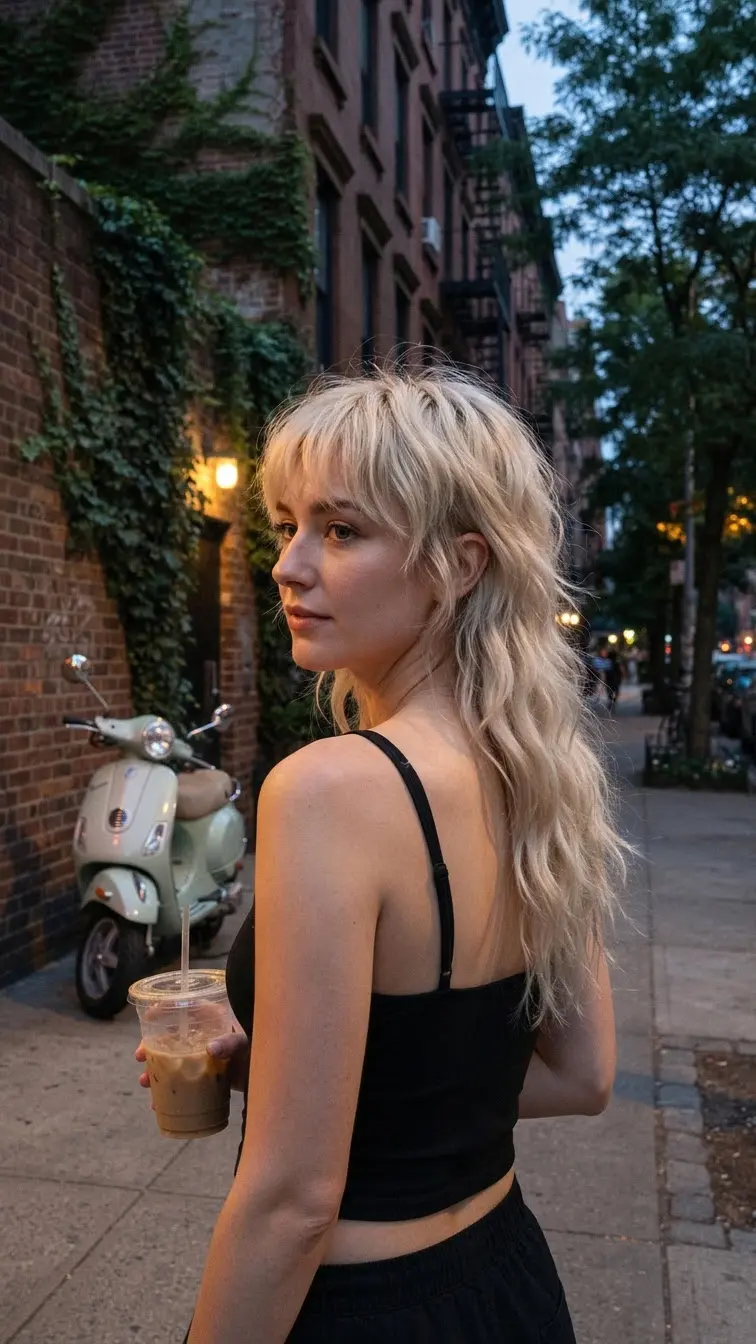
Personal observation: soft mullets look best on hair that does not behave. Thick waves qualify.
Short layers around the crown and sides. Longer, wavy length at the back. No hard shaved lines, just a soft shift in length.
Why does it remove bulk? The sides are where thick hair piles up and pushes out. Here they are cut short and textured, so the outline stays narrow even on humid days.
Keep it soft:
- Leave the sides at least ear length.
- Blend the top into the back with long layers.
It is a bold cut, but the waves round off every edge.
21. Twist Cut Ends on Shoulder Length Waves

Direct how to, because this one is about technique more than shape.
- The stylist takes a small section and twists it.
- They snip into the twist, removing hair from the outer, loosest bits.
- They untwist and repeat across the hemline.
The result is ends that are lighter but not shredded. On thick waves, this helps the hair clump into neat ribbons instead of fanning out into a fuzzy edge.
It pairs well with almost any length, though shoulder length shows it best. Ask for it at your next trim even if you are keeping the same cut.
22. Long Shag That Grows Out Well

The salon visit you keep putting off? This cut does not mind.
A long shag has layers all over, from the crown to the ends, so the weight is spread out evenly instead of collecting at the bottom. When it grows, the layers just get longer. No awkward shelf, no sudden triangle at month three.
What helps it last:
- Ask for the top layers to start around the chin, not shorter
- Keep the curtain fringe long enough to tuck behind your ears
- Book a dusting every four months
Best for busy people who want thick waves to stay light without frequent appointments.
Your Waves Just Need Room to Fall
Thick wavy hair is not the problem. Weight in the wrong spot is. Once the bulk comes out from under the top layer, off the nape, or out of the corners of your hemline, the waves finally sit closer to your head and the triangle stops showing up.
Start with your biggest frustration. Slow drying points to the nape undercut. Puffy sides point to a wolf cut or a V. A heavy front points to ribbon layers.
The best haircuts for thick wavy hair are the ones you can air dry on a weekday and still like on day three. Bring a back view photo and ask about dry cutting.
Save this list to your hair board so it is ready for your next salon booking.