

Fine hair has a sneaky habit. It looks full for about an hour after you blow it out, and then it slowly flattens until you can see your scalp at the part and the ends look see through in photos.
Most fine haired women respond by growing it longer, hoping more length means more hair. It usually does the opposite. Long, fine strands pull themselves flat with their own weight, and the ends thin out until they look wispy no matter what product you use.
Going shorter is often the fix. The right cut keeps the ends dense, lets the roots lift, and gives your hair a clear shape that reads as thick from across a room. The wrong cut, full of choppy thinned layers, can make things worse.
So this list sticks to short hairstyles for fine hair that actually build the look of volume. Each one shows you the front and the back, explains why it works on thin strands, and gives you a few words to say at the salon so you leave with the cut you pictured.
1. Blunt Chin Length Bob With a Heavy Baseline

Fine hair looks thickest at the ends when every strand stops at the same place.
That is the whole secret behind the blunt bob. With no layers chipping away at the bottom, the perimeter stays dense and solid, so the hair reads as full even when it is not.
Ask your stylist for:
- A one length cut that hits right at the chin
- A cut with straight scissors, no razor and no thinning shears
- A slightly shorter back so the line tilts forward a touch
Style it with a round brush at the roots and a flat brush through the ends. Quick tip: a trim every six to eight weeks keeps that line crisp. Once the ends start to split, the heavy look disappears fast.
2. Stacked Bob With Lift at the Crown

Flat at the back of the head is the most common fine hair complaint. A stacked bob fixes it with the cut, not with a can of spray.
Your stylist cuts short graduated layers at the nape and builds them up toward the crown. Those little layers push against each other and hold the top up, like a shelf. The front stays longer, so you still get length around the jaw.
Styling takes about ten minutes:
- Rough dry until hair is mostly dry.
- Lift the crown with a small round brush, aiming the dryer down the shaft.
- Finish with a pea sized bit of light paste at the back only.
Keep the stacking subtle if your hair is very fine. Too many short layers can show scalp.
3. Textured Pixie With a Piecey Top
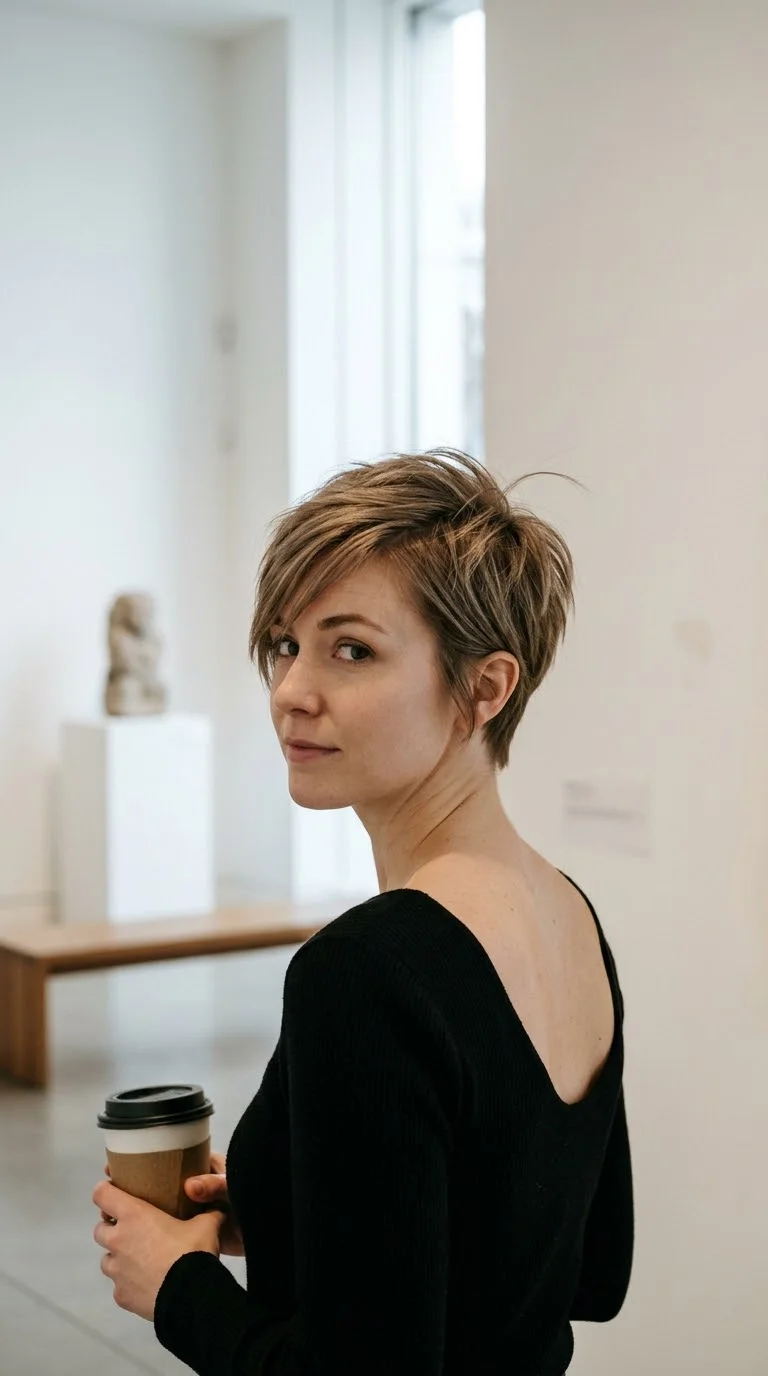
There is a myth that fine hair cannot go pixie short because it will look thin. In practice, a pixie is one of the best ways to hide thinness, because short strands stand up instead of lying flat.
The trick is texture on top. Point cutting breaks the top into little separated pieces, and those gaps create shadows that fool the eye into seeing more hair. Short, tight sides make the top look even fuller by contrast.
- Rub a small amount of matte clay between your palms until warm
- Twist random pieces at the crown with your fingertips
- Leave the sides smooth so the top stays the focus
Skip shiny pomades. Shine on fine hair shows every gap.
4. French Bob With Wispy Bangs

Bangs are a cheat code for fine hair. They borrow hair from the top of your head and put it right where everyone looks first, around your eyes.
The French bob pairs those bangs with a short, slightly rounded cut that sits at the jaw or cheekbone. It has a lived in feel, so it actually looks better a little messy on day two.
For fine hair, keep the bangs wispy and long enough to sweep. Thick blunt bangs take too much hair from the crown and leave the top flat.
Rough dry the bangs with your fingers, side to side, then smooth the ends with a flat brush.
The cut below covers what to ask for and what to avoid.
Blunt or softly point cut ends that keep the bottom dense.
A few long layers only where you want lift, like the crown.
Bangs taken from a narrow triangle at the front, not a deep section.
Thinning shears or heavy texturizing through the ends.
A razor cut on very fine, straight hair, which can look frayed.
Lots of short choppy layers all over the head.
5. Shaggy Bob With Short Face Framing Layers

Visual detail first: look at where the layers start. On a fine haired shag, the short pieces sit only around the face and at the crown. The perimeter stays fairly solid.
That placement matters. Layers around the face create movement where people look, while the full back keeps the cut from looking stringy. You get the undone, rock and roll feel of a shag without losing density.
To style it:
- Spray a light sea salt mist on damp roots and mid lengths
- Scrunch while diffusing on low heat
- Twist two or three front pieces away from your face as they cool
It looks best a little rumpled, which makes it great for women who hate fussing with a round brush every morning.
6. A Line Bob That Is Longer in Front

Comparison time. A regular bob is level all around. An A line bob is shorter at the nape and gets longer toward the face.
Why does that help fine hair? The short back cuts weight off the part that usually goes flat, so the crown lifts on its own. The long front keeps a heavy, polished line around your face, which is where thickness shows the most.
It also grows out gracefully. Three months later it just becomes a slightly softer lob.
Good for: straight or slightly wavy fine hair, women who like a sleek finish, and anyone with a jawline they want to show off.
Keep the angle gentle. A steep slope on thin hair can make the front points look wispy.
7. Collarbone Lob With Soft Bent Waves
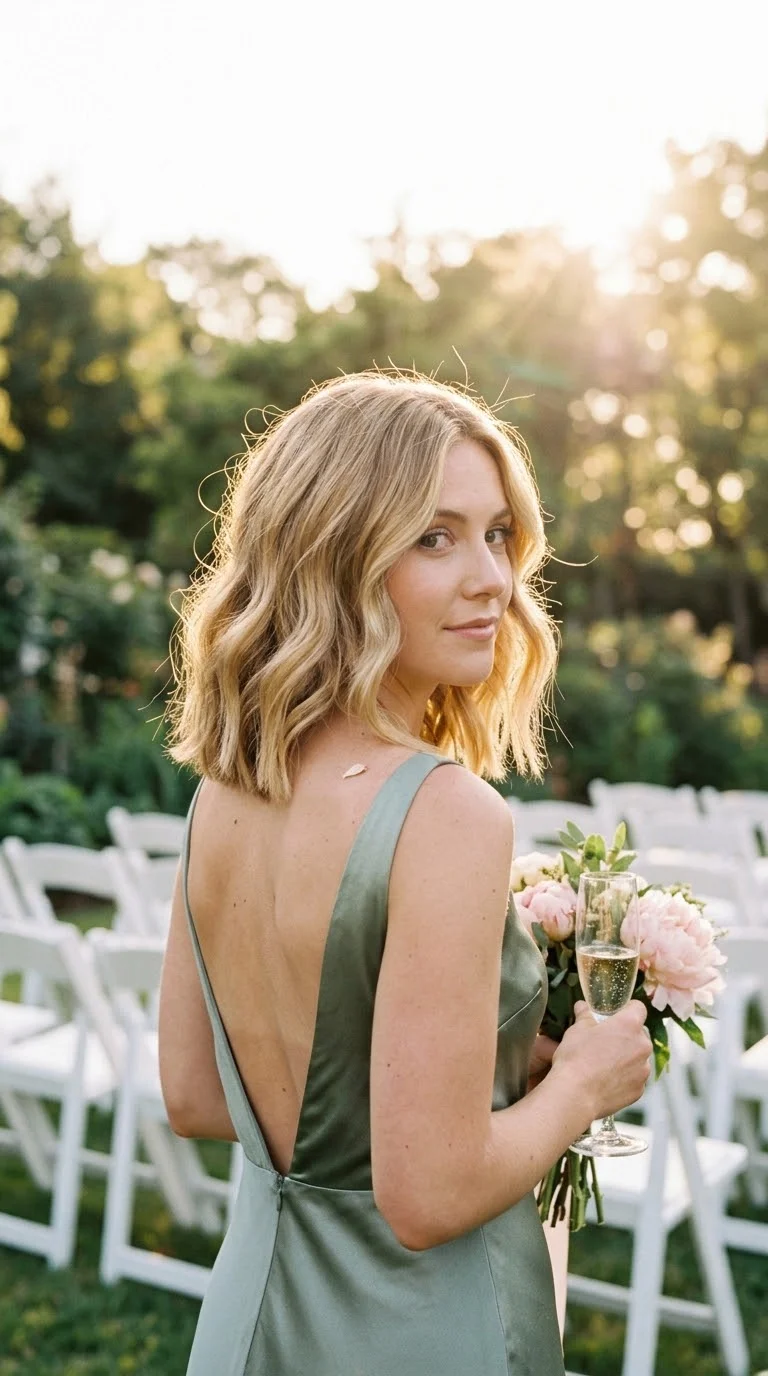
Not ready to go above the chin? The collarbone lob is the gentle step down.
At this length, fine hair still has enough weight to hang nicely but not so much that it drags itself flat. Add a bend in the middle and the hair suddenly takes up more space.
Here is the fast version of bent waves:
- Take a 1 inch section and clamp a flat iron near the root.
- Twist the iron half a turn and glide down, stopping two inches before the ends.
- Alternate the direction of each section.
- Shake it out with your fingers once it cools.
Leaving the ends straight is what keeps the look modern. A full spiral curl on fine hair tends to fall out by lunch anyway.
8. Deep Side Part Bob
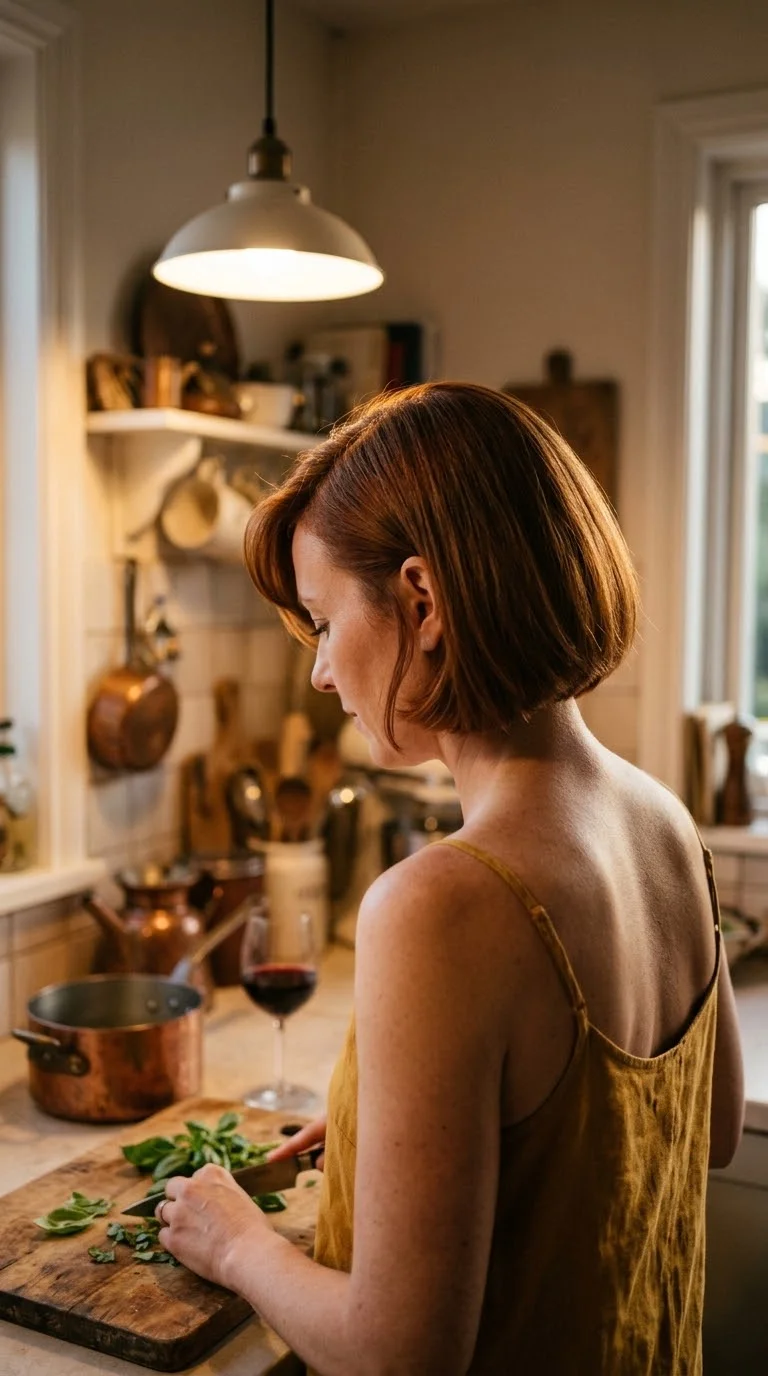
Tiny rule: move your part, change your volume.
When fine hair sits in the same part for years, the roots train themselves to lie flat on both sides. Flipping to a deep side part forces the hair to stand up and fall over, which creates instant height at the crown and a fuller swoop across the forehead.
It costs nothing and works on almost any bob. Your stylist can cut the bob slightly heavier on the swoop side so it falls well.
- Part while hair is still wet, using the tail of a comb
- Blow dry the roots against the part first, then flip back
- Tuck the thin side behind your ear
The heavier side does the work. The tucked side just keeps it neat.
9. Bixie Cut With a Fluffy Crown
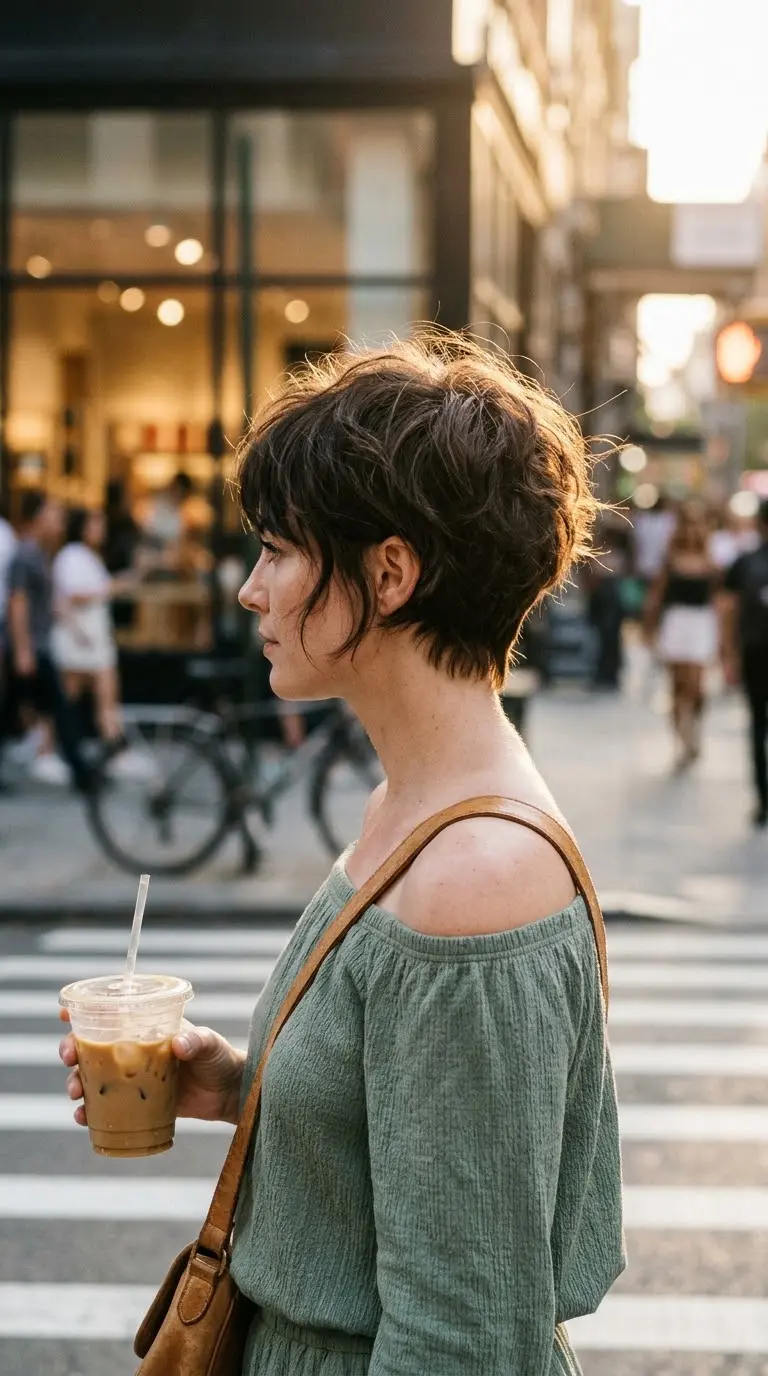
Half bob, half pixie. The bixie keeps the soft, longer pieces of a bob around your face and ears but has the short, airy back of a pixie.
For fine hair, this is a smart in between. The short back removes the weight that usually flattens the crown, so the top puffs up naturally. The longer front and sides give coverage if you feel exposed with very short hair.
Ask for the crown layers to be cut a bit longer than a classic pixie. That extra inch is what gives you fluff instead of spikes.
Air drying works surprisingly well here. A quick scrunch with mousse on damp hair, and you are out the door.
10. Long Pixie With Swoopy Side Bangs

Problem first: very short pixies can look severe on thin hair because you see the scalp through the top.
A long pixie solves that. The top and the bangs are left two to four inches long, so the hair lies in a soft swoop that covers the crown and front hairline. The back and sides are tapered close to keep it tidy.
This one is popular with women whose hair has thinned at the temples, since the side bangs sweep right over that area.
Quick tip: blow dry the bangs in the opposite direction first, then flip them back into place. They will land with a little lift instead of plastered flat.
11. Tousled Asymmetrical Bob

Here is a scene most fine haired women know. You air dry after the beach, and your hair looks better than any salon blowout. The salt, the wind, and the slight mess all add grip and body.
An asymmetrical bob is cut to look like that on purpose. One side falls an inch or two longer than the other, so the cut always looks a bit windswept, and the uneven line hides any thin spots at the ends.
Use a texture spray instead of hairspray. Hairspray glues fine strands together into fewer, bigger pieces, which shows the gaps.
Here is how a basic morning routine changes things.
Heavy conditioner on the roots, hair left to dry flat against the scalp, a shiny serum on top. By noon the part is wide and the ends look stringy.
Conditioner on the ends only, roots dried upside down for a minute, then a light texture spray scrunched in. The cut holds its shape and looks fuller well into the evening.
12. Rounded Italian Bob

Benefit first: the Italian bob makes thin hair look heavy and expensive.
It sits slightly longer than a chin bob, usually right at the jaw or just below, and the ends are bevelled under so they curve in toward the neck. That curve makes the hair look thick, like the bottom edge of a full skirt.
The finish is glossy but full, not sleek and flat. A lot of the effect comes from the blow dry, so here is the routine:
- Apply a light volumizing mousse to damp roots.
- Dry the crown with a large round brush, lifting straight up.
- Roll the ends under with the brush and hold for a few seconds.
Big velcro rollers at the crown during your makeup help it hold all day.
13. Blunt Bob With Brow Grazing Bangs

Quick mistake many people make: cutting very short, heavy bangs on fine hair. They take a deep section from the crown, and suddenly the top looks thin.
Brow grazing bangs are the safer version. They come from a shallow, narrow section, sit right at or just below the eyebrows, and are cut soft enough to separate a little.
Paired with a blunt bob, the result is two strong lines, one at the brow and one at the jaw. Both look dense, which tricks the eye into reading the whole head as thick.
Expect to trim the bangs every three or four weeks. Most salons do a quick fringe trim for very little or for free between cuts.
14. Shoulder Grazing Cut With Invisible Layers

Personal observation from a lot of salon chairs: fine haired women who say they hate layers usually hate visible ones. The choppy steps on the outside are what make ends look thin.
Invisible layers are different. Your stylist cuts a few soft layers underneath and inside the hair, then keeps the outside perimeter full and blunt.
What you get:
- Movement and a little bounce at the shoulders
- No stringy, see through ends
- A shape that still holds when you tuck it behind your ears
This is a strong pick if you like wearing a ponytail some days, since everything still reaches the elastic. Ask for internal layers or interior texturizing, and say clearly that you want the outside left full.
15. Inverted Bob With a Short Nape

Direct how to, because this cut lives or dies on the instructions.
An inverted bob is cut very short at the nape and angles sharply longer toward the front. It is similar to an A line, but the back is closer cut and slightly stacked, so it pushes the whole crown up into a rounded shape.
Say this at the salon: “Inverted bob, short at the nape, light stacking only, front lengths at my chin, blunt ends.”
At home, blow dry the back first with a paddle brush, pushing hair up and forward. Then smooth the front pieces down.
It suits straight fine hair best. Curly hair can make the stacking poof out too much.
16. Bob With Flipped Out Ends
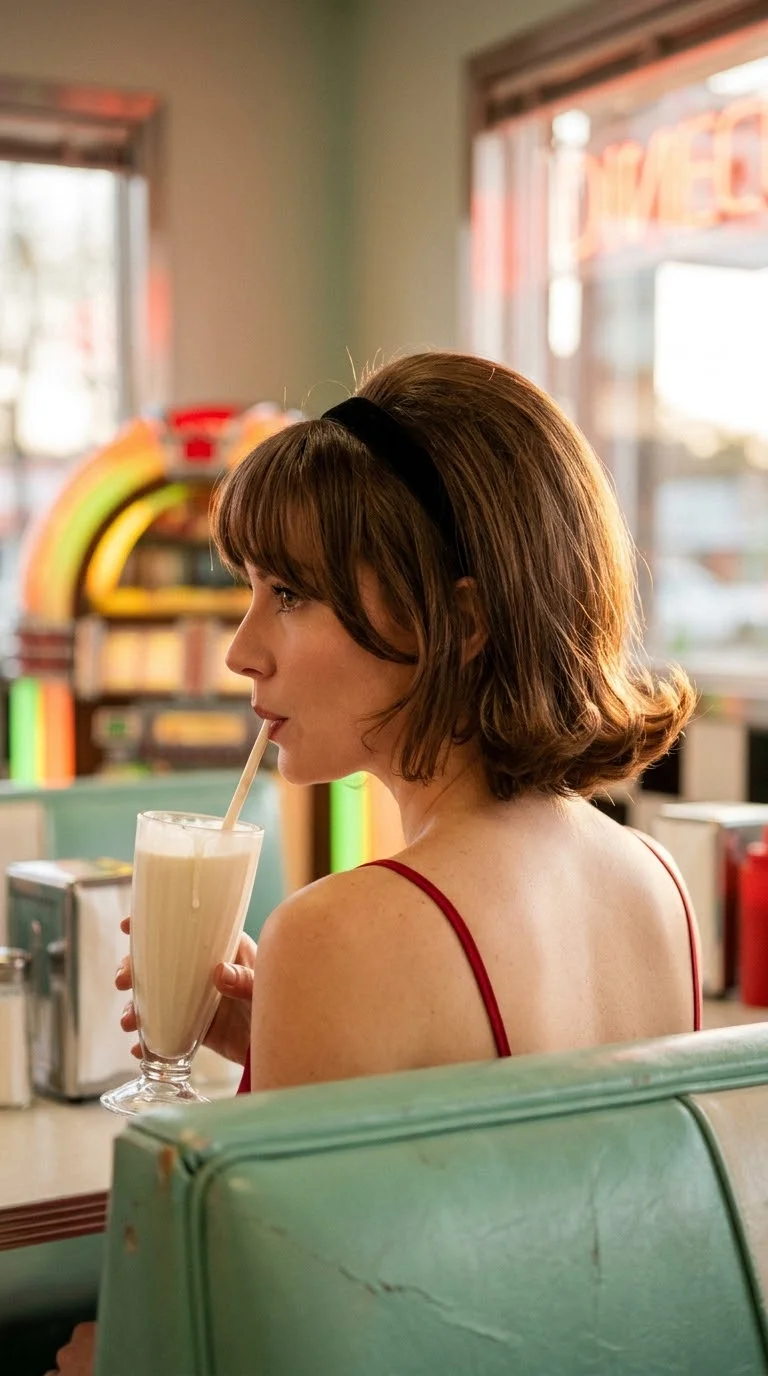
Fine hair loves a flip. Turning the ends out makes the bottom of the cut look wider, and wider reads as thicker.
It is a retro look, but it feels fresh again on a chin length bob with a bit of crown height. A thin velvet headband or a pair of small barrettes plays up the old school side of it.
Two ways to get it:
- With a flat iron, glide down and twist your wrist outward in the last inch.
- With a round brush, roll the ends up and out while blow drying, then cool shot.
Use a light hold spray on the ends only. The flip should bounce when you turn your head, not sit there stiff like a helmet.
17. Soft Mixie With a Fluffy Crown

Part pixie, part mullet, the mixie has a fluffy, rounded top and a nape that is left a little longer and wispy.
Why it suits thin strands: all the volume is placed on top, where fine hair usually falls flat, and the longer back gives the cut some length so it does not feel too exposed.
It is a younger, more playful look. Choppy curtain bangs keep it soft around the face.
Styling is mostly about the crown:
- Blow dry the top while pushing it forward with your fingers
- Pinch a little matte paste into the ends at the back
- Leave the bangs a bit messy
Women with a cowlick at the crown often find this cut finally puts it to good use.
18. Pixie With Dimensional Babylights
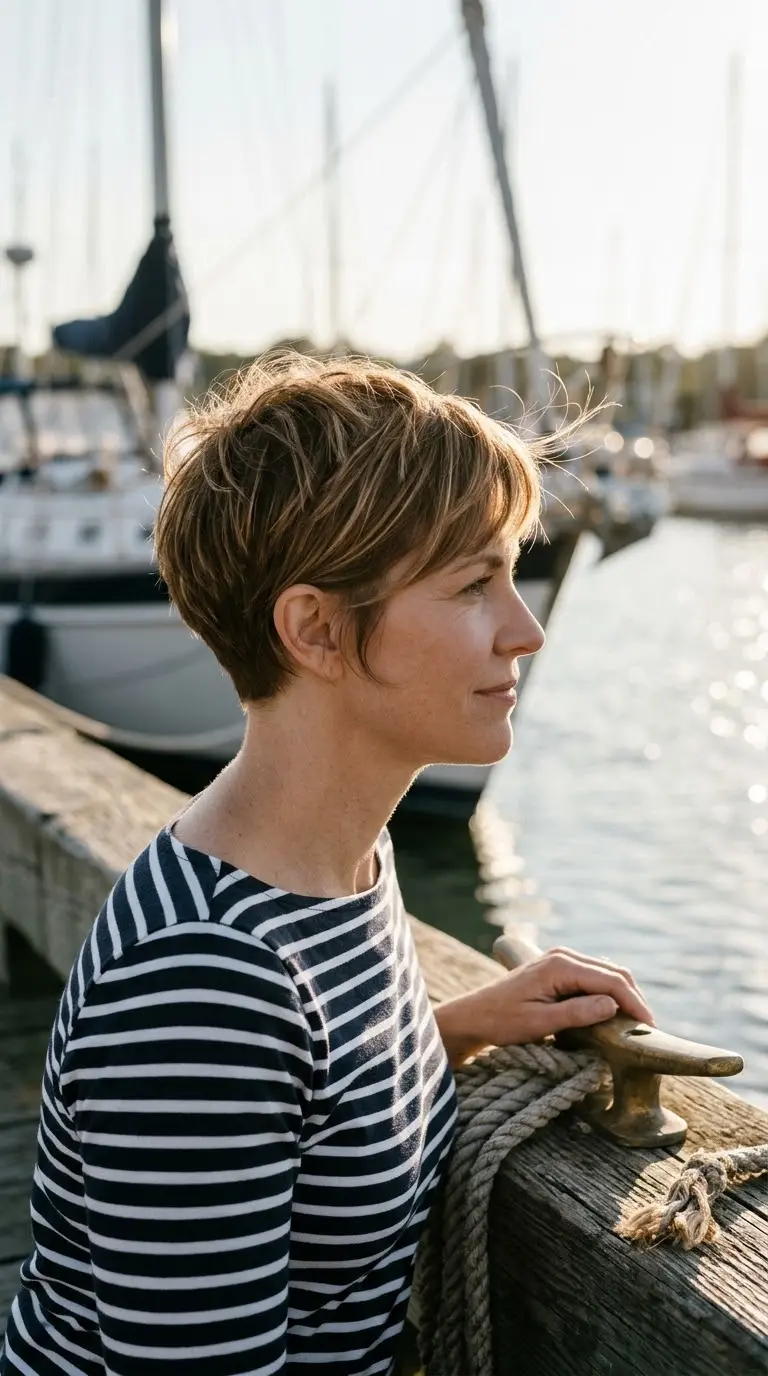
Color can do as much for fine hair as the cut does.
One flat, solid shade makes hair look like a single sheet, so you notice the gaps. Babylights are very fine highlights just a shade or two lighter than your base. They create tiny light and dark stripes through the hair, and that contrast reads as depth and fullness.
On a short pixie, babylights also show off the texture on top, because every lifted piece catches a bit of light.
Talk with your colorist about keeping the lightener gentle. Fine hair can get fragile with heavy bleaching, and breakage is the last thing you want.
These are the color tricks that tend to work best for fine hair.
19. Jaw Length Bob With a Root Shadow
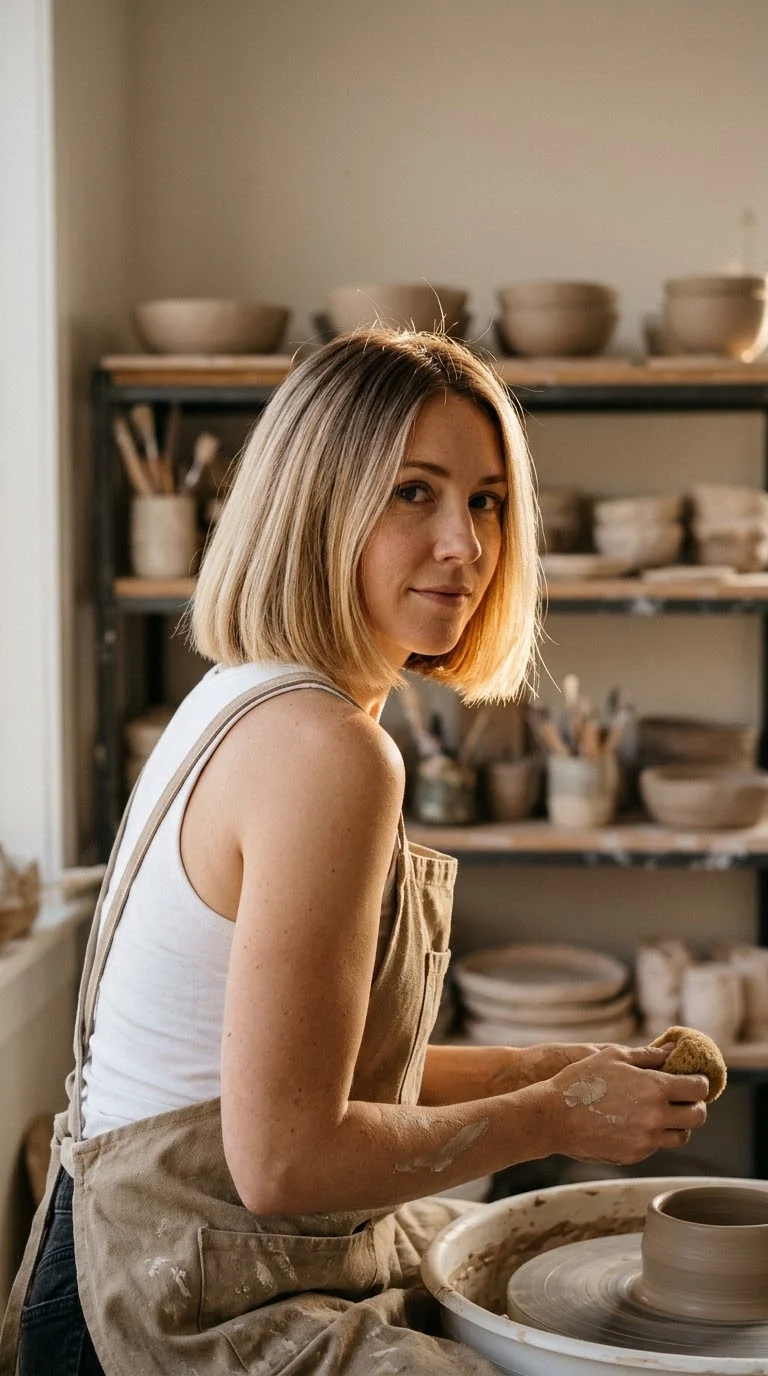
If you are blonde with fine hair, your part is probably the first thing that looks thin. Light hair next to pale skin makes the scalp easy to see.
A root shadow fixes that. The colorist tints the first inch or so at the roots a little darker than the rest, and blends it down. The scalp disappears into the darker shade, and the part suddenly looks dense.
Pair it with a blunt jaw length bob and the color and cut do the same job: heavy at the top, solid at the ends.
Bonus: a root shadow grows out softly, so you can stretch the time between color appointments by several weeks.
20. Short Bob With Brushed Out Bent Waves

Specific scene: Sunday afternoon, a short bob, and waves that look like you slept on braids but somehow better.
The secret step is brushing the waves out. Tight curls on short fine hair separate into thin ringlets, and you start seeing scalp between them. Brushing breaks them into soft, puffy waves that fill the space.
How to do it:
- Curl 1 inch sections with a 1 inch curling iron, away from your face.
- Let them cool completely, about five minutes.
- Brush through gently with a wide paddle brush.
- Spritz dry texture spray at the roots and shake.
Leave out step 3 and the look falls flat by afternoon. The brushing is what makes it last.
21. Short Bob With a Half Up Mini Knot
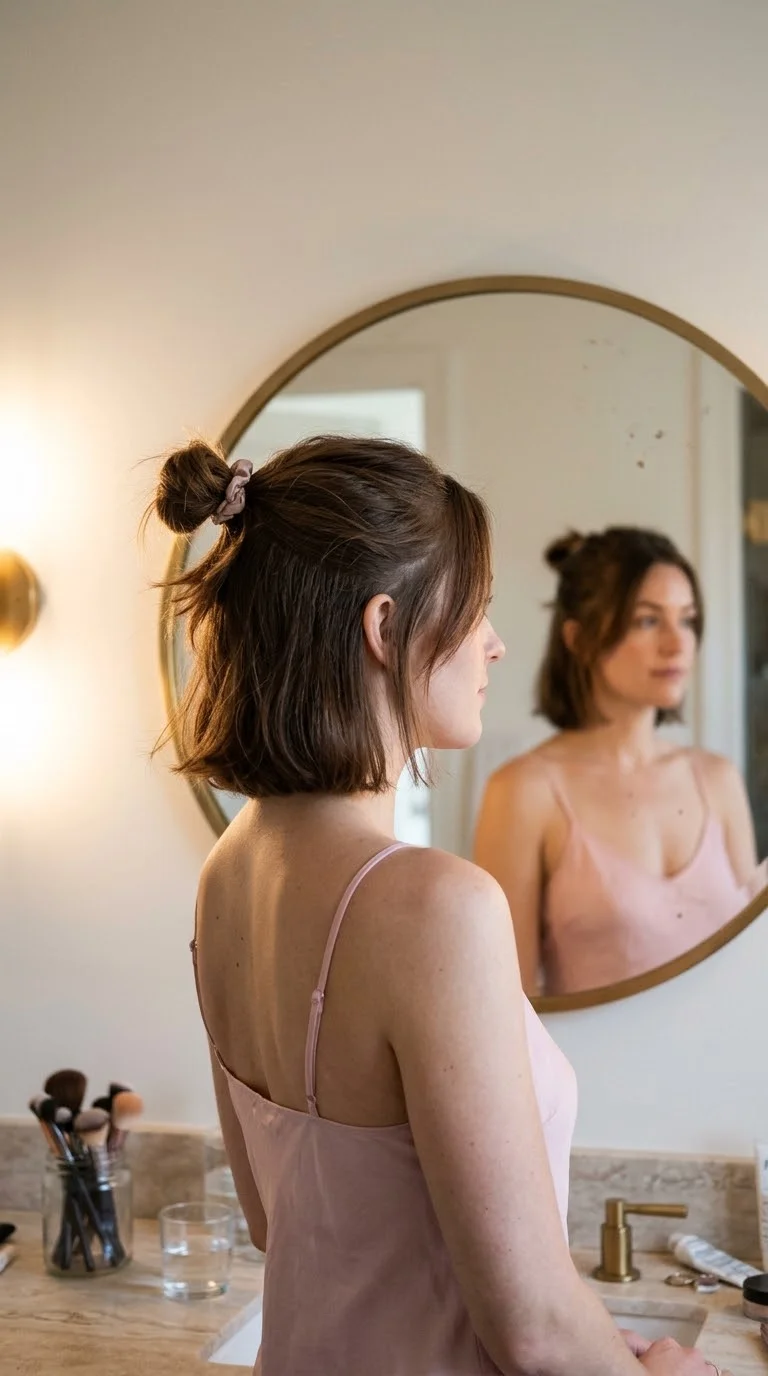
Not every idea needs a new cut. Sometimes the trick is styling the bob you already have.
A half up mini knot pulls the top section up and twists it into a small bun at the crown. That alone lifts the whole top of the head, and the hair falling below it looks fuller because the knot sits above it like a little stack.
The steps:
- Gather the top section, temple to temple, into a small ponytail at the crown.
- Tease the ponytail lightly at the base.
- Twist and wrap it into a knot and secure with a tiny scrunchie.
- Pull a few short pieces loose at the front.
A small satin scrunchie holds better on fine hair than a slippery clip, and it does less damage.
22. Short Curly Shag for Fine Curls

Fine curls get a raw deal. People assume curly means thick, but fine curly hair can look sparse when it is long because the curls stretch out and separate.
Shorter is kinder. A short curly shag lets each curl spring up tighter, and the stacked layers bunch the curls together into a full, rounded shape.
Ask for a cut done dry, curl by curl, so the stylist can see where each one lands.
For styling, go light:
- A lightweight curl cream or foam, not heavy butters
- Diffuse on low with your head tilted
- Scrunch out the crunch once fully dry
Heavy products weigh fine curls down. The less you use, the bigger they get.
Fine hair is not the problem. Usually it is a cut that fights it. Once the ends stay dense, the crown has a reason to lift, and the color gives a bit of depth, thin strands start to look like a lot more hair.
Pick the one or two ideas that match how much time you spend on your hair each morning. Bobs want a quick blow dry. Shags, mixies, and curls are happy air dried. Take a photo of the front and the back to your stylist, because the back is where most fine hair cuts go wrong.
The best short hairstyles for fine hair feel light to wear and look full on camera.
Save this list to your Pinterest hair board so you have it ready for your next salon appointment.