
Every barber knows the moment. A guy sits down, the cape goes on, and he says “same as last time, but cleaner.” Then he spends the next three weeks wondering why his hair looks exactly like it did in 2019.
The cuts people walk in asking for have changed a lot in the last couple of years. Fades sit lower. Tops are messier and longer. Curls are being grown out instead of buzzed off. Old school shapes like the flat top, the Caesar, and the mullet have come back with softer edges. And more men are showing up with a photo on their phone instead of a vague hand gesture.
That photo matters more than anything else you say in the chair. The second most useful thing is knowing the right words.
This list of mens haircuts covers the 30 cuts that keep coming up in barbershops right now, from short and sharp to long enough to tie back. Each one comes with what to say to your barber, how much work it takes in the morning, and which hair types it suits best. If you are scrolling for a partner, a brother, or a dad who has had the same cut since high school, save the ones that would suit him and send them over.
Pick two or three, screenshot them, and book the appointment.
1. Textured French Crop With a Low Skin Fade
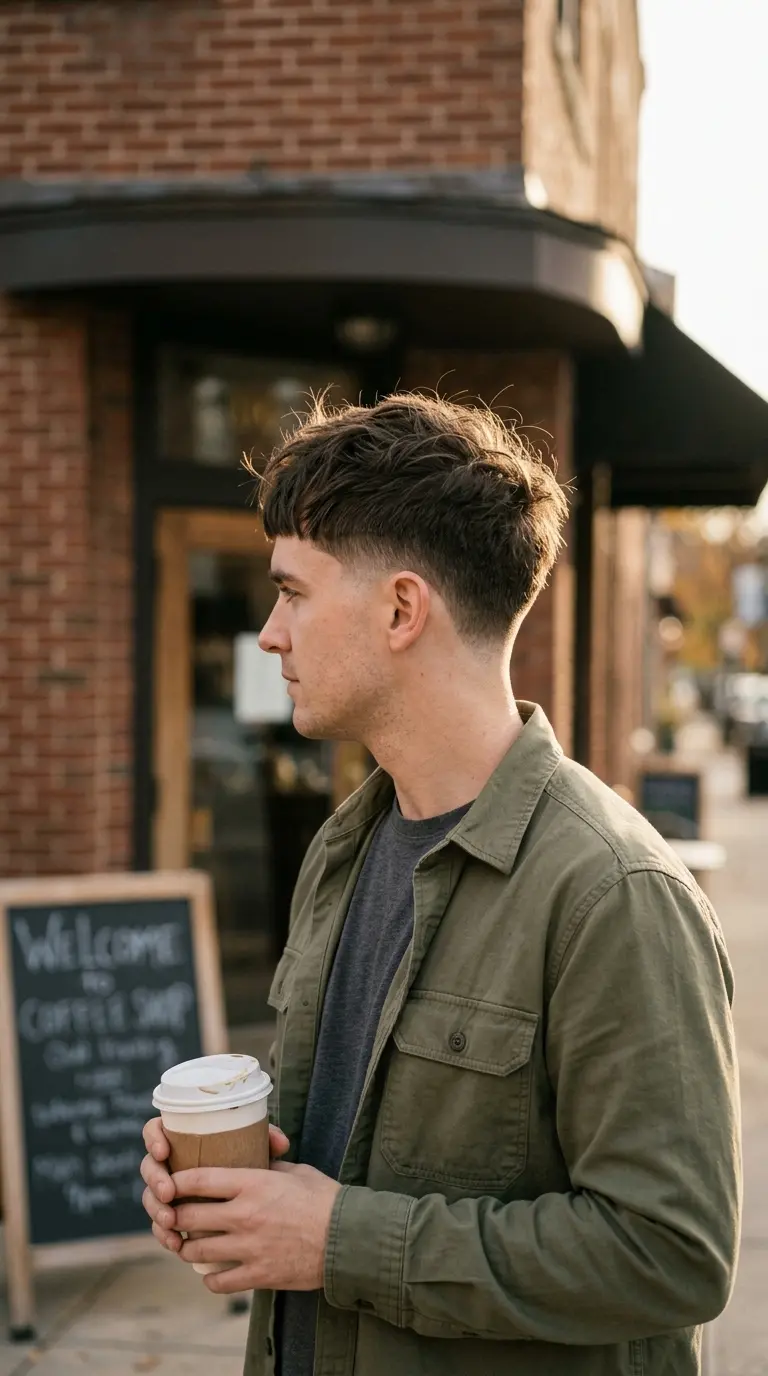
If one cut has owned the barbershop for the last few years, it’s this one.
A short, choppy fringe sits just above the brows. The top is cut with texture so it looks broken up, not blunt. The sides drop down to a low skin fade that starts just above the ear.
It works on straight and wavy hair, and it does a good job of hiding a high forehead or a front cowlick. On very fine hair, ask for the fade a little longer so the shape doesn’t look thin.
What to say at the shop:
- “Textured French crop, fringe just above the eyebrows.”
- “Low skin fade on the sides and back.”
- “Point cut the top so it looks choppy.”
Styling takes about two minutes. Rub a pea sized amount of matte clay between your fingers, push it into dry hair, and pinch the fringe forward. Book a cleanup every three to four weeks, because the fade is the first thing to look grown out.
2. Low Taper Fade With a Natural Curly Top

The low taper is the quiet favorite of this whole list. It only cleans up the hair at the very bottom, around the ears and along the neckline, and leaves everything else alone.
That makes it a great match for natural curls on top. The curls get to be the main event, and the taper keeps the cut from looking like it needs a visit.
Here’s how a taper differs from a fade. A taper only shortens the edges. A fade takes the whole side down, often to skin. If you want your cut to grow out slowly and look soft at week five, the taper is the better pick.
Quick tip: ask the barber to cut the curls dry. Curly hair shrinks when it dries, and a wet cut can leave you with less length than you planned.
At home, skip the towel rub. Scrunch in a curl cream while your hair is still wet and let it air dry.
3. Modern Mullet With Tapered Sides

The mullet came back, but it grew up a little.
Today’s version keeps the sides short with a taper or a burst fade, adds texture on top, and leaves the back a few inches longer so it touches the collar. It reads as a choice, not an accident.
It looks best on wavy or slightly curly hair, because the bend in the back gives it shape. Straight hair can pull it off with a little sea salt spray.
What to say at the shop:
- “Modern mullet, tapered or burst on the sides.”
- “Textured top, back to the collar.”
- “Take weight out of the back so it isn’t a block.”
A word of honesty: the mullet has an awkward grow out stage, and some offices are still not ready for it. If you are on the fence, ask for a “soft mullet” first. The back stays only an inch or so longer than the rest, and you can go bigger next time.
4. Classic Buzz Cut With a Number 2 Guard

The buzz cut has a reputation as the cut you get when you give up. In reality, it’s one of the hardest short cuts to pull off well, because there is nowhere to hide a lumpy spot or a crooked neckline.
The guard number changes everything. Most men look best somewhere between a #2 and a #4. A #1 can show a lot of scalp, which looks harsh on light hair or a pale scalp.
Before you sit down, think about two things:
- Do you have a bump, a scar, or a flat spot you would rather not show? Go one guard longer.
- Is your hairline starting to thin at the temples? A buzz actually helps here, because it shrinks the contrast between thick and thin areas.
Ask for the neckline to be “tapered” instead of “blocked.” A blocked neckline looks sharp for about five days. A tapered one looks clean for weeks.
5. Crew Cut With a Slightly Longer Front

The crew cut sits halfway between a buzz and an actual hairstyle. The sides are short, the crown is short, and the front is left about an inch longer.
That extra inch is the whole trick. It gives you something to push up with your fingers, and it softens the shape around the face. Men with a round face or a strong jaw tend to look great in it.
Buzz cut: one length all over, zero styling.
Crew cut: shortest at the crown, longest at the front, about ten seconds of styling.
Ask for the top to be “graduated toward the front.” Any barber will know what you mean. For product, a tiny bit of matte paste is plenty. You want it to look like you didn’t use any.
It’s one of the easiest mens haircuts to keep up, and it suits pretty much any job, any age, and any season.
6. Ivy League Cut With a Soft Side Sweep

Think of the Ivy League as a crew cut that’s been to a job interview. It keeps the same short sides, but the front is long enough to part and sweep to one side.
It’s smart without being stiff. You can wear it pushed loosely across on a Saturday and combed neat for a wedding.
Here’s what makes it different from a full side part:
- There’s no hard line cut in.
- The front is longer than the crown, not the same length.
- It’s meant to look slightly undone.
It works best on straight or lightly wavy hair with medium thickness. Very thick hair can puff up at the sides, so ask the barber to thin it out a little above the ears.
Style it with a light cream on damp hair, push it across with your fingers, and leave it. A comb makes it look too formal.
7. Classic Side Part With a Scissor Taper
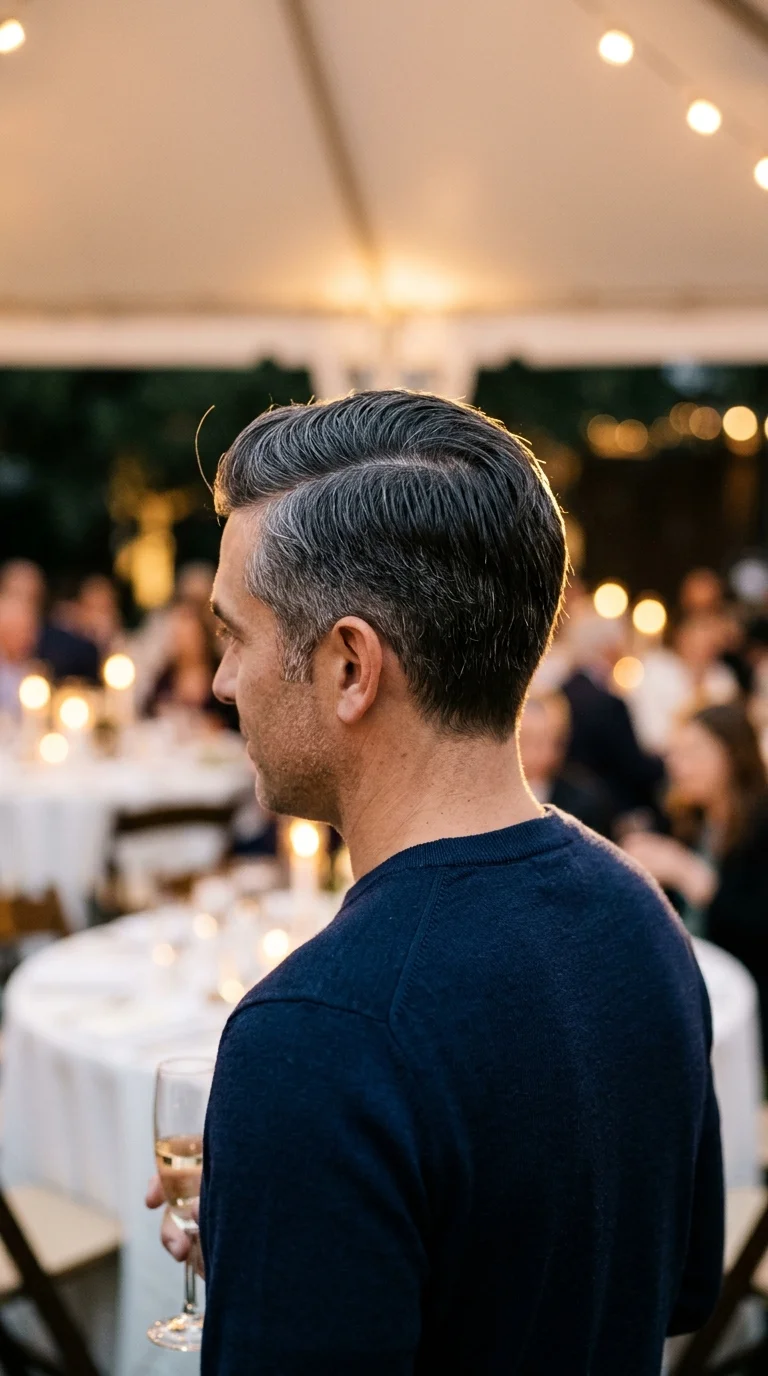
Some cuts never really leave. The side part is the one men come back to for weddings, new jobs, and big birthdays.
The version people are asking for now is softer than the slick, shiny one from a decade ago. The sides are cut with scissors instead of clippers, so there’s still a bit of length and no visible skin. The top is two to three inches and combed across with a matte finish.
The most important thing happens before any cutting. Ask your barber to find your natural part. It usually lines up with the swirl at your crown. A part cut on the wrong side will fight you every morning.
Quick tip: if you are going grey, this cut is your friend. Silver hair looks polished in a neat side part, and the scissor taper keeps it from looking severe.
Use a light cream or a soft pomade, comb it across while damp, and finish with your fingers so it doesn’t look painted on.
8. Modern Pompadour With a Matte Finish
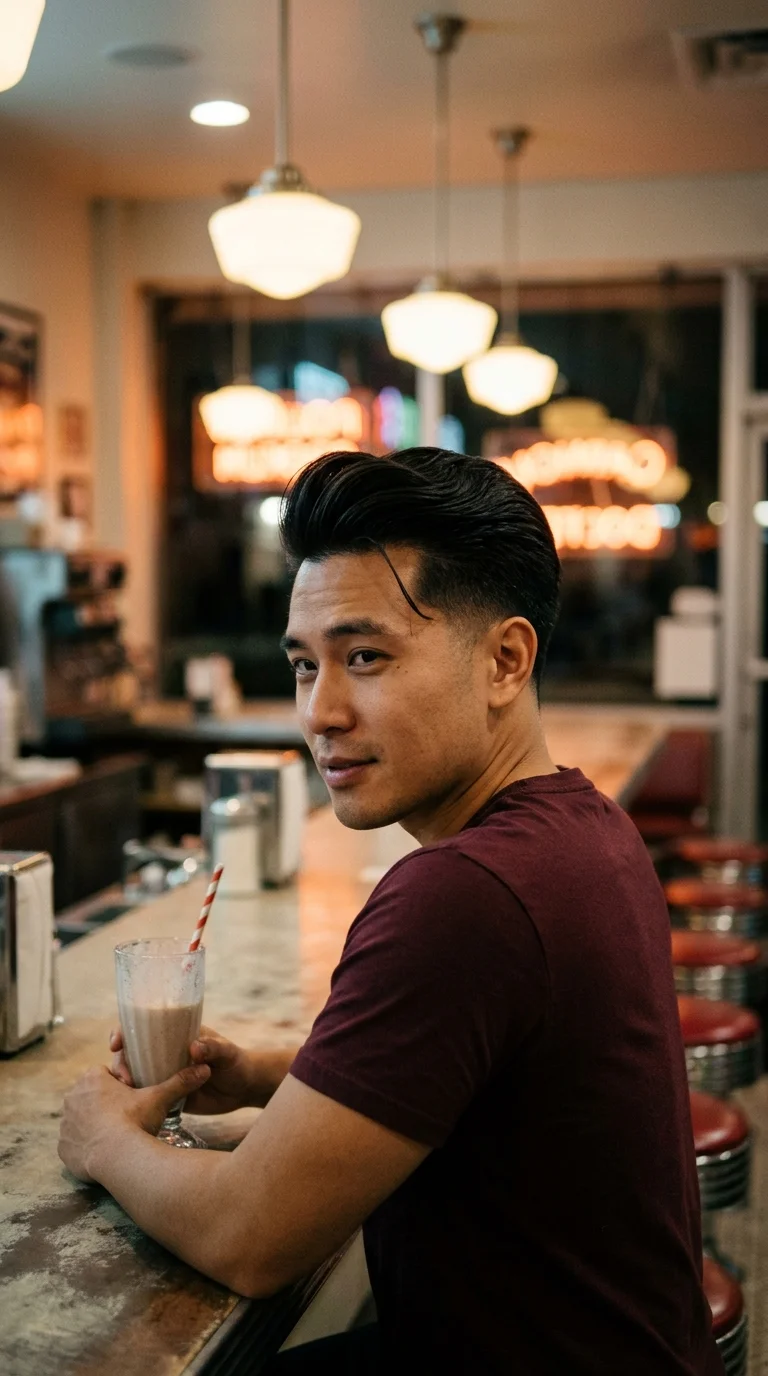
Height at the front, short on the sides, and swept back in one smooth shape. The pompadour has been around for seventy years, but the modern version skips the heavy grease.
Now it’s all about volume with a natural, matte look. You can see movement in the hair instead of one solid shiny wave.
You’ll need some length to make it work, about four to five inches at the front. The sides can be faded or tapered, depending on how much contrast you like.
The morning routine looks like this:
- Towel dry, then add a little volumizing spray at the roots.
- Blow dry the front up and back with a round brush.
- Finish with a small amount of matte clay or pomade.
- Shape with your fingers, not a comb.
It’s ten minutes once you get the hang of it. The first week, it’ll take longer. That’s normal.
9. Textured Quiff for Thick Hair
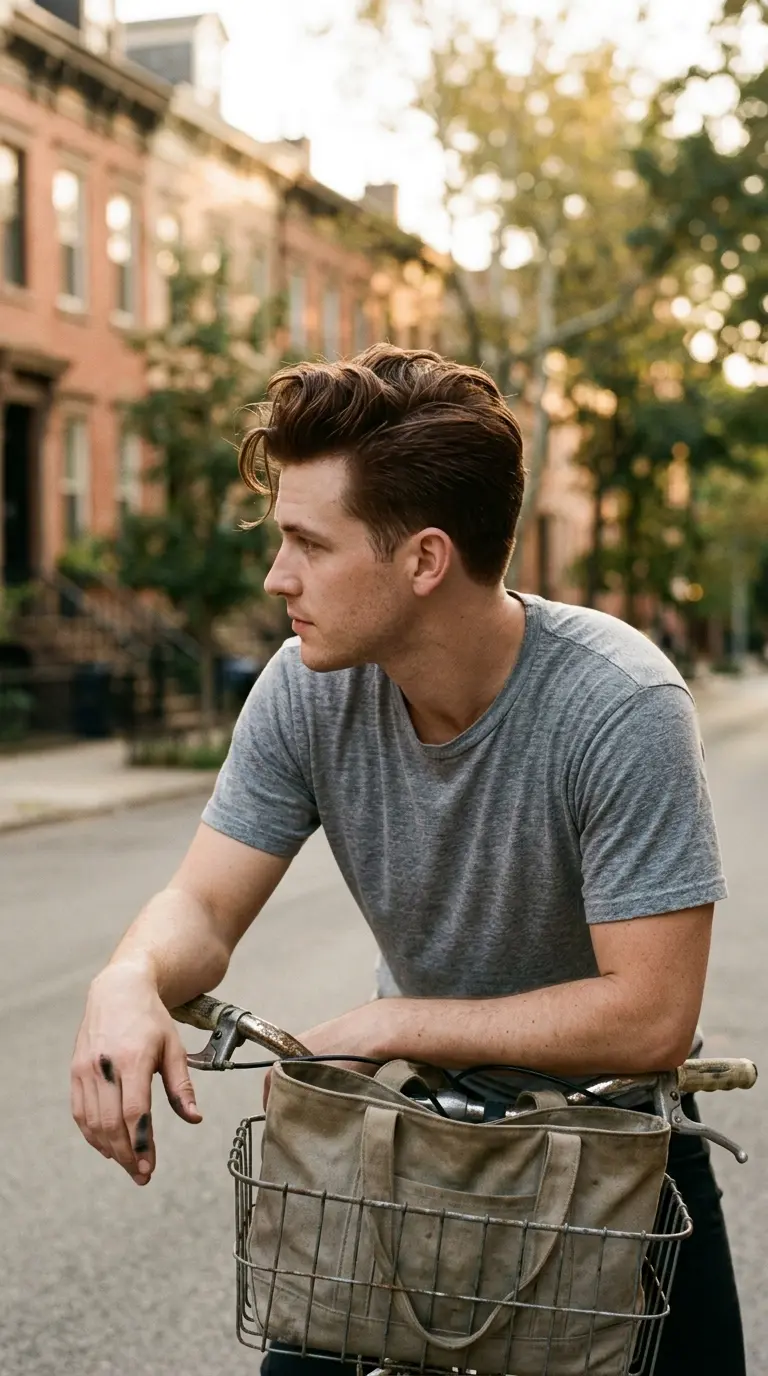
The quiff is the pompadour’s more relaxed cousin. It has lift at the front, but the hair is pushed up and a little messy instead of rolled back into one wave.
It’s made for thick hair. If your hair is dense and tends to stand up on its own, this cut uses that instead of fighting it.
What to say at the shop:
- “Textured quiff, about four inches at the front.”
- “Shorter toward the crown.”
- “Taper or mid fade on the sides.”
- “Texturize the top so it isn’t heavy.”
A quiff takes less time than a pomp. Blow dry the front upward for about a minute, add a little paste, and rough it up with your fingers.
It also forgives a bad morning. If it falls a little by lunch, it just looks more casual, not broken.
10. Slick Back Undercut

Long on top, short on the sides, with no blending in between. That sharp break is called a disconnection, and it’s what makes an undercut an undercut.
The slick back version combs everything on top straight back. It looks sharp, a little bit dramatic, and works well for men with a strong hairline.
Undercut: a clear line where the long top meets the short sides.
Fade: a smooth blend from short to long with no line.
It needs at least five inches on top to lie back properly. The sides need a cleanup every three weeks or so, or the line starts to blur.
Choose your product based on the look you want. Pomade gives shine and a polished finish. Cream gives a softer, more natural one. Either way, apply it to damp hair and comb it back once. Going over it ten times just flattens it.
11. Comb Over With a Mid Fade

The comb over fade is what happens when a classic side part meets a modern barbershop. The top is still combed to one side, but the sides are faded down to skin or close to it.
It’s one of the most common cuts you’ll see on men in their twenties and thirties, mainly because it looks good at the office and on a night out with almost no change.
The mid fade starts around the temple, so you get a clean shape without looking too extreme. If you have a longer face, a low fade keeps more width at the sides. If you have a round face, a mid or high fade makes it look slimmer.
| Comb Over Fade | Classic Side Part |
|---|---|
| Sides faded short, often to skin | Sides tapered with scissors or a long guard |
| Sharp, high contrast look | Soft, traditional look |
| Touch ups every 2 to 3 weeks | Touch ups every 4 to 6 weeks |
| Best for: men who like crisp lines | Best for: grey hair and formal jobs |
Use a medium hold pomade or cream, comb it into damp hair, and blow dry it in place if you want it to last past lunch.
12. Middle Part Curtains With Face Framing Layers

Nineties curtains are back, and they look a lot better the second time around.
The hair is long enough on top to split down the middle and fall on each side of the forehead, usually somewhere between the eyebrows and the cheekbones. The sides and back are left with some length and layered so the whole shape moves.
This cut needs a few things to work:
- At least four to six inches at the front.
- A bit of natural wave. Very straight hair can fall flat and stringy.
- A quick blow dry, pushing each side away from the part.
If you’re growing out a short cut, this is a great stage to aim for. It looks intentional the whole time.
Quick tip: a lightweight sea salt spray before blow drying gives the curtains enough grip to stay put without looking crunchy.
13. Wolf Cut With a Shaggy Crown

The wolf cut sits somewhere between a shag and a mullet. It has a lot of short, choppy layers at the crown, a messy fringe, and wispy longer pieces at the back and sides.
It’s built for thick, wavy hair. All those layers take out the weight, so the hair stops looking like a helmet and starts to move.
Before you book, here’s what changes once it’s done:
Thick, heavy hair that sits in one flat shape, puffs out at the sides by noon, and takes forever to dry.
Close to the same length, but lighter. Lift at the crown, waves that fall in separate pieces, and a much faster dry.
Styling is mostly air drying. Scrunch in a little mousse or sea salt spray and leave it. A diffuser on low speed helps if your waves are lazy.
Get a trim every six to eight weeks. Without it, the layers grow together and you lose the shape.
14. Burst Fade With a Curly Fringe

A burst fade doesn’t go straight across. It curves around the ear in a half circle, then drops back down at the neck, leaving a bit of length at the nape.
Paired with a curly fringe, it’s one of the most requested cuts for younger guys right now. It’s sharp at the sides and loose up top.
There’s more than one kind of fade, and knowing the names saves a lot of pointing:
To keep the curls defined, use a curl cream or a light gel on wet hair and don’t touch it while it dries. Touching is what turns curls into frizz.
15. 360 Waves With a Low Drop Fade

Waves are earned. Nobody walks out of the shop with them. The cut just gives you the right length to start, and the rest comes from brushing.
The barber keeps the top short and even, usually with a #1 or #2 guard following the grain, then adds a low drop fade and a sharp line up. The drop fade curves down behind the ear, which frames the wave pattern nicely.
The routine is simple but daily:
- Wash with a gentle shampoo and apply a wave pomade or moisturizer.
- Brush from the crown outward in the direction your hair grows, for ten to fifteen minutes.
- Put on a durag to hold the pattern.
- Repeat. Most people call this “wolfing” when they let it grow a little between cuts to deepen the waves.
Ask your barber to cut with the grain, not against it. Cutting against it can wipe out weeks of brushing in one visit.
16. High Top Fade for Coily Hair

Tall, flat on top, and squared off at the corners. The high top is one of the best known shapes in barbering, and it keeps showing up in shops again.
It needs coily or tightly curled hair that can stand up on its own. The top is usually grown to two to four inches before the barber shapes it, and the sides are taken down with a high fade.
What to say at the shop:
- “High top fade, flat and squared.”
- “About three inches of height.”
- “High fade on the sides with a sharp line up.”
Shaping it at home takes a pick and some patience. Pick the hair straight up from the roots, then pat the top flat with your palm. A light moisturizer keeps it from looking dry or dull.
Sleep with a satin pillowcase or a loose bonnet so the shape survives the night.
17. Two Strand Twists With a Temple Taper

Twists are a smart move for men with coily hair who want length without daily styling. They protect the ends, they look neat for weeks, and they can lead into locs later if you want.
Pair them with a temple taper and the whole look sharpens up. The taper only cleans the temples and the back of the neck, so the twists stay the focus.
Most men can wear them for two to four weeks before redoing them. In between:
- Mist with water and a light leave in every few days.
- Sleep on satin to cut down on frizz.
- Get the taper touched up every two weeks, even if the twists stay in.
Quick tip: twists done on damp, freshly conditioned hair last longer and come out with a better defined pattern when you take them down.
18. Starter Locs With a Clean Line Up

Starter locs are the very first stage of locs, which can be grown for years. They start as coils or twists, and over a few months they begin to mat and lock together.
A clean line up and a low taper keep the early stage looking sharp. That matters, because the first six months of locs can look a little rough as they settle.
Here’s what to expect in the early months:
- The first few weeks: neat and defined, but some coils may unravel.
- Months two to four: frizz and puffiness. Totally normal.
- Months four to six: the locs start to firm up and hold their shape.
Retwist the roots every four to six weeks, not more. Too much retwisting can thin the roots. Keep the scalp clean with a residue free shampoo, and skip heavy waxes, since they build up inside the locs.
19. Edgar Cut With a Blunt Fringe

The Edgar splits opinions, but it is one of the most asked for cuts in a lot of shops right now, especially with guys in their teens and twenties.
It has a straight, blunt fringe cut in a hard line across the forehead, a short textured top, and a high skin fade that takes the sides all the way up. Some versions add a crisp line up at the temples.
It works best on straight, thick hair that sits forward naturally. Wavy or curly hair can make the fringe line look uneven.
What to say at the shop:
- “Edgar cut with a straight blunt line in front.”
- “High skin fade.”
- “Texture on top, keep the fringe line sharp.”
The fringe line needs a cleanup every two weeks to keep its edge. Use a small amount of matte paste to push the top forward. No blow dryer needed.
20. Caesar Cut With a Textured Top

The Caesar is short, even all over the top, and brushed straight forward into a short fringe. It’s named after the way Roman statues wore their hair, and it’s been popular on and off for about two thousand years.
The modern version adds texture on top and a fade on the sides. That keeps it from looking flat and old fashioned.
It’s one of the best cuts for men with a receding hairline. The forward fringe covers the temples without looking like a cover up, and the short length doesn’t draw attention to thinning.
Quick tip: ask for the fringe to be “point cut” so it has a soft, choppy edge. A straight blunt line can look too harsh, especially on grey hair.
Styling takes under a minute. A little clay, rubbed in and pushed forward. Done.
21. Messy Textured Fringe With a Mid Taper

This is the French crop’s longer, lazier brother. The fringe falls past the eyebrows in uneven, piecey bits, and the top has lots of movement.
It suits guys who want something that looks good slightly undone. It’s also kind to a big forehead or an uneven hairline, since the fringe covers most of it.
What makes it work is the cutting technique, not the product. Ask your barber to “texturize” or “point cut” the fringe so the ends are uneven on purpose. A fringe cut straight across will look like a bowl cut.
Styling, start to finish:
- Towel dry until damp.
- Add a little sea salt spray.
- Rough dry with your fingers, pushing the hair forward.
- Twist a few pieces with a dab of clay.
That’s it. If it looks too neat, mess it up a little more.
22. Medium Length Flow Pushed Back

Sometimes called hockey hair or bro flow, this cut has length all over, usually five to seven inches, pushed back off the face and flipping out at the neck and ears.
It’s the cut a lot of men land on after growing out a short style. It doesn’t need a fade, a part, or much product.
The key is regular trims. Long hair without shape just looks grown out. With shape, it looks like a choice.
What to say at the shop:
- “Keep the length, just clean up the shape.”
- “Take weight out of the sides so they don’t puff.”
- “Leave the back long enough to flip.”
Air dry with a little cream. For more lift, blow dry the front back with your fingers for thirty seconds. Wear a beanie in winter and it’ll still look right when it comes off, which is half the appeal.
23. Shoulder Length Layers for Long Hair

More men are growing it out all the way, and shoulder length hair is showing up a lot more in barber chairs. What makes it work is layers.
Without layers, long hair hangs in one heavy sheet and can look flat on top and wide at the bottom. With them, it moves, falls around the face, and shows off any natural wave.
It takes about 12 to 18 months to get here from a short cut. A few things help on the way:
- Get a trim every eight to ten weeks to cut off split ends.
- Use conditioner every wash. Long hair needs it.
- Keep a few hair ties on your wrist. You’ll want them.
Quick tip: ask for “long layers with face framing pieces.” That’s the cut most barbers and stylists use to keep long hair from looking like a curtain.
24. Man Bun With a Short Undercut

Long on top, shaved short underneath, and tied up into a bun. The undercut makes the bun look tidy and keeps your neck cool, which is why it’s popular with chefs, cyclists, and anyone who works in the heat.
With the hair down, the undercut is hidden. With it up, you get a sharp, clean look.
An undercut that stops below the bun line, so it hides when your hair is down.
At least six inches on top so the bun stays put.
A clipper cleanup on the undercut every three weeks.
Tying the bun in the same tight spot every day. It can cause breakage at the hairline.
Thin rubber bands. They snag and snap hair.
Shaving the undercut too high if you want to wear it down too.
Switch between a high bun and a low one every few days to give your hairline a break.
25. Soft Faux Hawk With Faded Sides

A faux hawk gives you the shape of a mohawk without shaving anything off completely. The hair along the center is left longer and pushed up into a soft peak, and the sides are faded down.
The current take is soft and textured, not stiff and spiky. It looks fun without looking like you are about to go to a punk show.
It suits thick straight hair and wavy hair. Fine hair can do it too with a texture spray for grip.
Styling, in three moves:
- Blow dry the center up and slightly toward the middle.
- Rub a little clay between your palms.
- Pinch the hair toward the center line from both sides.
Want to keep it subtle for work? Flatten it a bit with your hands and it turns into a short textured cut. Want more height on the weekend? Add a little more product and pinch higher.
26. Flat Top With a Clean Fade
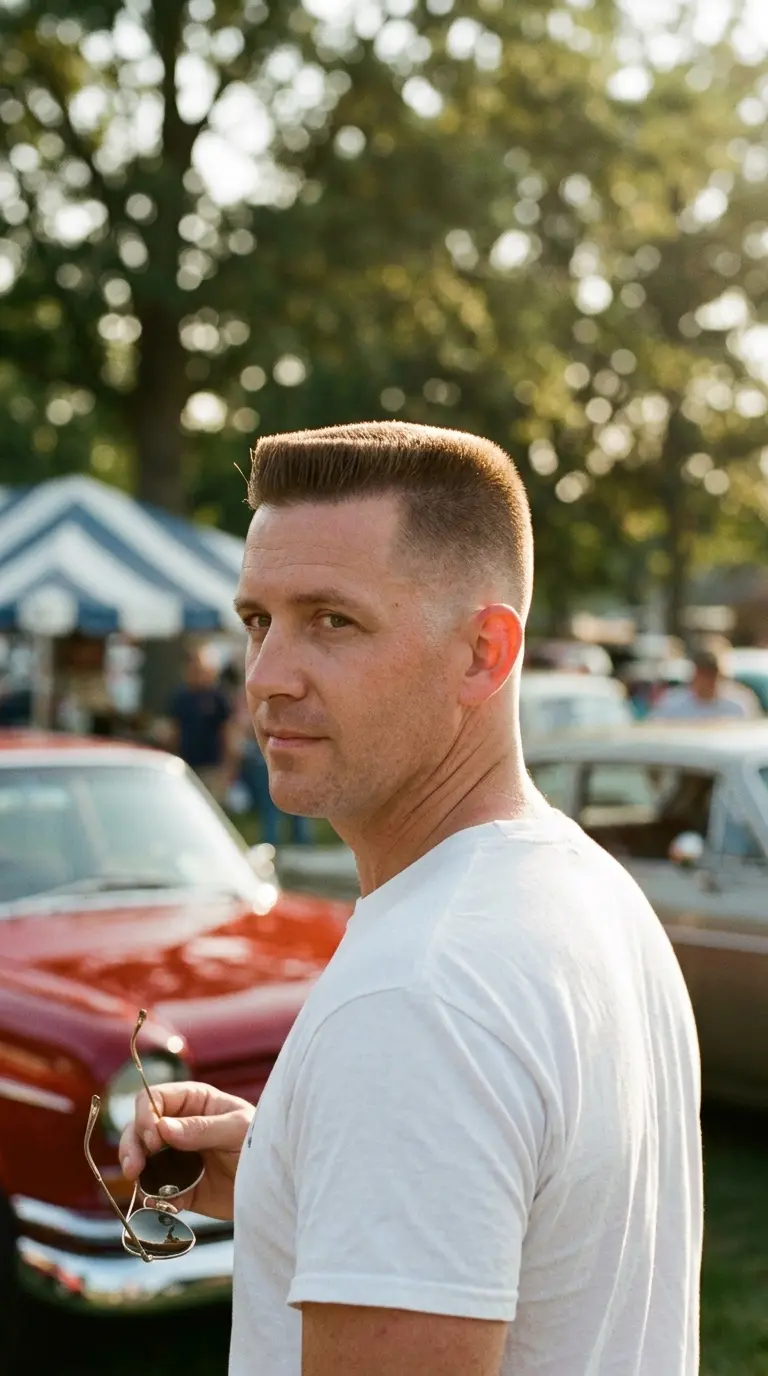
The flat top is a precision cut. The barber trims the top into a level, flat surface, like a tabletop, and fades the sides down.
It went out of style for a while and came back with a younger crowd. It works on thick straight hair that stands up and on tightly coiled hair, which naturally holds the flat shape very well.
Not every barber cuts a great flat top. It takes a steady hand and usually a flat top comb, so it’s worth asking if they do them often before you sit down.
Quick tip: a short flat top, about an inch tall, is a lot easier to wear day to day than a tall one. Start there.
At home, use a little firm hold wax and brush the top straight up. The barber did the hard part, so you only need to keep it standing. Book a cleanup every two to three weeks. Once the top grows uneven, it stops looking flat.
27. Buzz Cut With a Sharp Line Up and Beard Blend
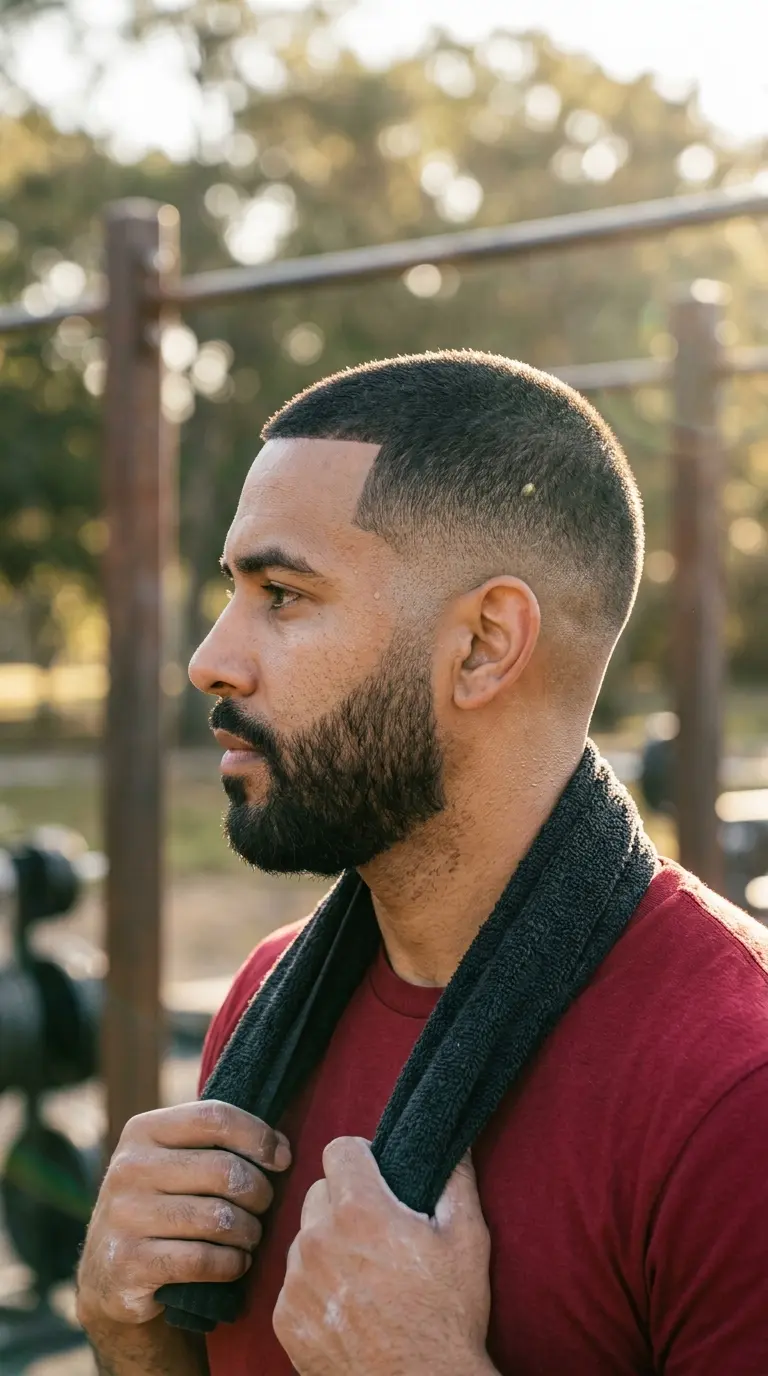
A plain buzz cut becomes something else entirely with two extra steps. A sharp line up along the front and temples, and a fade that blends the sideburns into the beard.
That blend is what makes it look finished. Without it, there’s a hard step where the hair stops and the beard begins.
What to say at the shop:
- “Number 2 buzz with a line up.”
- “Blend the sides into my beard.”
- “Shape the beard line on the cheeks and neck.”
A word of caution on the line up. Ask the barber to follow your natural hairline, not push it back. Pushing it back looks sharp for a week, then grows in uneven and makes the hairline look like it’s moving.
Trim the beard at home every few days. Book a full cleanup every two weeks.
28. Hard Part Comb Over

A hard part is a thin line shaved in with a trimmer, right where your part would naturally fall. It makes a regular comb over look sharper and gives the part a fixed spot so it doesn’t wander.
It looks best on straight or wavy hair that’s dark enough for the line to show. On very light hair, it can be hard to see.
Before you get one, know a few things:
- The line grows in fast. Expect it to blur in about ten days.
- Ask for the line to follow your natural part. Too low looks odd once it grows.
- Keep it thin. A wide shaved line looks less polished.
Styling is the same as any comb over. A medium hold cream, combed across while damp, and a blow dryer to set it. The hard part does most of the work of keeping it neat.
29. Short Textured Crop for Thinning Hair

Thinning hair is common, and the cut you choose makes a much bigger difference than most men expect.
The biggest mistake is trying to keep length to cover it. Long, thin hair shows more scalp, not less. A short textured crop does the opposite. Short sides make the top look fuller, and choppy texture hides gaps by breaking up the surface.
Here’s what to ask for:
- Sides short, with a low or mid taper.
- Top about one to two inches, cut with texture.
- A slightly forward fringe to soften a receding hairline.
Use a matte product only. Shiny pomades and gels clump the hair together and show the scalp underneath. A light matte paste or a thickening spray adds grip and makes each strand look thicker.
Quick tip: dry your hair with a towel first, then a blow dryer on low heat, pushing the hair in different directions. It lifts the roots and makes the whole top look fuller.
30. Two Block Cut With a Soft Fringe

The two block cut started in Korea and has picked up fans in barbershops everywhere. It’s built from two parts. The sides and back are clipped short underneath, and the top is left long enough to hang over them.
When the hair is down, you mostly see the soft, longer top. The short section only shows near the ears and neck. It’s a softer look than an undercut, with no hard line on display.
It works great on thick, straight hair that tends to puff out at the sides. Clipping that underneath area takes away the bulk.
What to say at the shop:
- “Two block cut, clip the underneath short.”
- “Leave the top long enough to cover it.”
- “Soft fringe, just above the eyebrows.”
Blow dry the top downward and slightly forward, then use a light styling cream. For a weekend change, push the fringe up and back into a soft quiff with a little paste.
Show your barber a photo of the cut on someone whose hair looks like yours. Same texture, same thickness, same hairline if you can find it. A good photo says more than five minutes of describing.
Finding Your Next Cut
The best cut for you is the one that fits your hair, your face, and the amount of time you really spend in front of the mirror. A wolf cut is great until you realize you don’t want to air dry it every morning. A skin fade looks sharp until you can’t make it to the shop every three weeks.
So be honest with yourself before you book. How much styling will you do? How often can you get a cleanup? What does your hair do on its own when you leave it alone?
Then bring a photo, use the words from this list, and let your barber help with the rest. These mens haircuts cover short, long, straight, wavy, curly, and coily, so there’s something here for almost every head.
Save this list to your hair ideas board so it’s ready the next time you, or someone you know, needs a fresh cut.