It is forty minutes to curtain. The dressing room smells like hairspray and stage makeup, someone’s little sister is crying over a lost tap shoe, and you have six bobby pins in your mouth while your dancer twists around to wave at her friend.
The bun you did at home already has a bump on one side. Her first number is in the second half, and she has a costume change with ninety seconds to make it.
Every dance mom knows this moment. Recital hair is not like school hair. It has to survive turns, leaps, quick changes, and hot stage lights, and it has to look clean from the very back row of the auditorium. One loose strand that you would never notice at the dinner table looks huge under a spotlight.
This list of dance recital hairstyles is built for that kind of day. Each style comes with how long it takes, what hair length it needs, and the small trick that keeps it locked in from warm up to final bow. There are classic ballet buns, sleek looks for lyrical and jazz, hip hop styles, retro looks for theme numbers, options for curly and coily hair, short hair, and boys.
Grab a full card of bobby pins, a hair net that matches her hair, strong gel, and a can of firm hold spray. Then check the costume sheet from her teacher and pick the style that fits her number.
1. Classic Ballet Bun Wrapped in a Hair Net
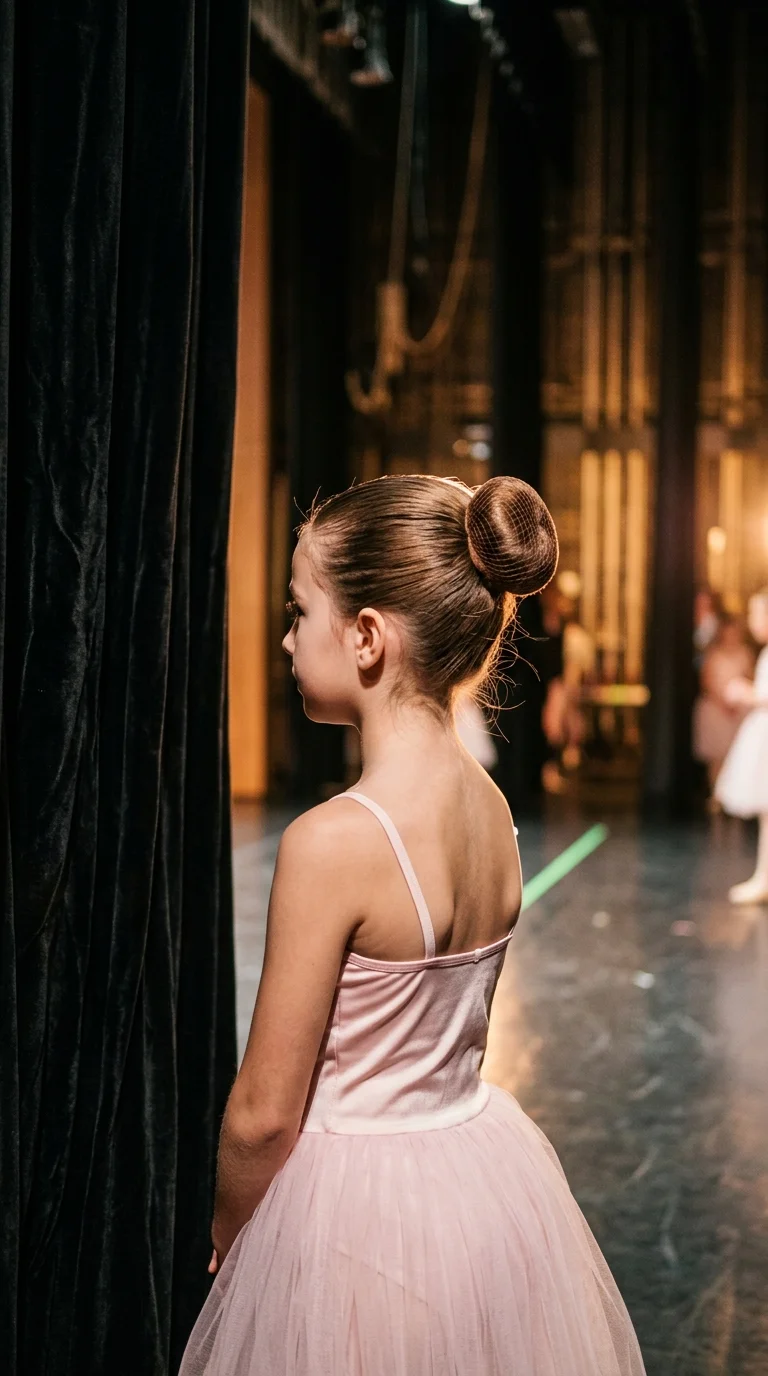
This is the bun most ballet teachers ask for, and it is worth learning well because you will do it many times.
- Start with dry or slightly damp hair and smooth a little gel through the front and sides.
- Brush everything back into a tight ponytail at the crown, just above the top of her ears.
- Twist the ponytail until it coils, then wrap it around the elastic in a flat circle.
- Pin the outer edge of the coil to the head with bobby pins pushed in toward the center.
- Stretch a hair net over the bun, wrap the extra net around twice, and pin it down.
- Finish with firm hold spray around the hairline and over the net.
The height matters. A bun that sits too low can bump against a partner during lifts, and one that sits too high looks like a top knot from the audience.
Quick tip: buy a hair net in her exact hair shade, not black or blonde by default. Under stage lights the wrong color shows up as a strange halo around the bun.
2. Donut Bun for Thick or Very Long Hair
Very thick or waist length hair can make a classic bun huge and heavy. A foam bun ring, often called a donut, spreads that hair out into a neat, even circle.
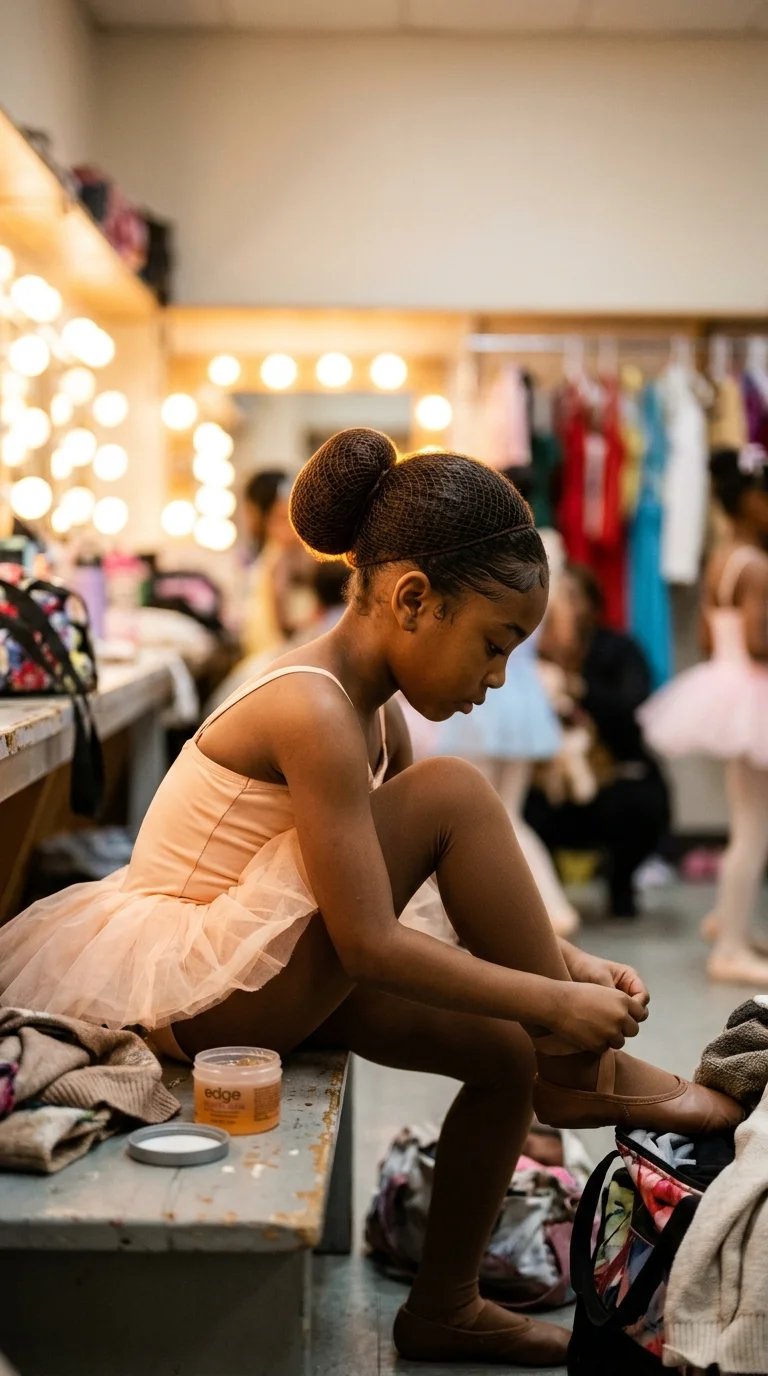
Tie a high ponytail and slide the donut over it until it sits at the base. Spread the ponytail evenly over the ring like a fountain, so you cannot see any foam. Slip a thin elastic over the top to hold the hair against the ring, then wrap the leftover ends around the base and pin them under.
Pick a donut close to her hair color. A dark ring under blonde hair can show through when the stage lights hit it.
Good to know: for hair that is thick but not very long, a smaller ring works better than a large one. A big ring with too little hair leaves gaps.
3. Mini Bun With a Bun Cover for Little Dancers
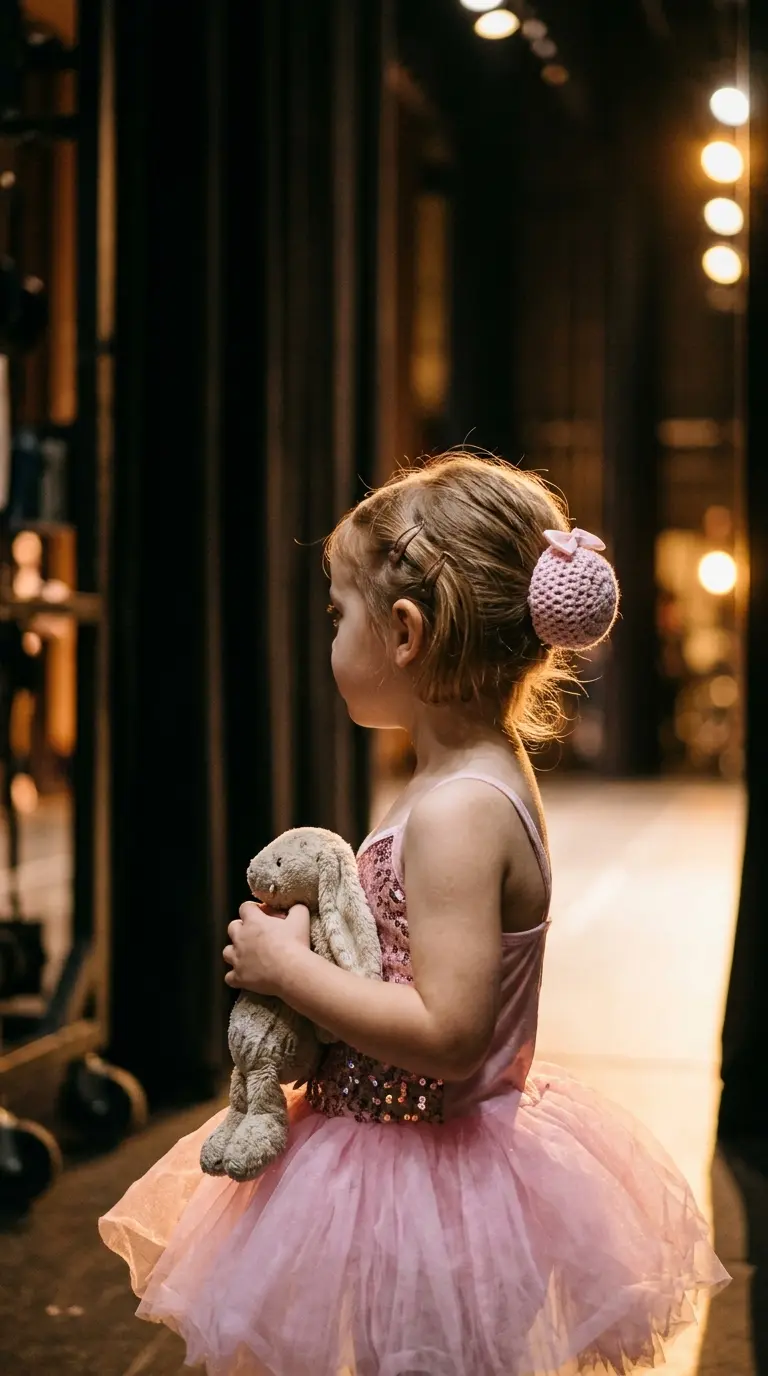
Preschool dancers often have hair that is too short or too fine for a full bun. A bun cover fixes that and looks adorable on stage.
Gather whatever length she has into a small ponytail at the back of the head. Twist it into a little knot and pin it. Then slide a stretchy bun cover over the top, either a crocheted one, a scrunchie style one, or a small net with a bow. The cover hides the short ends and makes the bun look twice as big.
Use small snap clips or bobby pins for the short pieces around her ears. Little ones touch their hair a lot, and gel on those bits helps them stay put even when tiny fingers find them.
Styling detail: do her hair before she gets into costume. Three and four year olds are far more patient in pajamas than in a scratchy tutu.
4. Braided Ballet Bun for Hair That Will Not Stay Smooth
Layered hair is the enemy of a smooth bun. The short layers poke out of the coil and look like little spikes under the lights.
Braiding the ponytail first catches those layers before they can escape. Tie a high ponytail, braid it down to the very ends, and tie off the braid with a tiny elastic. Wrap the braid around the base in a spiral and pin the outside edge every inch or so. Tuck the tail under the coil and pin it.
You can still add a hair net over the top, but many braided buns look neat enough without one.
Wash her hair the night before, not the morning of. Day old hair grips pins and holds gel much better.
Read the costume sheet again and lay out every pin, net, clip, and headpiece on a towel.
Do her hair at home in good light, before makeup and before the costume goes on.
Have her shake her head, spin, and bend over. Anything that moves now will fall out on stage.
5. Center Part Low Chignon for Lyrical and Contemporary
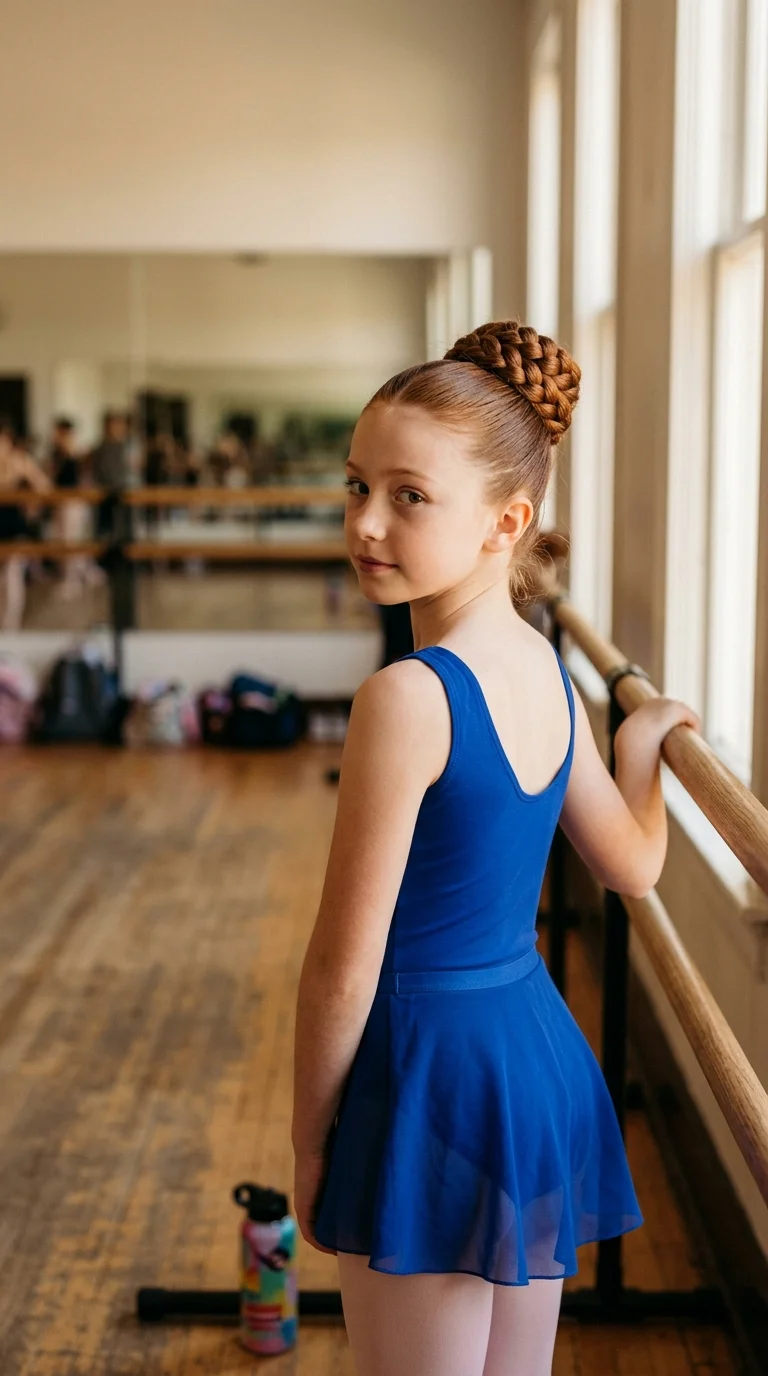
Lyrical and contemporary pieces often call for something softer and lower than a ballet bun. A center part chignon reads clean and calm, and it lets the dancer’s face and neck lines do the talking.
Make a sharp center part with the tail of a comb. Smooth gel along each side and brush the hair down over the tops of her ears to the nape. Tie a low ponytail, twist it, and fold it up into a small roll or knot. Pin it flat with pins pushed in from both sides.
Keep it low and small. A bulky chignon at the nape gets in the way during floor work, when dancers roll onto their backs.
Watch out: contemporary choreography often includes rolls and head drops. Use more pins than you think you need and spray the nape well.
6. Wet Look Slicked Back Low Ponytail
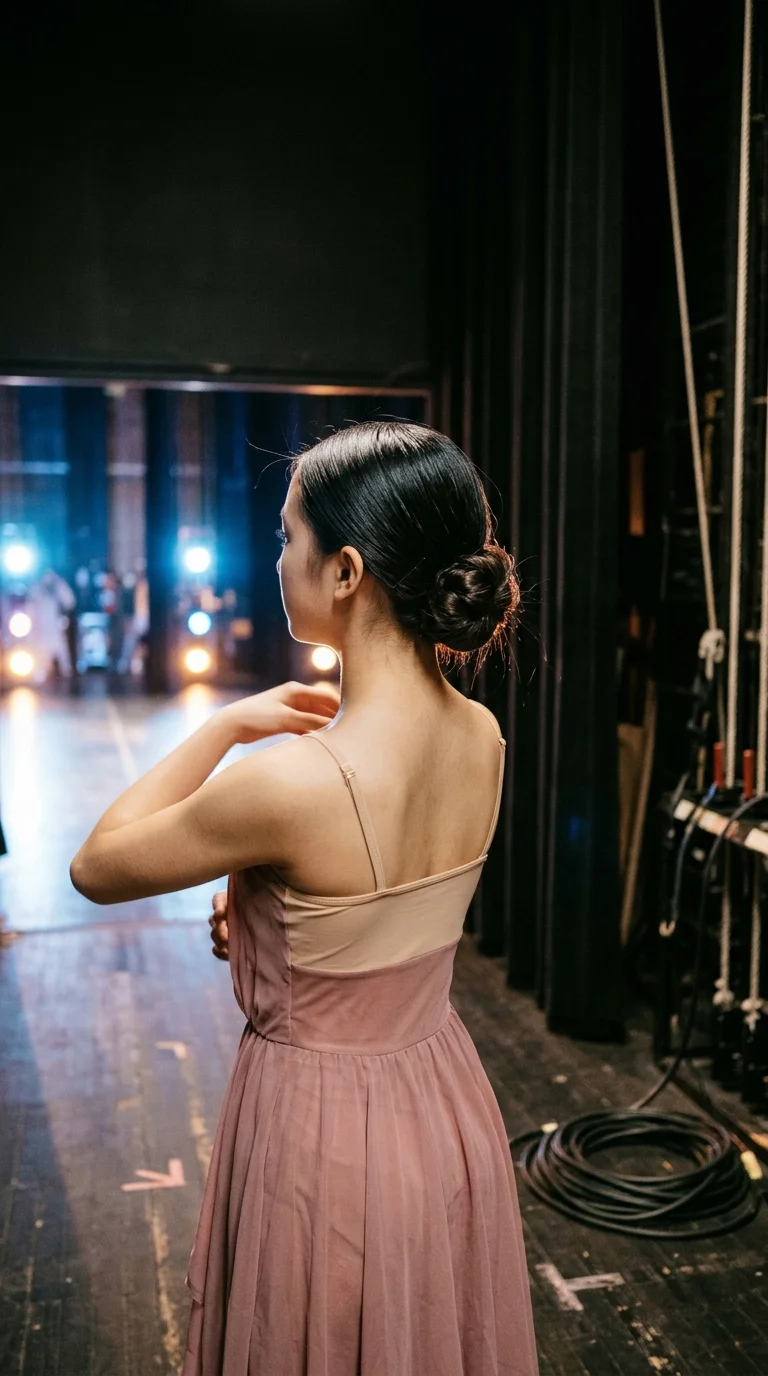
Some modern pieces want a bold, glossy look that almost looks wet. It is striking under a single spotlight and holds no matter how hard she moves.
- Start with damp hair.
- Work a generous amount of strong gel through from the roots to the nape.
- Comb everything straight back with a fine tooth comb, so you can see the comb lines.
- Tie a low ponytail and run a little extra gel down the length to keep it sleek.
- Let it air dry, then mist with spray for a glossy finish.
Do not brush it once it starts to dry. The gel will flake and lose that shine.
A quick ponytail brushed in the car. By the second number, little bumps and frizz at the crown catch the spotlight, and the photos show a fuzzy halo around her head.
The same ponytail set with gel and combed back on damp hair. It stays smooth through every turn, and the photos look clean from the front row to the balcony.
7. Swinging High Ponytail Locked for Jazz Turns
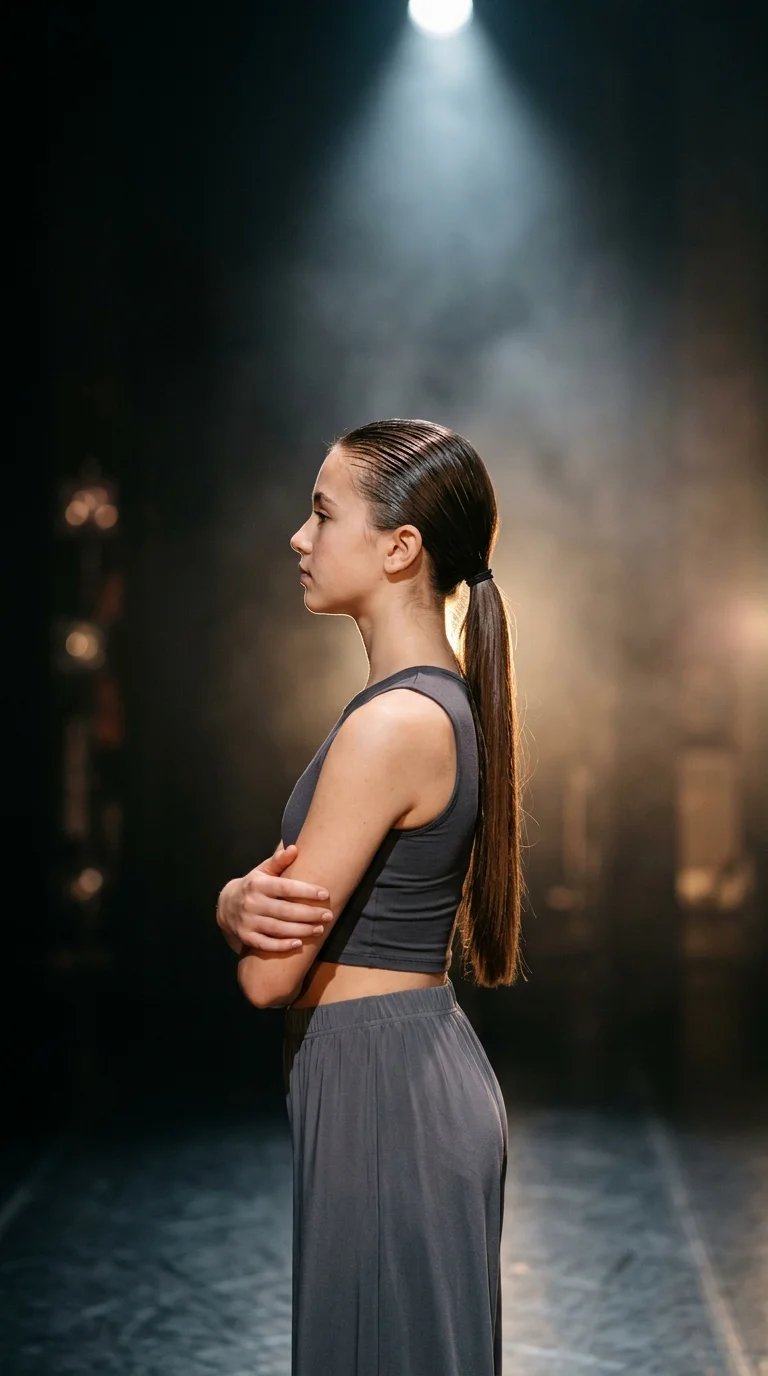
Jazz numbers love a high ponytail that whips around on every turn. The trick is making the base so solid that the ponytail swings but never slips.
Brush the hair up to the crown with her chin tipped up, so the nape stays tight. Tie it with one strong elastic, then split the ponytail in two and pull the halves apart to push the elastic up tight. Add a second elastic right over the first. Wrap a thin strand around the base to hide both, and pin the end underneath.
Curl the ends with a large barrel iron or set them in foam rollers the night before. Curled ends swing in a nice arc instead of falling flat.
Quick tip: slide two bobby pins up into the base of the ponytail from underneath, one on each side, pointing toward the crown. They act like anchors and stop the ponytail from drooping after a dozen turns.
8. Half Up Curls With a Costume Bow for Tap and Musical Theater
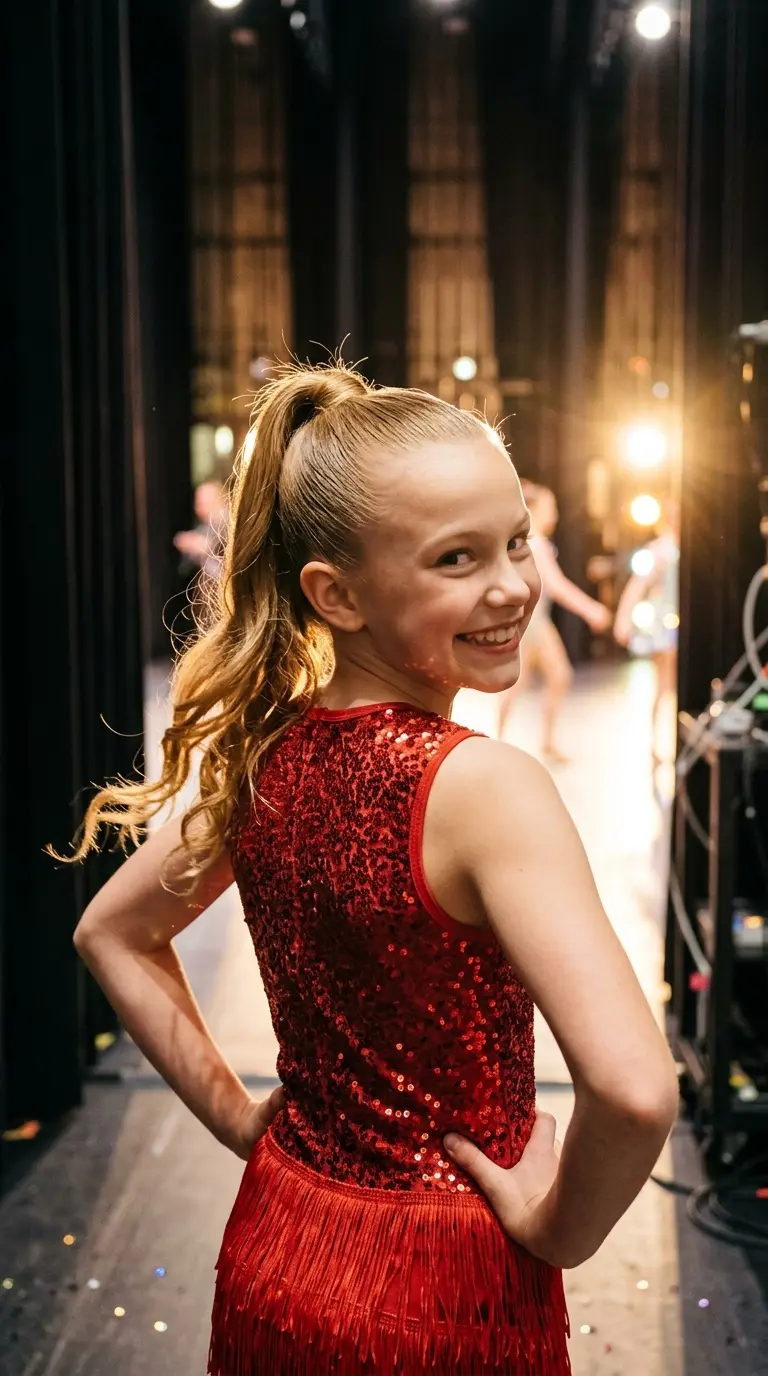
Tap and musical theater numbers are about personality, and studios often allow hair partly down. Big curls and a bow match a bright, bouncy costume.
Set curls the night before with foam rollers or rag curls, so there is no hot tool in a crowded dressing room. In the morning, take out the rollers and gently separate the curls with your fingers. Pull back the top section from the temples to the crown and tie it in a small ponytail. Pin the costume bow right over the elastic.
Spray the curls well. Stage lights are warm, and curls can drop by the end of the show.
Good to know: pin the bow with two bobby pins crossed in an X through the clip or the elastic loop. A bow that only clips on tends to slide off during a shuffle ball change.
9. Spanish Style Low Bun With a Spit Curl
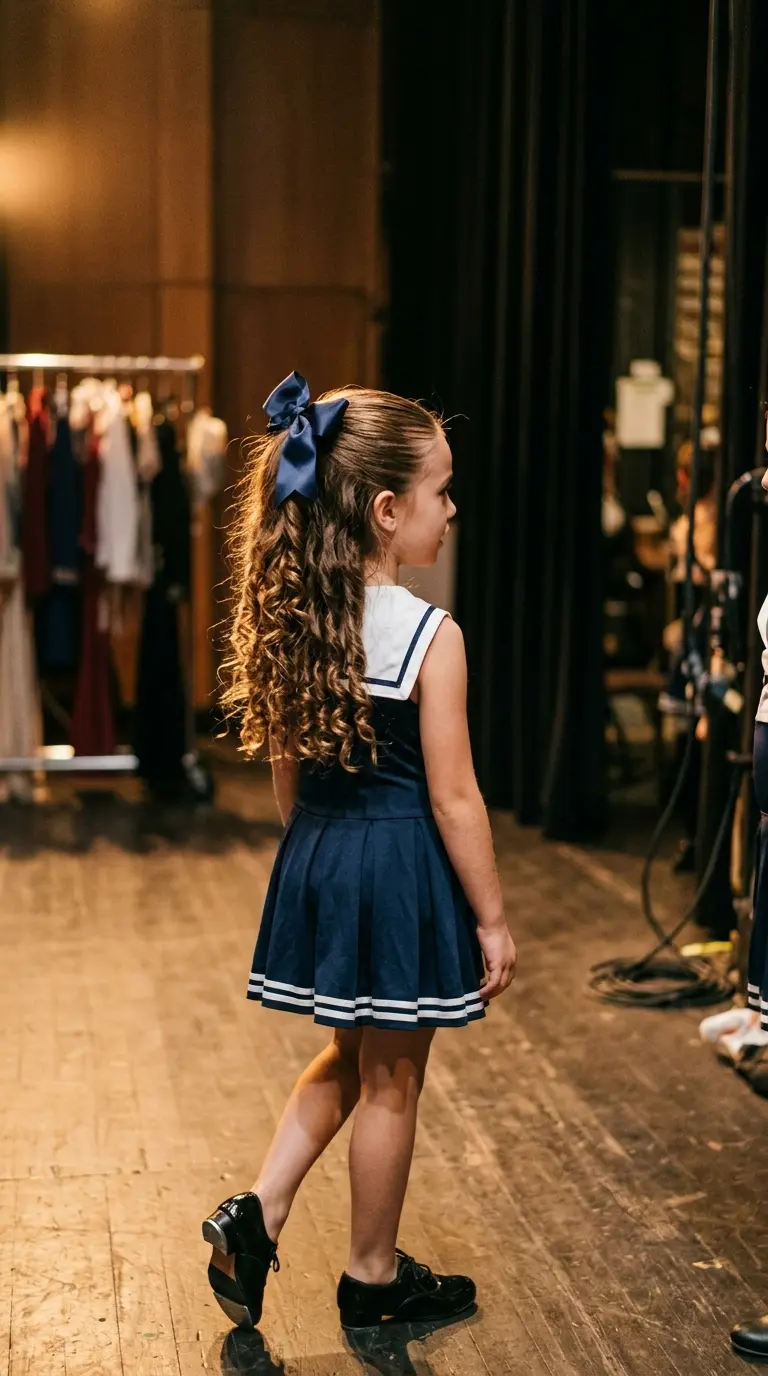
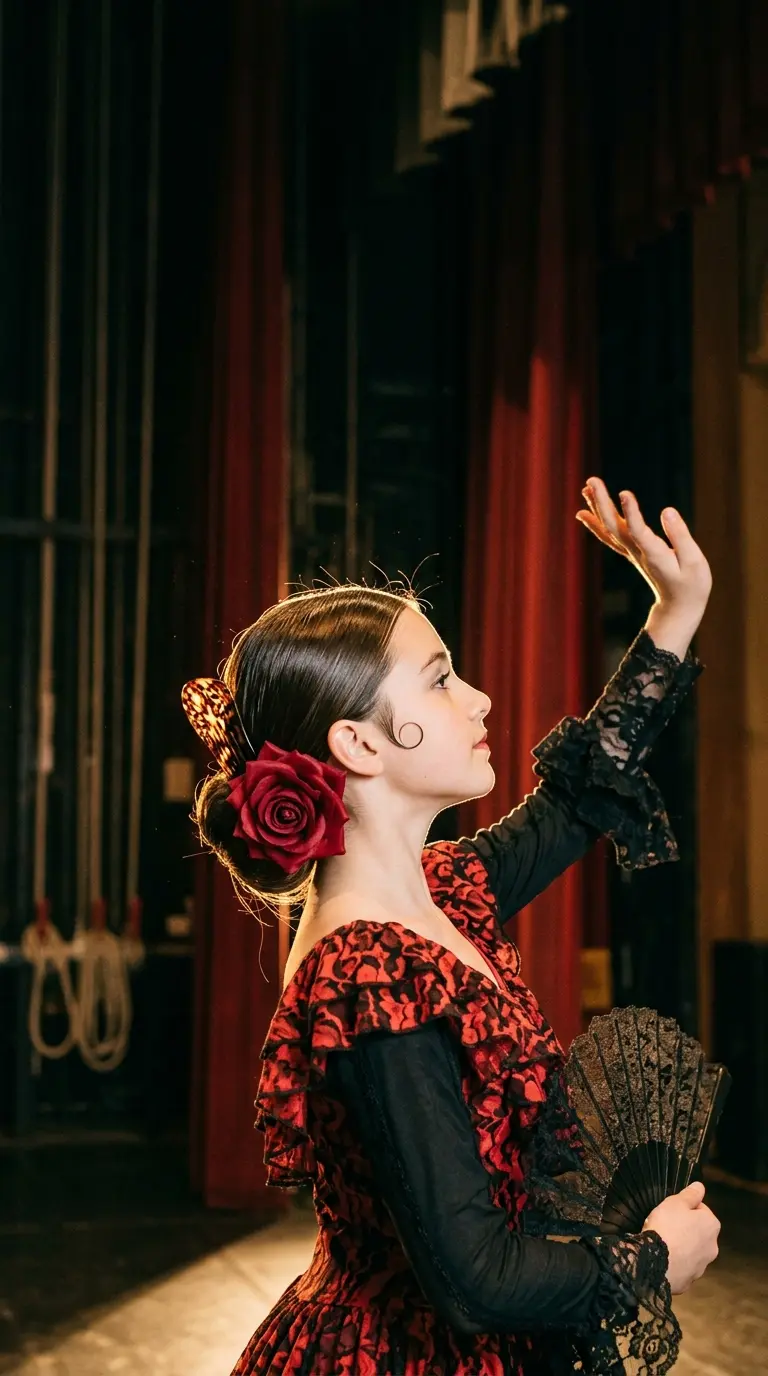
Character pieces with a Spanish or flamenco feel call for something dramatic. The low bun and the flat curl at the temple are what make the look read from the back of the house.
Make a sharp center part and slick each side down with gel over the ears. Tie a low ponytail, twist it into a tight bun at the nape, and pin it. For the spit curl, take a small piece of hair in front of one ear, coat it in gel, and press it flat against the temple in a curved C shape. Hold it with a duckbill clip until it dries, then remove the clip and spray.
Pin the flower just above or beside the bun, angled slightly toward the audience.
10. Sleek High Puff With Laid Edges for Hip Hop
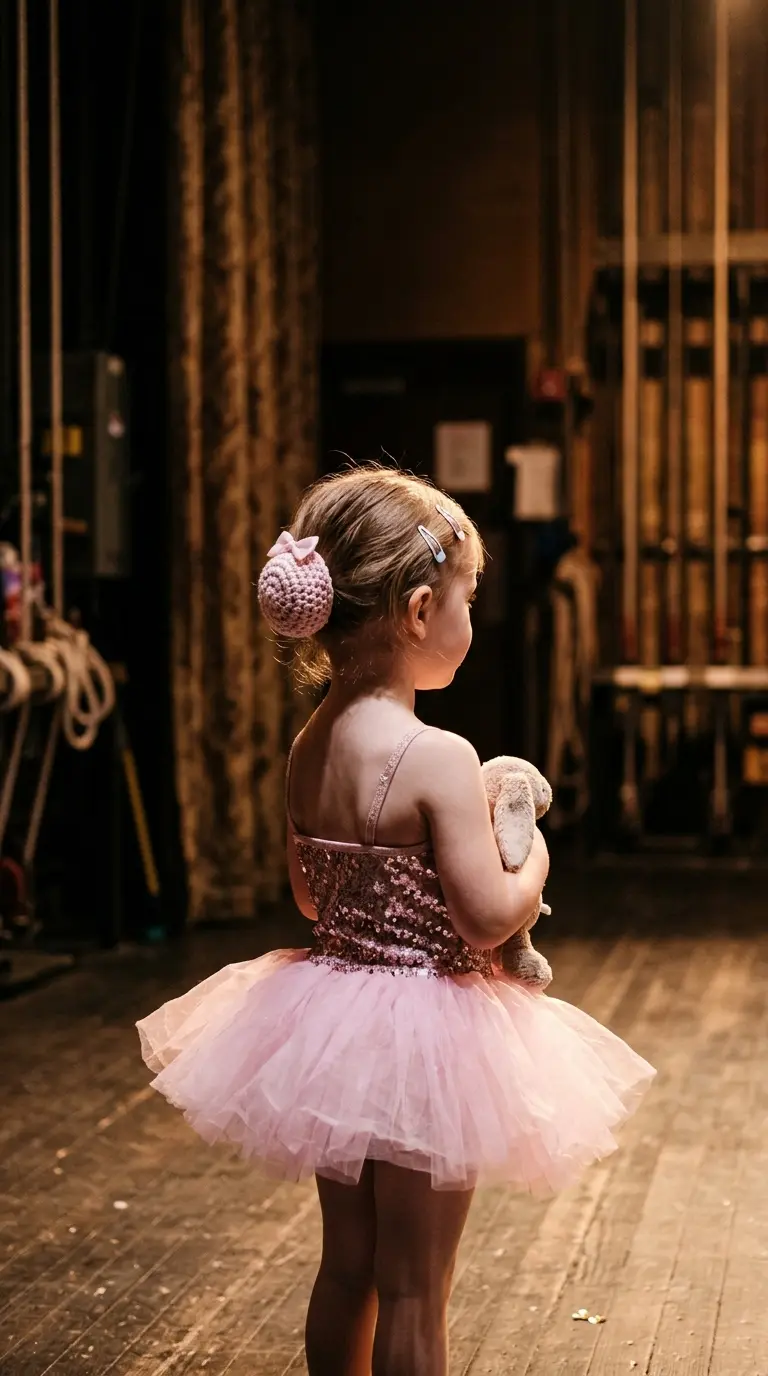
Hip hop numbers want energy, and a big high puff matches it. It moves with the beat and looks bold under bright, colored lights.
Start with stretched or freshly detangled hair, sprayed with water and a leave in conditioner. Brush the sides up with a soft brush and a little edge control. Slide a large satin band or a stretchy headband over the head and down around the neck, then push it up to the crown so it gathers all the hair. Fluff the puff into a round shape with a pick.
Lay the edges last with a soft toothbrush and edge control, swirling them into small waves. Tie a satin scarf over them for ten minutes while she gets dressed so they set.
Styling detail: skip tight rubber bands on coily hair. A satin band or a big scrunchie holds just as well for a show and is much kinder to her edges.
11. Stretched Coily Hair Shaped Into a Smooth Ballet Bun
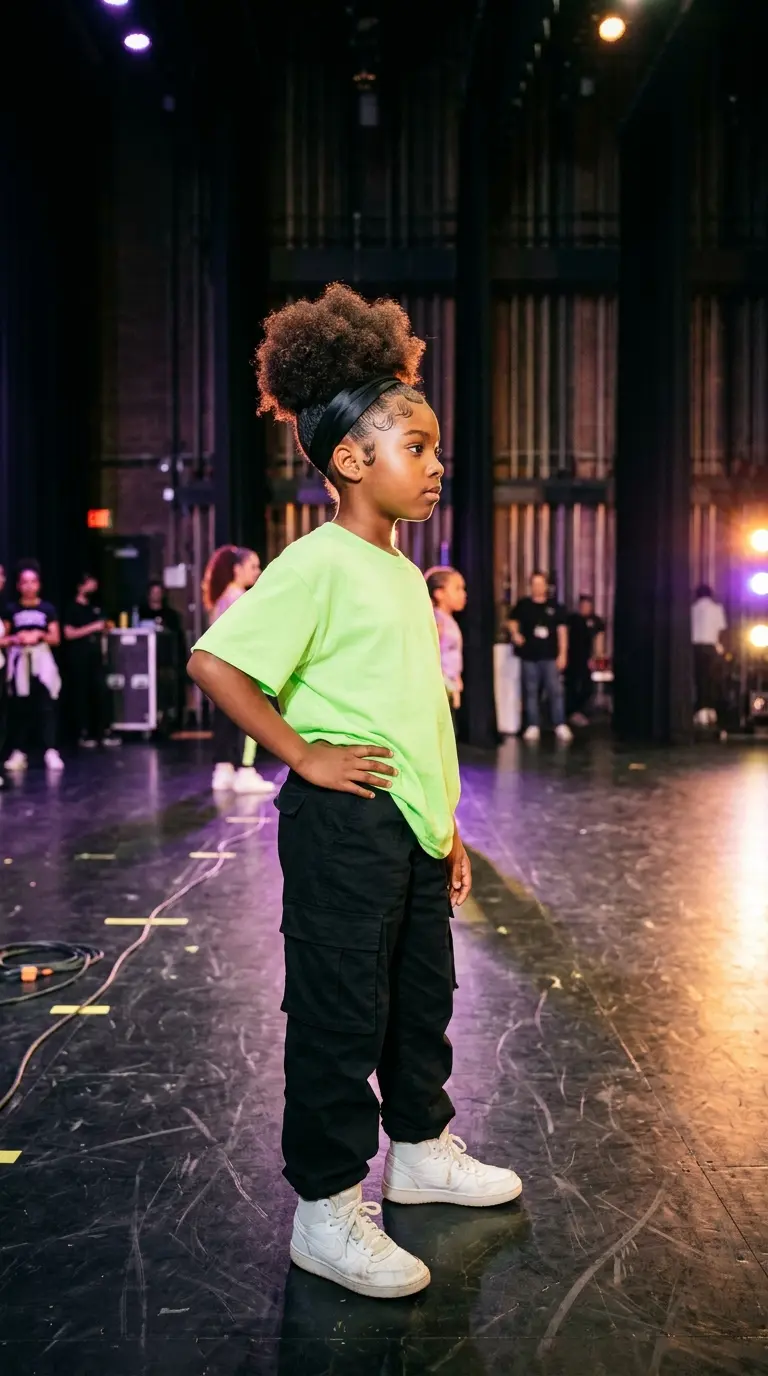
Curly and coily dancers can wear a classic ballet bun too. The secret is working with stretched hair, so it lies smooth without pulling hard on the scalp.
Stretch her hair a day or two before with a braid out, banding, or a gentle blow dry on low heat. On recital morning, mist it lightly, add a styling cream, and brush it back with a soft boar bristle brush into a ponytail at the crown. Use a satin scrunchie or a soft band. Twist the puff into a bun, pin it, and wrap it in a hair net that matches her hair. Lay the edges softly to finish.
A bun that sits a little fuller and rounder than a straight hair bun still reads as a ballet bun from the audience. Do not fight her texture to make it tiny.
Watch out: a bun pulled too tight can leave her with a headache by intermission and stress her edges. If she flinches when you brush back, loosen it a little.
12. Box Braids Coiled Into a High Recital Bun
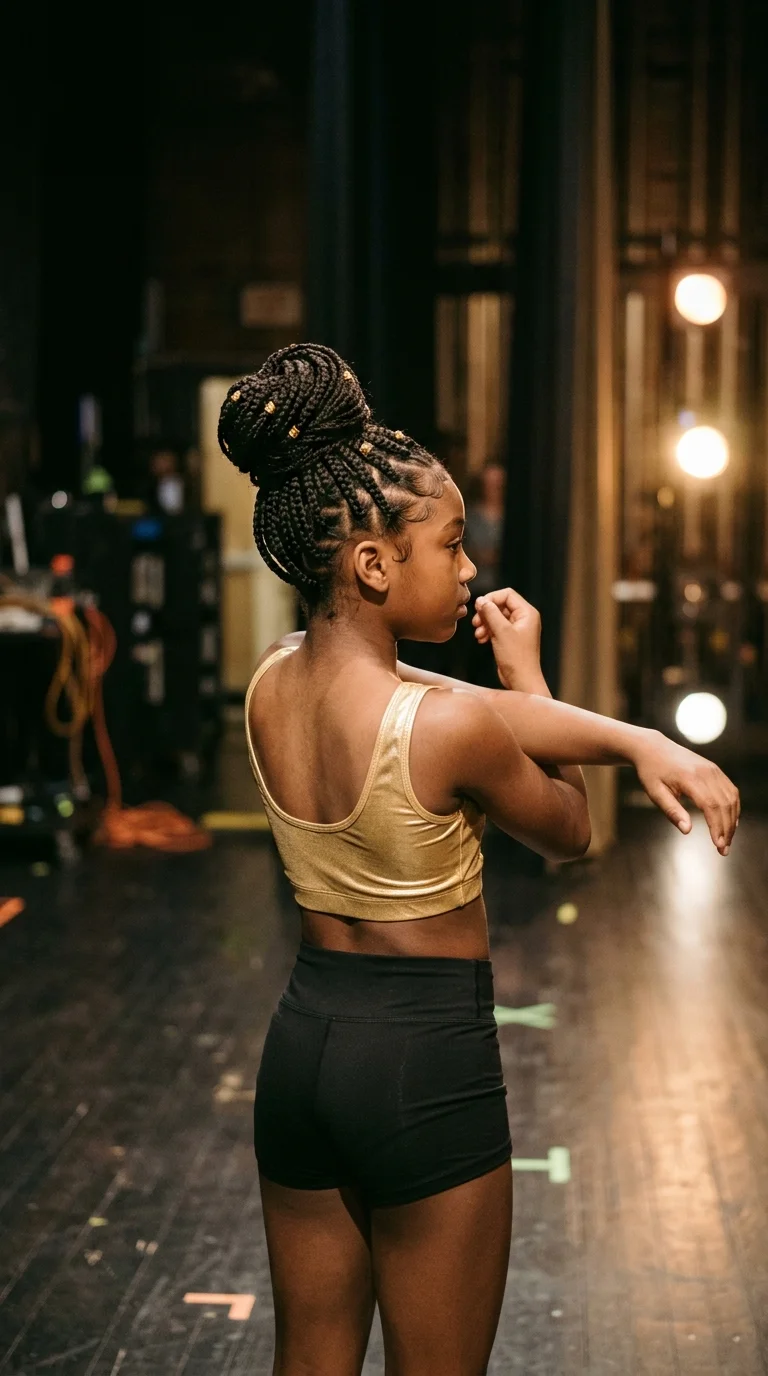
Braids are a gift on recital day because there is almost nothing left to do. A high braided bun is neat enough for most studios and stays put through every number.
Gather all the braids at the crown and tie them with a large, soft band. Twist the gathered braids around the base and pin the coil with large U pins, which grip braids better than bobby pins. Tuck the ends under and pin them.
If the braids are very long, the bun can get heavy. Split the braids in two, coil one half around the base, then wrap the second half over the top.
| Dance style | What teachers usually want | Best picks from this list |
|---|---|---|
| 🩰 Ballet | Smooth, high bun with no bumps or flyaways | Classic ballet bun, donut bun, braided bun, coily ballet bun |
| 🌊 Lyrical and contemporary | Low, soft, and secure for floor work | Center part chignon, wet look low ponytail |
| ⭐ Jazz and tap | Bright, bouncy, and full of personality | Locked high ponytail, half up curls with a bow |
| 🎧 Hip hop | Bold shape that moves with the music | High puff with laid edges, box braid bun, crimped side ponytail |
13. Victory Rolls for a 1940s Swing Number
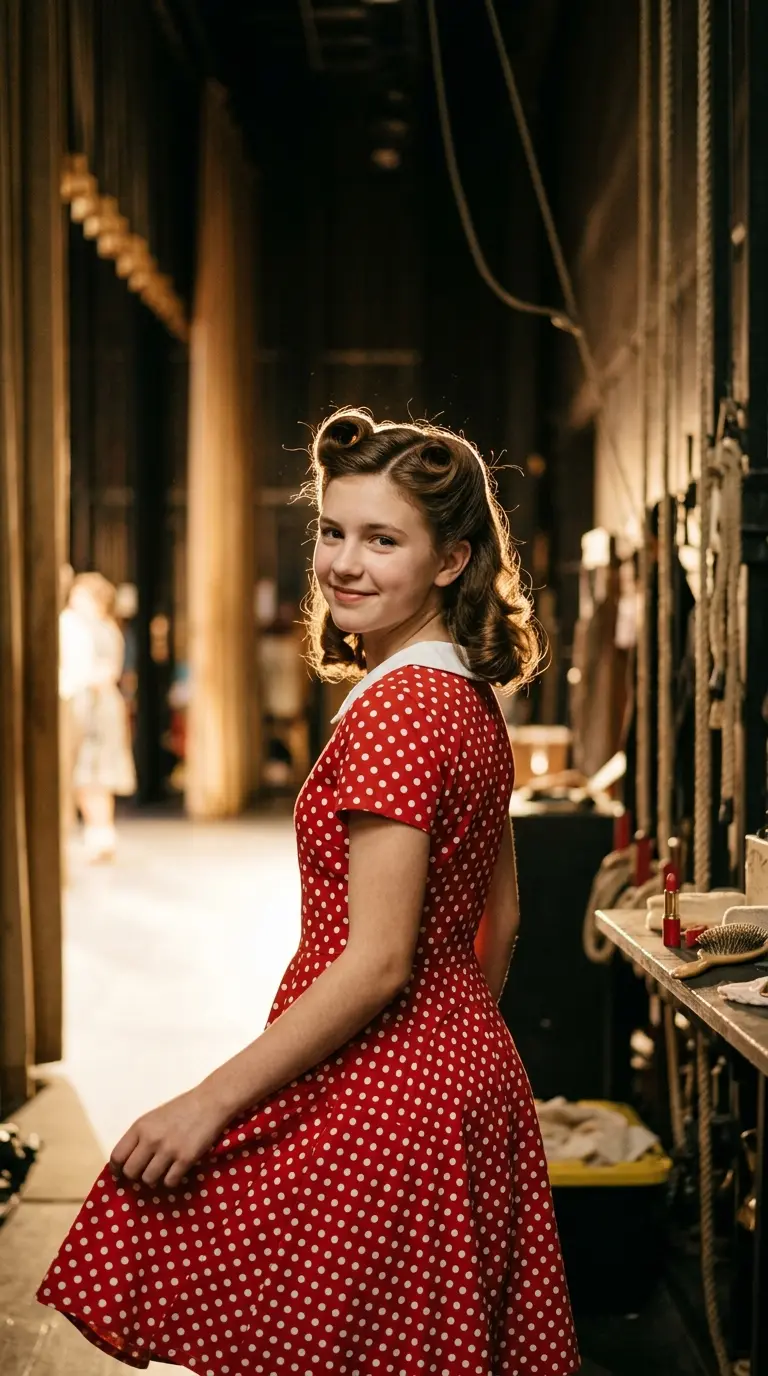
Theme numbers are where recital hair gets fun. Victory rolls instantly say 1940s and look great from the back of the theater.
- Make a deep side part and brush a little texture spray into the front.
- Take a section on one side of the part, about two inches wide, and tease the roots lightly.
- Wrap the section around two fingers, rolling it down toward the scalp.
- Slide your fingers out and pin the roll in place from both sides.
- Repeat on the other side of the part, then brush the back into soft curls.
The rolls look best when they are a little uneven in size. Perfect twins look stiff.
Quick tip: the back can also go into a low snood or a hair net with large holes for a true wartime feel, and it is faster than curling.
14. Faux Finger Waves for a Roaring Twenties Number
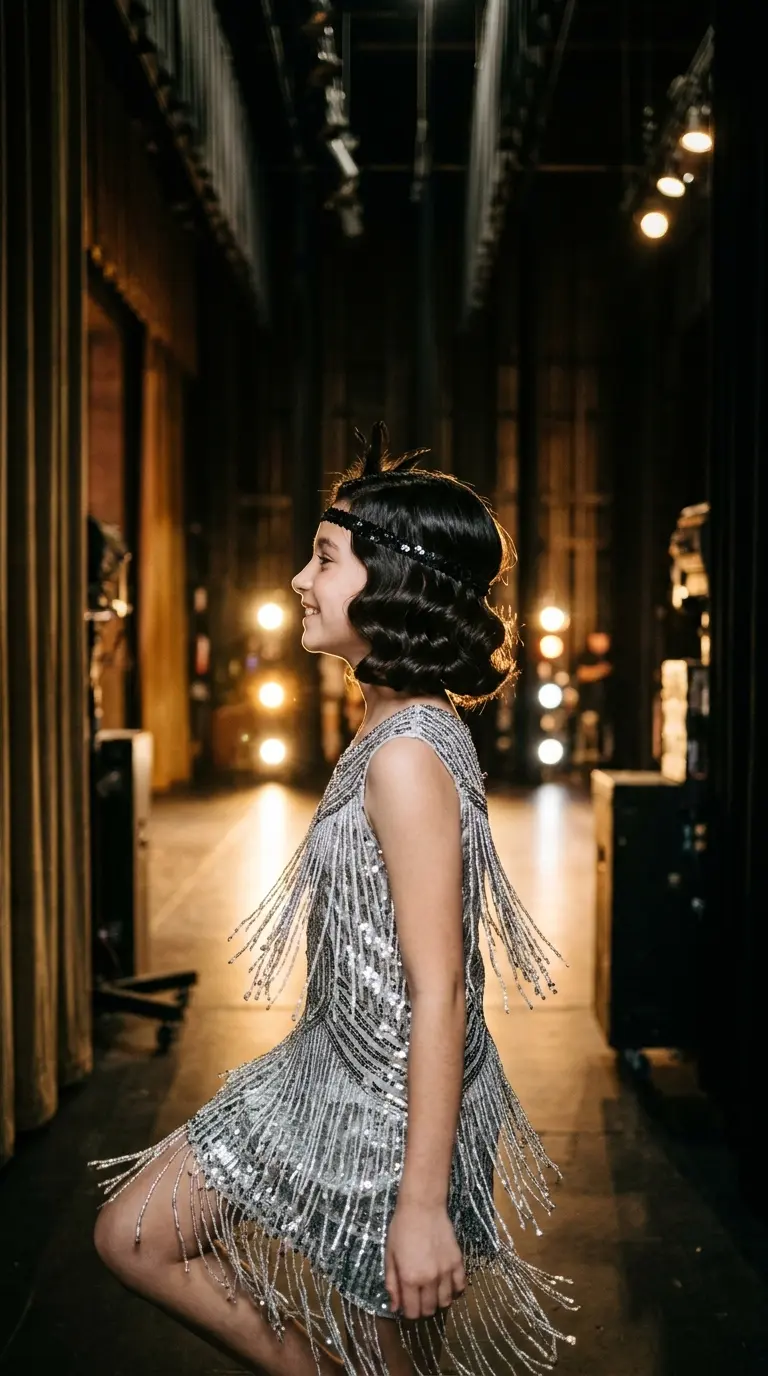
A Charleston or flapper number needs that glossy, sculpted wave look. Real finger waves take a long time to set, so this faster version uses gel and clips.
Make a deep side part on damp hair and comb strong gel through the top and sides. Comb the hair forward a couple of inches, then pinch it with your fingers and comb the next section backward. That makes a ridge. Hold each ridge with a long duckbill clip and keep going in an S pattern down the side of the head. Let it dry fully, ideally under a hooded dryer or with a diffuser on low, then take out the clips.
For long hair, tuck the length under at the nape and pin it to fake a bob. Add the headband last.
Good to know: this one takes a good thirty minutes plus drying time. Do it at home, not in the dressing room.
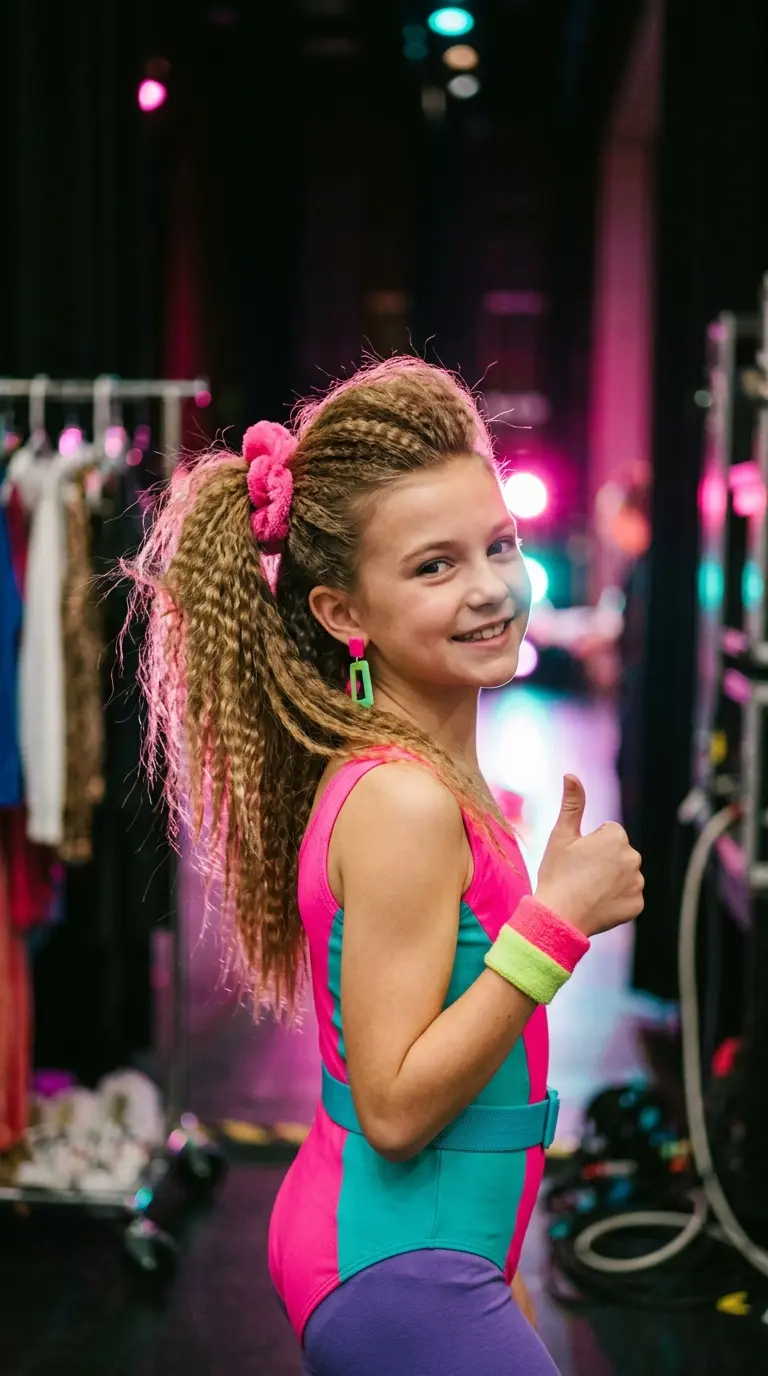
15. Crimped Side Ponytail for an 80s Theme Number
Nothing gets a laugh and a cheer like a full 80s number, and the hair is half the costume.
For heatless crimps, braid damp hair into eight to ten small braids the night before. Take them out in the morning and do not brush, just separate the zigzags with your fingers. If you use a crimping iron instead, keep it on a low setting and use a heat protectant spray first.
Tease the crown a little for height. Sweep everything to one side and tie it high above the ear with a big neon scrunchie. Spray it all generously.
Styling detail: add a tiny bit of glitter hairspray at the crown. It is very 80s and shows up wonderfully under colored lights.
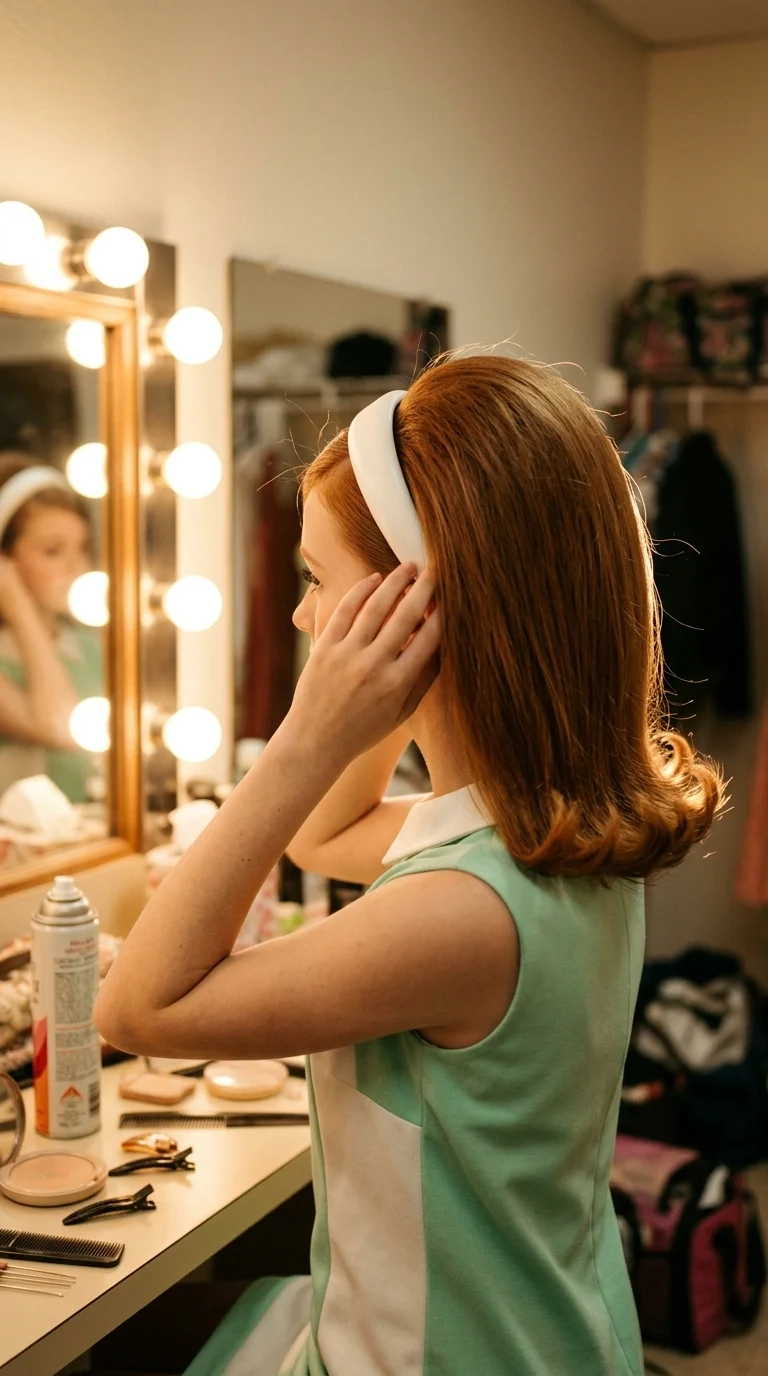
16. Teased 1960s Flip With a Headband
Shoulder length hair is perfect for this playful 60s look. The flip bounces with every step and the headband keeps the front tidy.
Set the ends in large rollers, rolled up and outward, the night before or for an hour on recital morning. Take the rollers out. Lift the crown in small sections and tease the underside of each one at the roots. Smooth the top layer over the teased hair with a soft brush. Slide on the headband just behind the front hairline and spray everything well.
Shoulder length to just past the shoulders works best. Very long hair is too heavy to hold the flip.
17. Short Bob Slicked Back With Gel and Pins
Short hair is common in dance, and teachers usually ask for it to be slicked back so it matches the look of a bun from the audience.
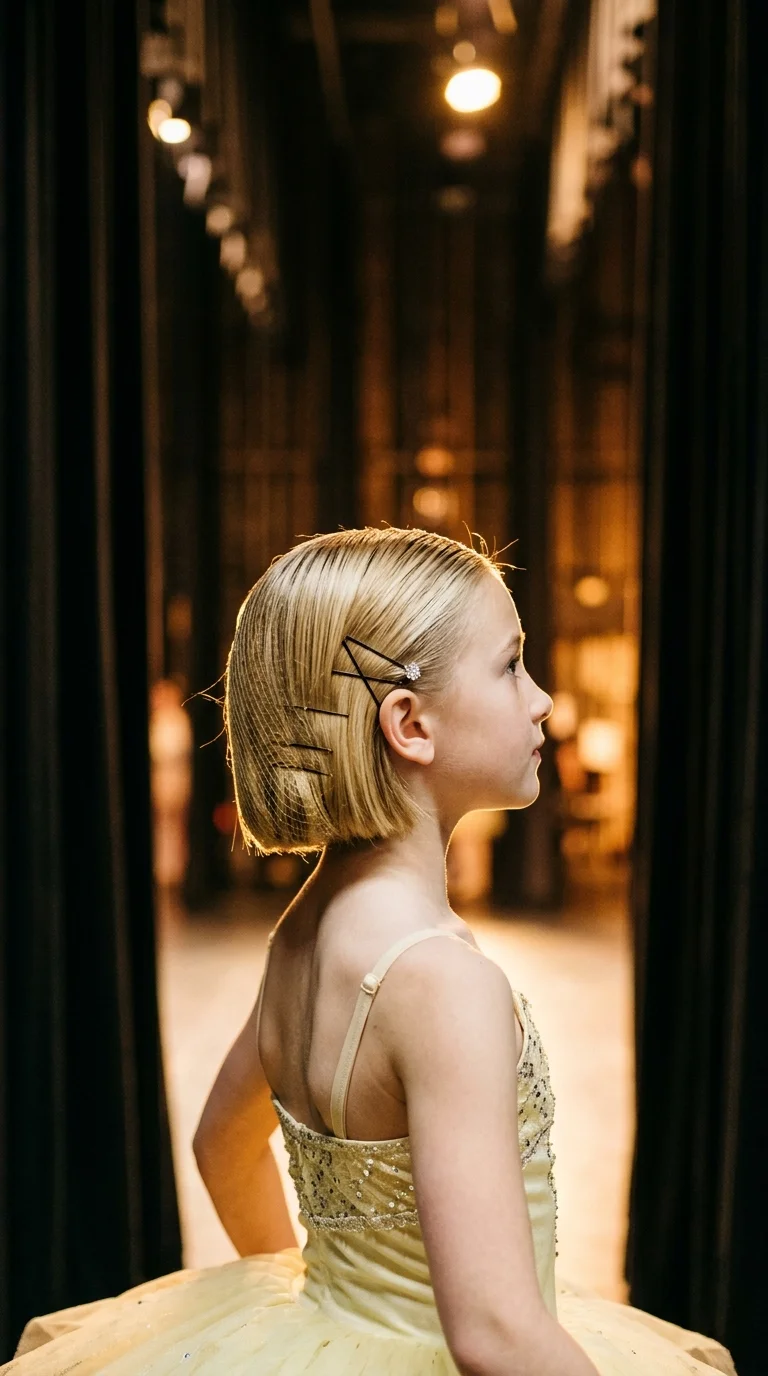
Work gel through damp hair and comb everything straight back from the forehead. Tuck the sides behind the ears and cross two bobby pins above each one. If the back is long enough, twist it into a tiny knot at the nape and pin it. If it is not, pin it flat and pull a hair net over the whole back of the head.
For a pixie or very short cut, gel alone is often enough. Comb it back and let it dry without touching it.
Quick tip: a small rhinestone clip or flower above one ear makes short hair feel just as dressed up as a bun on the same stage.
18. Neat Gelled Side Part for Boy Dancers
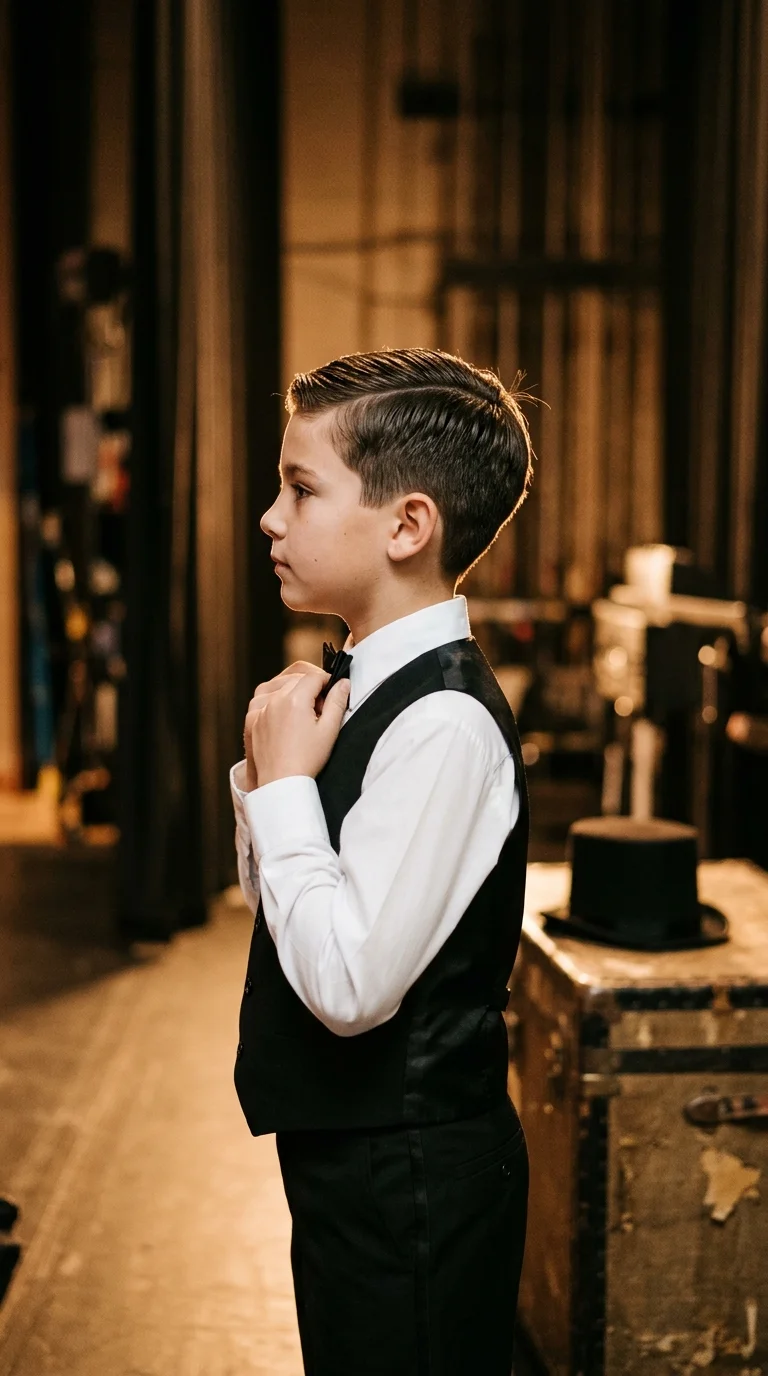
Boy dancers need recital hair too, and a messy top looks just as messy on stage as loose strands from a bun.
Dampen his hair and work a small amount of gel or pomade through it. Make a clean side part with the tail of a comb, usually on the side where his hair naturally falls. Comb the top over and the sides down. If he has a cowlick at the crown, press a little extra gel into it and hold it flat with your palm for a few seconds.
For longer hair, slick it straight back and tie it at the nape, or pin it close to the head, depending on what his teacher prefers. Book a trim about a week before the recital so the edges look sharp without that freshly cut look.
Every dancer in a number is meant to match. Before you pick a style, read the costume and hair sheet from her studio, and ask her teacher if anything is unclear. The best recital hair is the one that looks exactly like the rest of the line.
Ready for the Big Night
A good recital style is one your dancer forgets about the moment the music starts. It holds through every turn and leap, it matches the rest of her group, and it still looks neat in the photos at the final bow.
Start with what her number calls for. A smooth bun for ballet, something low and soft for lyrical, a locked high ponytail or bouncy curls for jazz and tap, a bold puff or braided bun for hip hop, and a fun retro look for theme numbers. Pack a small kit with pins, a spare net, gel, and spray, and keep it in the dance bag all season.
The best dance recital hairstyles are the ones that look just as good at curtain call as they did at warm up.
Save this list to your dance mom board so recital morning starts with a plan.