
25 Fulani Braids Styles That Are Bold, Beautiful and Protective
Fulani braids were never just a trend. The style comes from the Fulani people, a large community spread across West Africa and the Sahel. Women there have worn a center cornrow, side braids, and shells or beads for generations. That history is part of why the look still feels so strong, on a Sunday at church or a Monday at work.
The hard part is choosing. Scroll long enough and the photos start to blur together, and it gets tough to know what to ask your braider for. You have to choose the length, the part shape, beads or no beads, a color, and knotless or classic. Each choice changes how your head feels for the next six weeks.
This list breaks down 25 fulani braids styles by the one detail that makes each look different. Some are about the parting. Some are about finishing touches. A few are about keeping your edges safe, because a protective style should actually protect.
Screenshot the ones that catch your eye and bring them to your next appointment.
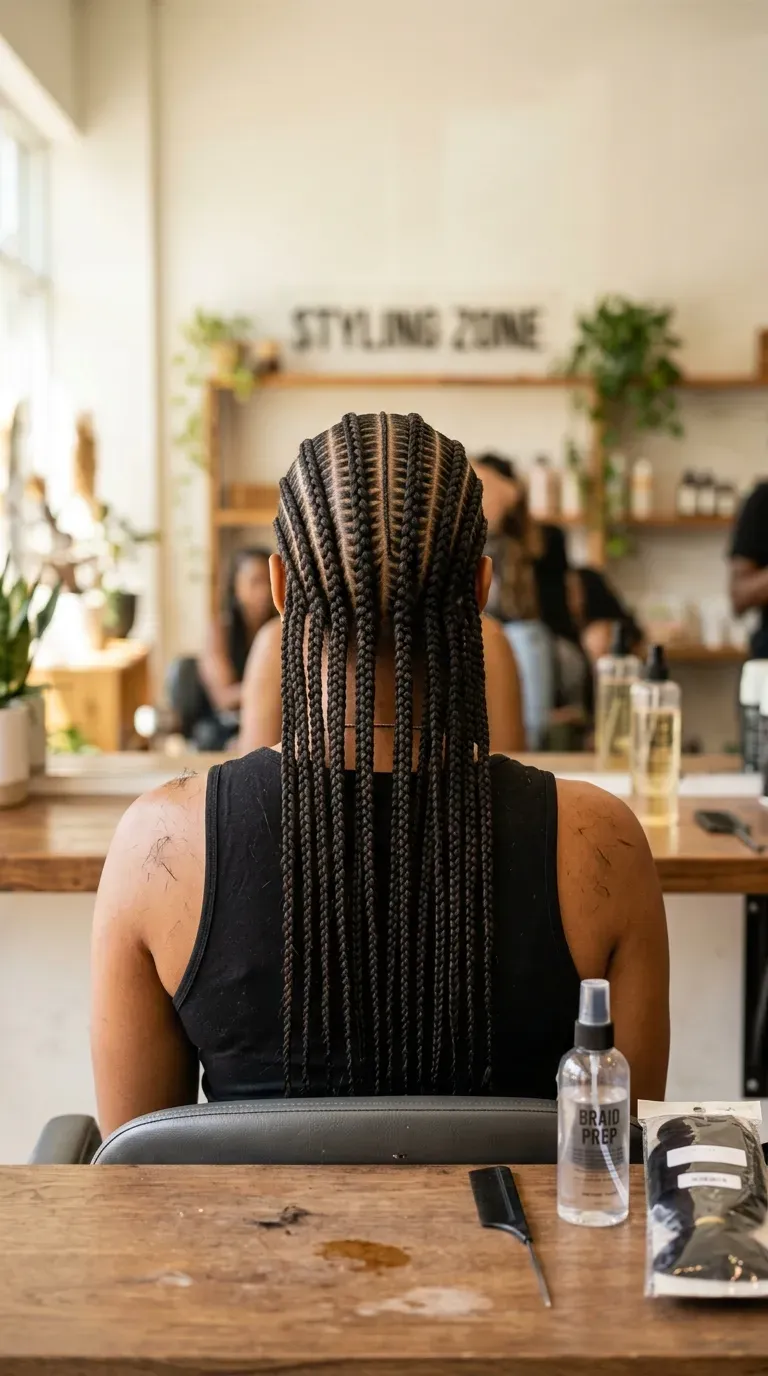
1. Classic Fulani Braids Styles With One Center Cornrow
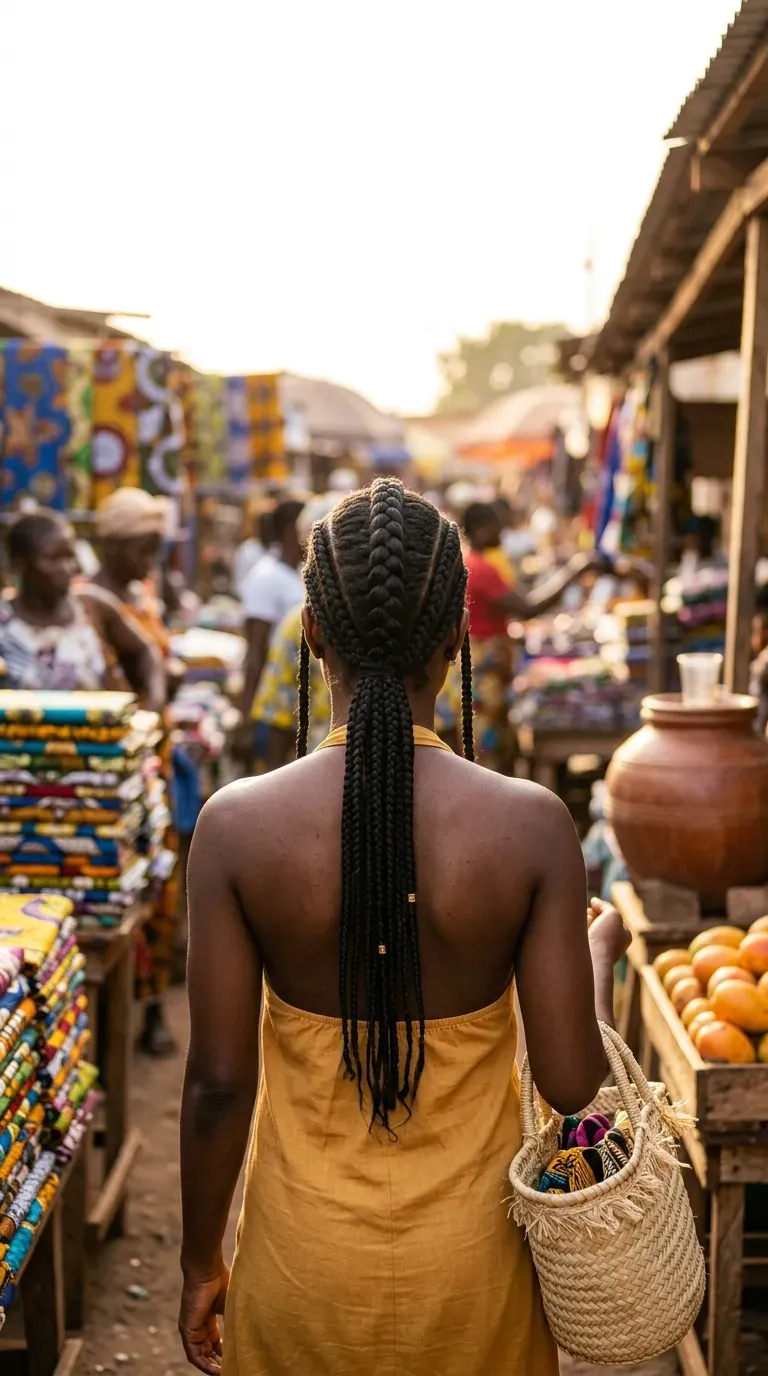
Start with the version that made the style famous. One cornrow runs straight down the middle of the head, and the rest of the hair splits into two groups around it.
Here is the classic layout:
- One center cornrow ending in a single braid at the back
- Side cornrows braided toward the face and ears
- Box braids filling the crown and the back
Ask your braider to keep the center row slightly thicker than the side rows. It reads clearly from behind and shows up well in photos.
Quick tip: Bring a photo that shows the center row, not just the length. Braiders read parting faster than descriptions.
2. Gold Cuffs Stacked Along the Side Rows

Gold against black braids catches evening light before anything else does. The trick is where the cuffs go.
Stack them on the side braids that fall near your cheekbones instead of scattering them everywhere. Three or four cuffs per side braid is plenty. Past that, the braids swing heavily and tug at the root.
A few details keep it looking intentional:
- Pick one metal and stick with it
- Space the cuffs about a finger width apart
- Leave the center cornrow bare so it stays the main line
Take them off before bed. They dig into your scalp on the pillow and snag silk pillowcases.
3. Knotless Fulani Braids That Go Easy on Your Edges
Sore edges after a fresh install are a warning, not a rite of passage. Traditional braids start with a knot of extension hair right at the root, and that knot adds weight and pull where your hair is most fragile.
Knotless braids start with your own hair and feed the extension hair in slowly. The root lies flatter, the braid moves more freely, and the first night is usually much easier to sleep through.
Two things to know before booking:
- Knotless installs often take longer, so plan for a full day.
- They can cost more because of the extra time.
Your hairline is worth the wait.
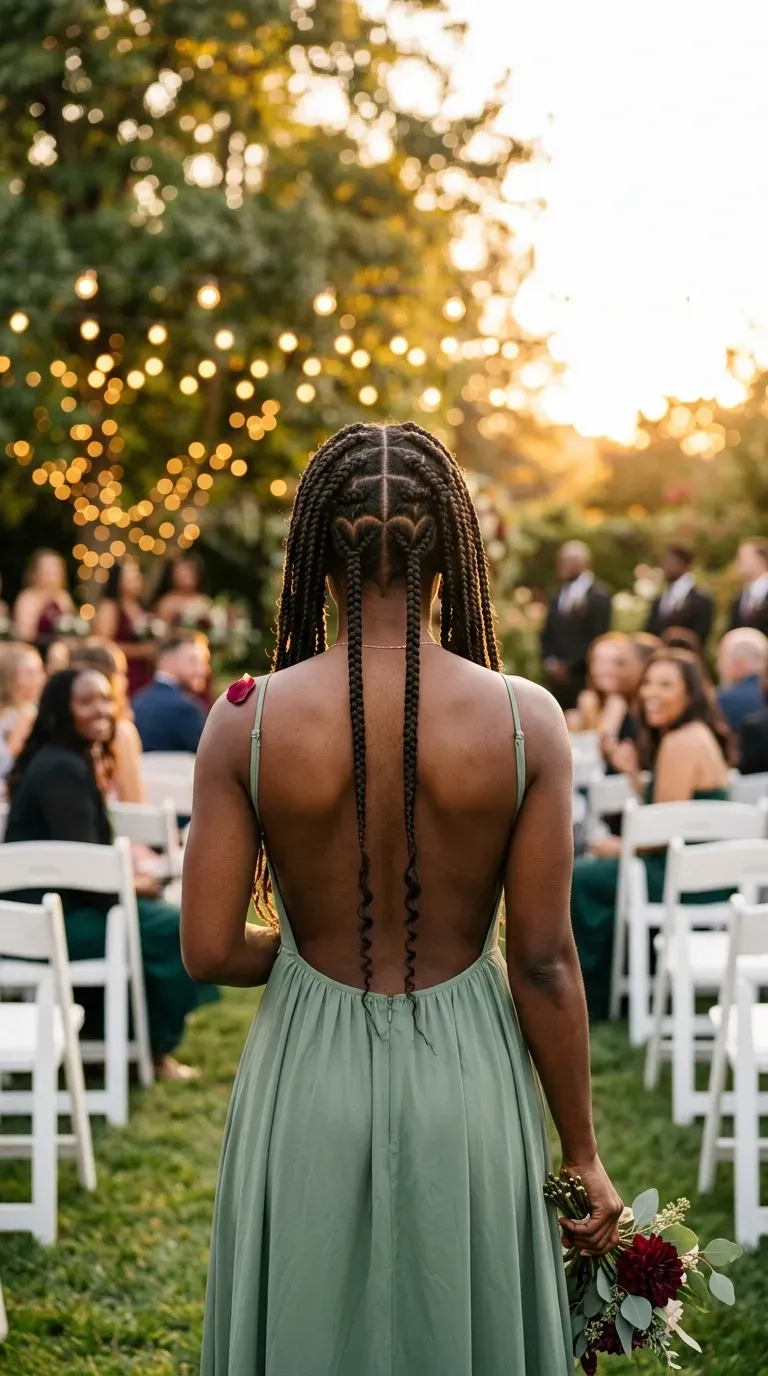
4. Heart Shaped Parts at the Nape

At a wedding, you spend most of the ceremony with your back to half the room. That is exactly where heart shaped parts pay off.
Your braider carves one or two small hearts into the parting at the nape, usually around a single box braid in the middle of each heart. The front stays classic Fulani, so the surprise only shows when you turn around.
Ask for this: clean, sharp heart lines and a braid size small enough that the heart does not look lopsided.
Keep it to two hearts at most. Any more and the shapes crowd each other and start to look like a random pattern.
5. Boho Fulani Braids With Curly Pieces Left Loose
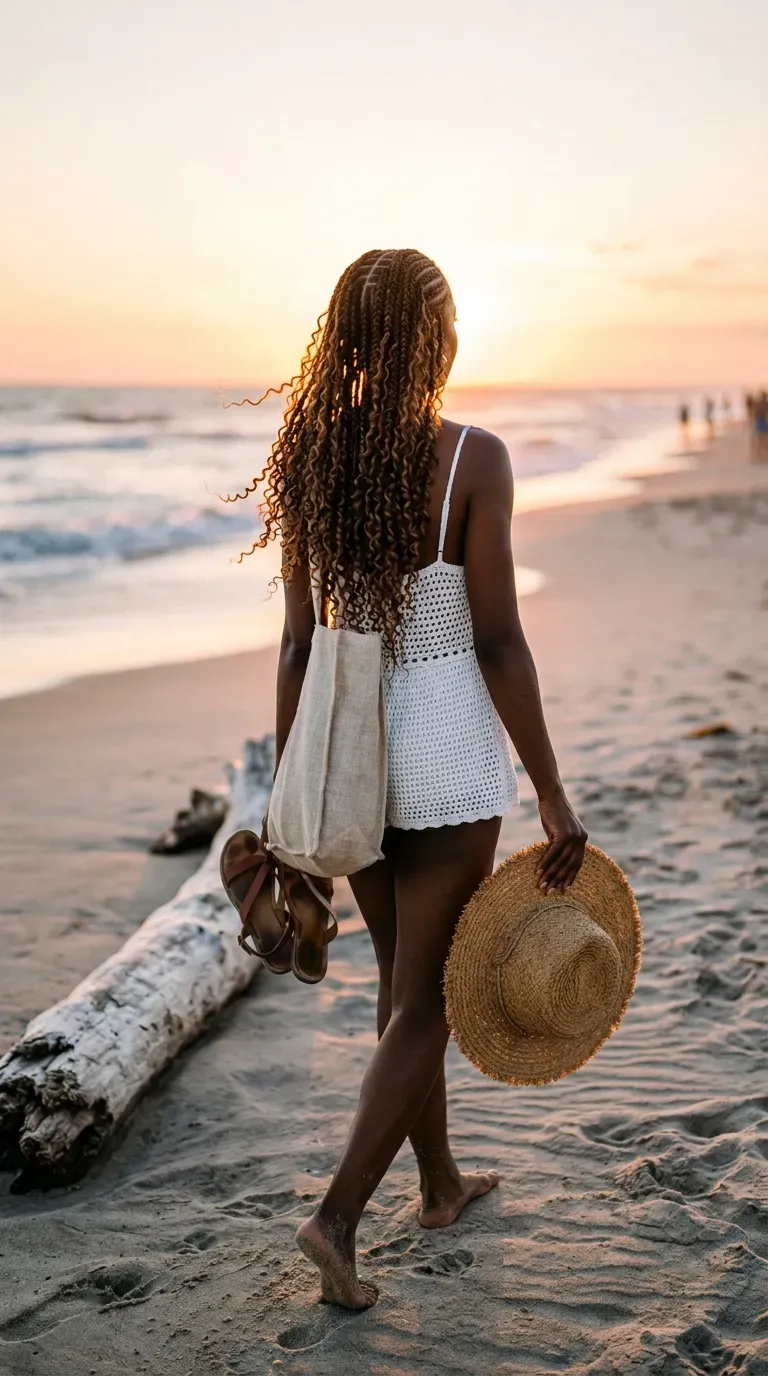
Loose curly strands tucked between the braids soften the whole style, especially around the face and shoulders. It looks less structured and more lived in.
The curls come from curly extension hair pulled out during braiding, not from your own hair. That means they need their own small routine:
- A light mist of water brings flattened curls back
- A drop of leave in conditioner keeps the ends from drying out
- Fingers, not a comb, stop them from frizzing into a cloud
The honest downside is that boho pieces need more attention than plain braids. If you want a hands off six weeks, skip them.
6. Fulani Braids Swept Into a High Bun
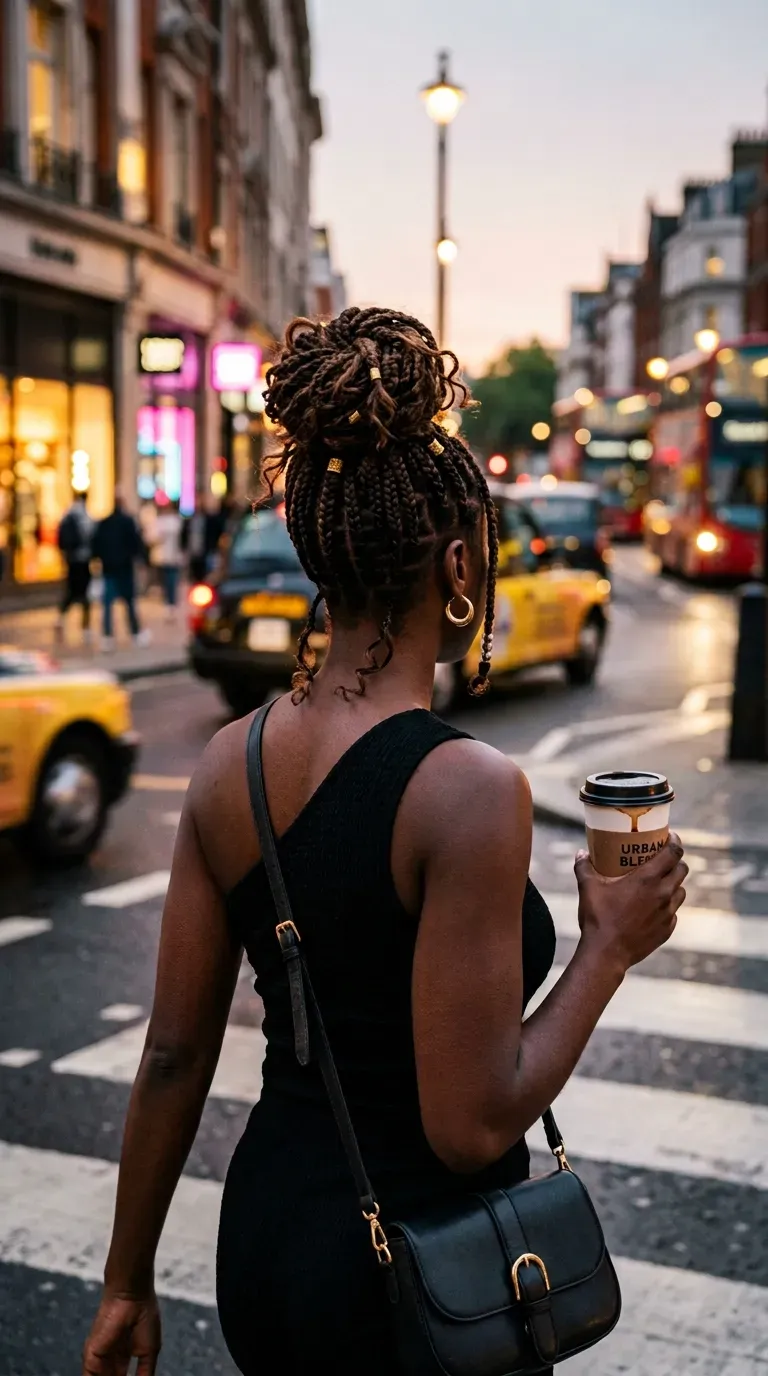
Here is a simple rule for this one: the bun should sit right where the center cornrow ends. The cornrow then leads the eye straight up into the bun instead of stopping short.
How to put it up without strain:
- Gather the braids loosely with your hands, no brush.
- Loop a soft scrunchie around them once, not three times.
- Twist the lengths around the base and pin with a few bobby pins.
Wear it for a day or an evening, then let it down. A heavy bun worn several days in a row pulls hard on the hairline.
7. Clear and Wooden Beads on the Braid Tips
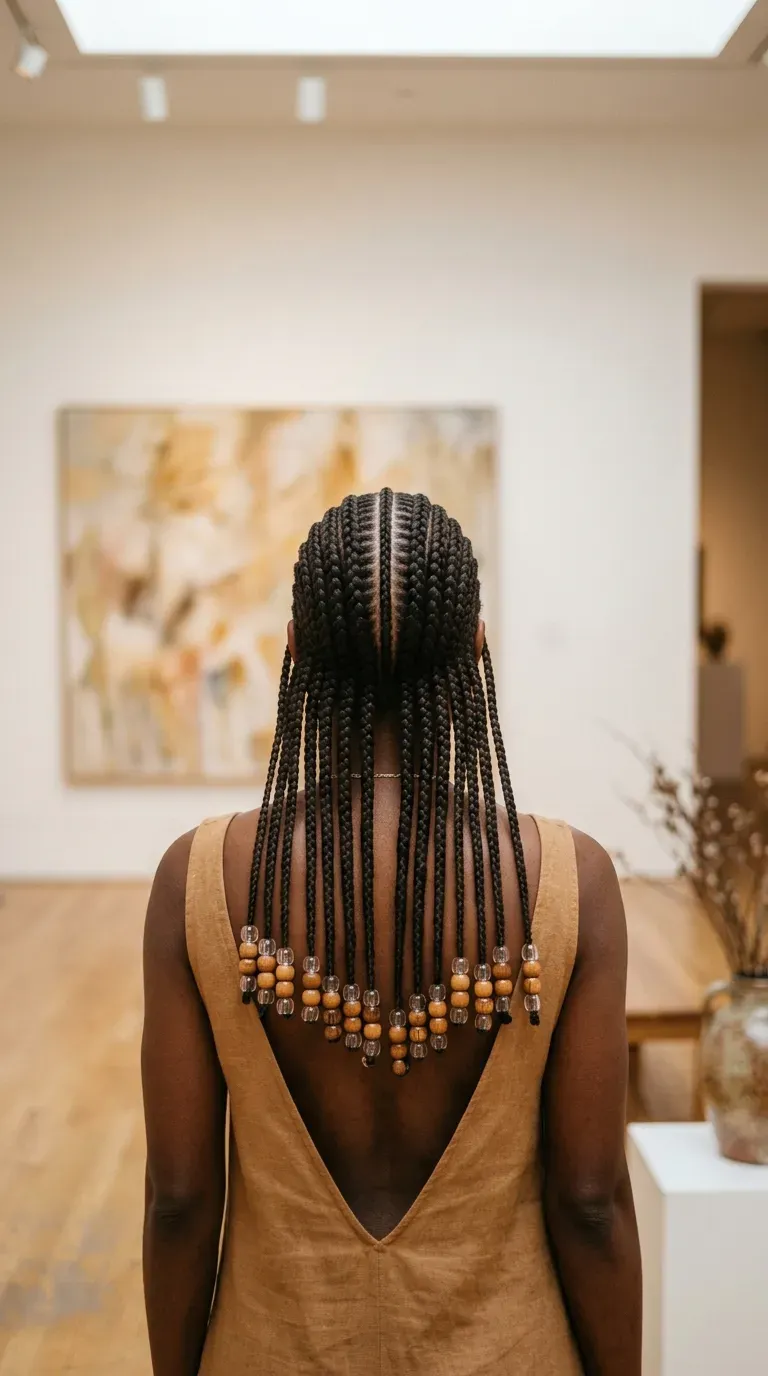
The most common bead mistake is putting one on every single braid. It looks busy, it rattles every time you turn your head, and the extra weight adds up fast.
Pick a pattern instead. Beads on every third braid, or only on the side braids, give the same rhythm with far less weight.
Mixing clear acrylic beads with wooden ones is a nice middle ground. The clear ones catch light, and the wood keeps the look warm.
Small warning: wooden beads soak up water and can stay damp inside. Squeeze them in a towel after washing so they dry fully.
Secure each bead with a tiny clear band underneath so it stays put.
Wrap beaded ends in a silk scarf at night so they stay quiet and unscratched.
Heavy metal beads on thin braids. The weight drags on the root.
Gluing beads straight onto the braid. They are hard to remove at takedown.
8. Zig Zag Parts for a Sharper Back View

Straight parts look neat. Zig zag parts look designed. The difference is small, but suddenly the back of your head has movement even when you stand still.
Straight parts:
- Faster to install
- Easier to keep clean as they grow out
Zig zag parts:
- Hide new growth a little better because the line is broken up
- Take more time and a steady hand
Ask for the zig zag only on the back section and keep the center cornrow straight. Too many angles fighting each other gets messy fast.
9. One Side Swoop Braid Curving Over the Ear

People tend to notice the swoop braid first, probably because it breaks the symmetry. One cornrow starts near the temple, curves down over the ear, and joins the braids at the back.
It frames the face without bangs and draws attention to your jawline.
Ask your braider to:
- Keep the curve smooth, with no sharp corner behind the ear
- Leave enough room so earrings still sit comfortably
Put it on your stronger side. Most people have a side they naturally part toward, and the swoop looks best there.
10. Bob Length Fulani Braids for Hot Weather
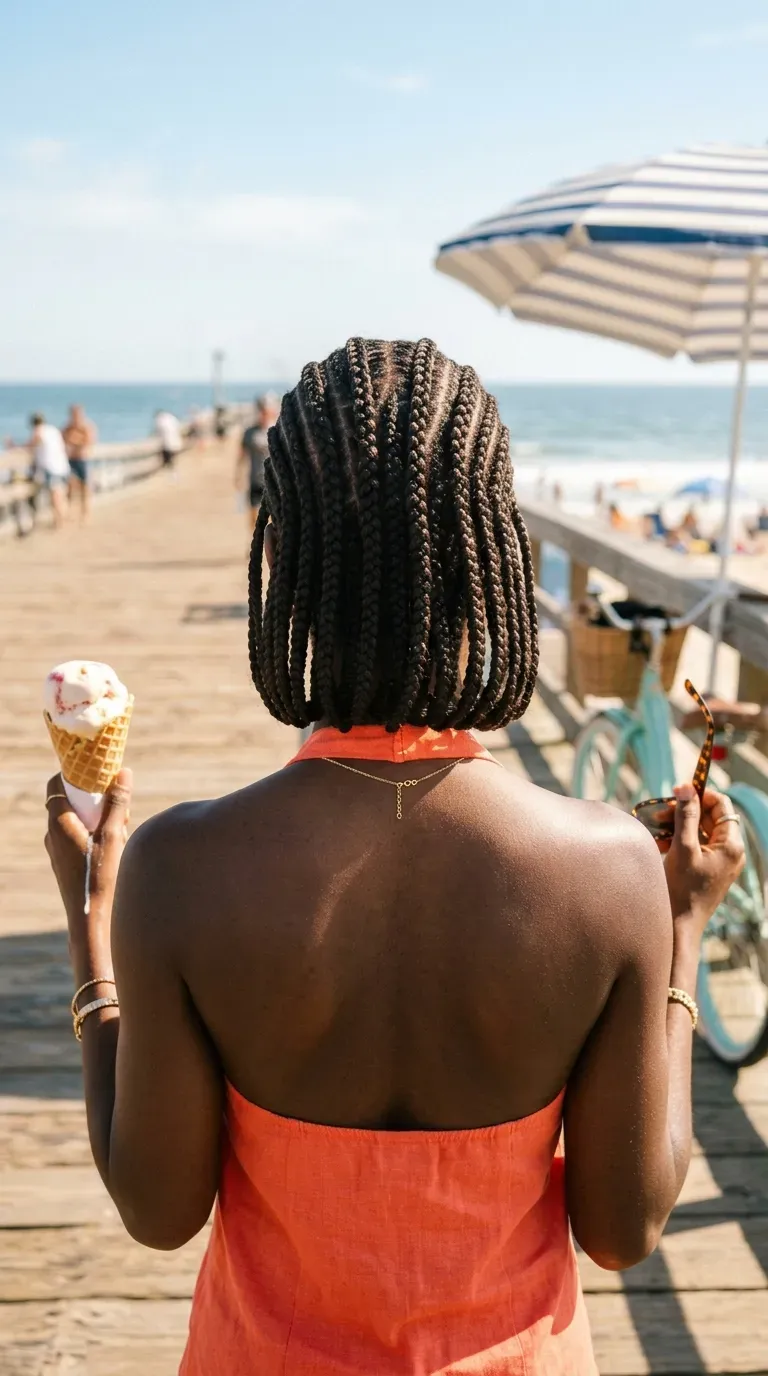
Short braids are not a lesser version of the long look. On a humid day, they might be the smarter one.
Bob length braids end around the jaw or just above the shoulders. Your neck stays cooler, wash day is quicker, and far less weight hangs from your scalp all day.
Why they work in summer:
- They dry faster after swimming or washing
- They stay off your neck without a ponytail
- They use less braiding hair, so the install goes quicker
Styling note: an angled bob, slightly longer in front, keeps the side braids framing your face.
11. Waist Length Fulani Braids With a Middle Part

At waist length, the braids swing like fabric every time you walk. The middle part and center cornrow line up into one long line that runs almost the full length of your back.
That drama comes with trade offs:
- The install can take most of a day
- Wash day needs extra drying time so the roots do not stay damp
- The weight is real, so smaller, lighter braids matter
A lighter feel starts with less extension hair in each braid. Mention it at the start of the appointment, not halfway through.
12. Burgundy Braiding Hair Woven Through Black

Keep burgundy to roughly a third of the braids and it reads as depth, not a full color change. In low light the braids look dark. In the sun, the red comes through.
Two ways to mix it:
- Blend burgundy and black hair inside each braid for a soft, marbled effect.
- Alternate whole braids of burgundy and black for clearer stripes.
The first option is subtler and easier to wear at work. The second shows up from across a room.
Autumn is when this shade makes the most sense, next to camel coats and dark red leaves.
13. Honey Blonde Peekaboo Braids Underneath
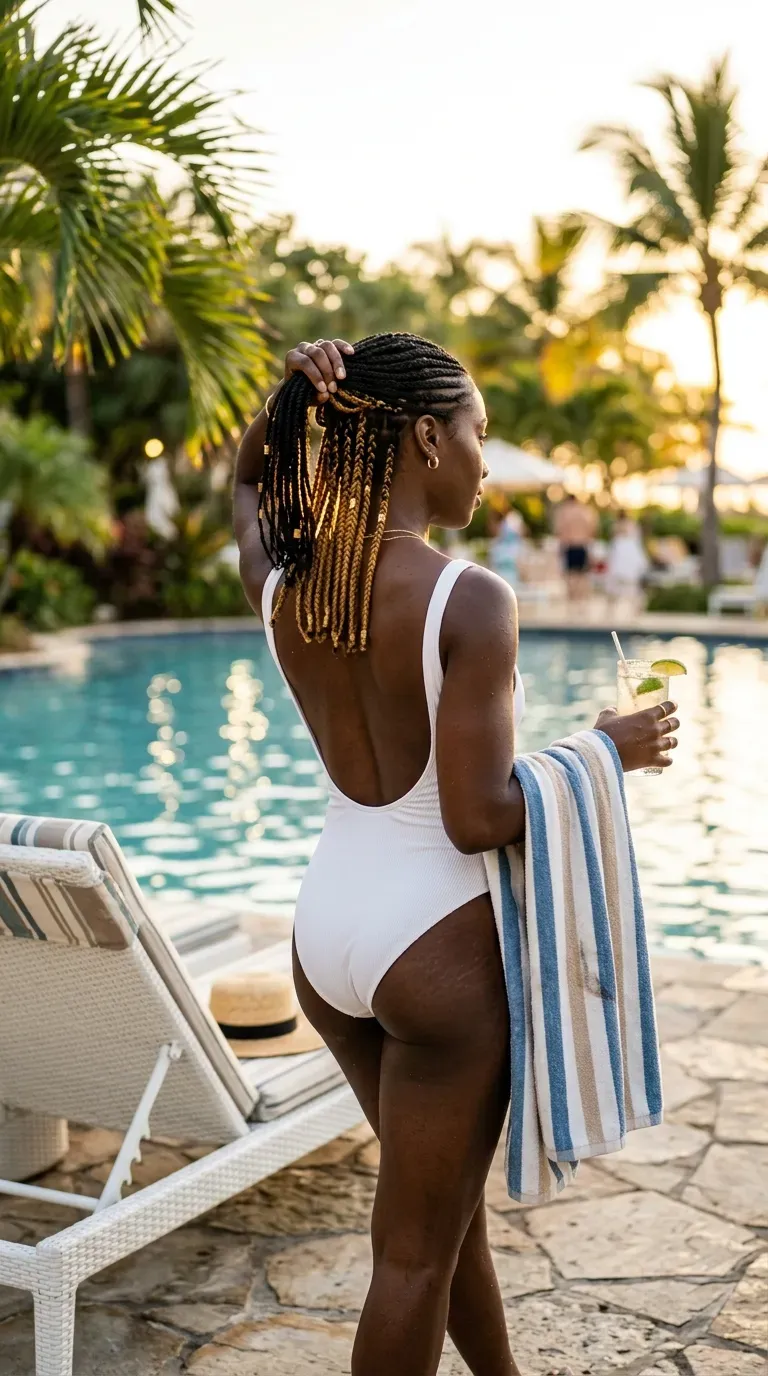
Peekaboo color sits in the bottom layer of braids, so it hides until you move, tie your hair up, or catch a breeze. It is a softer way into blonde if a full head feels like too much.
Honey blonde tends to flatter deep skin tones because it leans warm instead of ashy.
Where to put it:
- The lowest rows at the nape
- A few braids behind each ear
With your hair down at work, people mostly see black. Pull it into a ponytail and the blonde flashes underneath.
14. Two Front Cornrows Framing the Face

Swap the single center row for two cornrows that start above each eyebrow and run back toward the crown. Your face gets a symmetrical frame, and the style reads a little softer.
Ask for it like this:
- Two cornrows, starting evenly above each brow
- Both rows meeting or ending near the crown
- Side braids below them falling toward the jaw
This layout suits a wide forehead because the two lines break up the space. Check both starting points in a mirror before the braider begins. An uneven start is hard to fix later.
15. Stitch Braid Cornrows With Razor Sharp Lines

Fuzzy cornrows tend to show up by week two, and they make the whole style look older than it is. Stitch braiding helps a lot.
Your braider uses a fingernail to split off small, even sections as each cornrow is built. That creates the little ladder lines you see across the braid, and the tucked hair lies flatter for longer.
Good to know:
- Stitch rows take more time per row
- They matter most on the center and side rows, where they show
A silk scarf at night keeps those lines crisp far longer than a cotton pillowcase.
Rows look puffy, loose hairs stick up along each line, and the parts are hard to see from behind.
Ladder lines still show, rows lie flat, and a little mousse under a scarf brings them back overnight.
16. Half Up Fulani Braids With a Top Knot
Saturday market, one hand holding peonies, the other digging for cash. Half your braids are out of the way and half still swing past your shoulders.
That is the whole appeal of a half up top knot. It keeps braids off your face and still shows off the length.
How to do it:
- Take only the braids from the crown upward
- Twist them into a small knot, not a tall bun
- Secure it with a claw clip or two pins
Leave the center cornrow visible below the knot. Once it gets hidden, the style loses its Fulani shape.
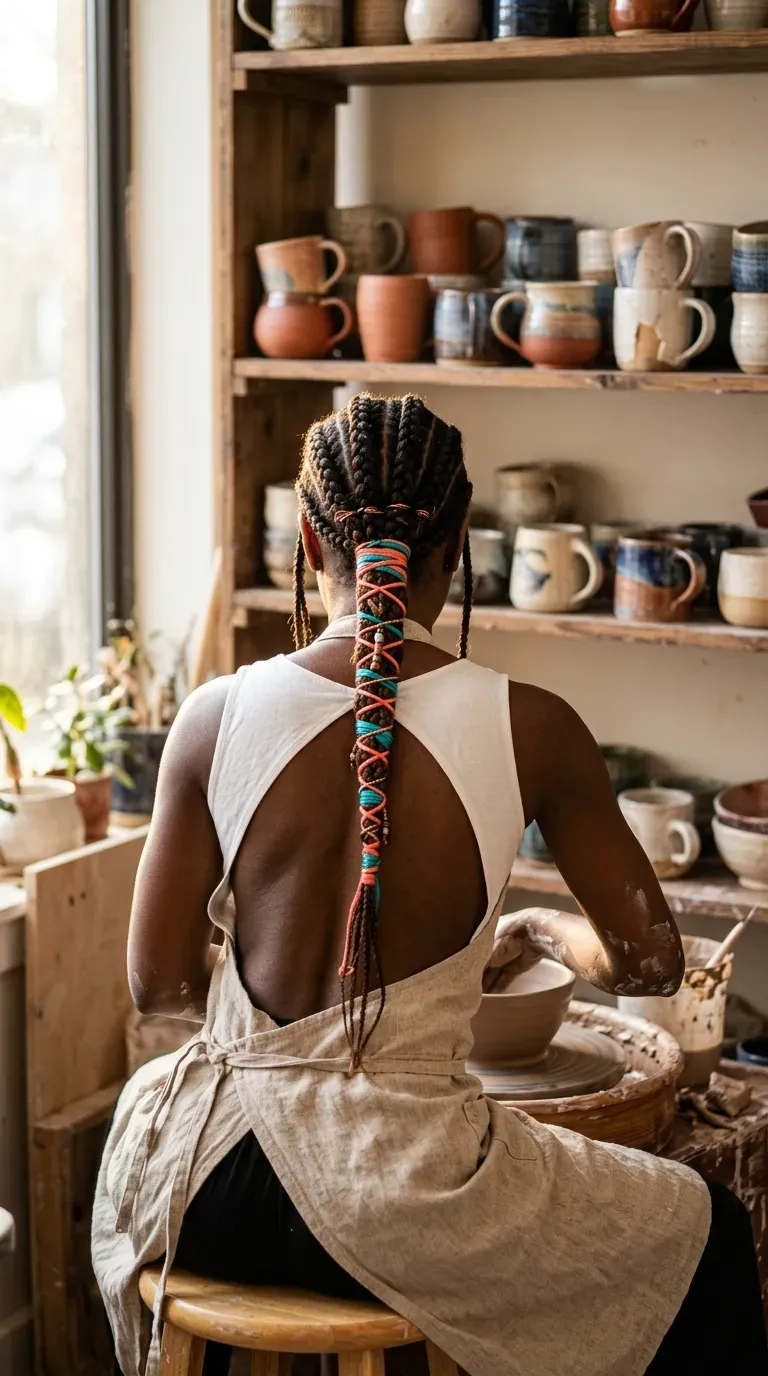
17. Colored Thread Wrapped Around a Few Braids
Bright thread wound tightly around a handful of braids turns them into little solid columns of color. It borrows from the long tradition of thread wrapped styles across West Africa.
Keep it to a few braids so it reads as an accent:
- Two or three near the face
- One running down the center at the back
Embroidery floss and yarn both work. Floss is thinner and sits flatter. Yarn is chunkier and bolder.
Tip: wrap from the root down, then tie off with a small knot hidden under the last wrap so nothing unravels on wash day.
18. Triangle Parts With Jumbo Braids in Back

Small braids up front, jumbo braids in the back. It sounds like two styles fighting, but triangle parts pull them together.
Small front braids:
- Keep the classic Fulani detail around your face
- Hold side rows and beads neatly
Jumbo back braids:
- Cut install time a lot
- Mean fewer braids overall, though each one is heavier
The triangle parting ties both sizes into one pattern. Ask for triangles on the jumbo section only, since tiny triangles up front get lost.
19. Goddess Fulani Braids With Curly Ends

Curly ends change how the braids behave. Straight ends hang. Curly ends bounce and spread, so the bottom of the style looks fuller from behind.
The braid stays tight for most of its length, then opens into a loose curl for the last few inches.
Care that actually helps:
- Mist the ends, not the roots, when they flatten
- Sleep with the ends piled loosely on top of your head
Expect the curls to look their best in the first few weeks. After that, many people trim the frizziest ends rather than fight them.
| Human hair curls | Synthetic curls |
|---|---|
| Feel soft and move naturally | Feel smooth with a slight shine |
| Tangle less as the weeks go on | Tangle more, mostly at the tips |
| Water and leave in bring them back | Water helps only a little |
| Cost: higher | Cost: lower |
20. Braids Tied Low With a Silk Scarf

Fold a silk square into a long strip, about three fingers wide, before you tie anything. A flat band holds better than a twisted one and does not squeeze the braids.
Then:
- Gather the braids at the nape without pulling them upward.
- Wrap the scarf twice around the base.
- Knot it once and let the ends hang with the braids.
It is a two minute fix for a heat wave, a road trip, or a day when the roots look a little fuzzy. The scarf does the dressing up for you.
21. Cowrie Shells Threaded Into the Center Row

Cowrie shells are more than a pretty add on. In West Africa they were once used as money, and they still carry ideas of wealth and good fortune. On Fulani braids, they point back to where the style began.
Where they look best:
- Threaded along the center braid at the back
- One or two at the tip of each side braid
Pick shells with a drilled hole so they slide onto the braid cleanly. Glued shells tend to pop off in the wash.
22. Criss Cross Cornrows Under Feed In Braids
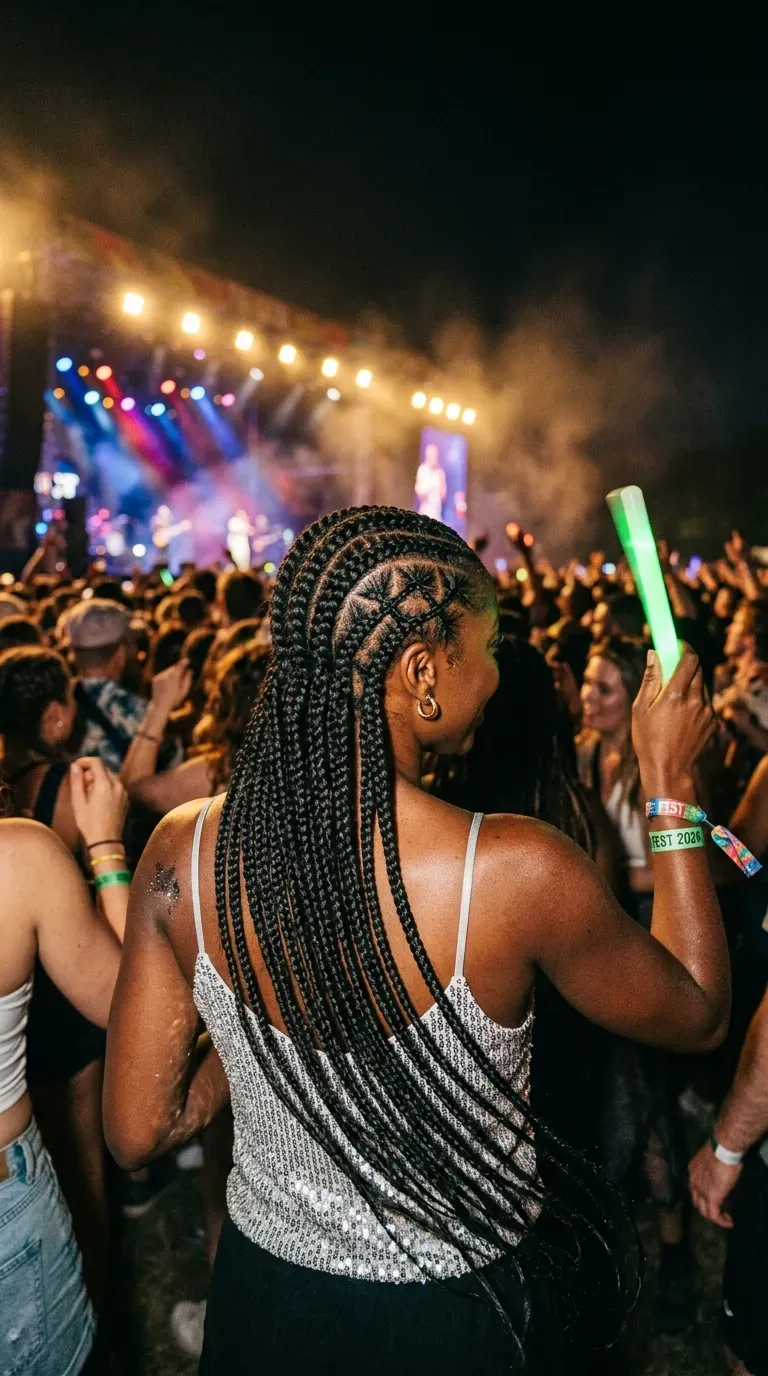
The usual mistake with criss cross cornrows is crossing too many of them. Two or three X shapes on each side look bold. Six start to look like a net.
Feed in braiding keeps the rows flat and tapered, which matters when lines overlap. The crossing point needs to lie smooth, not bumpy.
Ask for:
- Crossings at the sides, above the ears
- A straight center cornrow left alone
- Box braids hanging freely at the back
For a concert or a night out, this version still looks sharp under stage lights.
23. A Low Sleek Ponytail That Still Shows the Pattern

Keep the ponytail low enough that the cornrow pattern stays in view. Pull it up too high and the back parts disappear under the bulk.
A low ponytail at the nape looks polished for work, and the side rows still sweep back clearly.
Quick setup:
- Gather the braids gently at the nape.
- Wrap one braid around the base to hide the band.
- Tuck the end underneath.
Skip slicking gel over the rows. It builds up and flakes by the next day.
A ponytail should never feel like a face lift. If your temples ache or small bumps show up along the hairline, take it down and wear the braids loose for a few days.
24. Two Low Buns With Braids Split Down the Middle
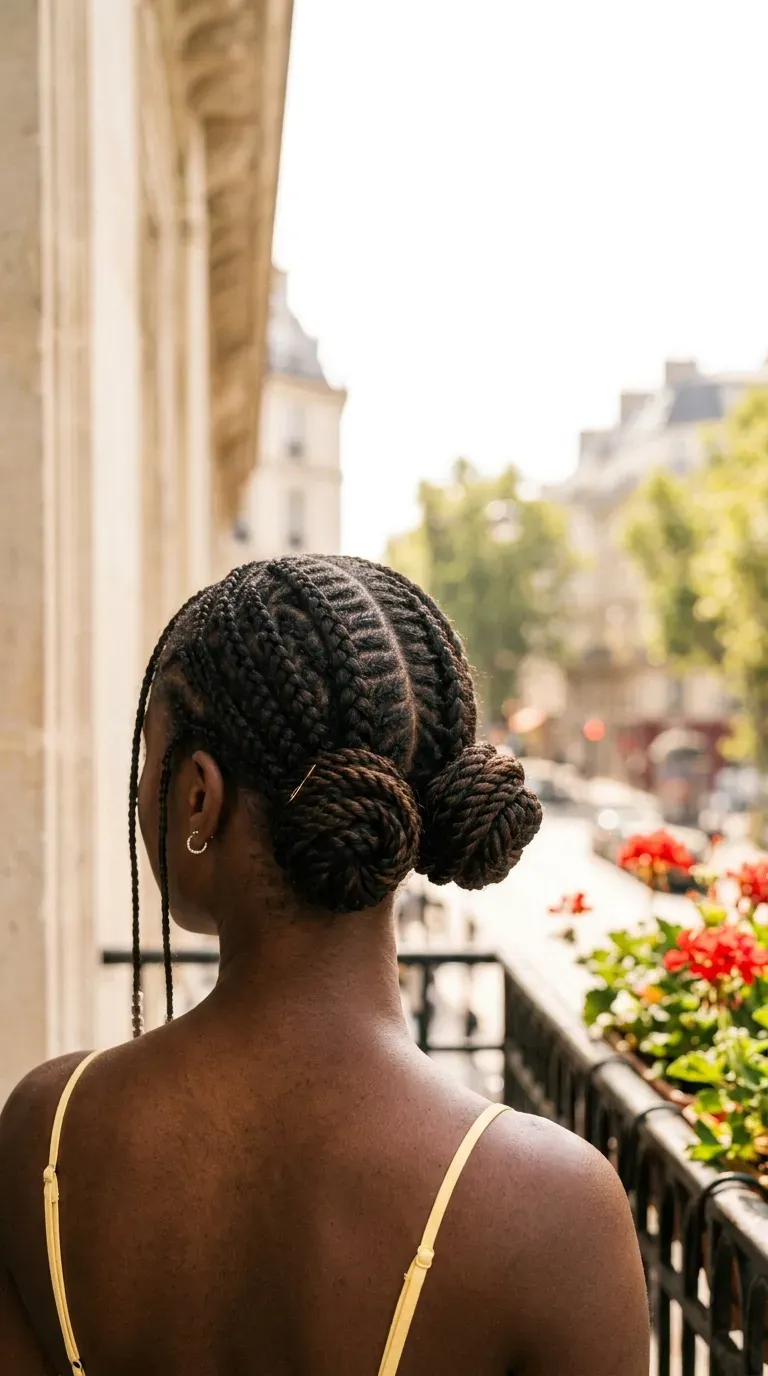
Two low buns spread the weight across both sides of your head, so neither side takes all the pull. With heavy braids, you feel the difference by afternoon.
The center cornrow becomes the natural dividing line. Split the braids along it and you get a clean part with no extra work.
- Twist each half into a bun behind the ears
- Pin them loosely, a few pins per bun
- Let a couple of side braids fall near your face
It looks playful at brunch and holds up through a busy day.
25. Fulani Braids Wrapped Into a Crown
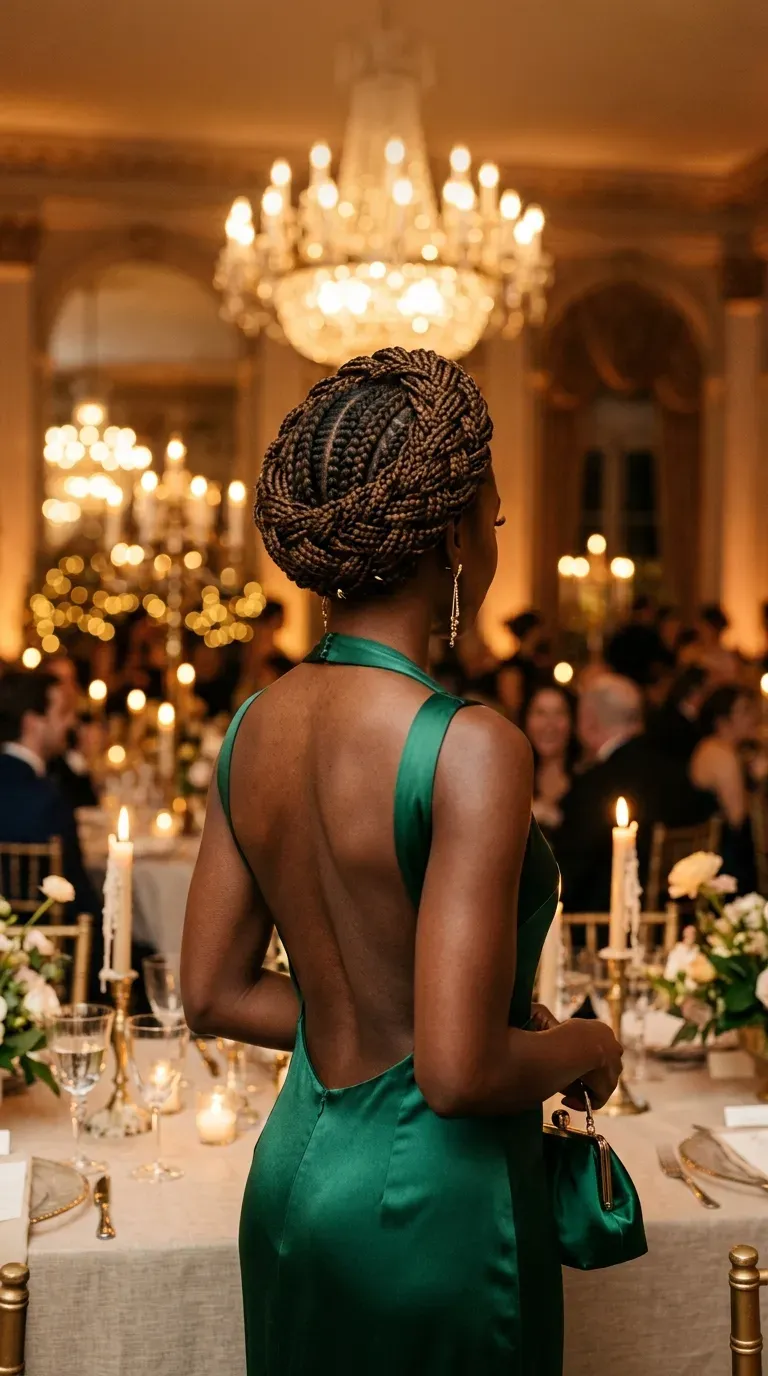
Wrapped all the way around the head, long braids turn into something close to a woven crown. The center cornrow runs underneath, and the braid lengths circle the hairline.
It suits weddings, galas, and any formal dress that needs the neck left clear.
How it comes together:
- Split the braids into two long sections.
- Wrap one around the front and the other around the back.
- Pin where the ends meet and tuck them under.
Keep in mind: this only works with braids long enough to reach well past your shoulders.
Fulani braids have lasted this long because they do two jobs well. They protect your natural hair, and they carry a real piece of West African history. The details are where you make them yours: a swoop braid, a row of cowries, a burgundy mix, a crown for a big night.
Whatever you choose, protect your edges first. Ask for light tension and lighter braids, and set a takedown date before the roots start to strain. Many stylists suggest taking braids out somewhere around the six to eight week mark.
Save this list of fulani braids styles to your hair board so it is ready for your next braiding appointment.