
Thick hair sounds like a gift until you are the one drying it. Forty minutes with the blow dryer, an arm that aches halfway through, and an elastic that snaps by noon. Then the cut grows out an inch and starts puffing into a triangle at the sides.
A lot of salons answer this by thinning it all over with texturizing shears. It feels lighter for about a week. After that, the short chopped bits start poking up through the top layer, and the frizz gets worse than before.
The better fix is a cut that is planned around the weight. Bulk comes out underneath, where nobody sees it. Layers are placed so the hair falls in toward your face instead of out. The ends get softened, not shredded.
These medium haircuts for thick hair are built on that idea. Each one comes with what to ask your stylist for, how it behaves when it dries, and who it suits best. Bring a screenshot, point to the details, and walk out with hair that finally sits the way you want it to.
1. Internally Layered Shoulder Cut That Removes Bulk From Underneath

Most of the weight in thick hair sits underneath, in the layer nobody sees. That hidden section is what pushes everything else out into a puff.
Internal layers, sometimes called hidden or interior layers, cut that under section shorter while the top stays one length. The surface still looks smooth and full. The bulk just quietly goes away.
What to ask for:
- Shoulder length, one length on the outside
- Internal layers through the lower half of the head
- No thinning shears on the top sections
Quick tip: Ask your stylist to lift the top and show you the under section after the cut. You should see shorter, clean pieces tucked in there, not a choppy mess.
2. Collarbone Lob With a Hidden Nape Undercut

Thick hair dries noticeably faster when a patch of it is simply gone. A nape undercut clippers a small area at the back of the head, under the hairline, and the rest of the lob falls right over it.
Nobody sees it unless your hair goes up. Then it shows as a clean little detail at the nape.
- Ask for a collarbone lob with a soft blunt edge.
- Have the undercut stop below the occipital bone, the bump at the back of your skull.
- Keep it a bit longer with the clippers if you want an easier grow out later.
Best for anyone whose ponytail feels like a weight by midday.
3. Long Shag With Curtain Bangs That Opens Up the Face
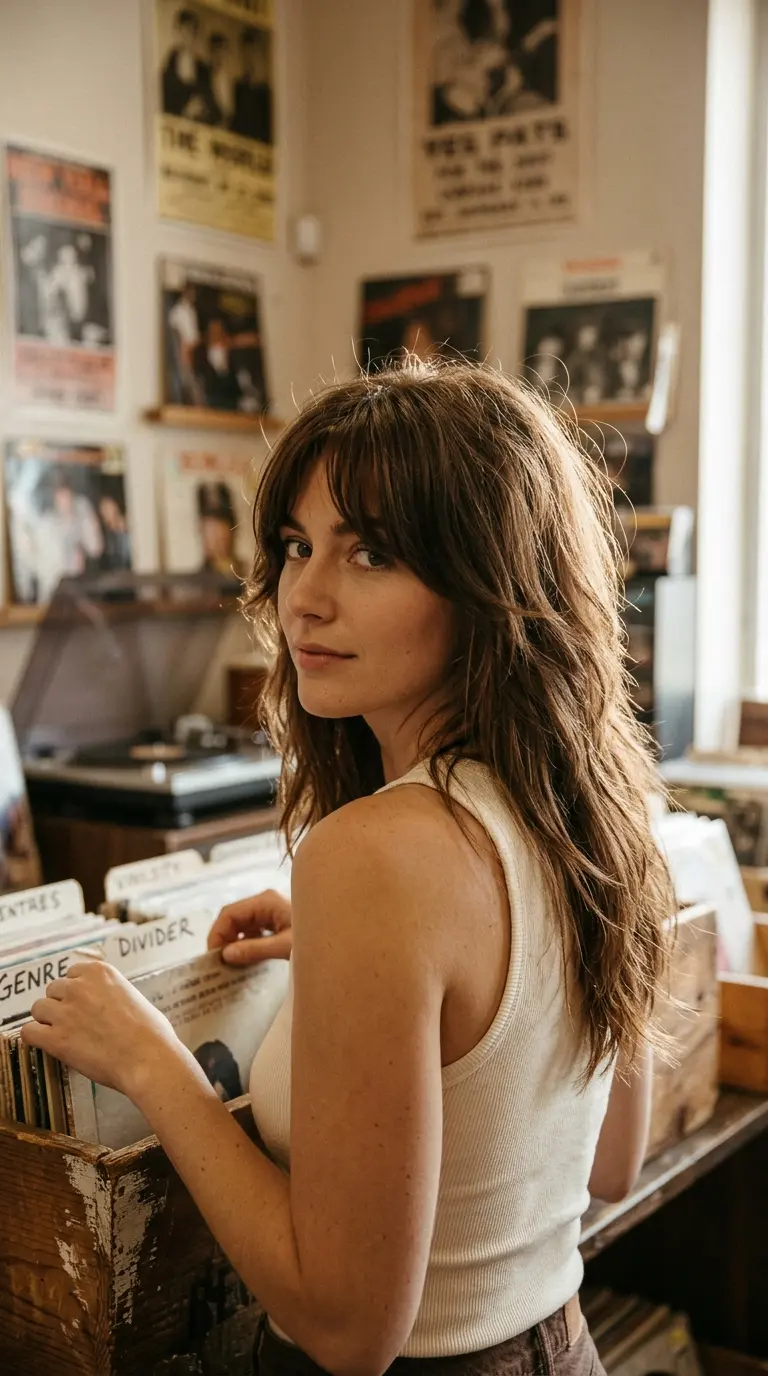
Look at the crown on a good shag. Short choppy layers sit up top, and they get longer as they fall toward the shoulders. That stacking spreads thick hair out in a way that looks planned instead of heavy.
Curtain bangs finish the shape. They split at the center and sweep back toward the cheekbones, so the front stops looking like a solid wall of hair.
Ask for:
- Layers starting around the cheekbone
- Curtain bangs cut long, near the top of the cheekbone
- Point cut ends instead of a blunt line
Thick hair holds a shag better than most textures. There is enough weight to keep the layers from flipping up in every direction.
4. Textured Lob With Point Cut Ends That Stop the Bell Shape

The common mistake with a thick lob is a dead straight blunt bottom edge. On fine hair that line looks crisp. On thick hair it often swings out into a bell shape by week three.
Point cutting fixes this. Your stylist snips upward into the ends with the tips of the scissors, which breaks up the hard line and lets the hair settle closer to your neck.
The length still lands just above the shoulders. It just moves more, and it stops flaring at the bottom.
A flat iron run quickly through the ends, with a slight bend under, is all the styling it needs most days.
Point cutting on the last inch of the ends to soften the line.
Weight taken out underneath before the outer shape is set.
A final check of the shape once your hair is fully dry.
Thinning shears through the top layer, which leaves short pieces that frizz.
A dead straight blunt hem with nothing removed inside.
Razoring dry, coarse ends, which can leave them frayed.
5. Shoulder Length V Cut Layers for More Swing

Long V shaped layers are usually seen on long hair, but they shrink down well to the shoulders. The back finishes in a soft point, and the sides angle up toward the face.
How it gets cut:
- The center of the back stays as the longest piece.
- The sides are cut shorter on an angle, meeting at that center point.
- Layers go in through the back so the V never looks heavy.
The result swings when you turn your head. At this length the point is subtle, more of a gentle curve than a sharp arrow.
Skip it if you wear a low bun every day. The shorter side pieces tend to slip out.
6. Medium Butterfly Cut With Lifted Face Layers

A butterfly cut and a shag look alike in photos, but they behave differently. A shag keeps texture all over the head. A butterfly cut puts short layers only around the face, while the back stays longer and smoother.
On thick hair, that difference matters. The short face pieces get lift and bounce, and the back keeps enough weight to stay sleek.
- Shortest face layer: around the chin
- Back length: just past the shoulders
- Styling: a round brush on the face layers, rolled back and away
It still looks like a fresh blowout on day two, mostly because the face layers hold their curve so well.
7. Soft Wolf Cut for Thick Hair That Refuses to Lie Flat

Some thick hair simply refuses to lie flat, no matter how much serum goes on it. The soft wolf cut stops fighting that.
It blends a choppy shag on top with a slightly longer, wispy back. Think of a mullet’s outline, only softer and more grown out. The crown gets a lot of short layers, so all that natural volume ends up looking intentional.
What makes it work:
- Heavy texture at the crown
- Piecey, textured ends at the back
- Bangs that blend into the side layers
Watch for this: The crown layers grow out fast on thick hair. Plan on a trim about every six to eight weeks to keep the shape.
8. Angled Long Bob That Sits Shorter in the Back
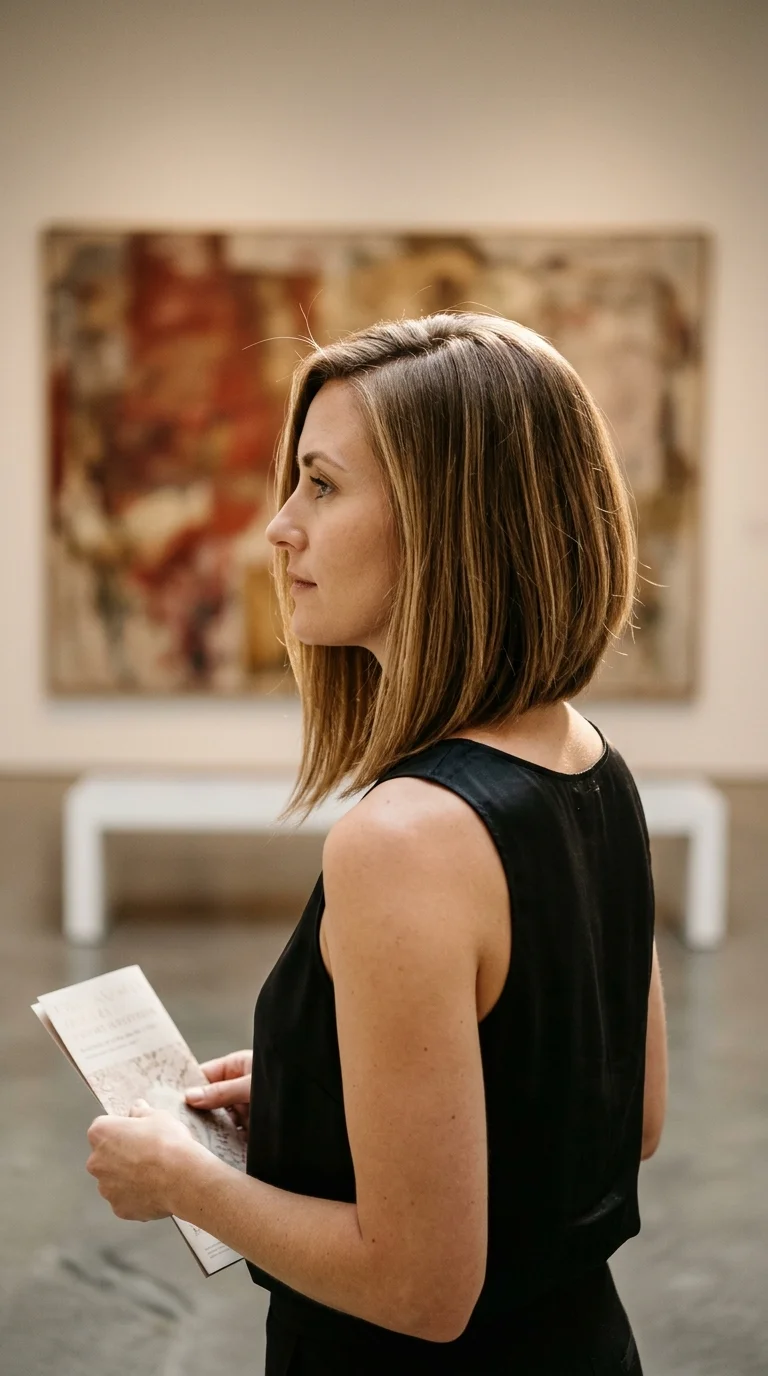
Here is a simple rule for thick hair: shorter in the back means less weight pulling everything down and out.
An angled long bob is cut a little shorter at the nape and gradually longer toward the front, so the front pieces brush the collarbone. The back stays tidy and close to the neck, and the front gets to swing.
Keep the angle gentle. A steep one can look dated and needs constant trims.
- Ask for a one to two inch difference between back and front.
- Have weight removed at the nape before the angle is set.
- Blow dry the front forward and down with a paddle brush.
Clean, polished, and quick on a workday morning.
9. Wavy Layered Lob for Naturally Thick Waves

On a humid summer morning, thick wavy hair can double in size before you finish your coffee. A layered lob gives those waves room to form instead of getting squashed into one frizzy mass.
The cut sits around the collarbone. Long layers start near the chin, so each wave has space to curl without stacking on top of the one below it.
Styling routine:
- Rake a curl cream through soaking wet hair
- Scrunch in a light gel
- Air dry or diffuse on low, then scrunch out the stiffness
Ask for the cut to be done dry, or at least checked dry. Waves shrink up, and a dry cut shows where each layer really lands.
10. One Length Cut With Face Framing Layers Only

Easy upkeep is the big appeal here. The hair stays one solid length at the shoulders, and only the front few inches get layers around the face.
That small change keeps thick hair from looking like a heavy curtain. The face pieces lift and curve, while the rest stays simple enough to air dry.
Good fits for this cut:
- Anyone growing out old layers
- People who wear their hair up a lot
- Thick, straight hair that holds a clean line
The front layers usually land at the cheekbones or the jaw. Cheekbone length tends to lift a round face, and jaw length softens a longer one.
11. Collarbone Cut With Long Side Swept Bangs

People with thick hair are often told to skip bangs completely. Straight blunt bangs can be a lot of daily work, that part is true. Long side swept bangs are a different story.
They are cut on a diagonal, longest near the ear, so they blend into the side layers instead of sitting there as a separate block. Thick hair actually helps, because the bangs have enough weight to stay put.
Ask for:
- Bangs that start at the brow bone and angle down to the cheek
- A collarbone length cut with light layers
- Point cut bang ends, never blunt
A quick blast with the dryer, brushing them sideways, is the whole routine.
12. U Shaped Layers for a Rounded, Softer Back

Seen from behind, a U shaped cut curves gently at the hem. It is longest at the center and slightly shorter toward each side. It is softer than a V, and it suits thick hair that already has plenty of body.
Layers through the back keep that curve from turning into a heavy shelf.
What you get:
- A rounded back that moves when you walk
- Sides that fall smoothly past the shoulders
- Enough length left for braids and half up styles
It grows out kindly, too. The curve just gets a little longer, so you can stretch a few extra weeks between cuts.
13. Rounded Curly Cut for Thick, Medium Length Curls

Thick curly hair cut with straight lines tends to turn into a pyramid, flat on top and wide at the bottom. A rounded curly cut fixes the shape before you even reach for product.
The stylist cuts curl by curl, usually on dry hair, and shapes everything into a soft round outline around the face and shoulders.
Before you book:
- Look for a stylist who regularly cuts curls dry
- Show up with your curls styled the way you normally wear them
- Skip heavy oils on the day of the appointment
Quick tip: Ask for the top curls to be cut a bit shorter than the bottom ones. That is what lifts the crown and stops the pyramid.
14. Feathered Mid Length Cut With a Retro Swoop

Feathered layers are cut to fall back, away from the face, in long soft wings. It is a seventies look, and it suits thick hair because the weight gives each feather a clear shape.
Getting the feathers to show:
- Blow dry with a round brush, rolling each side section back and away from your face.
- Hit each section with the cool shot before letting it go.
- Mist a flexible hairspray onto your palms and smooth the outside.
The length sits around the shoulders. Pieces near the face are the shortest, usually at the cheekbone.
Fair warning: it shines when blow dried. Air dried, it reads more like a loose shag.
15. Shoulder Length Cut With Bottleneck Bangs

Full bangs on thick hair are where a lot of people get burned. They end up with a heavy, straight block that needs blow drying every single morning.
Bottleneck bangs avoid that. They are short and narrow in the center, then widen and lengthen around the eyes and cheekbones, like the neck of a bottle.
- Less hair in the bang, so less to tame
- Blends easily into shoulder length layers
- Can be pushed aside on second day hair
Ask for the bangs to be cut and checked dry. Thick hair often hides a cowlick at the front, and a dry cut shows exactly how it falls.
16. Asymmetrical Lob With One Longer Side
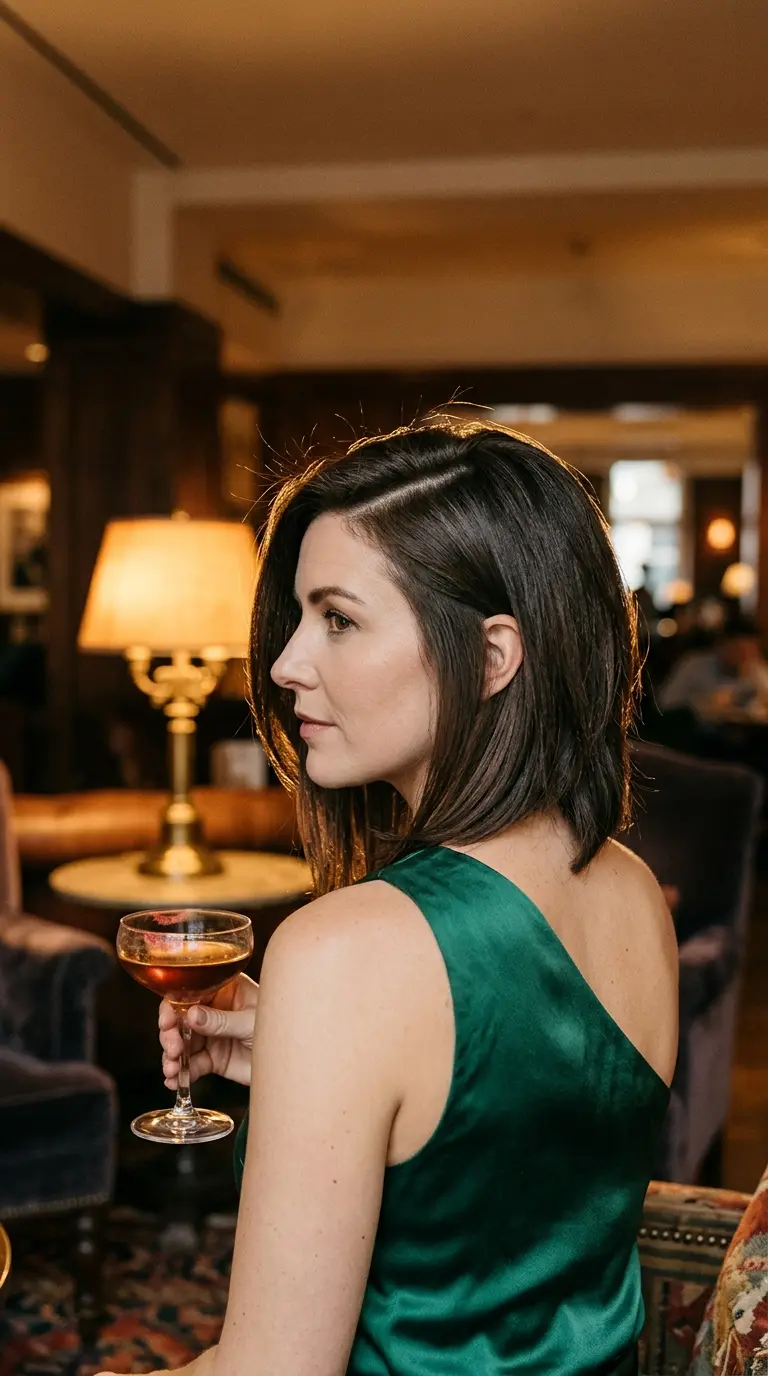
An asymmetrical lob gives thick hair a reason to look a little different on each side. One side sits about an inch or two longer, usually the side your part leans toward.
The longer side drapes along the jaw and collarbone. The shorter side tucks neatly behind your ear, which is handy with all that volume.
Good to know:
- A deep side part shows off the uneven line best
- It works on straight and slightly wavy hair
- On tight curls, the difference tends to disappear
Keep the gap small for everyday wear. A big difference looks striking in photos but needs more trims to keep it sharp.
17. Slide Cut Layers That Melt Weight Away

Regular layers are cut in sections, which can leave visible steps in thick hair. Slide cutting is different. The stylist glides slightly open scissors down the hair shaft and removes weight in a smooth, blended way.
The result is less bulk and no obvious lines. Thick hair falls closer to the head and moves more freely.
Slide cuts work best on:
- Straight or slightly wavy thick hair
- Hair that tends to puff out at the sides
- Anyone who wants layers that look almost invisible
Watch out: Not every stylist slide cuts. Ask when you book, because the technique needs very sharp, smooth blades and a steady hand.
Shoulder length hair shaped like a triangle, flat at the roots and wide around the jaw, with a heavy line where the ends stop and a blow dry that takes most of the morning.
The same length lying closer to the neck, soft movement through the sides, ends that taper instead of stopping, and noticeably less hair to dry.
18. Razor Cut Shoulder Length Hair for Soft, Piecey Ends
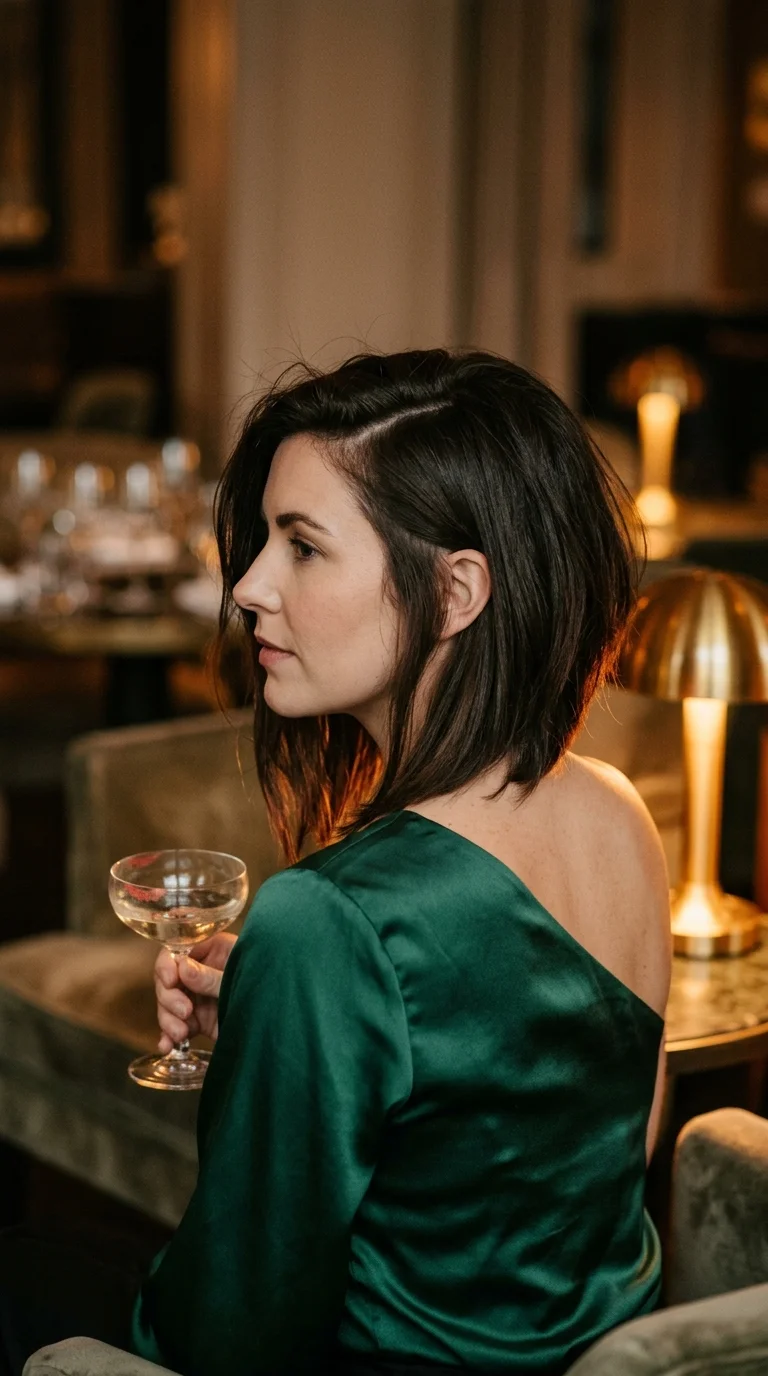
Run your fingers through razor cut hair and you feel the difference right away. The ends taper into soft, wispy points instead of stopping at a blunt line.
On thick hair, that taper takes off visible weight and gives the cut a lived in, piecey finish.
How to get a good one:
- Find a stylist who razor cuts often, not once a year.
- Ask for it on wet hair, which keeps the ends smoother.
- Separate the ends with a light texture spray after drying.
Very coarse or frizz prone hair does not always love a razor. A good stylist will tell you honestly if yours is a match.
19. Rounded Italian Lob With Soft Volume

Some mornings the only goal is to look put together in five minutes. A rounded Italian lob handles that. It sits just above the shoulders, with a full, softly curved outline and slightly bent ends.
It borrows from the Italian bob, but the extra length keeps thick hair from springing out at the sides.
- Soft, rounded ends rather than a hard edge
- A little weight left in for that full shape
- Works with a side part or a middle part
A quick bend with a large barrel iron, or a round brush blowout, gives it form. On day two, with slightly messy ends, it still holds that round outline.
20. Nineties Flipped Ends on a Shoulder Length Layer Cut

Flipped ends make thick hair look bouncier and lighter than it really is. The look is straight out of the nineties, and it hides a lot of bulk.
The cut underneath is simple: shoulder length with long layers, so the ends have room to turn out.
To flip the ends:
- Blow dry smooth with a paddle brush.
- Curve the last inch outward with a large round brush or a flat iron.
- Set it with a quick mist of flexible hairspray.
Skip the flip if your hair is very curly. Straight or wavy thick hair holds it best, often right through the evening.
Playful, a little retro, and a fun break from beach waves.
Lighter Hair Starts With the Right Shape
Thick hair does not need to be thinned into submission. It needs weight taken out in the right places and a shape that works with the way it naturally falls.
Pick the one cut that matches your biggest frustration. If drying takes forever, start with the nape undercut. If your hair puffs into a triangle, ask about internal layers or a slide cut. If your waves keep getting squashed, book the layered lob and ask for it cut dry.
The right medium haircuts for thick hair should make your mornings shorter, not longer, and leave you liking your hair on day three as much as day one.
Save this list to your hair board so it is ready for your next salon visit.