
The first time most guys notice it is in a bad photo. A friend posts a picture taken from slightly above, and the corners of your hairline sit further back than they did last summer.
Then comes the usual fix. Grow the top longer, push it forward, and hope it covers the gap. It rarely does. Long, fine hair splits into strands and lets more scalp show, not less.
What actually helps is a cut built around the hair you have now. Shorter sides make the top look fuller. Texture breaks up the surface so light doesn’t bounce off the scalp. A soft front edge blurs the corners of the hairline instead of drawing a hard line around them.
These haircuts for men with thinning hair cover short crops, buzz cuts, side parts, fades, curls, and a couple of longer tops that still work. Each one comes with what to tell your barber and the kind of thinning it suits best. Save the two or three that look most like you, and bring them to your next appointment.
1. Short Textured Crop With a Choppy Fringe

A textured crop hides more than almost any other cut here. The top is point cut, so the ends land at slightly different lengths. That uneven surface catches light in lots of small places instead of one flat shine, and the fringe falls forward over the temples on its own.
What to ask for:
- 1 to 2 inches on top, point cut for texture
- A low or mid taper on the sides
- A fringe that sits well above the brows, kept choppy and not blunt
Rub a pea sized bit of matte clay between your palms and push the hair forward with your fingertips. That’s the whole routine.
It suits early recession at the temples best, the stage where you notice it and most people don’t.
2. Even Buzz Cut With a Number 2 Guard

Here’s the rule: the shorter the hair, the smaller the gap between thick and thin areas. When everything is a quarter inch long, a sparse crown and a full back look almost the same.
A number 2 guard is the sweet spot for most men. It’s long enough to keep some color over the scalp and short enough that nothing separates.
- Ask for the same guard all over, or one size shorter on the sides.
- Have the barber round off the front corners so the shape isn’t boxy.
- Keep the neckline tapered, not squared.
Quick tip: once you know your number, buy your own clippers. A buzz grows out fast, and a touch up every week or two keeps it sharp.
3. Ivy League Cut Swept Loosely to One Side

Compared with a crew cut, the Ivy League keeps an extra half inch or so at the front. That’s just enough to push across to one side, and the swept piece lands right over the deepest corner of the hairline.
Crew cut: same short length on top, the front stands up.
Ivy League: the top grows longer toward the front, and the front sweeps sideways.
Direction matters more than length here. Pushing hair sideways covers one temple point, while pushing it straight back shows both corners at once.
Ask for scissor over comb on top with a short taper at the sides. Style with a little cream on damp hair, using your fingers. A comb splits fine hair into neat rows, and the rows show scalp.
4. Classic Crew Cut With a Short Taper

The usual crew cut mistake is asking for “a little longer on top” to make up for thinning. On fine hair that extra length goes flat and shows exactly where it’s sparse.
Keep the top at about an inch, cut fairly even, and let it stand up a little at the front. Upright hair throws small shadows over the scalp, and shadow reads as density.
- Sides: number 2 or 3, tapered down to the ear
- Back: tapered close at the nape
- Top: about an inch, a touch longer at the front edge
A small dab of matte paste is enough. Shine makes thin hair look thinner, so leave the wet look gels on the shelf.
It’s the cut nobody comments on, in a good way.
5. Short Spiky Top With Matte Paste

Look closely at a good spiky top and you’ll see dozens of small clumps pointing in slightly different directions. Each clump throws a tiny shadow, and together they cover the scalp far better than smooth hair could.
How to style it:
- Towel dry until the hair is just damp.
- Blow dry the top up and slightly forward.
- Warm a little matte paste and twist the ends between your fingers.
Keep the length to about an inch and a half. Longer spikes get heavy and fold over by lunch.
Small warning: skip frosted tips. Light ends pull the eye straight to the top of your head.
6. Butch Cut for Thinning All Over

Thinning that happens everywhere at once is hard to style around, because there’s no single spot to cover. Every fringe or sweep just moves the problem somewhere else.
The butch cut stops trying. Everything on top is clipped to one short length, usually a number 3 or 4, and the sides go a little shorter.
It works because it’s honest. There’s no length to separate and no fringe to clump. The shape comes from your head itself.
Quick tip: ask the barber to round the front corners slightly. A square front edge outlines the hairline, and a rounded one blends into it.
No product needed. Wash, towel dry, and you’re out the door.
7. Caesar Cut With a Short Straight Fringe

Ask for a Caesar by name, then add three details so it doesn’t come out like a bowl:
- Top cut to about an inch and combed forward.
- Fringe cut straight across, short, sitting well above the brows.
- Sides and back tapered with a number 2 or 3.
The forward direction does the real work. All the hair on top points toward your face, so the fringe gets backup from the hair behind it, and the hairline sits hidden underneath.
It’s the best choice here for a hairline that has moved back evenly across the forehead, rather than only at the corners.
8. Low Side Part Set at the Deepest Temple
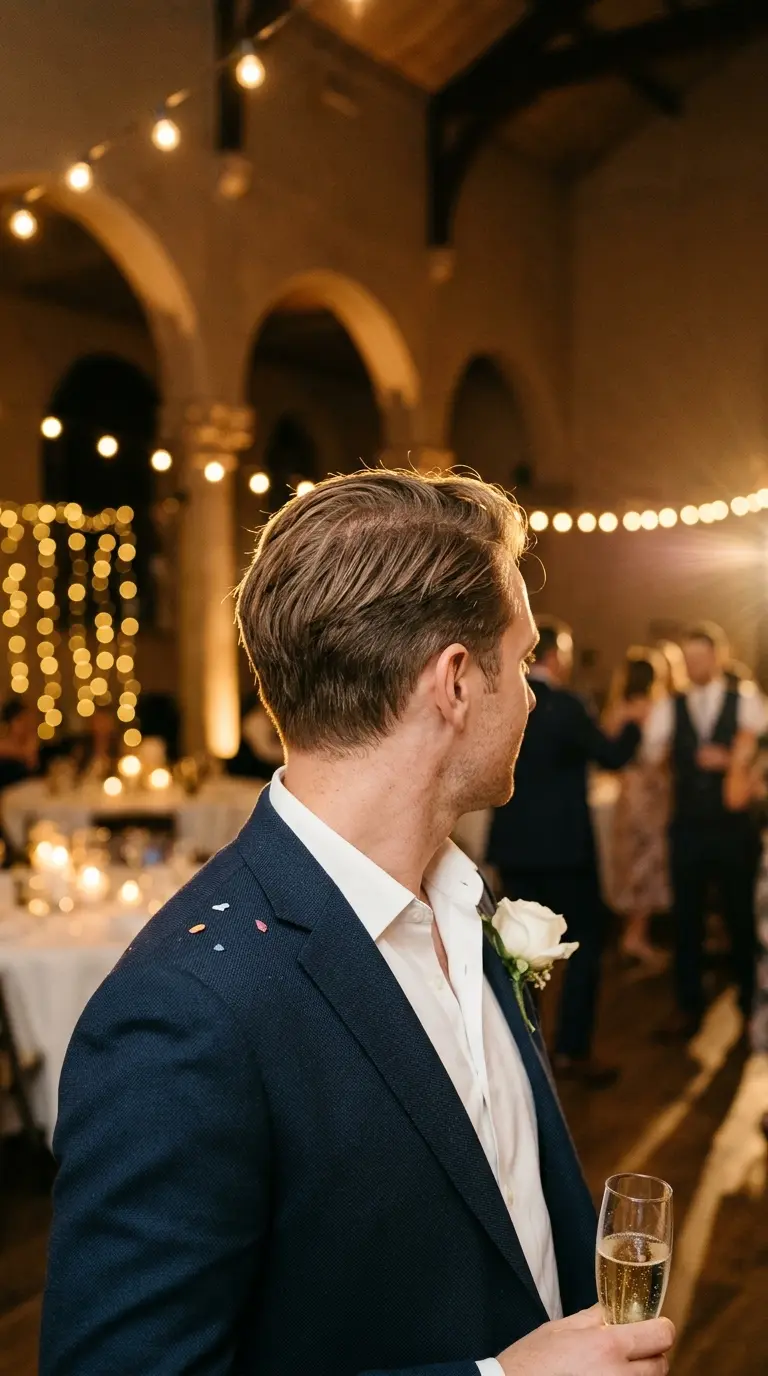
Most men assume a side part is off the table once the temples start going back. Usually the part is just in the wrong place.
Find the deepest point of your recession on one side. Set the part right there, or a touch lower. Now the hair sweeps across from that line and covers the corner, instead of the part pointing at it like an arrow.
Keep the part soft. A shaved hard part is a bright line on a thin area.
- Top: 2 to 3 inches, layered so it isn’t heavy
- Sides: scissor taper, kept short
- Product: light cream, combed through with fingers
Have your barber find the part with you while your hair is dry.
9. Mid Fade With a Short Brushed Up Top

Something I notice again and again: the guys who look best after a cut for thinning hair usually walk out with the sides far shorter than they planned.
A mid fade does exactly that. The sides drop close to the skin around the temples and blend up into a short top. Next to that clean shade, the top looks thicker by contrast, with the same amount of hair.
Keep the top at 1 to 2 inches. Brush it up and slightly back with a little texture powder at the roots, which adds grip without weight.
Book the fade every three weeks. A grown out fade loses the contrast that makes it work.
10. Clean Shaved Head With a Full Beard

Shaving it all off is a decision, and plenty of men wish they’d made it sooner. When the top is mostly gone, a full shave removes the contrast between the patches that are left and the scalp around them.
A beard balances the look. It moves the visual weight down to the jaw, so the head reads as clean rather than bare.
Keep the beard shaped, with a clear cheek line and a neckline about a finger’s width above the Adam’s apple.
Small warning: a shaved scalp burns fast. Sunscreen on your head becomes part of the morning routine.
Shave with the grain for the first few weeks while your skin gets used to it.
Rub a light, unscented moisturizer over your scalp after every shave.
Leaving a ring of hair around the sides. It frames the bare top instead of hiding it.
Letting the beard grow wide and shapeless. A loose beard makes the head look smaller.
11. High and Tight for Busy Mornings

It’s 7:40 on a Monday, you have four minutes, and the hair needs to look fine all week. That’s the whole job of a high and tight.
The sides are clipped very short, often to the skin, all the way up to the curve of the head. A small patch on top stays at a quarter to half inch.
Why it helps thinning hair:
- Very little length left to show density
- The tight sides make the top look darker by contrast
- Nothing to style, so nothing to fall apart in the wind
Get it tidied every two to three weeks. This shape loses its edge quickly.
12. Short Slick Back for an Even Mature Hairline

Rule of thumb: slick it back only if your hairline moved back evenly, without deep points at the temples.
A mature hairline, where the whole front sits a finger or so higher than it did at eighteen, is common and normal. Swept back short, it looks deliberate and grown up.
Keep the top at about 2 inches. Any longer and the strands split into stripes once product goes in.
Pick a matte or low shine cream over classic pomade. Wet shine on fine hair shows the scalp underneath, especially under office lights.
On the sides, a scissor taper blends without a hard line, which keeps the look soft.
13. Short Layered Cut for Fine Wavy Hair

Fine wavy hair tends to lie flat and part on its own, opening little gaps right where you don’t want them.
Short layers fix that. When the top is cut at a few different lengths, each wave has room to bend and lift instead of being pressed down by the hair above it.
Ask for:
- 2 to 3 inches on top, cut in soft layers
- Scissor cut sides, short but not faded
- Ends left uneven so the waves don’t sit like a helmet
Scrunch in sea salt spray while damp, then air dry or use a diffuser on low. Don’t brush it once it’s dry. Brushing pulls the waves apart, and the gaps come right back.
14. Curly Top With a Low Taper

Curly hair is a natural cover. Each curl takes up more room than a straight strand of the same length, so curls fill in thin areas almost on their own.
The cut just needs to keep them together. Leave 2 to 3 inches on top, have it shaped with scissors on dry hair so the barber can see where each curl sits, and keep a low taper on the sides.
Quick tip: rake a curl cream through wet hair, then leave it alone until it’s fully dry. Touching curls while they set breaks them into frizz, and frizz lets light through to the scalp.
Best for loose to tight curls that are getting lighter at the crown.
15. Shorter Crown Blend for a Thin Spot at the Back

The crown is the spot men forget, because they never see it. So it gets cut the same length as the top, and the thin patch at the back stays on show for everyone behind you in line.
The fix is simple. Ask for the crown to be cut about half an inch shorter than the front and blended into the sides.
Shorter hair at the crown lies flatter and closer, so the swirl in the middle doesn’t open up.
Two lines for your barber:
- “Take the crown a bit shorter than the top.”
- “Blend it in, no step.”
Check the back with a hand mirror before you pay.
16. Low Faux Hawk With a Taper Fade

A faux hawk pulls the eye to the middle of your head. That’s handy when the thinning sits at the temples, because people follow the peak and skip the corners.
Faux hawk: hair pushed toward a center ridge, front corners kept short.
Spiky top: texture spread evenly, so the corners stay part of the shape.
Keep the ridge low, 1.5 to 2 inches at most. A tall one on fine hair leans and splits by afternoon.
Ask for a taper fade on the sides so the center looks fuller. Style with fiber paste, pinching the top up toward the middle.
17. Short Back and Sides With a Scissor Cut Top
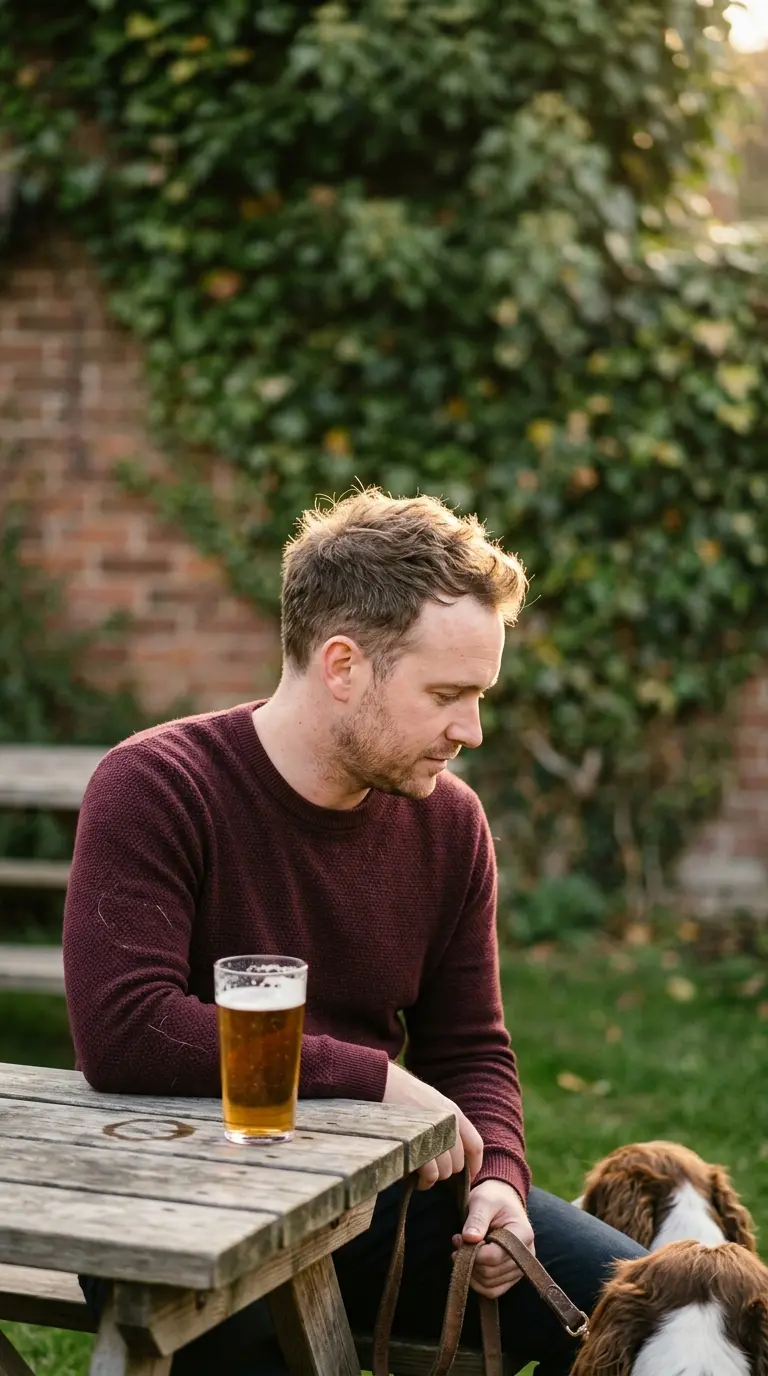
Plenty of men grow the sides out, thinking more hair anywhere means more hair overall. It works the other way. Full, puffy sides make the top look thin next to them.
A classic short back and sides fixes the balance. The sides go tight, and the top is scissor cut to about 2 inches with plenty of texture.
Why scissors on top matter:
- They leave soft, uneven ends that blend into each other
- Clippers on top can leave one flat, even surface that shows scalp
Ask for a natural neckline at the back. It grows out softer than a squared one, so the cut still looks tidy in week four.
Sides grown out and puffy, top about the same length as the sides. The head looks wide, and the eye lands on the thin front and crown.
Sides tight and clean, top scissor cut with texture. The head has a clear shape, and the top reads as the fullest part.
18. Silver Short Crop for Grey Thinning Hair

Silver hair has one quiet advantage on a thinning head. It sits close to the color of the scalp, so the contrast between hair and skin is lower than with dark hair.
A short crop leans into that. Keep the top at about an inch, point cut for texture, and taper the sides to a number 2.
Skip the box dye. Darkening grey brings back the contrast that was helping you, and the roots show within a couple of weeks.
Styling is a dab of light, matte cream. Grey hair can feel wiry, and cream softens it without adding shine.
This cut stays neat for five weeks or more, which suits men who don’t love the barber chair.
19. Low Taper With a Soft Natural Front

Tell your barber one thing before the clippers come out: leave the front hairline alone.
A sharp line up, where the edges are shaved into a crisp border, looks great on a full hairline. On a receding one, it draws a bright outline around exactly what you’d rather people missed.
What to say instead:
- “Low taper on the sides and back.”
- “Clean up the neck and around the ears only.”
- “Don’t touch the front edge, keep it natural.”
The soft, slightly uneven front blends into the forehead. The tapered back still looks sharp, so the cut never feels unfinished.
20. Textured Comb Over With a Low Fade

The comb over has a bad name, mostly thanks to the long, flat strand some of us remember on an uncle. The modern version is a different cut entirely.
Here the sides are faded low and short. The top stays around 2 to 3 inches, layered, and pushed across with lots of texture rather than combed flat.
It only works if the top is still fairly dense. If you can see scalp through it under a bright bathroom light, go shorter with a crop or an Ivy League instead.
Finish: blow dry the hair up first, then across, and set it with a little matte clay.
Thinning hair changes which cuts work, but it doesn’t take good haircuts off the table. Most of these styles share a few habits: shorter sides, textured tops, matte products, and a front edge that stays soft.
The best haircuts for men with thinning hair work with what’s there instead of covering it up. Pick the one that matches where you are right now, a little recession at the temples or a crown that’s getting light. Then give it two or three visits. Your barber needs a couple of rounds to learn how your hair grows.
If the thinning is new or moving fast, it’s worth bringing up with a doctor. A haircut can only work with the hair you have.
Save this list to your hair board so it’s ready the next time you sit down in the barber’s chair.