
A barber leaves too much bulk above the ears, the back hangs like a separate haircut, and the whole thing reads like a costume. That is the version people still joke about. The modern mullet men are asking for now is cut differently. The sides get tapered or faded so they blend. The top has texture. The back is thinned with layers so it moves when you turn your head.
There are a lot of ways to wear one. Some are quiet enough for a job interview. Others are loud on purpose, with bleach, a perm, or a burst fade cut high around the ear.
Below are 18 versions, each with what makes it different, the words to use in the barber chair, and a few honest notes on who it suits. Save the ones that match your hair type, because a curly mullet and a straight one need very different cuts.
1. Classic Modern Mullet With a Low Taper

Start here if this is your first mullet. It is the version most barbers picture when you sit down and say the word.
Ask for it like this:
- Short to medium length on top, cut choppy with scissors.
- A low taper around the ears and neckline, not down to skin.
- The back left about two inches longer than the top, then thinned so it falls in pieces.
Straight and wavy hair both work. The low taper keeps it calm enough for most jobs.
Quick tip: book a cleanup on the taper every three or four weeks. The back can go eight weeks between trims, but fuzzy edges above the ear make the whole cut look tired.
2. Burst Fade Mullet
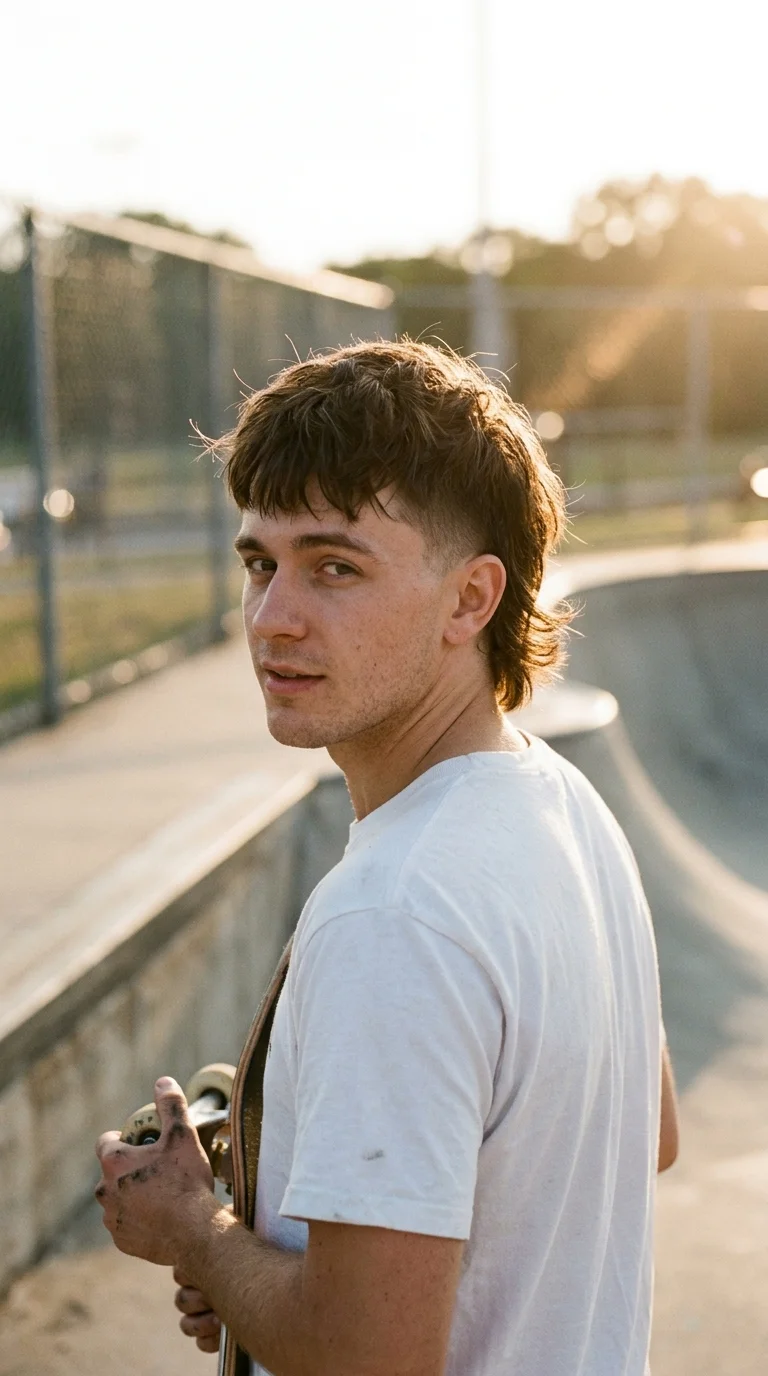
Look at the ear first. A burst fade curves around it in a half circle, short at the center and blending out toward the temple and the nape. Everything behind that curve stays long.
That shape is what makes this cut feel sharp instead of shaggy. The fade frames the ear, and the longer back drops out of it like a tail.
- Best on straight or wavy hair with some thickness
- Looks strongest with a messy, pushed forward fringe
- Needs a fade refresh every two to three weeks
One small warning. The burst only reads clearly if the back is at least two inches long. Go shorter and it starts to look like a regular fade that someone forgot to finish.
3. Drop Fade Mullet

Same idea as the burst fade, different line. A drop fade starts high at the temple, then dips down behind the ear toward the nape. It follows the shape of your head, so it looks clean from every side.
The difference shows up in the back. With a burst, the long hair sits in a narrow strip. With a drop, the fade curves under it, so the back looks fuller and sits lower on the neck.
Pick the drop if you want a mullet that looks tidy at work and still has some edge on the weekend.
What to ask for: a mid drop fade, a textured top, and a back trimmed to collar length with point cutting so it does not curl into one heavy flip.
4. Curly Mullet With a Taper

Curly hair grows out, not down. That is the main problem with a curly mullet. Cut it like straight hair and the back puffs into a triangle while the sides balloon above the ears.
The fix is a taper that goes a little higher than you think, plus a back cut dry, curl by curl. Wet cutting curls is risky because they shrink once they dry, sometimes a lot.
At home, keep it simple:
- Wash with a gentle conditioner and go easy on shampoo.
- Scrunch in curl cream while your hair is soaking wet.
- Let it air dry, and keep your hands off until it is fully dry.
Good for: men with loose curls or tight ringlets who are tired of fighting their texture.
5. Soft Mullet for Work and Everyday

Monday morning, a nine o’clock meeting, and a haircut you love on weekends. This is the mullet for that week.
A soft mullet keeps the shape but drops the drama. The sides are scissor cut instead of faded, so there is no hard line. The back is only an inch or so longer than the rest, and the layers blend together.
Face to face, it reads as a neat, slightly grown out cut. The mullet only shows when you turn your head.
Shop words: scissor cut sides, blended layers, a little extra length at the nape.
Style it with a light cream instead of clay so it looks soft rather than spiky.
6. Mini Mullet With a Textured Crop
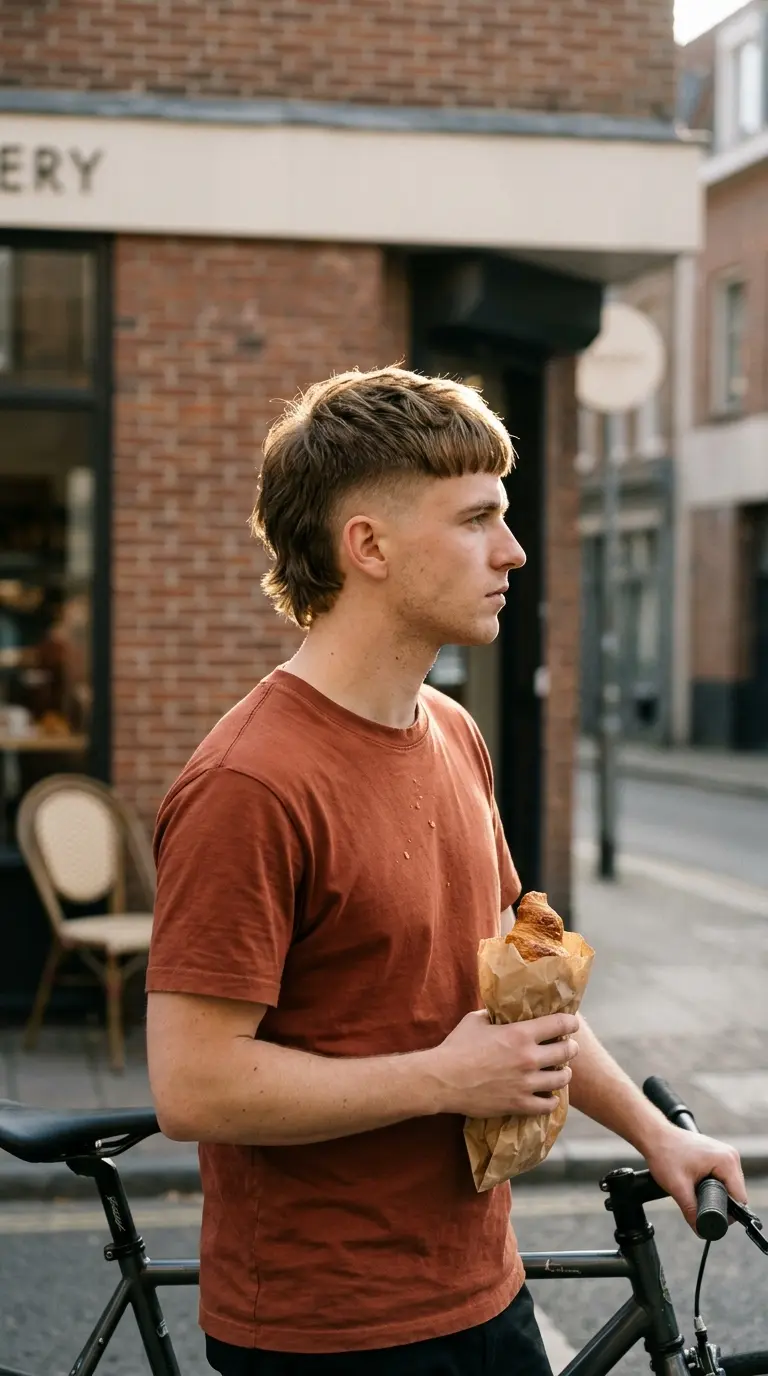
Keep the back under two inches. That one rule is what makes a mini mullet work.
It starts as a textured crop, the short, choppy cut with a blunt fringe that sits low on the forehead. The sides get a mid or high fade. Then the barber leaves a short tail of length at the nape instead of fading it out.
The result is small but noticeable. It suits guys who want to test the mullet idea without growing anything out first.
- Fringe: blunt or slightly jagged
- Product: matte powder at the roots
- Upkeep: every three weeks
Let the back pass the two inch mark and you are into regular mullet territory, which needs a different cut.
7. Wolf Cut Mullet
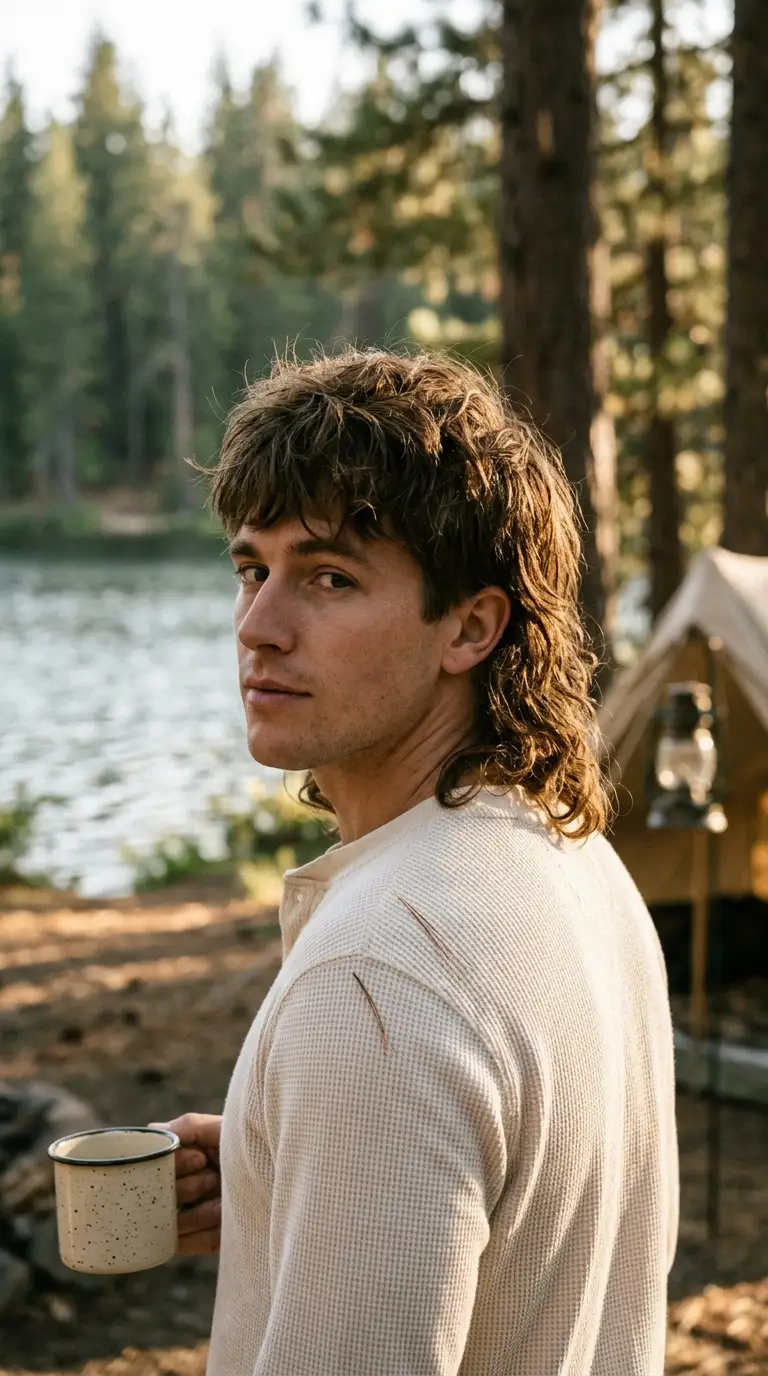
People treat the wolf cut and the mullet as the same haircut. They are close, but not twins.
A mullet keeps the sides short. A wolf cut keeps them shaggy, with layers all around the head and a lot of volume at the crown. The wolf cut mullet sits in between. The sides are layered but taken in tighter, the crown stays full, and the back is longer than everything else.
It works best on wavy hair, which gives the layers bounce on its own.
Quick tip: blow dry the crown with your head flipped forward for ten seconds, then flip back. That small move gives the cut its shape without a lot of product.
8. Mohawk Mullet
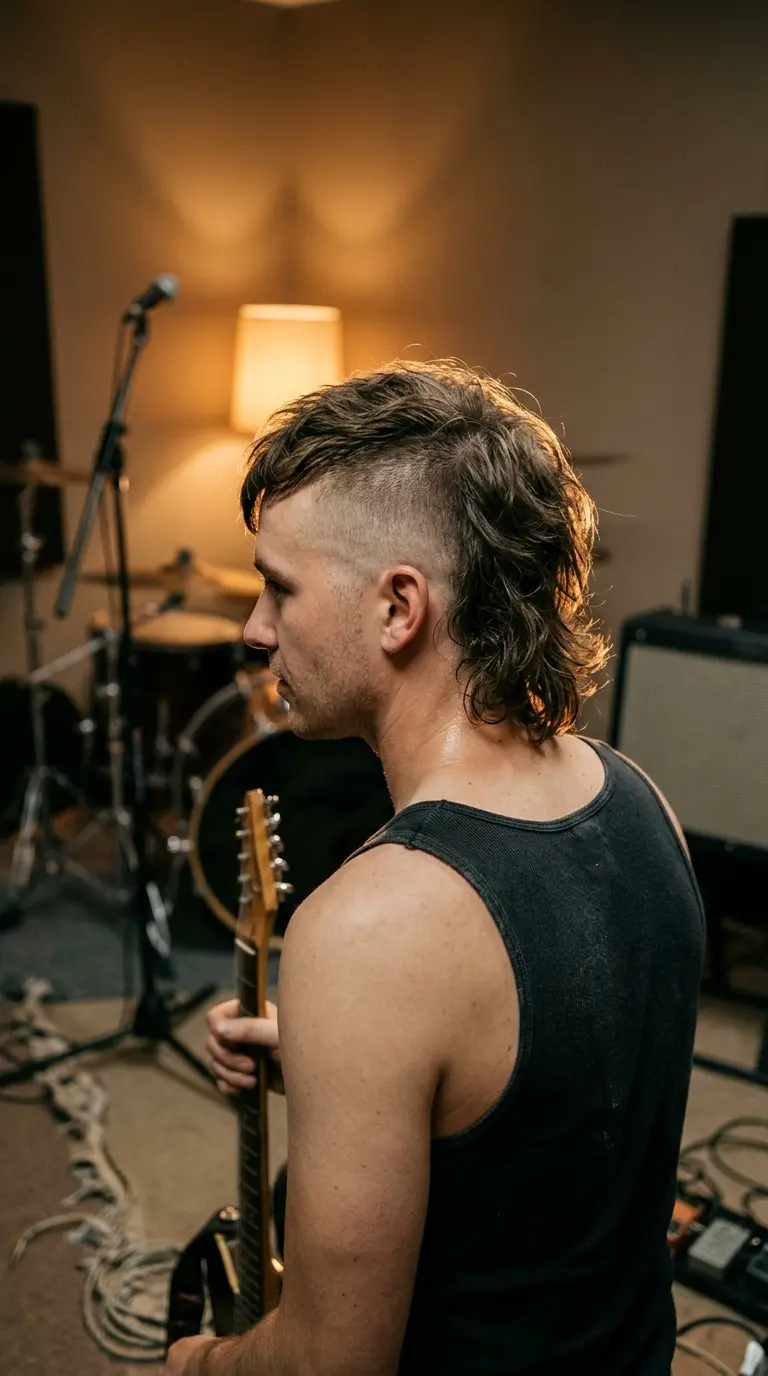
The usual mistake with this one is a strip that is too wide.
A mohawk mullet, sometimes called a mullhawk, needs a band of hair down the center that is narrow enough to read as a mohawk. If the barber leaves the top three or four inches wide, it just looks like a short mullet with tall hair.
Ask for a strip about two fingers wide with high fades or shaved sides. Let the back stay long and loose.
Style the top up and slightly forward with a strong hold paste. Keep it messy rather than spiked straight up.
Bold, yes. It suits guys with a strong jawline and straight or wavy hair best.
9. Straight Hair Mullet With Texture
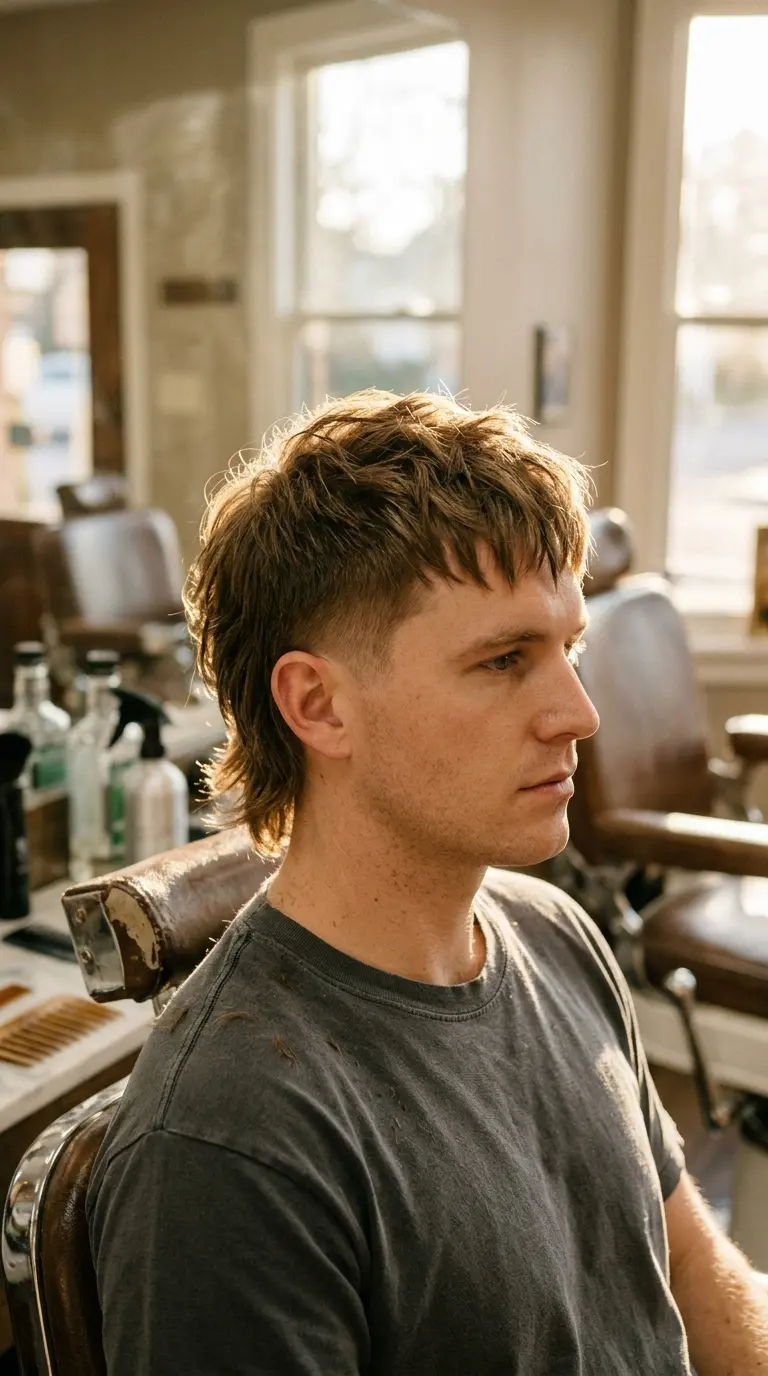
Fine, straight hair has one bad habit. It lies flat, and the back of a mullet turns stringy by lunchtime.
Texture fixes it, both in the cut and in the styling. Ask your barber to point cut the top and back instead of cutting straight across. Those small notches give each piece something to lean on.
Then build grip at home:
- Spray sea salt through damp hair.
- Blow dry on medium heat while pushing hair in different directions.
- Work a little matte clay through the back with your fingertips.
It takes about five minutes. Skip step two and the whole thing falls flat again.
Pick a matte product so the pieces look separate, not shiny.
Wash every other day so the roots keep a little grip.
Wet look gel, which clumps straight hair into thin strands.
A blunt cut back, which hangs like a curtain on the neck.
10. Korean Mullet With a Soft Fringe
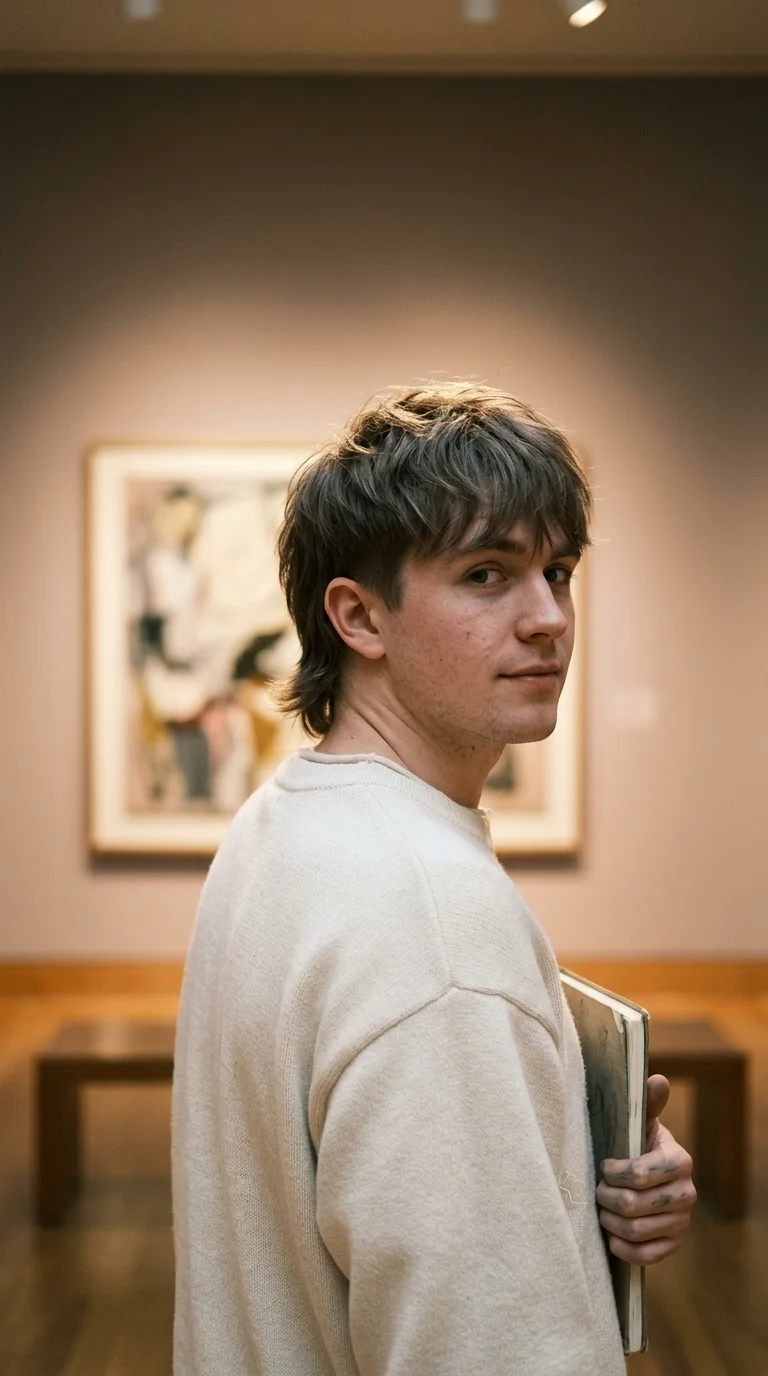
Softer than any other cut on this list, the Korean mullet is also the easiest one to grow into.
It skips fades completely. The fringe falls straight down to the eyebrows or a little past, the sides cover the top of the ears, and the back grows into a gentle layered tail on the neck. Nothing looks sharp.
Because there are no hard lines, it grows out well. Six weeks after a cut it still looks intentional.
Styling: blow dry the fringe downward with a round brush, then lift the crown slightly. Finish with a light spray.
Straight and slightly wavy hair work best. Thick hair may need thinning so the sides do not puff.
11. Mullet With Curtain Bangs
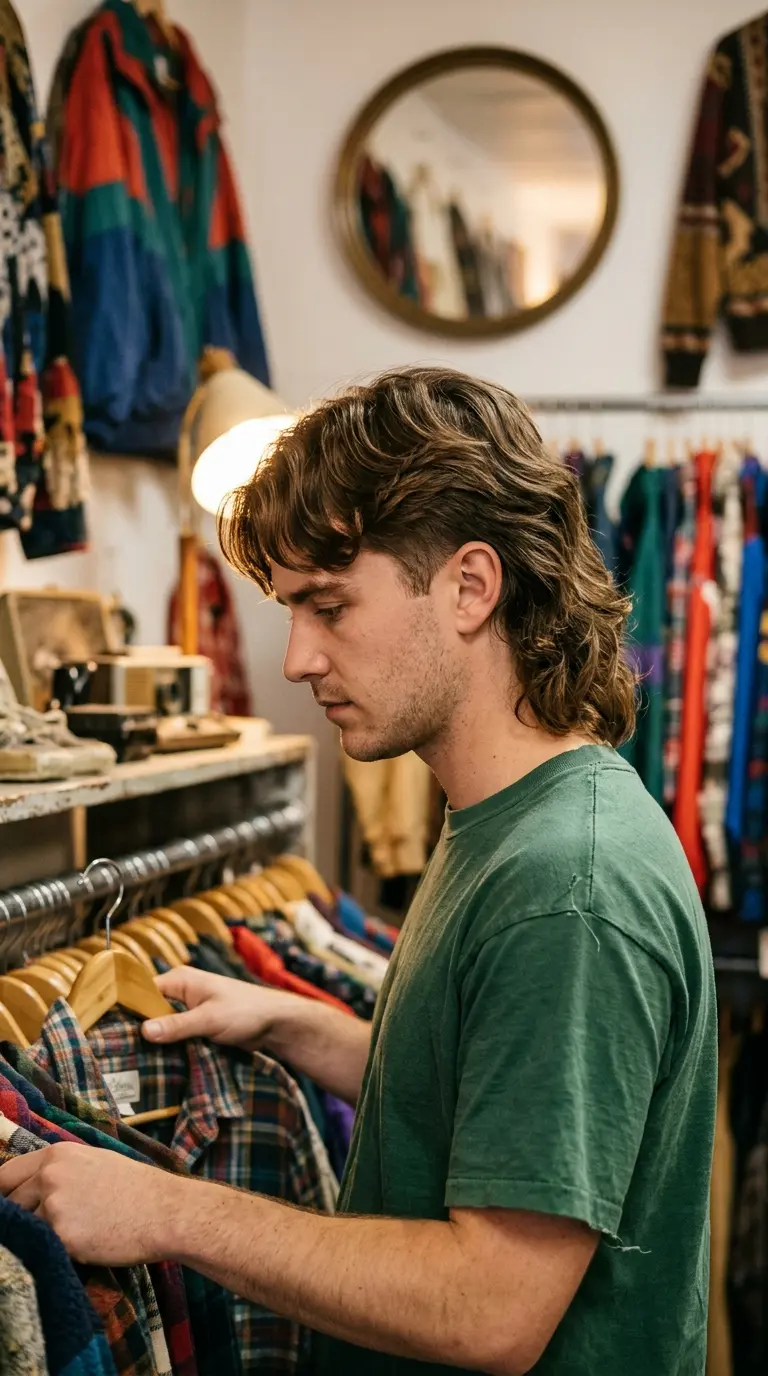
Ask for a center part first. Everything about this cut hangs off it.
Curtain bangs are cut longer at the edges and shorter in the middle, so they split and fall to each side of the face. Paired with a mullet, they balance out the length in the back. The cut looks finished head on, not just from behind.
How to set them each morning:
- Dampen the front only.
- Blow dry each side away from the part with a round brush.
- Rub a tiny bit of cream between your palms and press it into the ends.
Medium thick, straight or wavy hair holds the split best. Very fine hair tends to fall back together by noon.
12. Skin Fade Mullet With a Hard Part
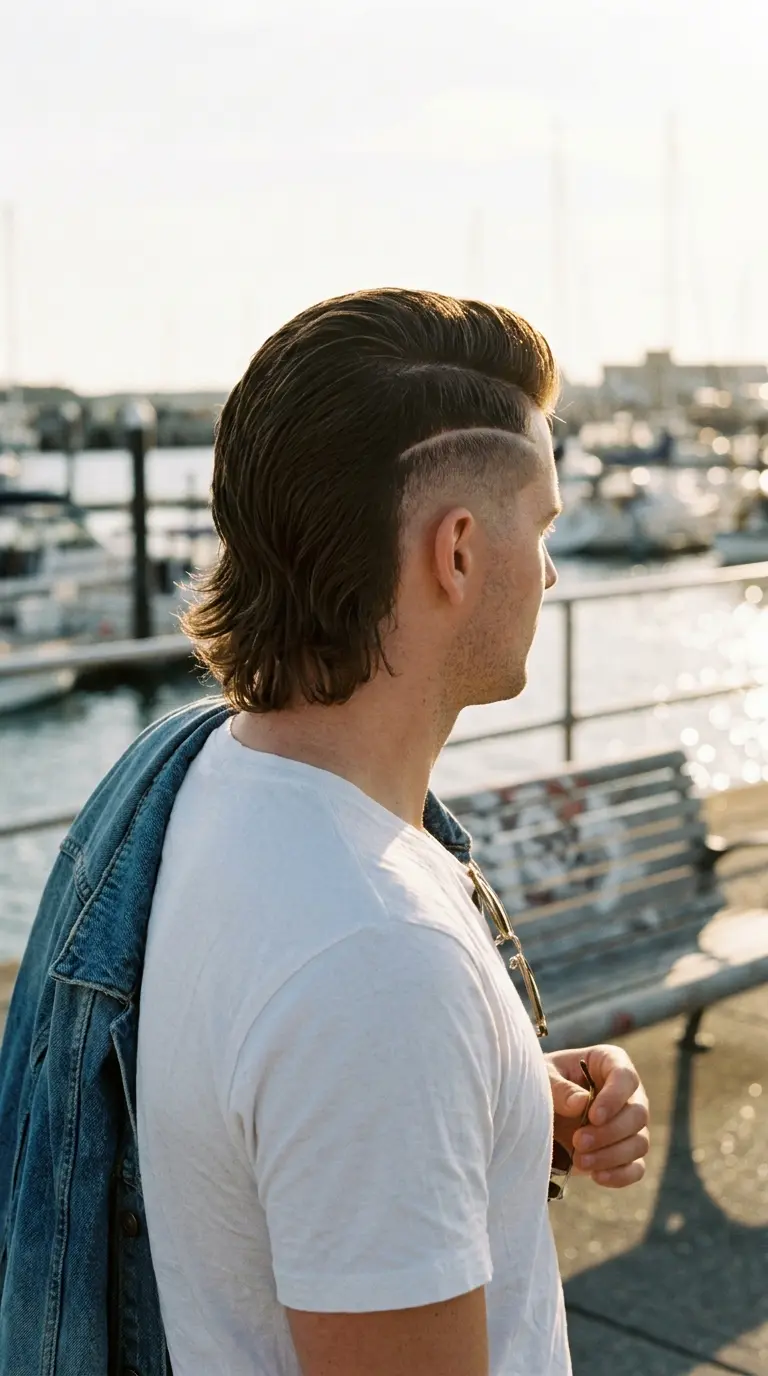
A thin razor line on one side of the head. That small detail is what people notice first.
The sides fade down to bare skin, usually starting low or mid. The hard part is shaved where your hair naturally parts. Above it, the top is combed over or left textured. Behind it, the back stays long.
It is the sharpest mullet on this list, so it suits guys who like a clean, finished look.
- The skin fade needs a touch up about every two weeks.
- The shaved part softens and grows in after a week or two.
- A part shaved too wide is the usual mistake. Ask for a single thin razor line.
Sharp, but it does ask for upkeep.
13. Long Flow Mullet

Most guys who end up with this cut did not plan it. They grew out a regular mullet, kept trimming the sides, and one day noticed the back was touching their shoulders.
It is a commitment. Expect something like a year of growth for the back to pass the shoulders, depending on where you start.
The barber’s job during that stretch is mainly to keep the sides neat and dust the ends so they do not split.
Wavy hair suits it best because the back moves when you walk. Straight hair works too, but it needs sea salt spray to avoid looking flat.
Tuck the front behind your ears on days you want it out of your face.
14. Permed Mullet
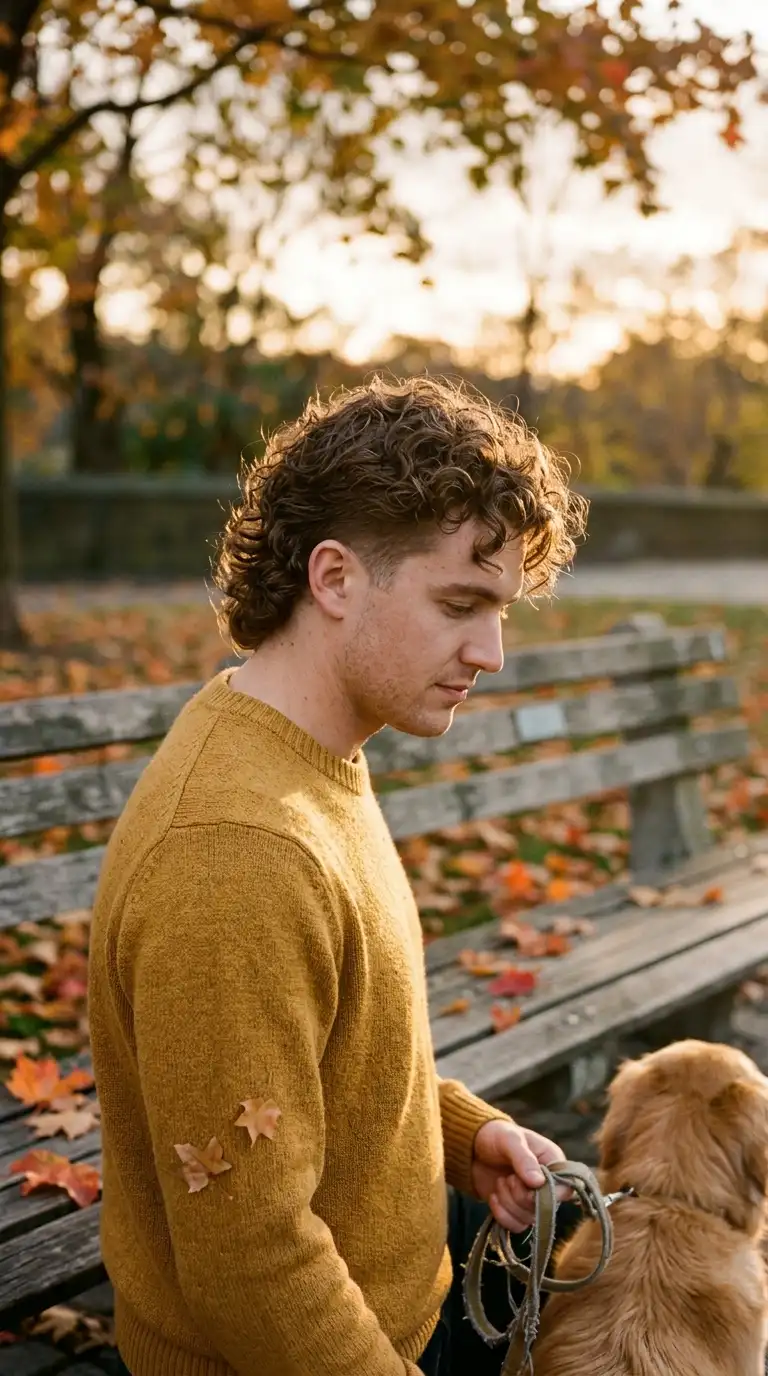
A perm gives straight hair the movement it cannot make on its own. On a mullet, that means a back full of loose curls that bounce instead of hanging.
Most barbers will not do the perm themselves. Book it at a salon and bring a photo of the exact curl size you want. Bigger rods make loose waves. Smaller rods make tight curls.
A few honest notes:
- Get the mullet cut first, then perm it a week or two later.
- Expect the curl to relax over a few months.
- Skip it if your hair is already bleached, since the two processes together can leave hair dry and brittle.
Wash with a sulfate free shampoo to help the curl last.
The back hangs flat against the neck. Styling takes ten minutes of blow drying and product, and it still drops by the afternoon.
The curls hold their own shape. Most mornings it is a splash of water, a little curl cream, and a quick scrunch with your hands.
15. Bleached Mullet
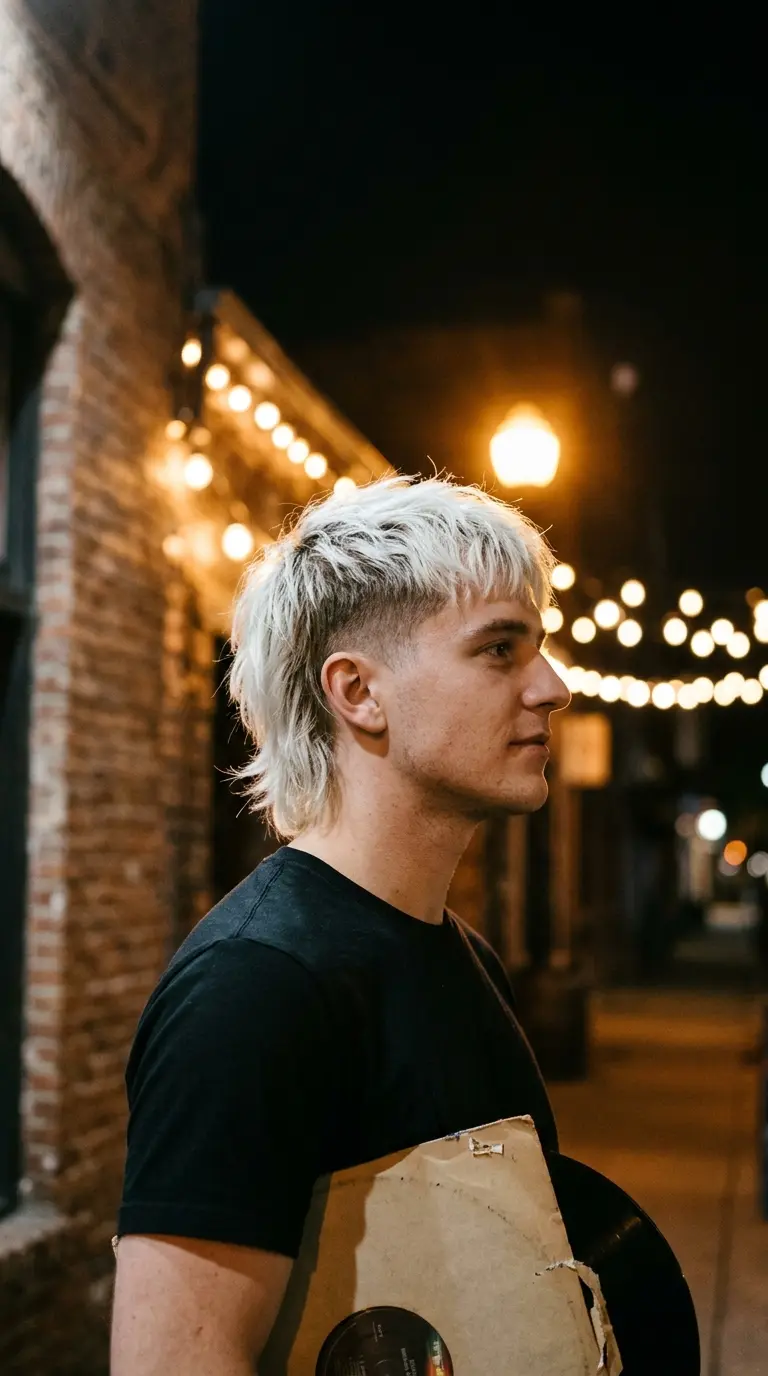
Box bleach is where this look usually goes wrong. Uneven patches, orange spots, and a crispy back that snaps when you brush it.
A colorist can usually lift dark hair to platinum or a cool blond in one or two sessions, depending on your starting shade. Ask about a bond builder in the bleach. It helps protect the hair during the process.
The mullet shape itself should stay choppy. Bleach shows off texture, so piecey layers catch the light and blunt ones look harsh.
Aftercare:
- Purple shampoo once a week to keep yellow tones down
- A deep conditioner every wash
- Heat tools on low, or not at all
Leave the roots a little dark for an easier grow out.
16. Coily Mullet With a Burst Fade

Coily hair holds a mullet shape better than almost any other texture. It does not fall flat, it barely needs product to stand up, and the back keeps its outline for weeks.
The burst fade is the usual partner here. It curves around the ear and lets the coils on top and in the back stand out. Some guys add twists or sponge curls on top for definition.
Moisture is the main job at home:
- Spritz with water or a leave in conditioner.
- Seal with a light oil or butter.
- Sleep on a satin pillowcase or wear a durag at night.
Ask for a sharp line up at the front to keep the edges crisp.
17. Buzz Cut Mullet
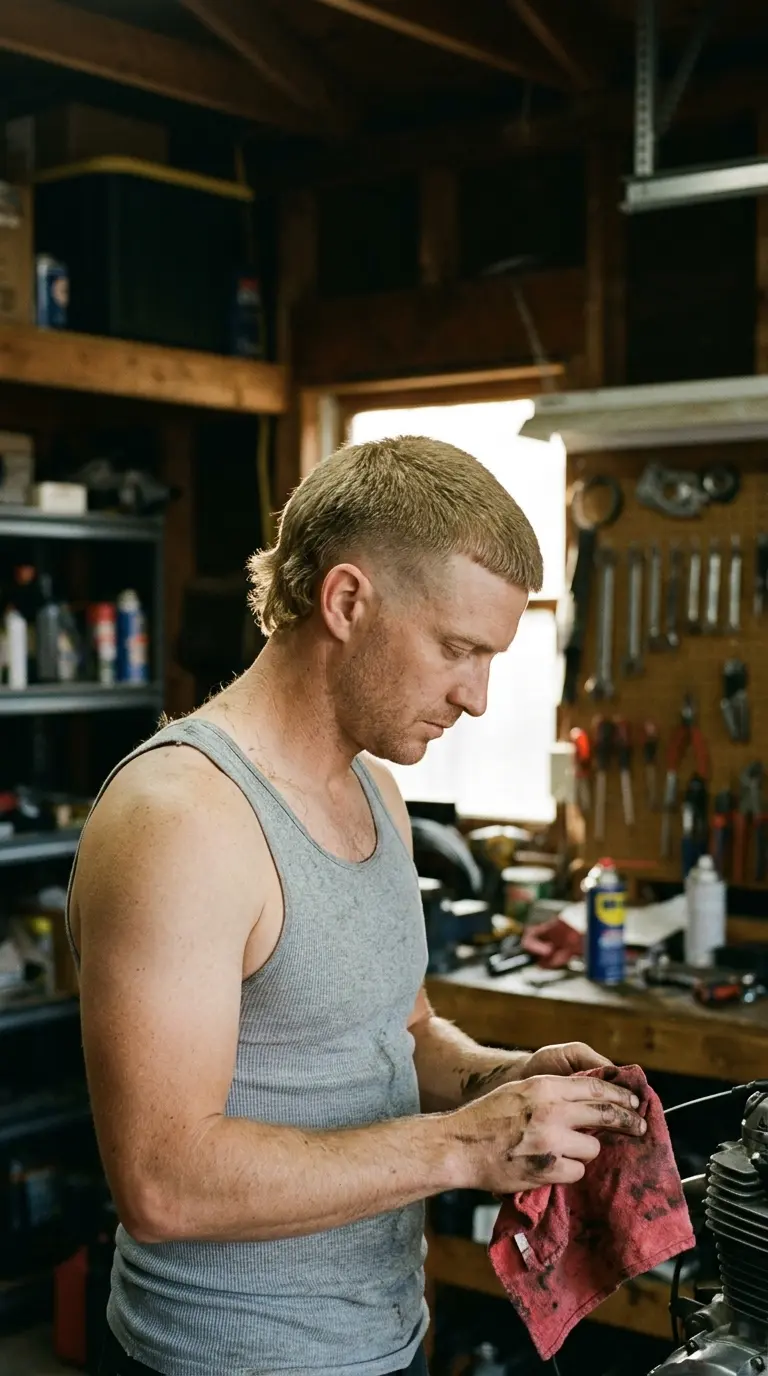
Almost every cut on this list needs scissors. This one barely does.
The top is buzzed short, often with a number two or three guard. The sides fade down tighter. The only real length is a short tail at the nape, usually one to two inches.
Compared with a mini mullet, it has no fringe and no texture on top. It is cleaner, harder, and easier to live with. Wash, towel off, done.
Who it suits:
- Guys with a strong head shape and jawline
- Anyone who works outdoors or in the heat
- Men thinning at the crown, since a short top draws less attention to it
Ask for the tail to be trimmed square, not tapered, so it reads as deliberate.
18. Rugged Mullet With a Full Beard
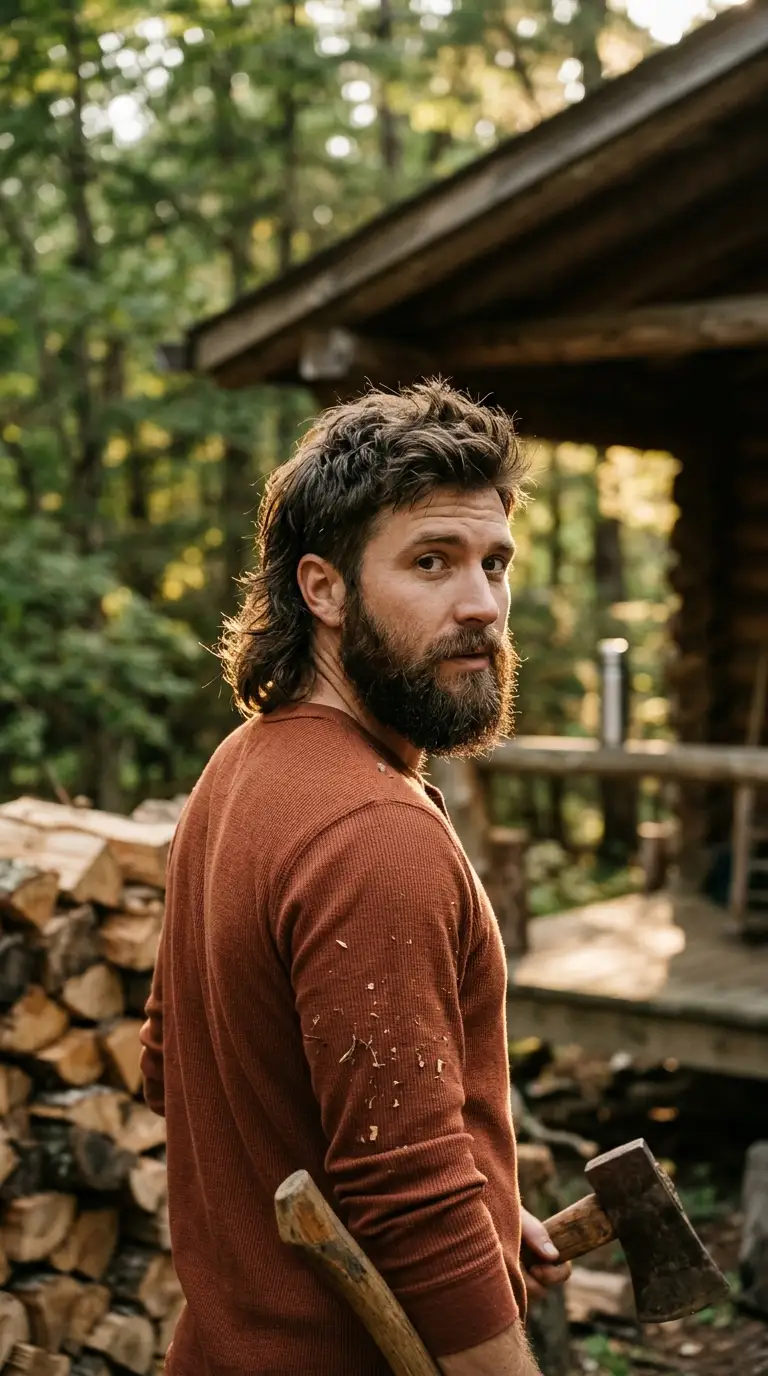
Spend a weekend at a cabin with this cut and the appeal makes sense.
A full beard changes how a mullet reads. Without one, the cut can look young. With one, it looks rugged and a bit seventies, in a good way.
The trick is connecting the two. Ask your barber to blend the sideburns into the beard instead of fading the sides down to skin. Keep the back medium length and a little shaggy.
Beard care that keeps the balance:
- Trim the cheek line high enough to look neat.
- Keep the beard shorter than the back of the hair.
- Rub beard oil into the ends every few days.
Best for men in their late twenties and up who already grow a thick beard.
Before You Book
The best mullet is the one that fits your hair and your week. Curly hair wants a higher taper and a dry cut. Straight hair needs texture to keep from going flat. If your job is conservative, start soft and let the back grow before you add a fade.
Whichever one you pick, bring a photo. It saves you from a cut that is half mullet and half accident.
The modern mullet men keep coming back to is never about length alone. It comes down to the blend at the sides, the weight in the back, and a trim schedule you can actually keep.
Save this list to your haircut board so it is ready the next time you sit in the barber chair.