
Somewhere around thirteen, the haircut stops being something a parent books and starts being something a teen cares a lot about. The cut he had at ten suddenly feels wrong. He wants what the older guys on his team have, or what he saw on his feed last night, and he may not know what it’s called.
That’s where most haircut trouble starts. A teen mumbles “short on the sides, kinda messy on top,” the barber guesses, and he walks out with something close but not quite right. Then comes the hoodie, pulled up for a week.
Moms, here’s the good news. Teen boy haircuts are less about trends and more about three things: hair type, how many minutes he’ll spend on it in the morning, and how often you can get him back in the chair. Get those right and almost any cut on this list will work.
Guys, here’s your part. Know the name of the cut, know a few words to say, and bring a photo of someone whose hair looks like yours.
Each cut below comes with the phrases to use at the shop, how much styling it needs, and which hair types it suits best. Scroll through it together, pick two or three, and book the appointment.
1. Messy Textured Fringe With a Low Taper

If you walked through any high school hallway this year, you saw this cut a dozen times before first period.
The top is left about three to four inches long and cut with lots of texture, so the fringe falls forward in loose, separate pieces. The sides and back are tapered short but not shaved, which keeps it soft instead of sharp.
It works on straight hair and on light waves. Thick hair is a bonus, because the barber has more to texturize.
What to say at the shop:
- “Messy textured fringe, falling right above the eyebrows.”
- “Low taper on the sides and back, no skin.”
- “Point cut the top so it looks broken up, not blunt.”
At home, towel dry, rub a pea sized amount of matte clay between your fingers, and work it in from the back toward the front. Then mess it up with your fingertips. That’s the whole routine.
Not sure which product to grab? Here’s a quick guide.
2. Modern Mullet With a Burst Fade
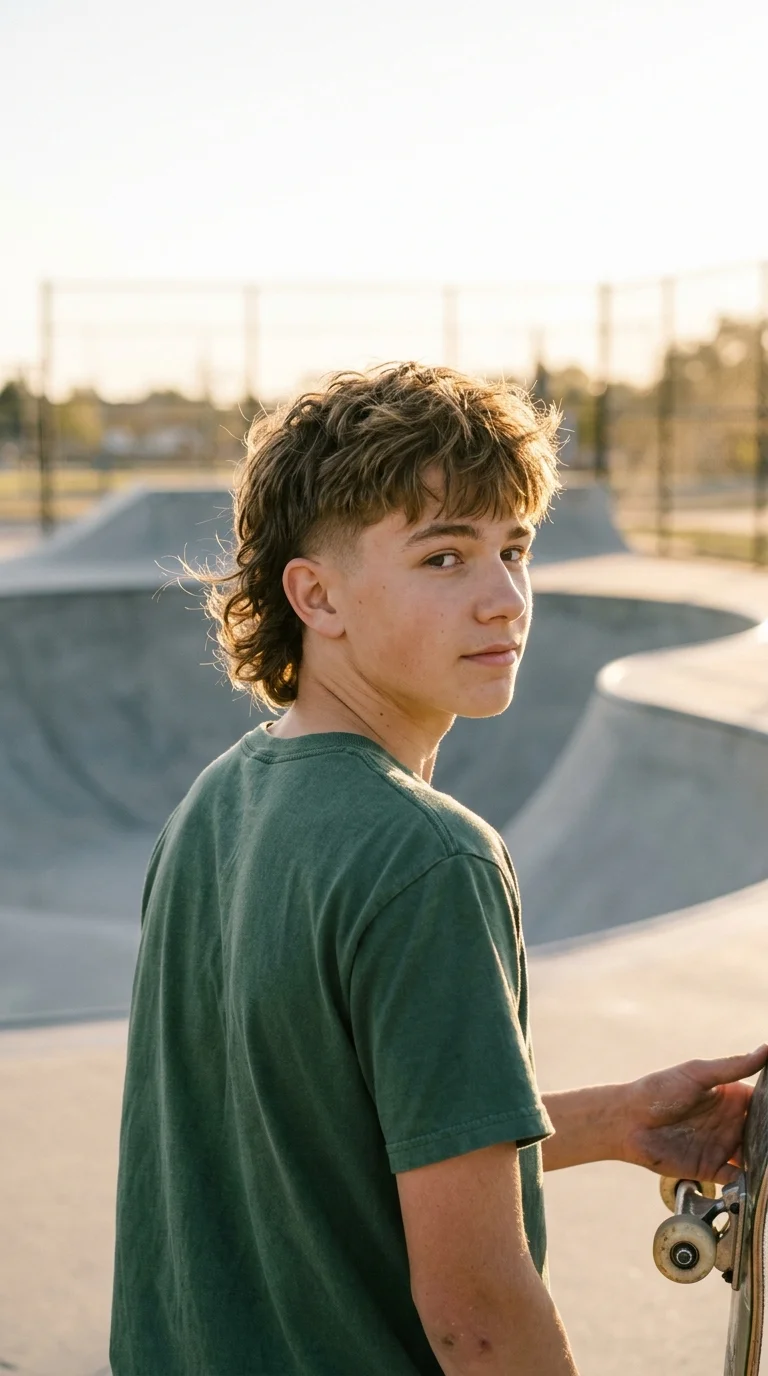
The mullet came back a few years ago, and teens never let it leave. The current version is softer than the one in old photos. Short and faded around the ears, textured on top, and a few inches longer at the back so it touches the collar.
The burst fade is what makes it look modern. Instead of a straight line around the head, the fade curves in a half circle around the ear and drops down behind it, leaving the back long.
Knowing the fade names saves a lot of pointing at the mirror:
What to say at the shop:
- “Modern mullet with a burst fade around the ears.”
- “Keep the back long enough to touch my collar.”
- “Texture on top, nothing too stacked.”
Wavy and curly hair make the back look full and intentional. Straight, fine hair can look thin at the back, so ask for a shorter mullet if that’s you.
Mom note: the fade needs a cleanup every three to four weeks, but the back can go much longer between trims.
3. Middle Part Curtains With Soft Layers

Curtains are one of the most requested teen boy haircuts right now, and they work on more hair types than people think.
The top is long enough to split down the middle and fall on both sides of the forehead, usually ending somewhere between the eyebrows and the cheekbones. The sides and back keep some length and get soft layers, so the shape moves instead of sitting like a helmet.
What it needs to look right:
- At least four to five inches at the front.
- A natural part in the middle, or close to it.
- A quick blow dry each morning, pushing each side away from the part.
Straight East Asian hair holds curtains well, as long as the barber thins out the weight so it doesn’t puff. Light waves work too.
Quick tip: a small amount of styling cream on damp hair before the blow dry keeps the curtains from flopping by second period.
4. Wolf Cut With a Shaggy Crown

The wolf cut sits somewhere between a shag and a mullet. Lots of short, choppy layers at the crown, a messy fringe, and longer wispy pieces at the back and sides.
It was made for thick, wavy hair. All those layers take out the bulk, so heavy hair stops sitting flat and starts to move.
Here’s what changes once it’s done:
Thick, heavy hair that sits in one flat shape, puffs out at the sides by lunch, and takes forever to dry after practice.
About the same length, but lighter. Lift at the crown, waves that fall in separate pieces, and a much faster dry.
Styling is mostly air drying. Scrunch in sea salt spray or a little mousse on damp hair and leave it alone.
Mom note: a wolf cut needs a trim every six to eight weeks. Skip it and the layers grow into each other, and the shape turns into a plain shag.
5. Buzz Cut With a Sharp Line Up

The buzz cut is the cut a lot of teens try once and then keep for years. No product, no blow dryer, no bad hair days. Shower and go.
The line up is what turns it from basic to sharp. The barber uses a trimmer to square off the front hairline, the temples, and the neck so every edge looks clean.
The guard number changes the whole look:
If it’s his first buzz, start with a #3. You can always go shorter on the next visit.
Heads up: ask the barber to follow his natural hairline. Pushing the line up too far back makes the forehead look bigger, and it takes weeks to grow in.
6. French Crop With a Mid Skin Fade
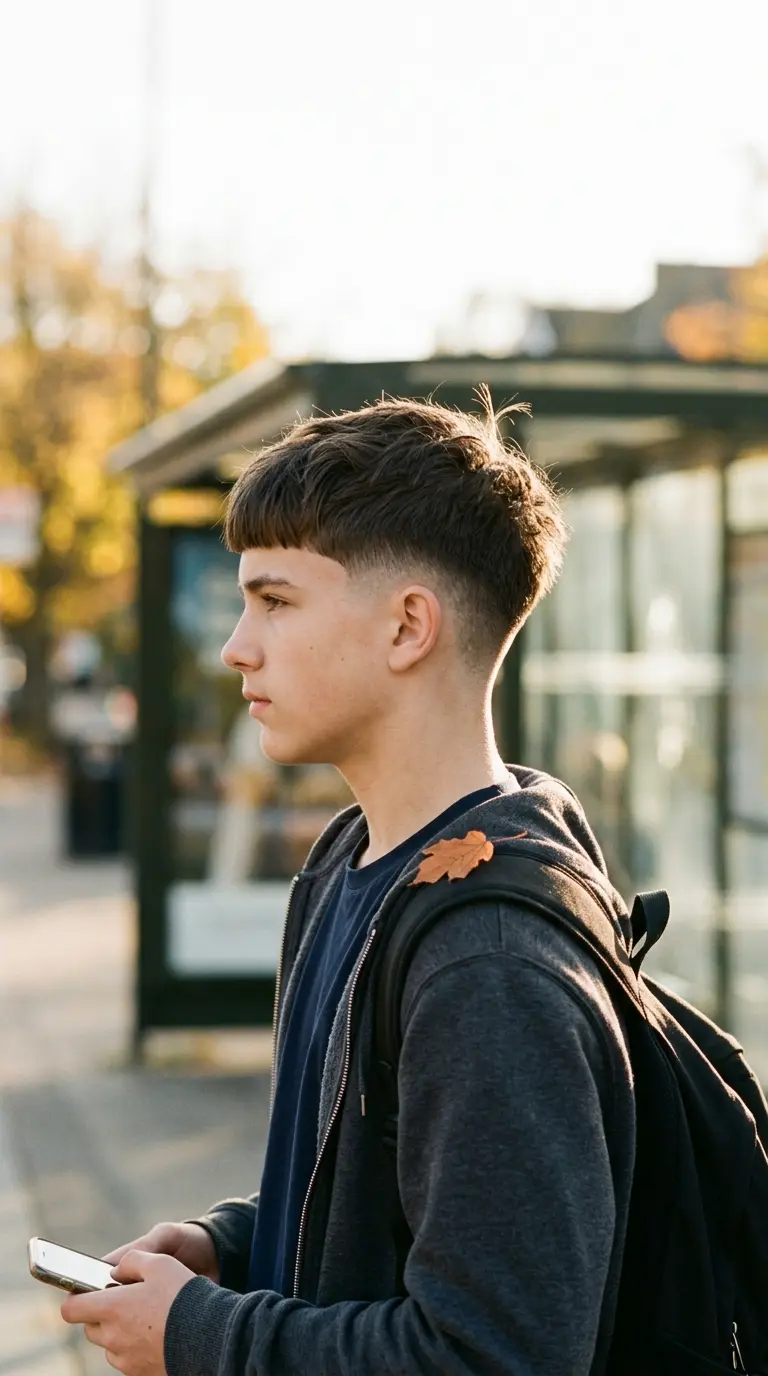
Short, choppy fringe across the forehead. Textured top. Sides faded down to skin starting around the temple.
The French crop is one of the most practical cuts for teens because it hides a lot. A cowlick at the front, a high forehead, hair that won’t lie flat. The fringe covers all of it.
What to say at the shop:
- “French crop with a short textured fringe.”
- “Mid skin fade on the sides and back.”
- “Leave enough on top so it doesn’t look like a buzz.”
Fine hair and thick hair both work, which is why so many guys end up here after trying something longer.
Styling takes about a minute. A small amount of matte paste, pushed forward with your fingers, then break up the fringe so it isn’t one solid line.
Mom note: skin fades grow out fast. Plan on a cleanup every two to three weeks to keep it sharp, or ask for a low taper instead if that’s too often.
7. Curly Top With a Low Taper Fade
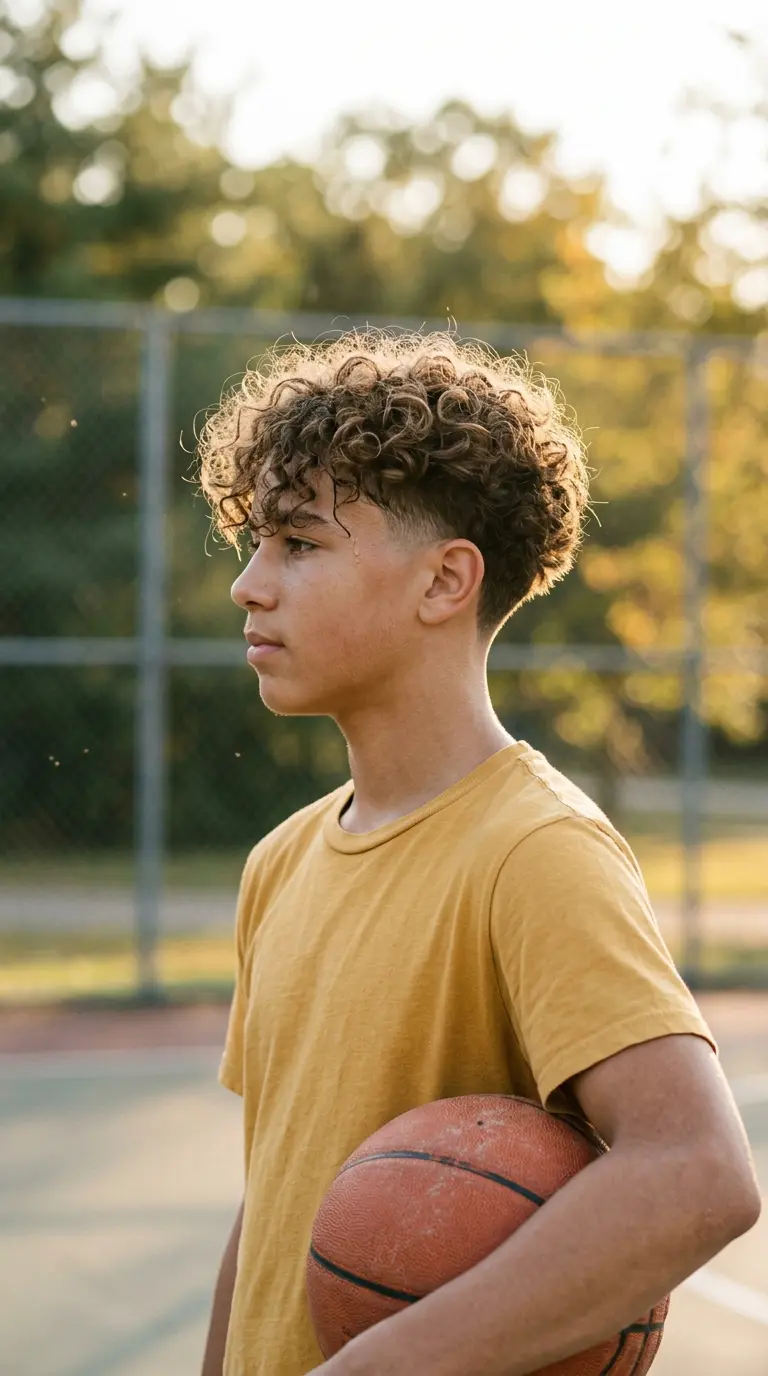
Teens with curly hair spent years getting told to buzz it all off. Not anymore. Big, defined curls on top with a clean low taper on the sides is one of the best looking teen boy haircuts out there.
The taper keeps the sides tidy so the curls look like a choice, not a mess. The top stays three to five inches long so the curls have room to form.
How to keep the curls defined:
- Wash with a gentle shampoo two or three times a week, not every day.
- Rake curl cream through soaking wet hair in the shower.
- Scrunch with a cotton t shirt instead of rubbing with a towel.
- Let it air dry and don’t touch it until it’s fully dry.
That last step is the one most guys skip. Touching wet curls is what turns them into frizz.
Quick tip: ask for the curls to be cut dry. A barber who cuts curls dry can see where each one sits.
8. Two Block Cut With a Soft Fringe

The two block cut comes from Korean barbershops, and it has spread to schools everywhere. The idea is two separate blocks of length.
The bottom block, around the sides and back, is clipped short. The top block is left long and falls over it, so the short part is mostly hidden. There’s no fade blending the two together.
The result looks full and soft, without the bulk that straight thick hair usually has at the sides.
What to say at the shop:
- “Two block cut, clip the underneath short.”
- “Leave the top long enough to cover it.”
- “Soft fringe, right above the eyebrows.”
Blow dry the top downward and slightly forward, then finish with a light styling cream. For a weekend change, push the fringe up and back with a little paste.
9. Textured Quiff With Short Sides
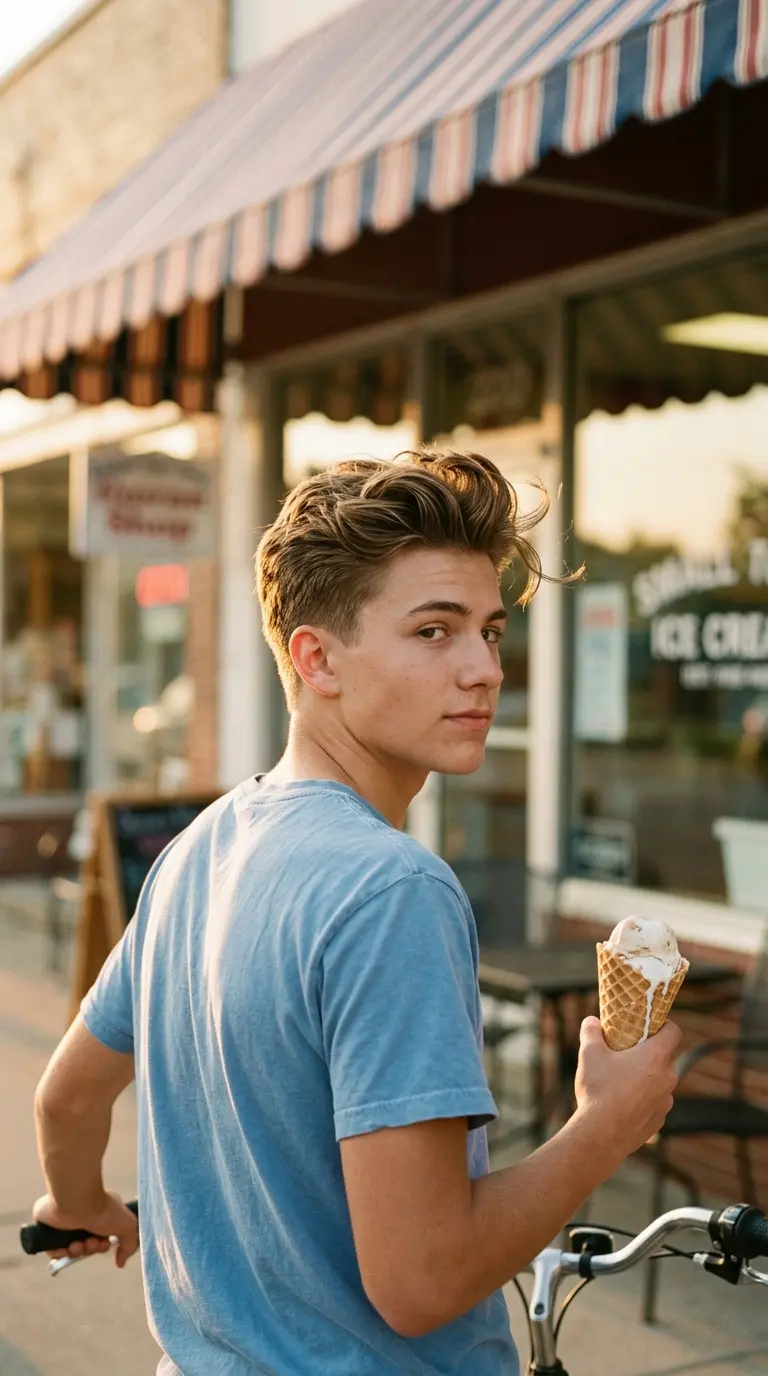
The quiff lifts the front of the hair up and slightly back, so there’s height at the hairline. The textured version looks messy on purpose, with pieces separated instead of slicked into one shiny wave.
It works best on thick, straight or wavy hair. Fine hair can pull it off too, with a little sea salt spray before blow drying for grip.
Styling, in three moves:
- Spray sea salt spray or a light mousse into damp hair at the roots.
- Blow dry the front up and back while lifting it with your fingers or a round brush.
- Rub a small amount of matte clay through it and pull a few pieces apart.
It takes about five minutes, which is longer than most cuts on this list. Worth knowing before you book.
Quick tip: ask your barber to leave the front a little longer than the back of the top. That extra length at the hairline is what gives the quiff its lift.
10. Sponge Twists With a Drop Fade

Short coils on top and a drop fade on the sides. It’s one of the most popular cuts for teens with tight curls or coily hair, and it stays neat between visits.
The drop fade is what sets it apart. Instead of running straight around the head, the fade dips lower behind the ear, which follows the shape of the head and looks clean from the side.
The coils come from a hair sponge, a textured pad that twists short hair into small, even twists:
- Mist the top with water.
- Smooth in a small amount of leave in conditioner.
- Rub the sponge in small circles for about a minute.
- Pat the coils down gently so they sit even.
Rinse the sponge every week. A dirty one leaves lint in the coils.
Mom note: ask for a line up with every visit. The sharp edge at the front is what makes this cut look fresh.
11. 360 Waves With a Low Taper
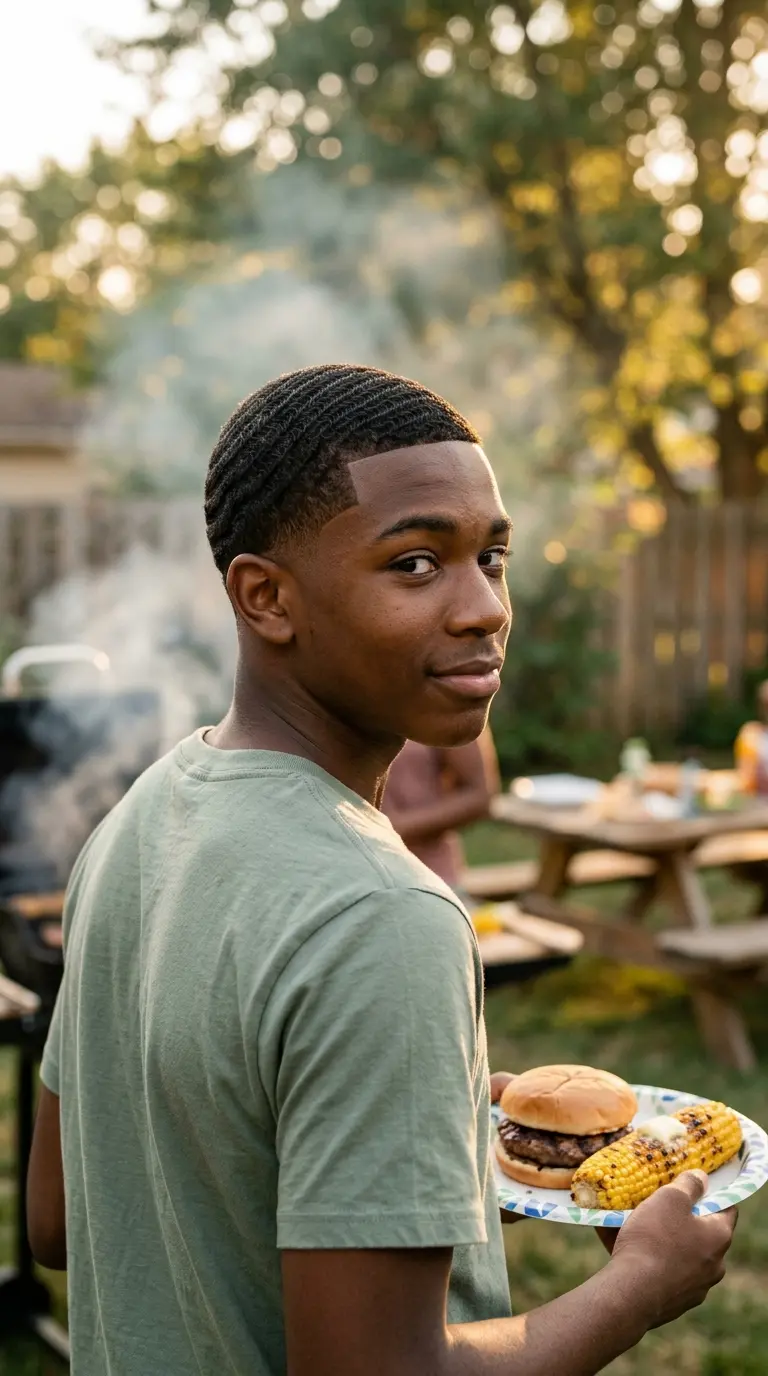
360 waves are a pattern of ripples that circle out from the crown and cover the whole head. They take patience, but once they come in, they look sharp every single day.
The cut itself is simple. A short, even length on top, usually a #1 or #2 guard with the grain, and a low taper at the sides and back.
The waves come from the routine, not the cut:
- Brush in the direction of the hair growth, from the crown outward, several times a day.
- Use a light wave pomade or a moisturizer on damp hair.
- Wear a durag or wave cap at night to press the pattern in.
- Don’t cut too often. Many guys go two to three weeks between visits to let the waves build.
Most teens see the first waves within a few weeks of daily brushing. Deeper waves take a few months.
12. Medium Length Flow Pushed Back

Hockey players made this look famous. The hair is grown out to around five to seven inches, pushed back off the face, and left to curl out over the ears and at the back of the neck.
It looks best on wavy hair, because the waves give the ends that natural flip. Straight hair can work with some sea salt spray and a quick blow dry.
Growing it out is the hard part. Here’s how to get through it:
Get a light trim every eight weeks to clean up the ends and the neckline.
Tuck the sides behind your ears during the awkward middle stage.
Use conditioner every wash. Longer hair dries out at the ends.
Skipping every trim to grow it faster. It grows out uneven and shapeless.
Heavy gel. It weighs the waves down and looks wet all day.
Giving up at month three. That’s when it starts looking right.
Mom note: this cut needs fewer barber visits than almost anything else on the list, which helps the budget.
13. Edgar Cut With a Blunt Fringe

The Edgar is a bold one. A straight, blunt fringe cut in a hard line across the forehead, a short textured top, and a high fade on the sides, often down to skin.
It’s a lot more structured than the French crop, even though the two get mixed up. Here’s how they compare:
| Edgar Cut | French Crop |
|---|---|
| Fringe cut in one straight, hard line | Fringe choppy and broken up |
| High fade, usually to skin | Low, mid, or high fade, or a taper |
| Bold, sharp look | Relaxed, messy look |
| Cleanup every 2 weeks | Cleanup every 3 to 5 weeks |
| Best for: thick, straight, dark hair | Best for: almost any straight or wavy hair |
Thick, straight hair holds the blunt line best. Wavy or curly hair tends to bend the fringe out of shape by the afternoon.
Styling is easy. A little matte paste on the top, and comb the fringe straight down.
14. Classic Side Part for Homecoming and Formals
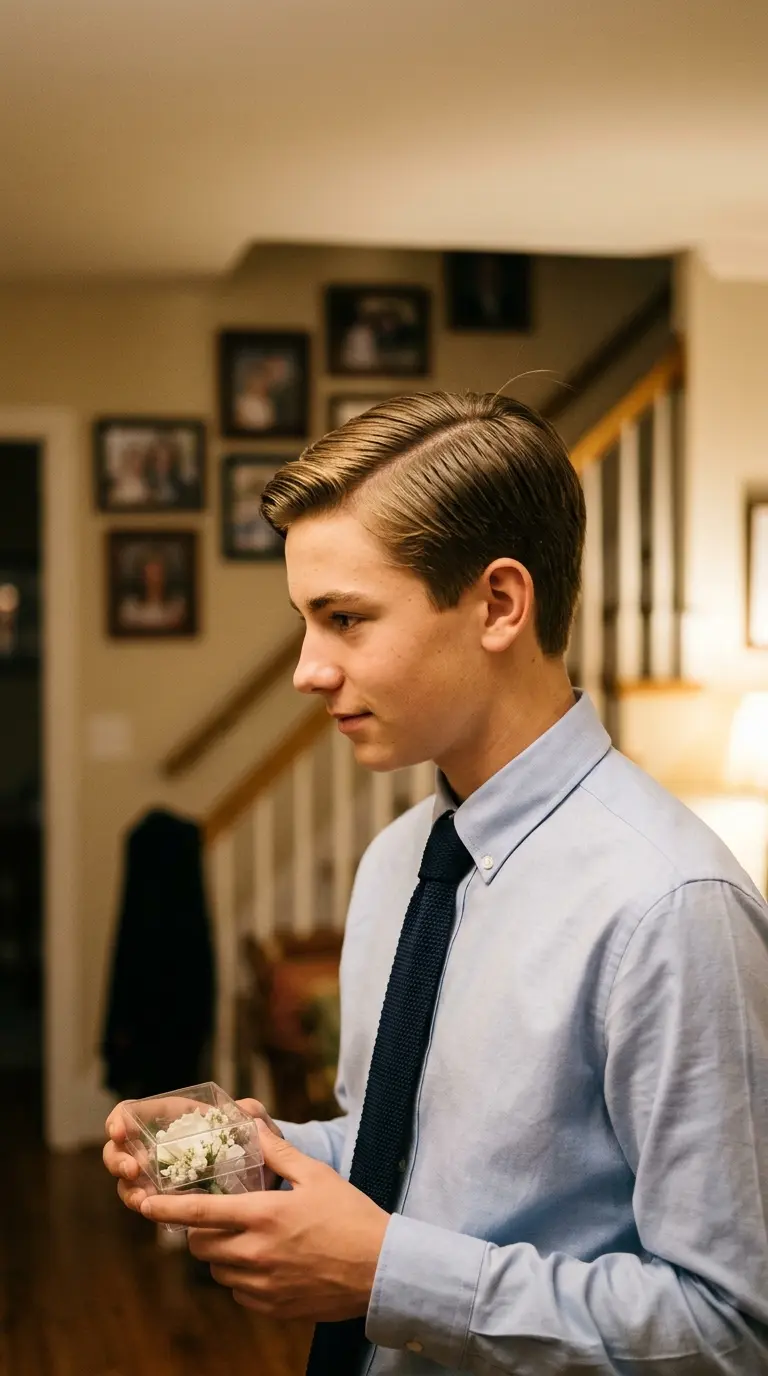
Homecoming, prom, a cousin’s wedding, the senior photo. Some days call for a cut that looks neat in every picture.
The classic side part keeps the top two to three inches long and combs it to one side. The sides get a soft taper, usually with scissors or a long guard, so there’s no hard line.
Ask the barber to find your natural part first. Most guys have one, often lined up with the swirl at the crown. A part cut against it will flip up before the photos are done.
Formal day plan:
- Get the cut four to seven days before the event, so it has time to settle.
- Use a light cream or pomade on damp hair, comb it into place, and blow dry it there.
- Pack a small comb for touch ups.
Quick tip: this cut grows out well. After the event, push the top back or let it fall forward and it becomes a casual everyday cut.
15. Starter Locs With a Temple Taper

Starter locs are the first stage of growing locs, and a lot of teens start them in high school so they’re longer by graduation. Short coils or comb twists are set in neat sections, then left to lock over the next several months.
A temple taper keeps the sides and hairline sharp while the top grows. It’s a clean way to wear locs in the early stage, when they can look a little uneven.
What helps in the first few months:
- Wash less often at the start, about once a week, so the coils don’t unravel.
- Sleep on a satin pillowcase or wear a durag to cut down on frizz.
- Retwist the roots every four to six weeks, not more. Too much retwisting can thin the roots.
- Keep the taper fresh every two to three weeks.
Mom note: locs are a long commitment. Taking them out later usually means cutting them, so it’s worth talking it through before the first appointment.
16. Textured Crew Cut for Sports Season

Two practices a day, a helmet, and a shower in the locker room. A crew cut handles all of it.
The sides and back are short, the top is a little longer, and the front is the longest part, about an inch or so. A textured crew cut adds some choppiness on top so it doesn’t look like a military cut.
It’s also the easiest cut on this list to keep up. Hair dries in minutes, sweat doesn’t ruin it, and it looks the same at the end of practice as it did in the morning.
What to say at the shop:
- “Textured crew cut, a little longer at the front.”
- “Taper the sides with a #2, blend it up.”
- “Add texture on top so it’s not flat.”
Push the front up with a tiny bit of paste on game day, or leave it alone. Both look fine.
Picking the Right Cut
The best cut is the one that fits his hair, his schedule, and how much time he’ll spend in front of the mirror at 7 a.m. A wolf cut looks great until nobody wants to air dry it before school. A skin fade looks sharp until the next barber visit is a month away.
So talk it through before booking. How much styling will he do? How often can he get a cleanup? What does his hair do when it’s left alone?
Then bring a photo, use the words from this list, and let him do the talking in the chair. Teens who pick their own cut tend to like it a lot more on Monday morning.
These teen boy haircuts cover short and long, straight and curly, wavy and coily, so there’s a good match here for almost every guy.
Save this list to your hair ideas board so it’s ready the next time his fringe hits his eyes.