
The ticket printer has not stopped for forty minutes. Six pans are on the flat top, the expo is calling for table twelve, and a loose strand of hair has just slipped out from behind your ear and is swinging right over the sauté station.
You cannot touch it. Your hands are covered in butter and you have three plates going out.
Anyone who has worked a Saturday dinner rush, a 6 a.m. café open, or a double on the floor knows this feeling. Hair that looked fine in the bathroom mirror starts to fall apart once the heat, steam, and constant movement kick in. Then you are fixing it with your wrist, washing your hands again, and falling behind.
Good food service hairstyles solve that before the shift starts. They keep every strand off your face and away from the food, they fit under a hat or hair net without bumps, and they still feel comfortable at hour nine.
This list is for chefs, line cooks, servers, bartenders, and baristas. Each style comes with how long it takes, what hair length it needs, and one small trick that helps it survive heat and sweat. There are options for long hair, short hair, curly and coily hair, and guys growing their hair out.
Grab a handful of bobby pins, a few strong elastics, and a little gel. Pick one for your next shift.
1. Slick Low Bun That Sits Under a Hair Net
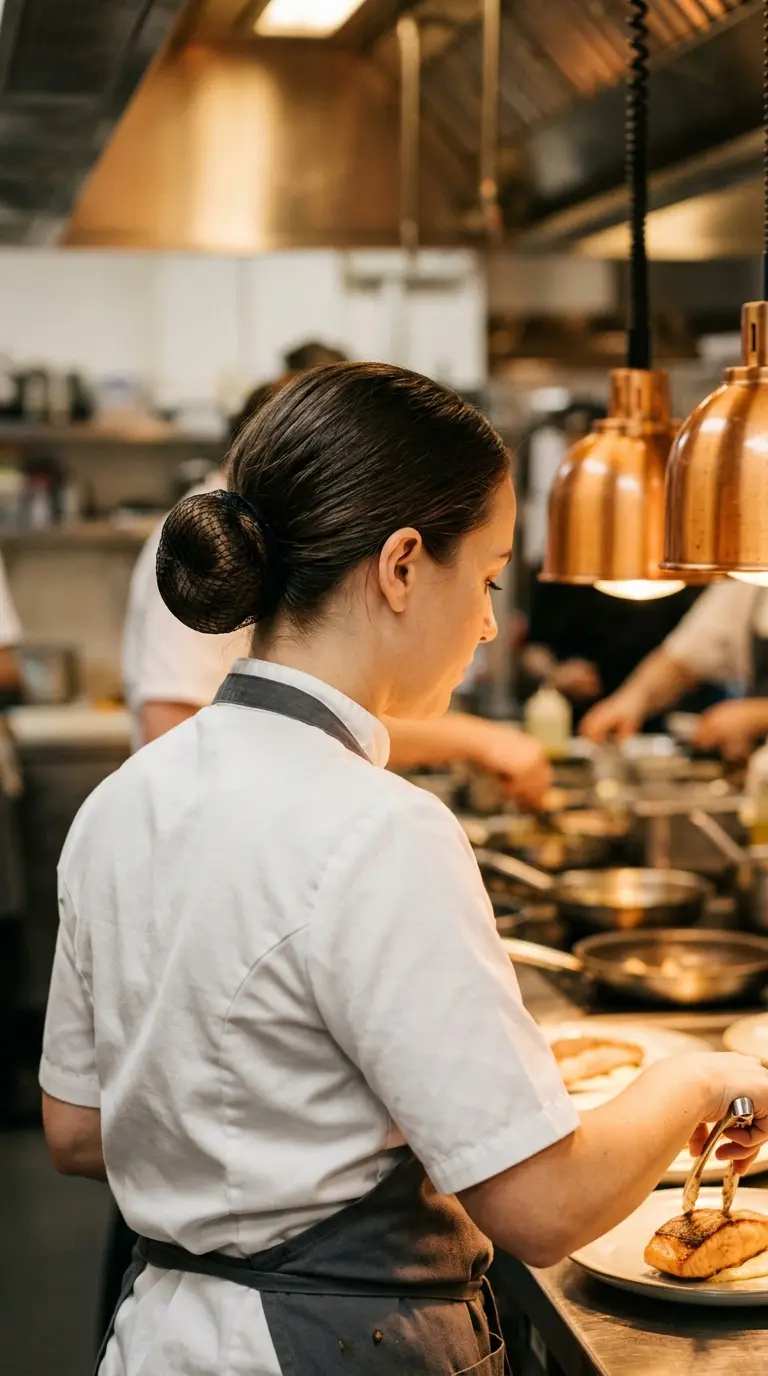
This is the default for a reason. It is tight, flat, and it disappears under a hair net or a chef cap without leaving a lump on top of your head.
- Dampen your hair a little and work a small amount of gel or strong cream through the front and sides.
- Brush everything straight back to the nape with a boar bristle or paddle brush.
- Tie a firm ponytail low at the back of the neck.
- Twist the ponytail until it coils, wrap it around the elastic, and pin it with four or five bobby pins pushed in toward the center.
- Slide a hair net over the top so it covers the bun and the hairline at the back.
Low beats high in a kitchen. A bun at the crown pushes a hat up and sits right where a hair net is loosest.
Quick tip: cross your bobby pins in an X through the bun instead of pushing them in one by one. Crossed pins lock against each other and do not work loose when you sweat.
2. Classic French Braid Tucked at the Nape
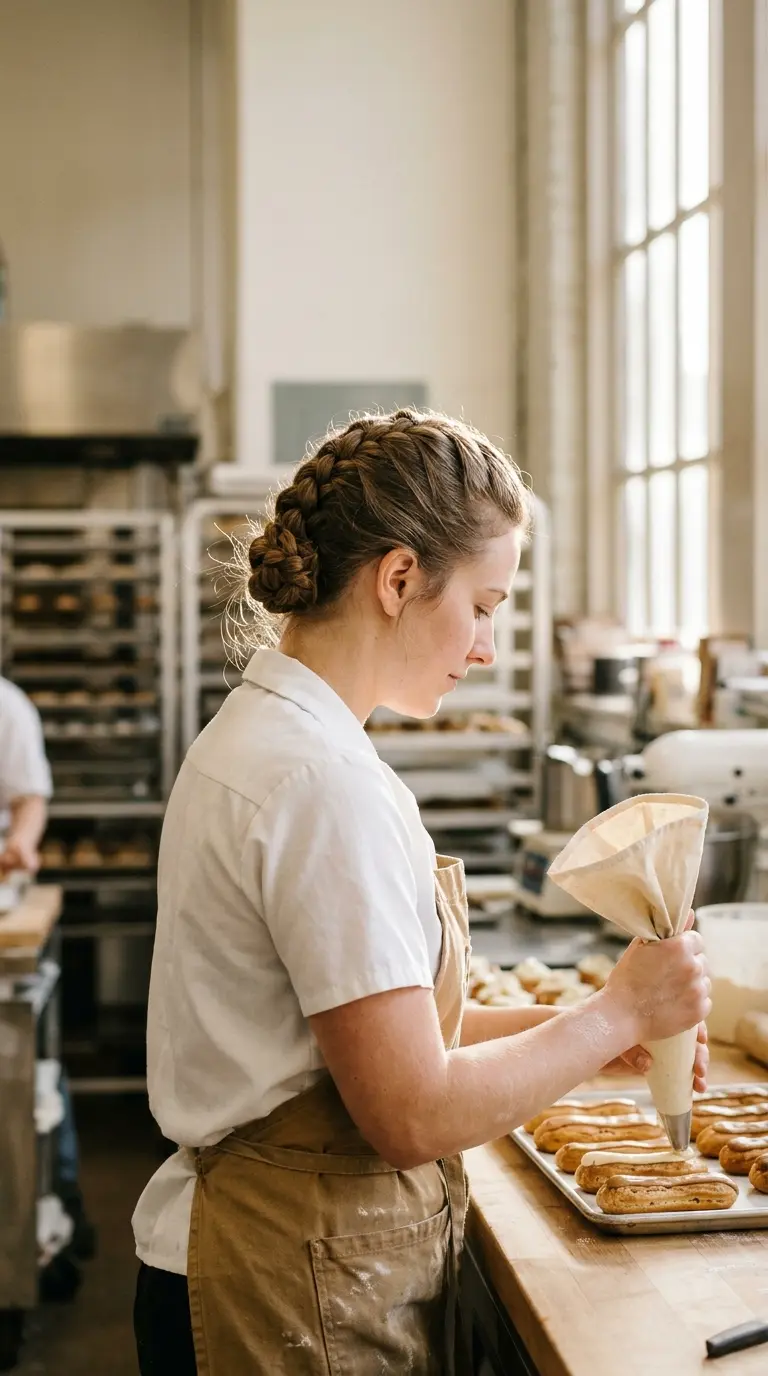
A French braid grabs every layer from the front to the back, so short pieces around the face get caught instead of falling forward.
Start at the top of your head with three small sections. Each time you cross a side strand over the middle, pick up a little more hair from that side. Keep going down to the nape, then finish in a regular three strand braid and tie it off.
Here is the part that makes it work for a kitchen: fold the loose braid up against the back of your head and pin it in place. Now nothing swings, and the whole thing fits under a cap.
Good to know: braid on day two hair if you can. Freshly washed hair is slippery and tends to loosen by the end of service.
3. Double Dutch Braids for Long Doubles
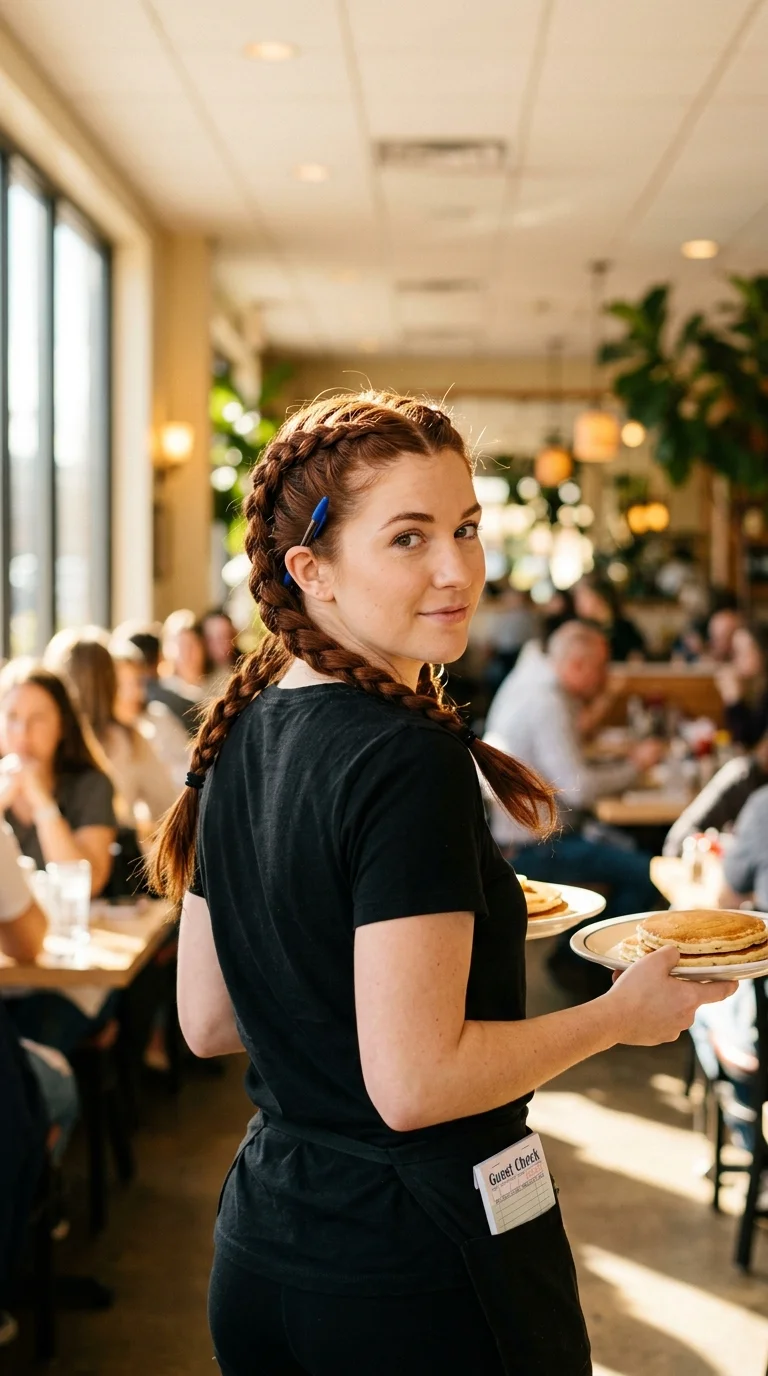
If you work a lunch and dinner back to back, this is the style that will still be standing when you clock out.
Part your hair down the middle. On one side, start a braid at the front hairline and cross each strand under the middle instead of over it. That under move is what makes the braid pop up off the head. Add hair as you go, braid to the ends, and tie it off. Repeat on the other side.
Two braids split the weight of long hair, so neither one pulls hard on your scalp. They also leave no loose ends near your face when you lean over a table or a ticket rail.
Styling detail: for servers, the ends can hang down your back. For cooks, cross the two braids at the nape and pin them up so they stay inside the hair net.
4. Dutch Braid Into a Low Bun
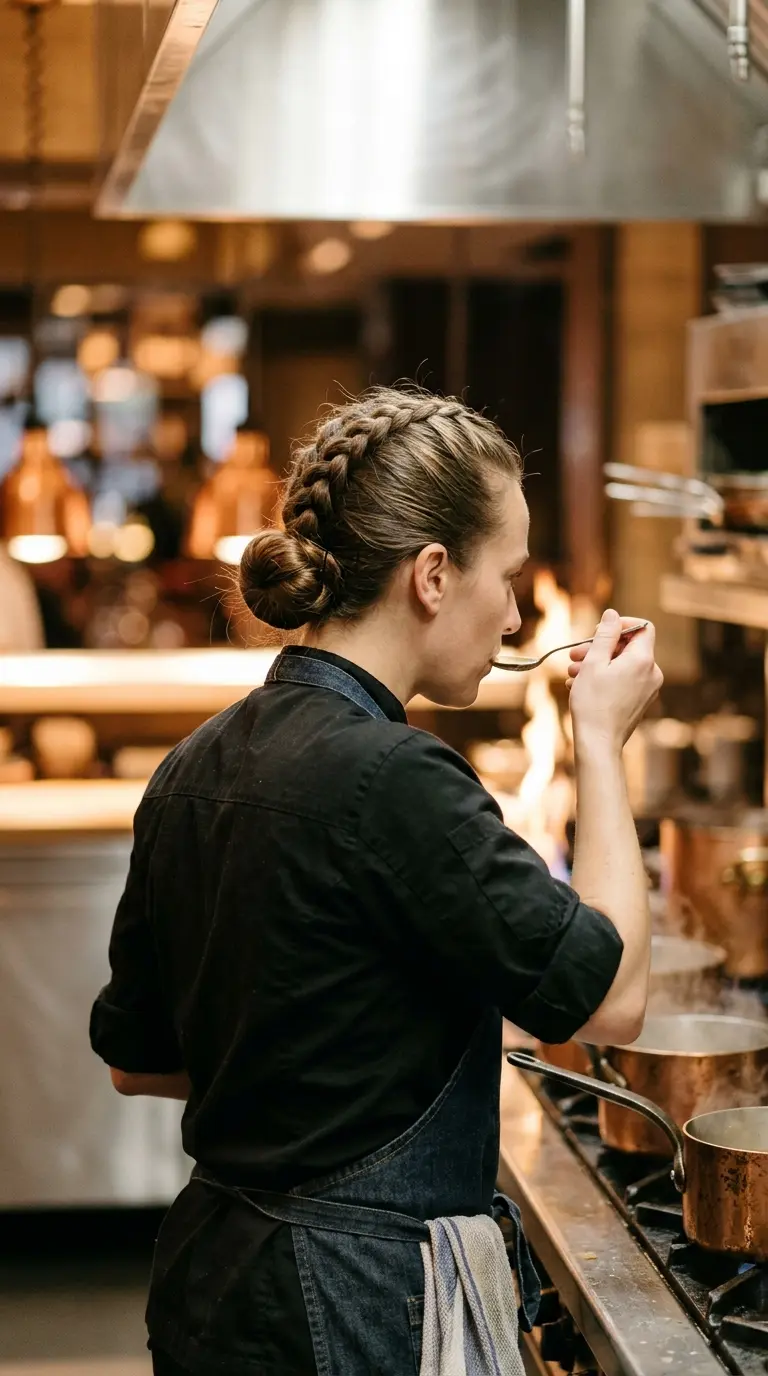
This one looks more put together than a plain bun and holds better too, because the braid anchors the top of your hair before it ever reaches the elastic.
Dutch braid from the front hairline straight back to the nape. Stop adding hair once you reach the neck and tie the rest into a ponytail. Twist the ponytail, including any leftover braid, around the base and pin it down.
It is a favorite with sous chefs and anyone working an open kitchen where guests can see the line. It reads neat and calm even when the kitchen is not.
Mist your hair lightly with water and smooth a small amount of gel or cream through the front and sides.
Brush everything back and decide on the base: a braid, a ponytail, or a bun.
Lock it with a strong elastic and crossed bobby pins, then shake your head hard to test it.
Put on your hat, cap, or hair net last, and wash your hands before you touch any food.
5. High Ponytail With a Wrapped Base
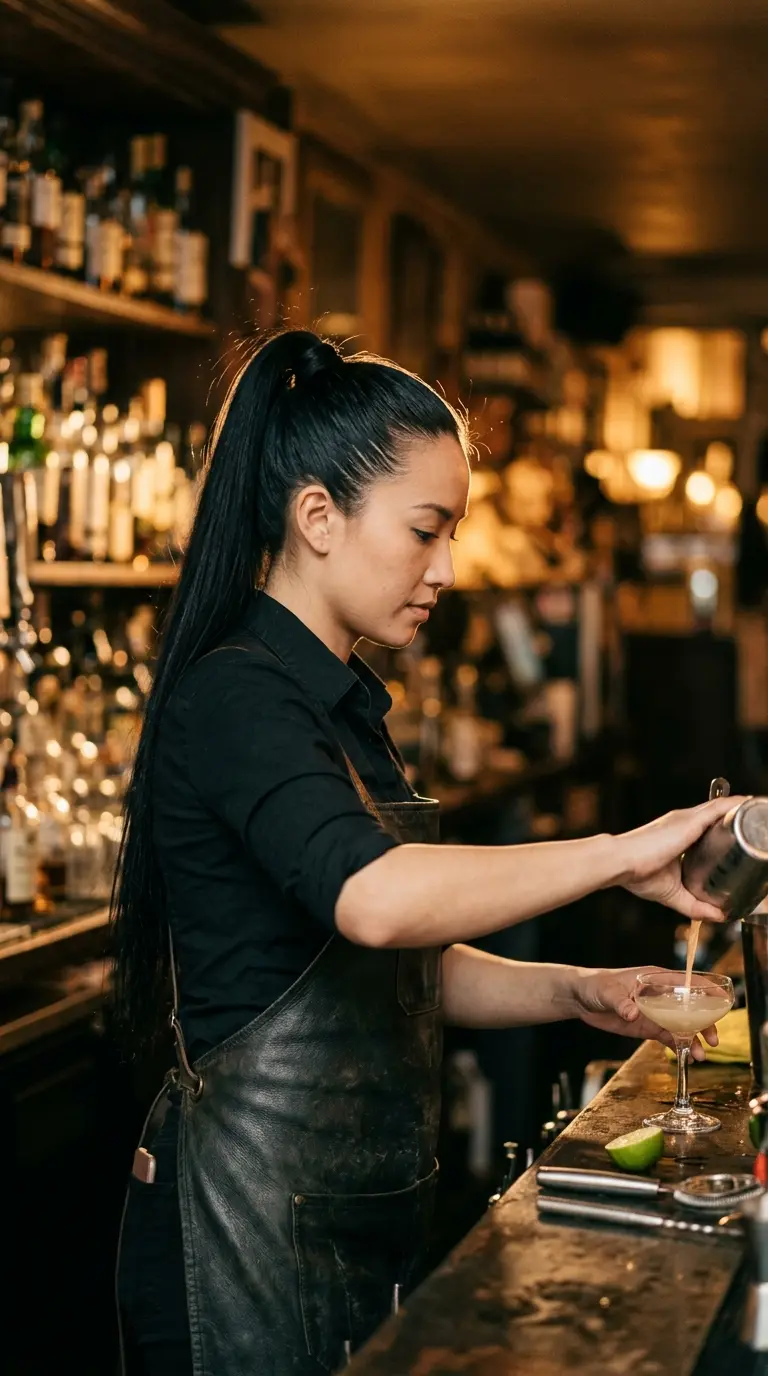
Servers and bartenders who work the front of house often want something polished that still swings a little. This is it.
- Brush your hair up to the crown with your chin tipped up, so the hair at the nape stays tight.
- Tie it with a strong elastic, then add a second elastic right over the first for extra hold.
- Take a thin strand from the underside of the ponytail and wrap it around the base.
- Pin the end of that strand underneath with one bobby pin.
The wrap hides the elastic and makes the whole look feel finished, like you planned it for the night.
Watch out: many health departments only let front of house staff wear loose ponytails when they are not handling open food. If you run food or garnish drinks, ask your manager whether you need a bun instead.
6. Low Looped Ponytail Pinned Flat
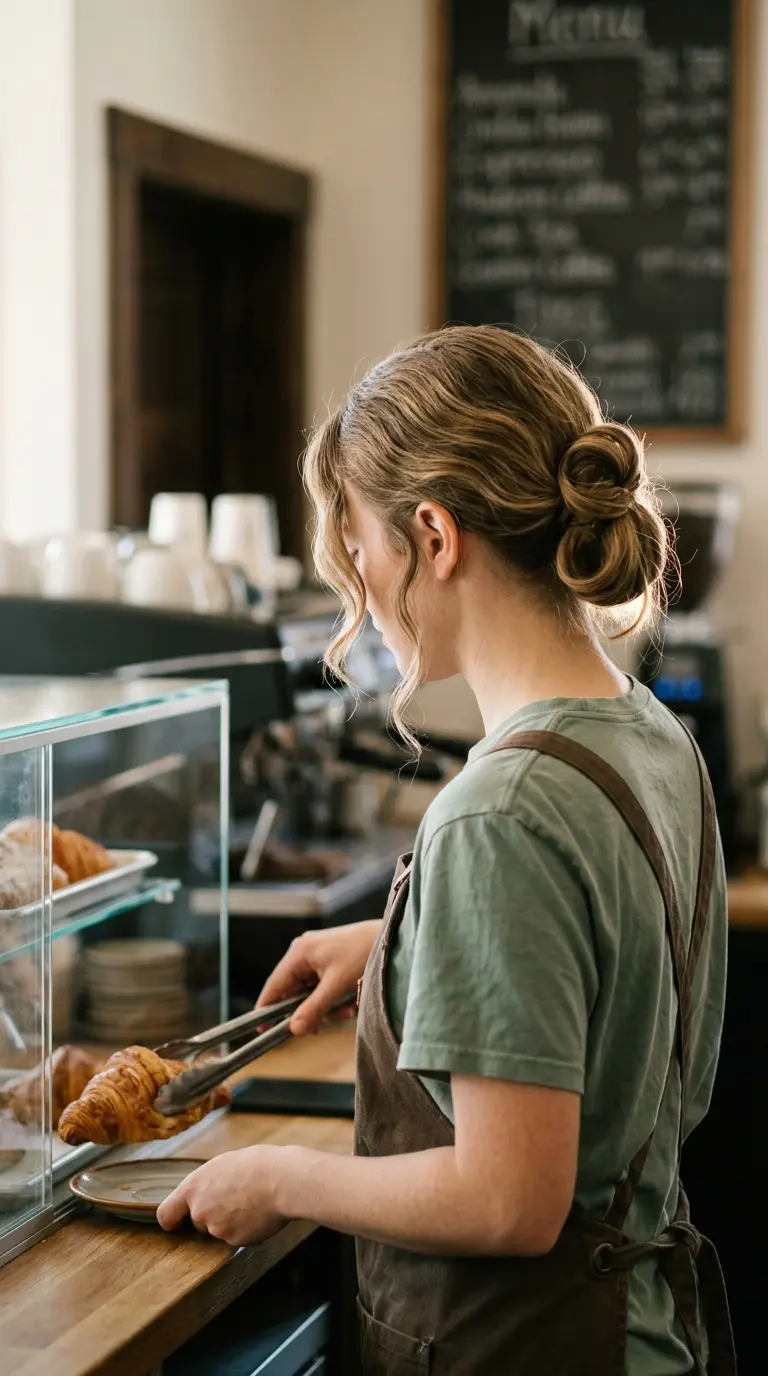
Medium hair is tricky. It is too short for a full bun and long enough that a regular ponytail brushes the counter every time you lean in.
The fix is a folded loop. Tie a low ponytail at the nape. On the last pass of the elastic, pull the hair only halfway through so it forms a loop instead of a tail. Flatten the loop against your head and pin the ends underneath with two bobby pins.
It takes under two minutes and gets everything off your neck. It also works well with a ball cap or visor.
A quick ponytail at the start of the shift. By the lunch rush, the ends are brushing the pastry case and you are tucking strands behind your ear with floury hands.
The same ponytail folded into a pinned loop. Nothing touches your neck, nothing swings forward, and you never reach for your hair once all day.
7. Low Ponytail Through the Back of a Cap
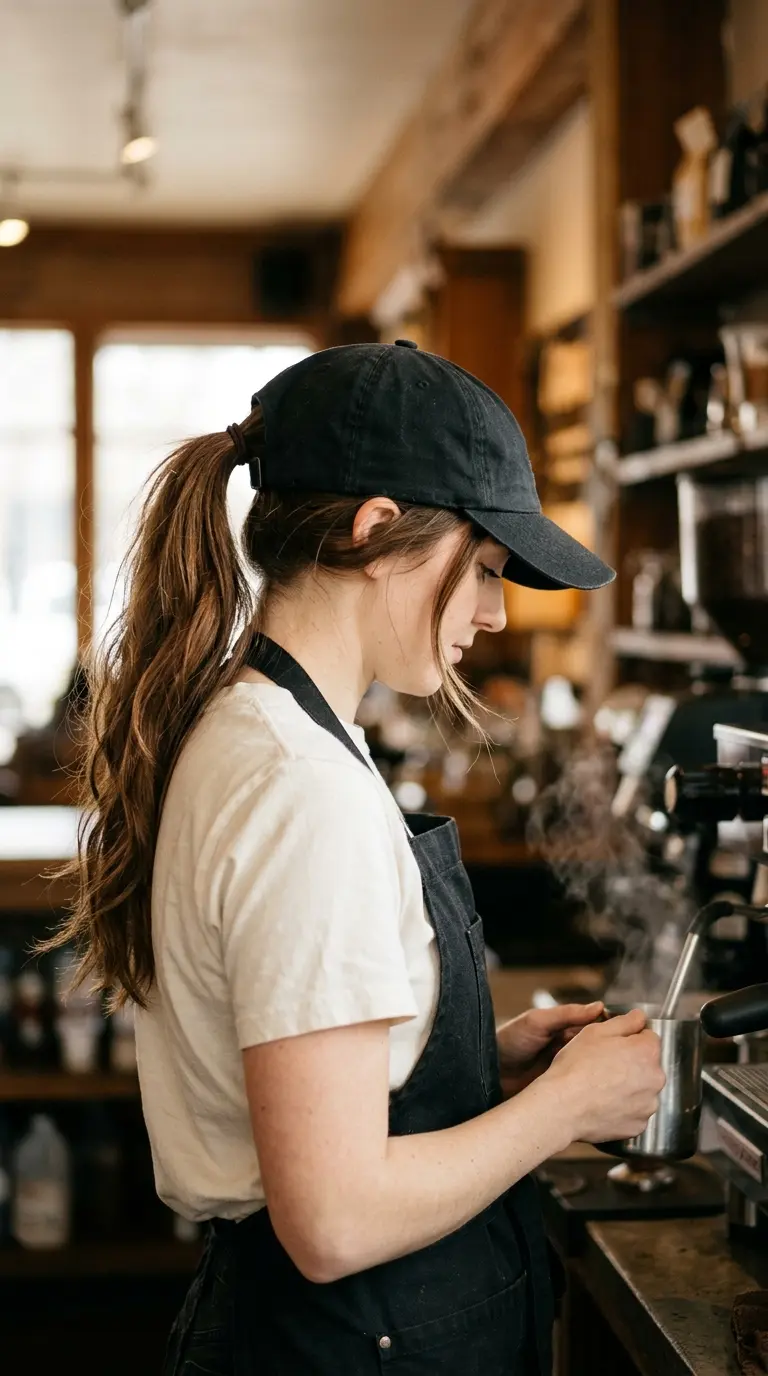
Plenty of cafés use a cap as part of the uniform, and baristas have turned it into a signature look.
Tie a ponytail at the height where the cap opening sits, put the cap on, and pull the ponytail through the gap in the back strap. Then add a second elastic lower down, right at the nape. That second tie keeps the length from swinging over the espresso machine or the milk pitcher.
Quick tip: smooth the sides behind your ears before the cap goes on. Once it is on, every strand under the brim stays exactly where you put it.
8. French Twist Secured With Pins
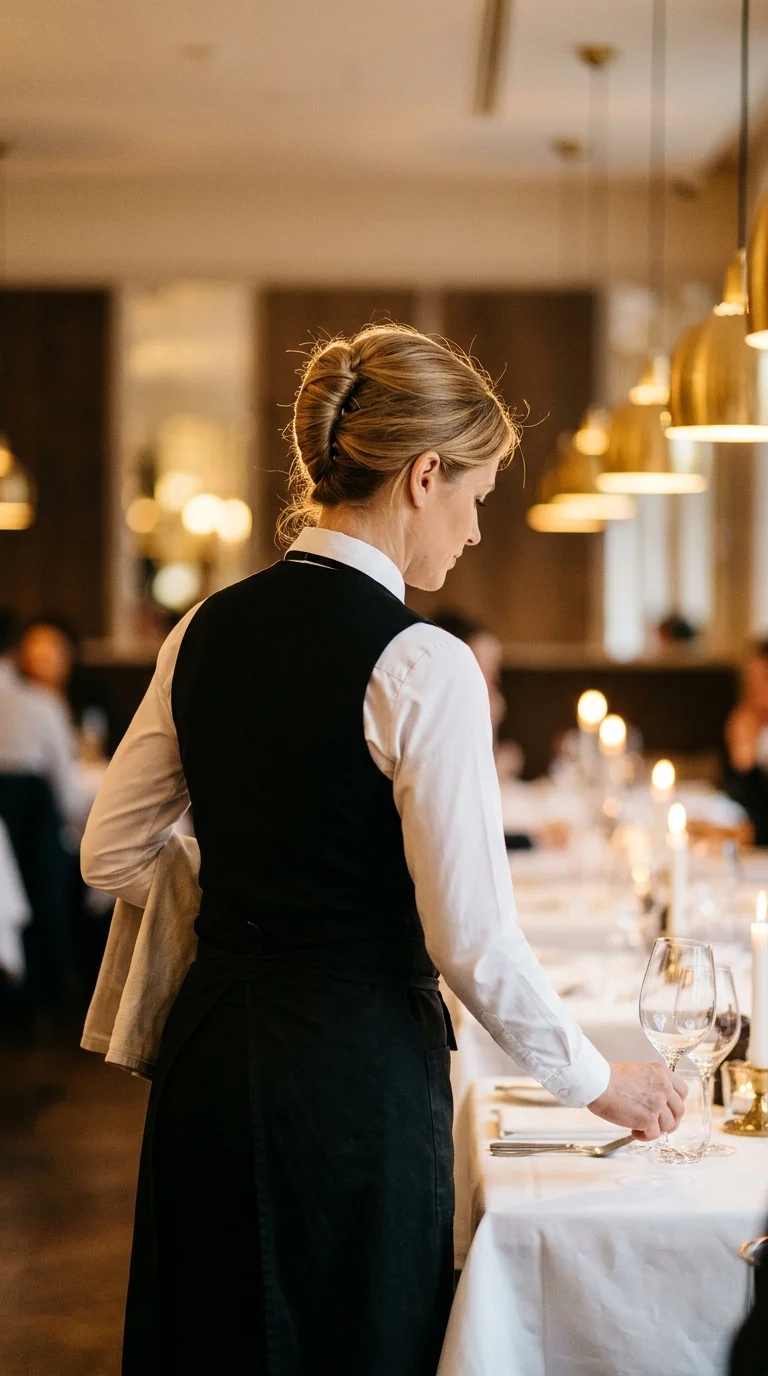
Fine dining rooms often expect a classic, quiet look. A French twist does that, and it holds shoulder length hair that is too short for most buns.
Brush your hair back and gather it at the nape as if you were making a ponytail, but do not tie it. Twist the hair upward and toward the center of your head, tuck the ends into the twist, and slide bobby pins in along the seam every inch or so.
Spray a light hold hairspray over the top to tame flyaways.
Styling detail: a claw clip is faster, but a clip can loosen or fall during a busy service. Pins sit flat and stay put.
9. Bandana Wrapped Top Knot
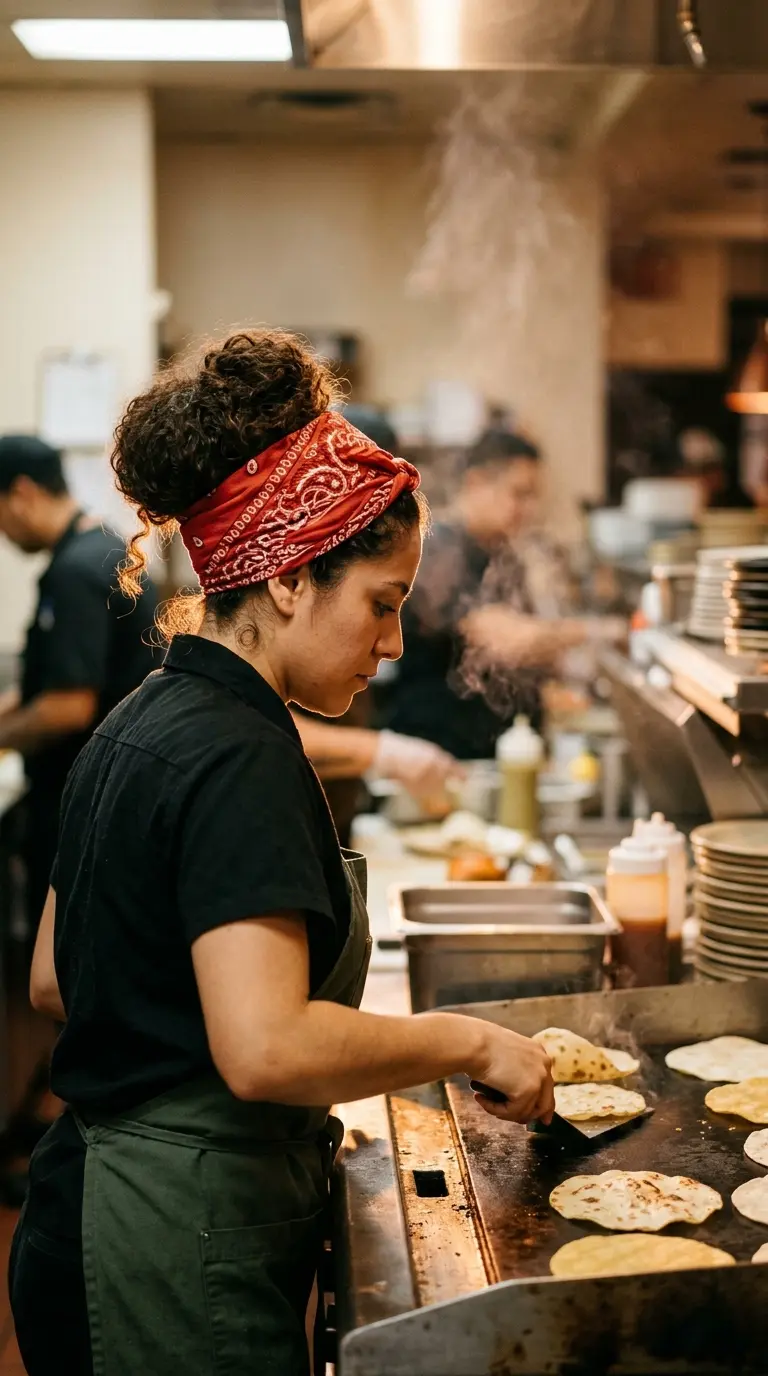
A bandana does two jobs at once. It holds back the short pieces at the front and covers the bun at the back, so it can count as your hair covering in kitchens that allow it.
Tie your hair into a bun anywhere from the crown to the back of the head. Fold a large square bandana into a triangle, place the long edge at your front hairline, and bring the two ends to the back. Tie them under the bun, then tuck the point of the triangle up and over the bun.
It also soaks up sweat on a hot line, which is why so many cooks swear by it.
10. Pull Through Braid Ponytail

If you never learned to braid, this gives you a braided look made only from small ponytails. Each section is held by its own elastic, so it does not unravel when you are running plates.
Tie a ponytail. Split it into a top half and a bottom half. Flip the top half forward, tie a small ponytail in the bottom half a couple of inches down, then bring the top half down around it and tie it underneath. Keep switching until you reach the ends. Pull each loop wider with your fingers.
Best for: very long hair on the floor, patio shifts, and anyone who gets bored of the same bun.
11. Tucked Bob With Pins and a Headband

Short hair has its own problem in food service. It is too short to tie, so the side pieces creep forward every time you look down.
Slide a thin elastic headband on first to hold the front. Tuck the sides behind your ears and cross two bobby pins over each one, just above the ear. If the back is long enough, gather the bottom layer into a tiny stub ponytail at the nape.
For kitchens that want full coverage, this all fits easily under a hair net or a skull cap.
12. Short Crop or Pixie Under a Skull Cap
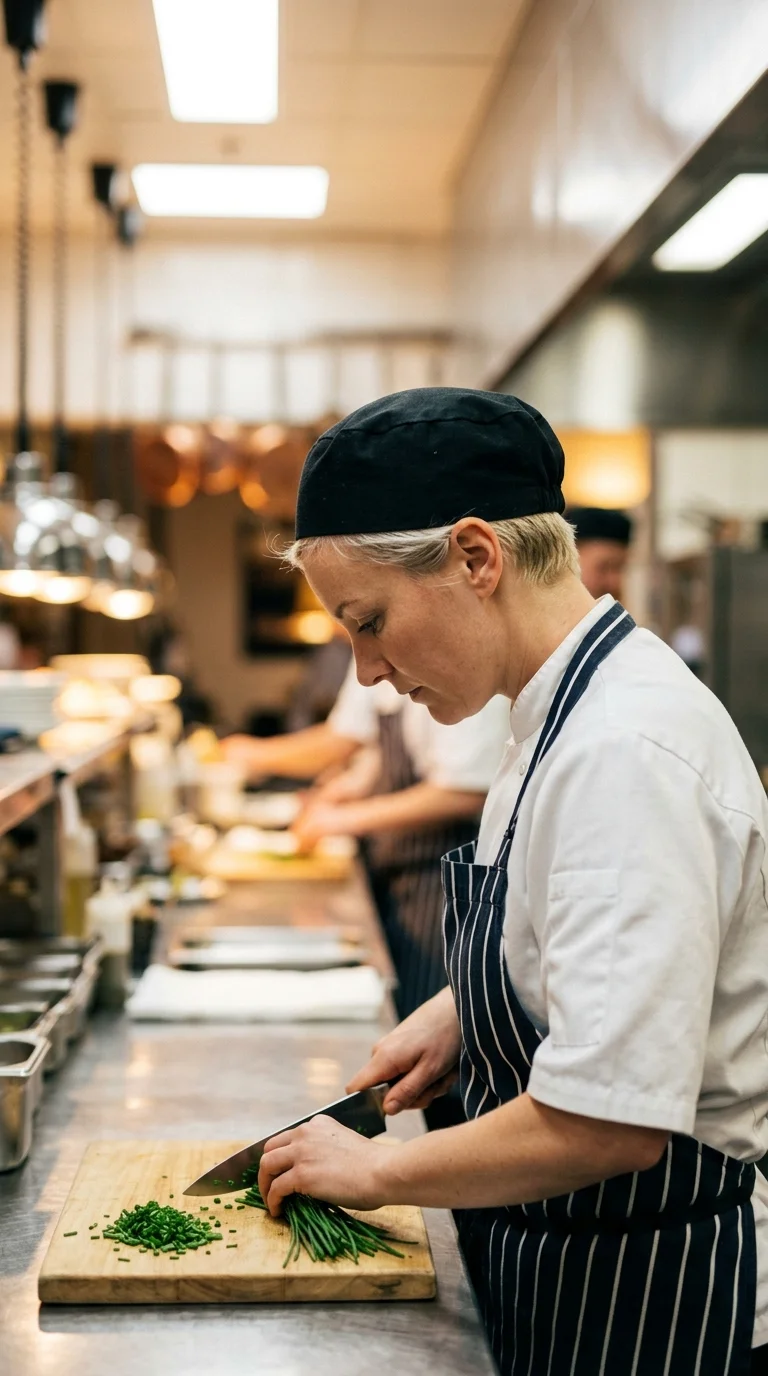
Some cooks skip the whole problem with a short cut. A pixie or a crop takes thirty seconds in the morning and fits under any hat.
Ask for a cut that is shorter at the nape and tapered around the ears, with a little length on top. That way the edges stay tidy under a cap and the top has enough length to push back.
A small dab of matte paste or gel keeps the top from popping out under the brim. Keep regular trims every four to six weeks so the back never grows past the collar.
| Your role | What matters most | Best picks from this list |
|---|---|---|
| 👩🍳 Chefs and line cooks | Flat under a hat or net, heat and sweat proof | Slick low bun, Dutch braid into a bun, bandana wrap, pixie |
| 🍽️ Servers and bartenders | Polished look that lasts all night | Wrapped high ponytail, French twist, double Dutch braids |
| ☕ Baristas and café staff | Fast to do, works with a cap or apron uniform | Cap ponytail, looped ponytail, tucked bob |
13. Low Knot for Long Haired Guys
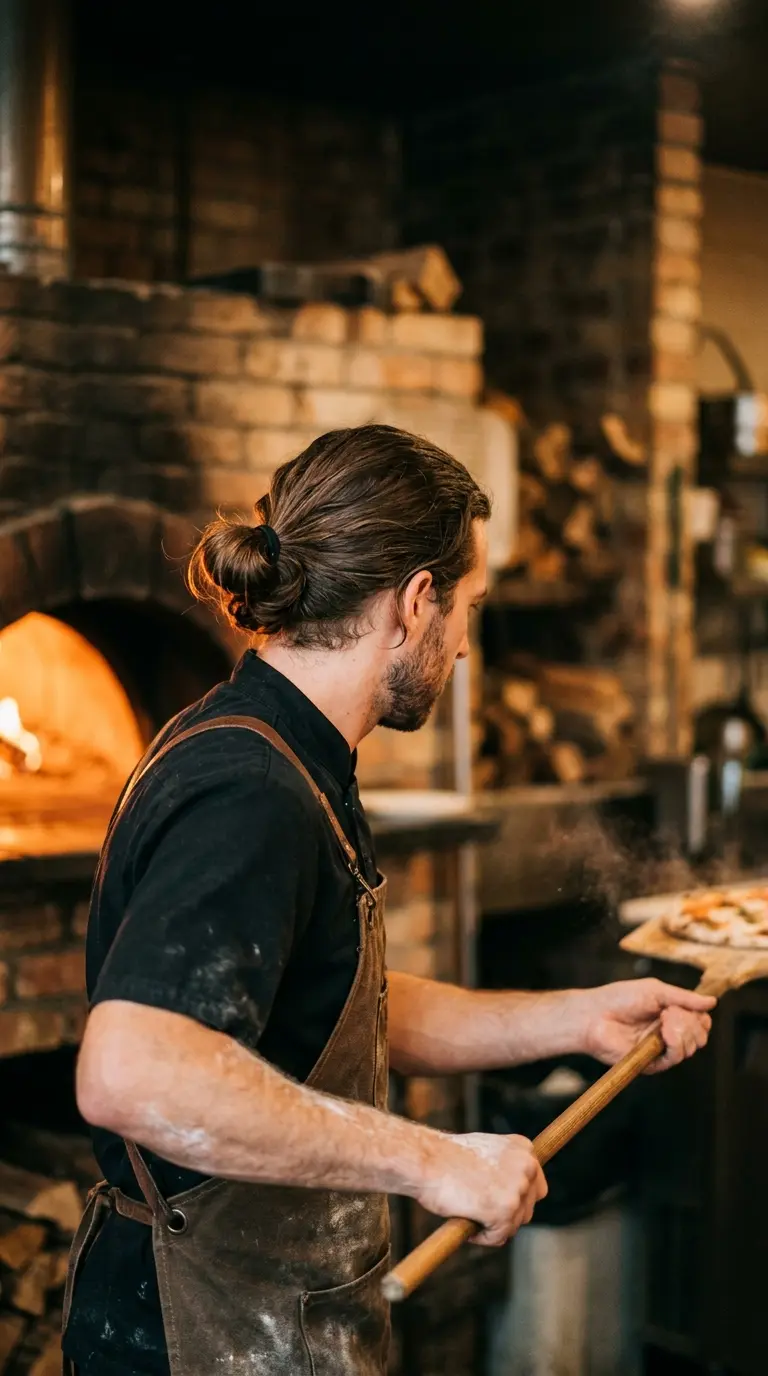
Guys growing their hair out face the same rules as everyone else. A loose ponytail is not enough on the line.
Pull your hair straight back, tie it low at the nape, and on the last loop of the elastic, pull the hair only halfway through to make a knot. Wrap the leftover ends around the base and tuck them under the elastic.
Keep it low so it sits inside a cap or hair net. A knot on top of the head lifts a hat right off.
Good to know: beards count too. Many kitchens ask cooks with more than short stubble to wear a beard net, so keep one in your bag along with the hair tie.
14. Feed In Cornrows Straight Back
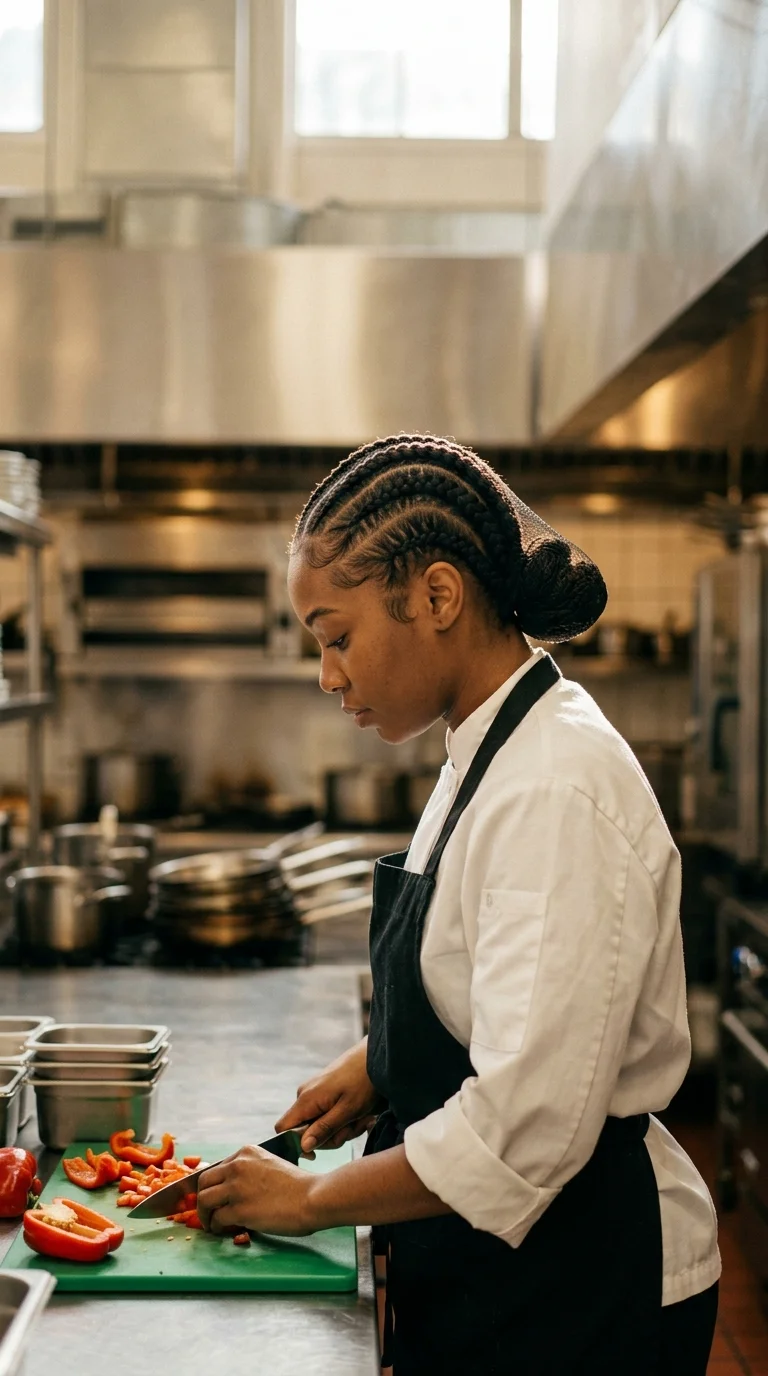
Cornrows are one of the most practical protective styles for long kitchen shifts. They lay flat, they last two to three weeks, and there is nothing to redo before work.
Feed in cornrows start small at the hairline and get thicker as extra hair is added, so there is less tension on your edges. Ask your braider for straight back rows so the braids sit evenly under a hat. Gather the ends into a low bun or a ponytail and tuck them under your hair net.
Quick tip: wrap your hair in a satin scarf at night and use a light oil on your scalp every few days. Hot kitchens can dry your scalp out faster than you expect.
15. Locs or Twists Gathered Into a Wrapped Bun
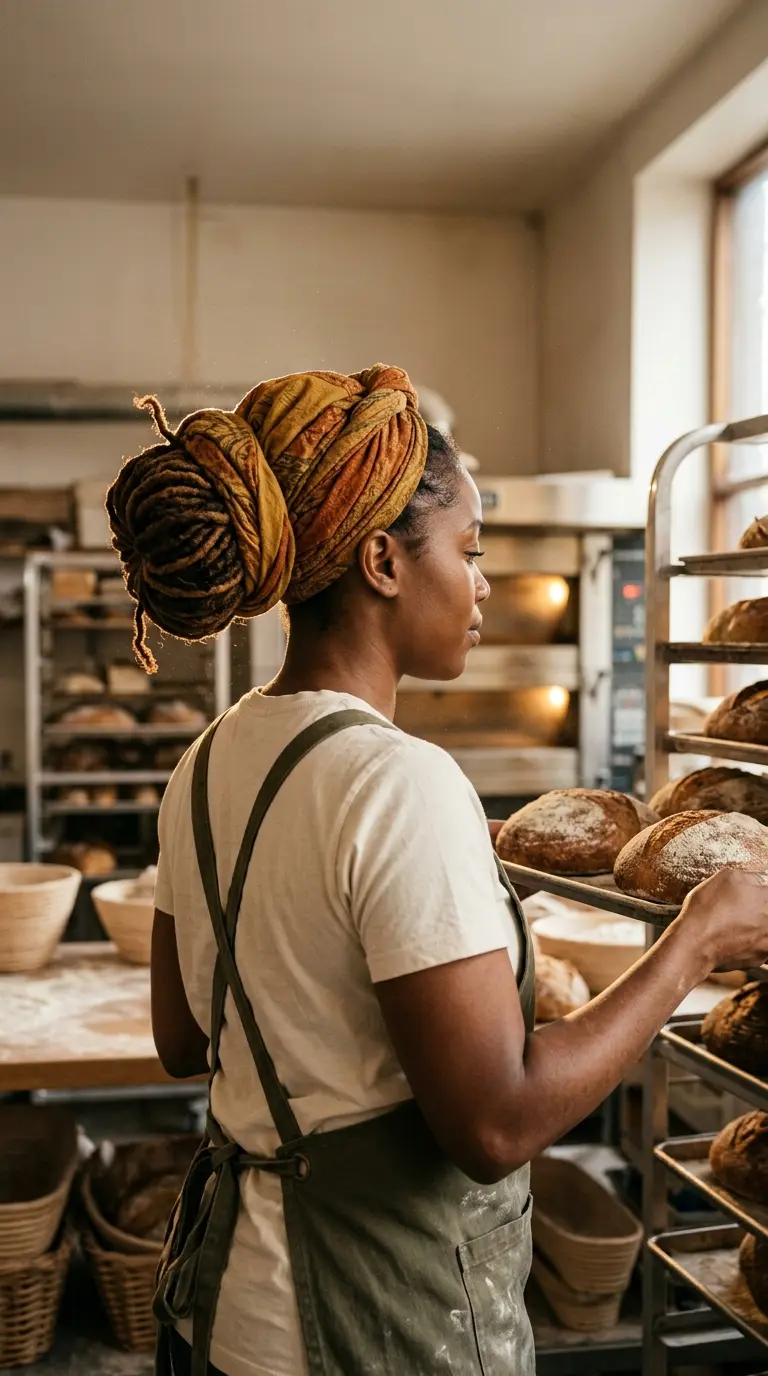
Locs and two strand twists can get heavy, and they love to swing forward when you bend over a mixer or a sink. A wrapped bun handles both problems.
Gather your locs or twists at the back of the head and tie them with a large, soft scrunchie or a loc band. Coil them around the base into a bun. Then wrap a head scarf over the top and around the bun, tying it at the nape or the front.
The scarf keeps every loc covered and inside the bun, and it looks good enough for a front counter shift too.
Styling detail: pick a scarf with a cotton outside and a satin lining. The cotton breathes in the heat, and the satin protects your hair from friction all day.
The FDA Food Code asks anyone handling food to wear a hair restraint, like a hat, a hair net, or another covering. A great style keeps your hair back, but the covering is what keeps it out of the food. Rules change from state to state and kitchen to kitchen, so always check with your manager or your local health department.
Ready for Your Next Shift
A good shift style is one you stop thinking about the minute you clock in. It stays flat under your hat, holds through the heat and the rush, and never sends your hands back up to your head in the middle of service.
Start with what fits your hair length and your role. A slick low bun or a Dutch braid for the line, a wrapped ponytail or French twist for the floor, and a cap ponytail or tucked bob behind the espresso machine. Keep spare pins and an elastic in your apron pocket, and give your scalp a break on your days off.
The best food service hairstyles are the ones that look the same at close as they did at open.
Save this list to your work hair board so your next early shift starts with a plan.