
You pull on a cute beanie at 8 a.m., and by lunch you take it off to find a flat crown, a ridge across your forehead, and ends sticking out like a broom. That is hat hair, and it is the main reason so many of us leave our favorite knits hanging on the hook all winter.
The usual advice is to skip the hat or carry a brush. Neither helps much when it is freezing out and you still have places to be after the hat comes off.
What actually works is a hairstyle that plans for the hat. Low braids, nape buns, and pulled out face framing pieces sit under the fabric instead of fighting it, so there is less hair to crush in the first place. Small habits help too, like putting the hat on fully dry hair and picking a smoother lining.
These beanie hairstyles, plus a handful for fedoras, berets, cloches, and bucket hats, keep your hair looking done before and after you pull the hat off. Each one comes with a quick how to and a small tip for keeping its shape.
1. Low Side Braid Under a Slouchy Beanie

Hat hair starts at the crown, where a beanie presses hardest. A slouchy beanie leaves extra room up top, and a loose side braid keeps the rest of your hair out of the squeeze zone.
- Brush everything over one shoulder and keep a soft side part.
- Start the braid low, just under the ear, not up near the crown.
- Tie it with a small clear elastic and tug the edges wider.
- Set the beanie so the slouch falls back and the band sits just above your eyebrows.
When the hat comes off, the braid looks exactly the same. Only the crown needs a quick fluff with your fingertips.
2. Curtain Bangs Pulled Out Under a Cuffed Beanie

Bangs and beanies can get along fine. The secret is where the band sits.
Roll your curtain bangs around a large Velcro roller while you do your makeup, then let them cool for five minutes. Pull the cuffed beanie on so the folded band rests just above the bangs, not on top of them. Then pull the two sides out and sweep each one away from the center.
Leave the rest of your hair down and tucked behind your ears.
Quick tip: Keep a mini roller in your coat pocket. Two minutes in the car or a restroom brings the bend right back after the hat comes off.
3. Two Low Dutch Braids Under a Chunky Knit Beanie
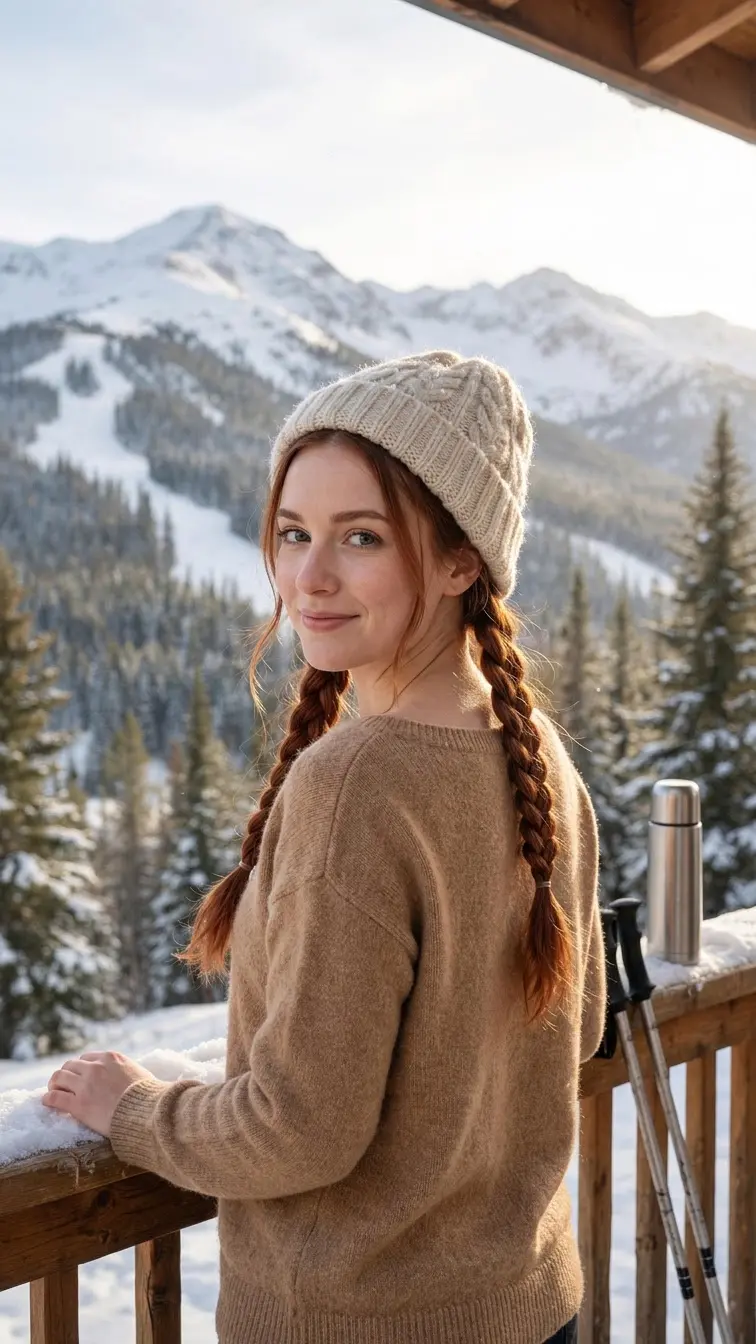
Two braids split the bulk evenly, so a chunky beanie sits level instead of tipping to one side. They also hold up through long ski days and windy school runs.
Part down the middle. Start each Dutch braid low, behind the ear, so the top of your head stays smooth where the hat sits. Braid to the ends and tie off.
A few things that help:
- Pull out two thin wisps at the temples before the hat goes on
- Skip pancaking the top of the braids, since the beanie covers that part anyway
- Pancake only the lower half, where people actually see it
Best for medium to long hair that frizzes in damp weather.
4. Loose Waves Tucked Behind the Ears With a Fisherman Beanie

Most people assume waves and hats are a lost cause. The waves usually survive just fine. It is the hair above your ears that goes flat.
A short fisherman beanie sits high, above the tops of the ears, so it presses on far less hair than a long, deep knit. Tuck your hair behind both ears first, then put the beanie on. Everything from the ears down stays loose and bouncy.
Set the waves the night before with a loose braid, or use a curling wand on dry hair in the morning.
Damp roots are the real enemy. Hair that goes under a hat even a little wet dries in the exact shape of the band.
5. Low Twisted Nape Bun Under a Wool Fedora
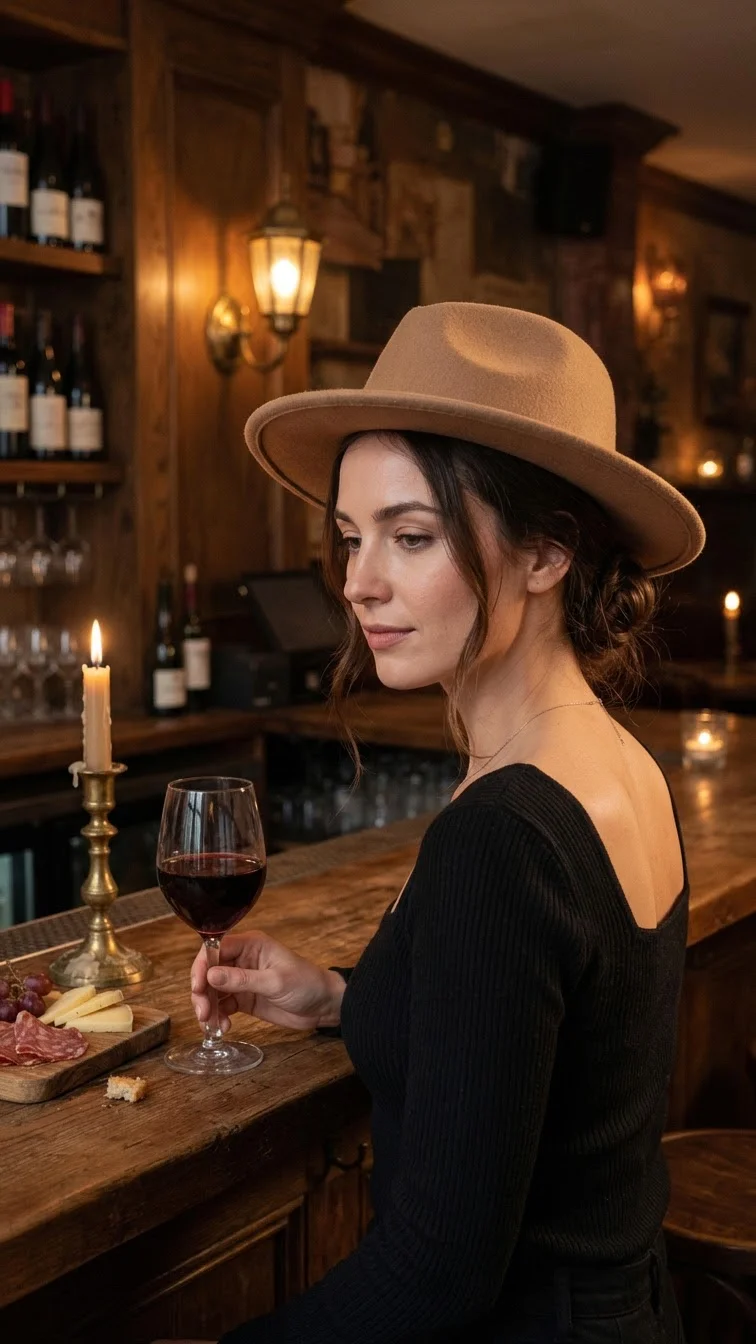
A wool fedora rests on top of your head, so anything high, like a top knot, pushes it up and makes it wobble. A low twisted bun slides under the back of the brim and keeps the hat level.
Twist all your hair into one rope at the nape. Wrap it around itself and pin it with four bobby pins crossed in X shapes. Then pull a few strands loose at the front so the brim has something soft to frame.
When you take the hat off at dinner, the bun is still neat. Lift the crown with your fingertips and you are done.
It works best with a fedora that fits easily, not one that grips your temples.
6. Side Swept Waves Under a Tilted Beret

Berets come with one rule. Tilt it, never pull it down over your whole head.
A beret worn at an angle only touches one side and the back, so the other side keeps all its volume. Make a deep side part on the side opposite the tilt. Curl the long side away from your face with a 1 inch iron, brush through gently, and sweep it forward over your shoulder.
Set the beret toward the back of your head, angled over the short side, and hold it with two bobby pins hidden under the edge.
The deep part does most of the work. It stays visible even with the hat on.
7. Sleek Low Ponytail With a Wrapped Base Under a Ribbed Beanie
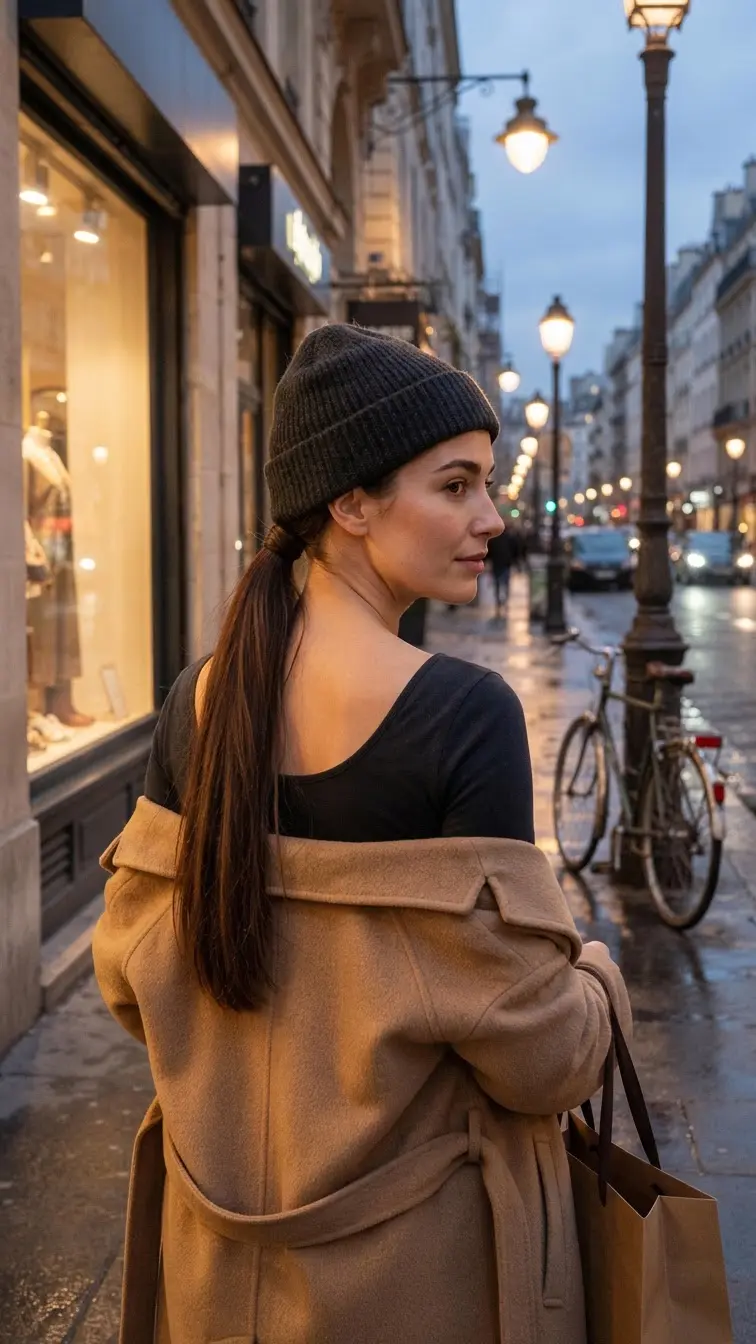
The classic mistake is a high ponytail under a fitted beanie. The band presses right on the elastic, the hat bulges, and you get a hard ridge across the back of your head.
Drop the ponytail to the nape instead. Smooth the sides with a little cream, tie it with a spiral coil tie, and wrap a thin strand around the base to hide the tie. Pin the end of that strand underneath.
The beanie ends just above the ponytail, so nothing presses on the base.
Watch out: Regular elastics leave a sharp kink. Coil ties and silk scrunchies leave a much softer bend when you finally take your hair down.
8. Bubble Ponytail Down the Back Under a Pom Pom Beanie
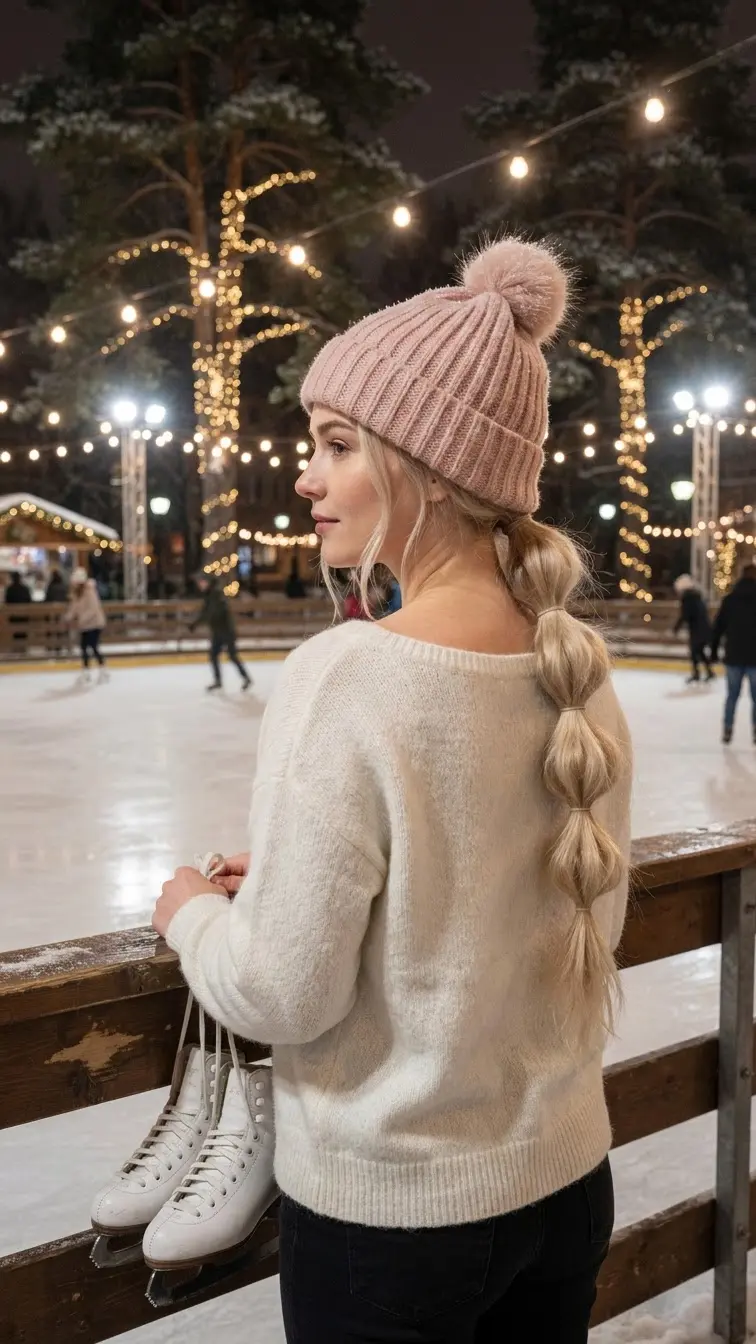
Five round bubbles running down your back still show when the top of your head is fully covered. That is why this one pairs so well with a big pom pom beanie.
Make a low ponytail at the nape. Add a clear elastic every 2 to 3 inches down the length, then gently pull each section wider to puff it out. Leave the last few inches loose.
The whole style lives below the hat band, so nothing gets crushed. Pull the beanie off later and the bubbles are right where you left them.
Clear elastics blend into blonde hair. On dark hair, small black ones hide better.
High ponytail under a pom pom beanie. The band presses on the elastic, the crown goes flat, and the pony pushes the hat into a cone shape.
Bubble ponytail starting at the nape. The beanie sits flush, the bubbles stay round all day, and the crown only needs a quick finger fluff.
9. Messy Fishtail Braid Over One Shoulder With a Fleece Bucket Hat

Bucket hats and beanies press on your hair in different ways. A beanie hugs your whole head. A fleece bucket hat rests on the crown and leaves the sides mostly free.
So the sides are where you show off. A loose fishtail braid swept over one shoulder fills the space under the brim and keeps the back from tangling against your coat collar.
- Start the fishtail at the nape, a little off center
- Keep the strands thin so the pattern stands out
- Pull the edges out gently once it is tied
Fishtails look better a little messy, so a few hours under a hat only helps.
10. Two Low Pigtails With Velvet Ribbons Under a Cable Knit Beanie
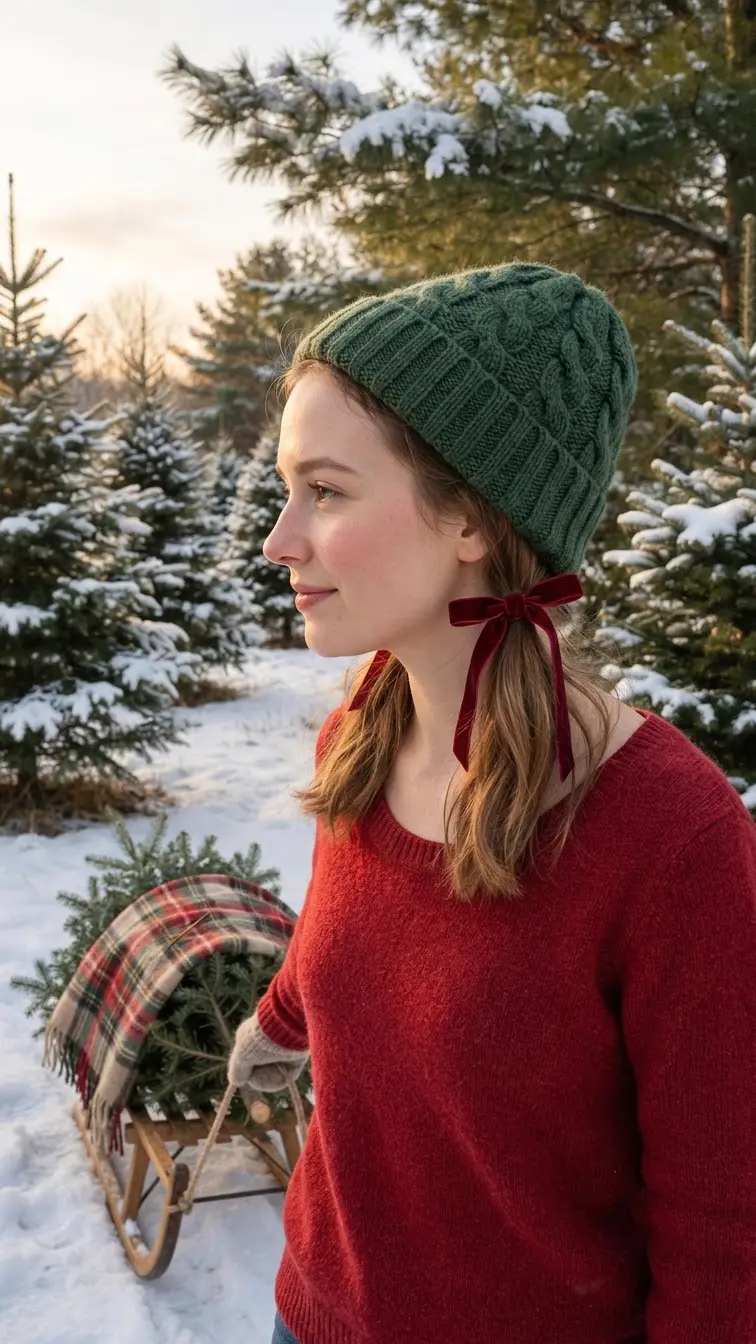
Low pigtails might be the most underrated hat style out there. They take one minute and still look planned.
Part down the middle, gather each side just below the ears, and tie with an elastic. Wrap a short velvet ribbon over each elastic and knot it into a small bow. The beanie hides the part, and the ribbons sit right at the edge where they show.
They suit shoulder length hair that is too short for proper braids.
Loosen the hair slightly above each tie before the hat goes on. Tight pigtails plus a tight hat leave two matching dents.
11. Short Bob With Tucked Ends Under a Cashmere Beanie

Short hair shows hat dents faster, because there is no length to pull the dent back down. A bob needs a gentler setup.
- Blow dry with a round brush, bending the ends under.
- Mist a little dry shampoo at the roots before the hat goes on. It adds grip and helps the crown lift later.
- Pick a thin, soft beanie in cashmere or fine merino instead of thick wool.
- Tuck the sides behind your ears and let the back curve under below the band.
After you take it off, flip your part to the opposite side for a few seconds, then flip it back. The roots lift right up.
12. Loose Curls Fluffed Below a Satin Lined Beanie

Curls lose their shape under wool mostly from friction. The rough knit rubs against each curl and breaks it into frizz. A beanie lined with satin or silk lets the hair slide instead of snag.
On curl day, apply your usual cream and gel and let the curls dry fully. Scrunch out the crunch. Pull the beanie on so it sits back from your hairline, leaving a few curls showing at the front.
Below the band, fluff the curls with your fingers to spread them out.
Quick tip: No satin lined hat yet? A thin satin bonnet or scarf worn under a regular beanie does a similar job.
13. Rope Twisted Sides Pinned Low Under a Wide Brim Felt Hat
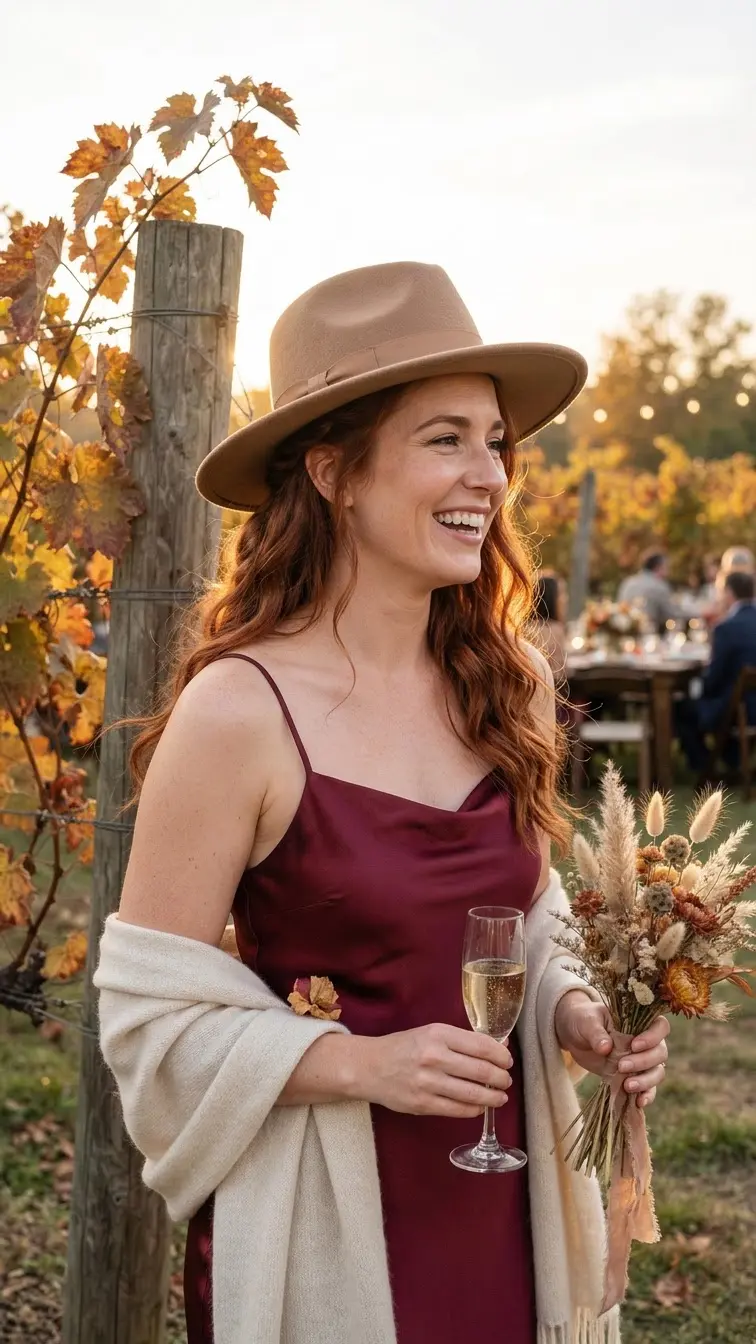
At a fall wedding or an orchard photo day, a wide brim felt hat looks lovely until the wind lifts your loose hair into the brim and across your lipstick.
Rope twisted sides fix that. Take a 2 inch section from each temple and twist it back toward the nape. Bring the two twists together at the back of your head, just below where the hat crown ends, and pin them with crossed bobby pins. The rest hangs loose down your back.
The twists frame your face nicely under the brim.
Pins placed below the hat line never get pushed into your scalp.
Put any hat on fully dry hair, roots included.
Lift the hat off from the back so it does not drag hair forward.
Keep a wide tooth comb and a mini spray bottle of water in your bag.
Pulling the hat down to your eyebrows. It presses the whole crown flat.
Brushing a dent hard and dry. Mist it lightly first, then reshape.
Pinning anything right where the hat band sits.
14. Low Rolled Chignon Under a Cloche Hat
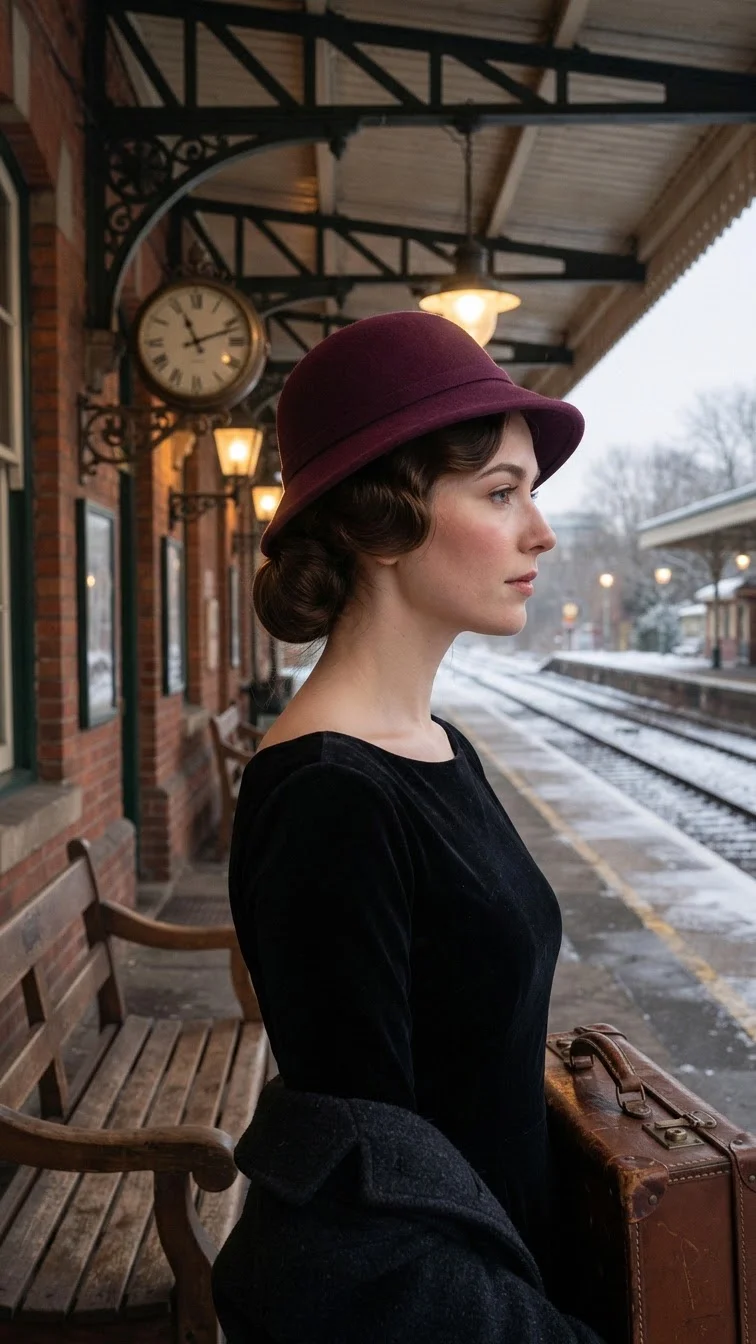
A cloche is shaped like a bell. It sits low on the forehead and dips close to the neck, so a high bun simply will not fit under it.
A rolled chignon tucks right beneath the back edge. Gather your hair at the nape, roll the ends under and up toward your head into a neat tube, and pin along the top of the roll. Keep the front smooth with a deep side part and a soft wave across the forehead.
It feels a little old Hollywood, in a good way.
Quick tip: Rub one drop of hair oil between your palms and smooth the top after the hat comes off. It softens any faint line from the band.
15. High Ponytail Pulled Through a Ponytail Beanie
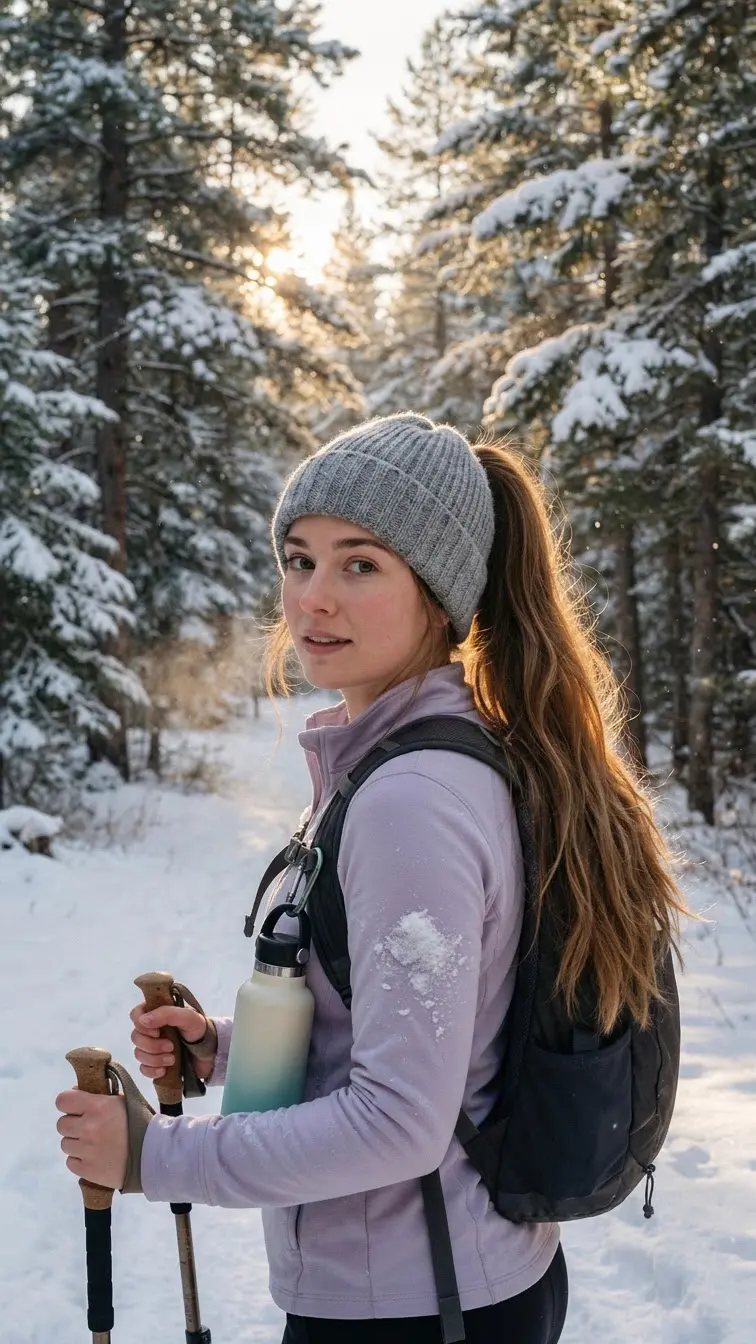
High ponytails and regular beanies fight each other. The hat either perches on the pony and slides off, or squashes it into a dent. A ponytail beanie, the kind with an opening at the back, ends that fight.
- Tie your ponytail at the crown with a coil tie
- Thread it through the back opening before you pull the hat down
- Settle the band over your ears and the top of your forehead
- Pull two short wisps forward at the temples
It is a solid pick for winter runs, snowy hikes, and sledding with the kids.
The ponytail swings free and the hat stays put, even when you are moving a lot.
Keep the Hat and Keep the Good Hair Day
Hat hair mostly comes down to where your style sits and how dry your hair is when the hat goes on. Keep the bulk low, leave the crown some room, and only cover hair that is fully dry. Those three habits fix more than any product.
Test one or two of these beanie hairstyles on an easy weekend first, so you know how your hair behaves after a few hours under knit. The low braids and the nape bun suit almost every length, and the pulled out bangs take two minutes.
Save this list for the next cold morning when you want the hat and still want good hair underneath.