
Thick hair has a way of punishing short cuts. You walk out of the salon with a neat bob, wash it the next morning, and it dries twice as wide as your head. The ends flip, the back puffs into a shelf, and suddenly you are wearing a helmet.
So most thick-haired women give up and keep everything long and heavy, because length at least pulls the bulk down. That works, but it also means hot necks, endless drying time, and ponytails that give you a headache by noon.
Here is the honest part. Short cuts on thick hair usually fail because of how they are cut, not because your hair is too much. A blunt one length chop with no weight taken out will poof. A cut with hidden layers, a cleaned out nape, or a shape built around your density will sit down and move.
These short haircuts for thick hair are built around that idea. Each one shows you the front and the back, explains how the bulk gets handled, and gives you words to use in the chair. Find the ones that match your texture and save them for your next appointment.
1. Internally Layered Chin Bob

From the outside, this looks like a plain chin length bob. The trick is hidden inside.
Your stylist lifts the top layer and carves shorter pieces underneath, mostly through the back and behind the ears. Those hidden pieces take out the bulk that usually pushes a bob into a triangle. The top layer stays long and smooth, so nobody sees the work.
What to ask for:
- A chin length bob with internal or “invisible” layers
- Weight removed underneath, not on the surface
- A soft edge, not a razor sharp line
Quick tip: book a dry check after a week. Thick hair often shows where more weight needs to come out once it settles.
2. Undercut Bob With a Hidden Nape Shave

Think of this as a secret weapon. A strip of hair at the nape gets buzzed short, usually from the bottom of the ears down, and the bob falls over it like a curtain.
All that removed hair is bulk that can no longer push your bob outward. The back lies close to your neck, and the whole shape looks lighter.
How it plays out day to day:
- Down, nobody can see the undercut.
- Up in a clip, the shaved nape shows and looks deliberate.
- On hot days, the back of your neck stays noticeably cooler.
A small warning: the buzzed part grows fast. Plan a quick clipper tidy every three or four weeks.
3. Textured Collarbone Lob With Shattered Ends

Not ready to go fully short? Start here.
A lob that hits the collarbone keeps enough length to weigh thick hair down, which already helps with poof. The magic, though, is in the ends. Your stylist point cuts or slides the shears into the last inch or two, so the edge breaks up instead of sitting as one heavy block.
The result moves when you walk. It looks lived in by day two, not tired.
Best for: wavy or straight thick hair that feels heavy at the bottom.
Air dry it with a little sea salt spray scrunched into the lengths, and leave the roots alone so they stay flat.
4. Stacked A Line Bob With a Tapered Nape

Stacking sounds like it would add bulk. On thick hair, it does the opposite when it is done right.
The back gets cut in short, graduated layers that sit tight to the head and taper into the nape. The front stays longer and angles down toward the chin. All the weight moves forward, where it frames your face, and away from the back of your head, where thick hair loves to puff.
Ask your stylist to keep the stacking soft, with no hard ledge at the occipital bone. A sharp shelf looks dated fast.
It takes about five minutes to blow dry with a round brush, mostly at the back.
5. Blunt Bob With Point Cut Ends

Most stylists warn thick-haired women away from blunt bobs. They are half right.
A truly blunt line on dense hair stacks up like a brick. But a blunt bob with point cut ends keeps the crisp look and loses the heaviness. Your stylist cuts the line, then snips small notches straight into the edge so it bends instead of flaring out.
Wash, rough dry, and finish with a flat iron on only the bottom inch. That one pass makes the line look sharp without flattening your roots.
Read the do and don’t list below before you book. It saves a lot of grief.
Ask for weight removed from the inside or underneath.
Ask for point cutting or slide cutting on the ends.
Ask to see the cut dry before you leave the chair.
Thinning shears dragged all over the surface layer.
A perfectly one length line with nothing taken out.
Very short layers at the crown, which stand straight up.
6. Short Shag With a Thinned Out Crown

Shags were basically invented for thick hair.
All those choppy layers give the bulk somewhere to go. Instead of one big mass, you get lots of small pieces that separate and move on their own. The secret for dense hair is to thin out the crown area from underneath, so the top layers lie down instead of stacking.
Keep it under your jaw, with bangs or curtain pieces in front.
Styling takes one minute:
- Scrunch in a light mousse while damp
- Diffuse or air dry, hands off
- Twist two or three front pieces with your fingers
Messy is the point. If it looks too neat, shake it out.
7. Bixie With Tapered Sides

Half bob, half pixie. The bixie keeps a little length on top and around the face, then tapers in tight around the ears and nape.
On thick hair, those tapered sides are everything. The widest part of your head is above the ears, and that is exactly where thick hair poofs. Take the sides in close and the whole silhouette slims down.
Tell your stylist you want “bob length on top, pixie sides and back.” Bring a photo, because this cut has a lot of versions.
It grows out kindly, too. In two months, it turns into a short, soft bob without an awkward phase.
8. French Bob With Soft Curtain Bangs

Here is a myth worth dropping: thick hair can’t do bangs.
It can. It just needs the right kind. Heavy, blunt bangs on dense hair turn into a thick shelf. Soft curtain bangs that part in the middle and sweep to the sides fall apart nicely and blend into the bob.
The French bob itself sits around the lip or jaw and is meant to look slightly undone. That suits thick hair, which rarely lies perfectly straight anyway.
Quick tip: blow dry the bangs first, while the rest of your hair is still damp. Thick bangs set fast and refuse to cooperate later.
9. Wavy Italian Bob With Long Layers

Big, swingy, a little bit glamorous. The Italian bob is fuller than a French bob and lands somewhere between the jaw and the collarbone.
Thick hair has the body this cut needs. What it doesn’t need is extra width, so ask for long layers that start below the cheekbones. Long layers shift weight without making the top fluffy.
A good day with this cut looks like this:
- Rough dry until 80 percent dry.
- Wrap a few big sections around a large round brush.
- Break the waves up with your fingers once they cool.
Skip the curling iron. On thick hair, it makes everything too round.
10. Asymmetrical Bob That’s Longer in Front

One side longer, one side shorter. Thick hair holds that angle well, because it has the weight to swing.
The asymmetry also spreads the bulk out unevenly on purpose, which keeps the shape from looking like a round dome. Your eye follows the long side instead of noticing the width.
Who it suits:
- Women with a cowlick on one side
- Anyone who always parts hair the same way
- Thick straight hair that refuses to curl under
Keep the difference subtle at first, maybe an inch. A big jump looks dramatic and can feel lopsided if you change your part a lot.
11. Textured Pixie With a Clipper Nape

Going very short sounds risky with thick hair. Strangely, it is one of the easiest options.
Once the sides and nape are clipped close, there is simply no room for poof. The thick hair stays on top, where it gets chopped into piecey texture that looks intentional instead of fluffy.
Two minutes of styling, max. Rub a pea sized bit of matte paste between your palms, push the top forward, and pinch a few pieces at the fringe.
Watch for: thick hair grows fast and the nape fuzzes out quickly. Book a neck trim every four to five weeks.
12. Long Pixie With a Deep Side Sweep

Not ready to clip your sides to a quarter inch? A long pixie keeps three to five inches on top and sweeps it deep to one side.
The length on top works like a little weight. It drapes instead of sticking up, which is the usual problem when thick hair is cut short and even all over.
Morning routine for this one:
- Blow dry the top in the direction of your sweep, using a flat brush
- Aim the dryer down the hair shaft to keep it smooth
- Tuck the short side behind your ear for a sharper look
It looks polished at the office and softer when you leave it air dried on the weekend.
13. Inverted Bob With a Graduated Back

An inverted bob is shorter in the back and longer in the front, like an A line but with a rounded, curved back instead of stacking.
For thick hair, the graduation at the back is the hero. It takes away the bulk at the nape and builds a smooth curve, so the hair hugs your head instead of puffing behind it.
Styling comes down to a few good habits and one or two products. Here is the short list that keeps this kind of thick bob sitting flat and shiny.
14. Curly Bob Cut Dry, Curl by Curl

Thick curly hair has its own rule. If it is cut wet and straight, it will spring up into a triangle the moment it dries.
Curly hair needs to be cut dry, one curl at a time. The stylist sees exactly where each curl lands and takes weight out of the spots that puff, usually the sides and lower back. What you get is a rounded bob that keeps its shape between washes.
Look for a stylist who lists curly cuts or dry cutting on their menu. Not every salon does it well.
Day two refresh: mist with water, scrunch in a dab of curl cream, and leave it alone.
15. Soft Shullet With a Feathered Nape
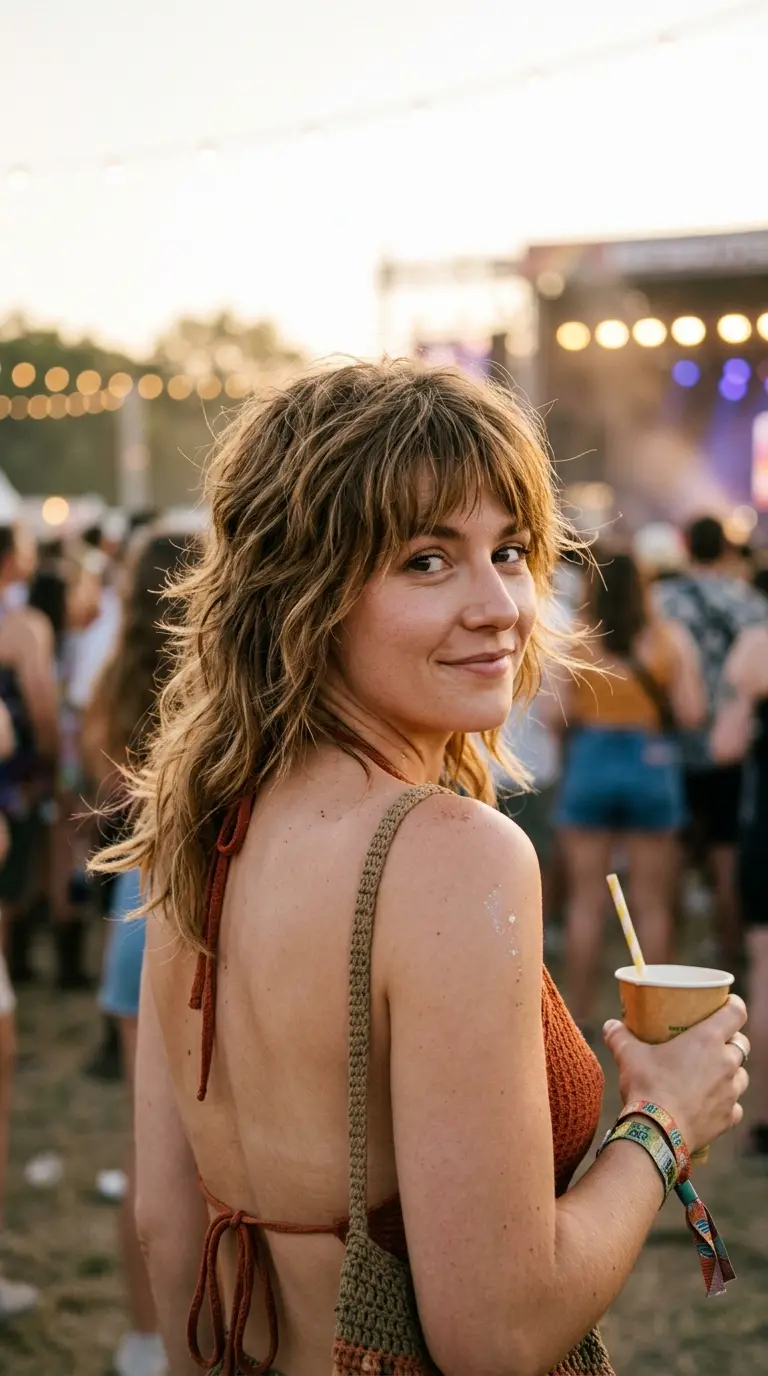
A shullet is the softer cousin of the mullet. Short, choppy layers on top, longer pieces left at the back.
Thick hair is ideal for it because the cut leaves bulk in only one place, the back, where it lies down against the neck. The top gets so much texture that it can’t build up into a dome.
Ask for:
- Curtain bangs or wispy fringe in front
- Short, piecey layers through the crown
- Feathered, thinned ends at the nape, sitting just above the shoulders
Scrunch with texture spray and let it dry messy. Neat doesn’t suit this one.
16. Ear Length Bob With Razored Ends

A razor works differently from scissors. Instead of a clean snip, it slices the hair at an angle and leaves feathery, tapered ends.
On thick, straight hair, that softness keeps an ear length bob from looking like a mushroom. Each end tapers off, so the edge of the cut looks light and wispy, never heavy.
Who should skip it: curly or very frizzy hair. Razored ends can fray on curls and make frizz worse.
Style it with a light smoothing balm and a quick blow dry, then push the front behind one ear. The tapered pieces fall forward on their own by lunchtime.
17. Short Wolf Cut With Choppy Layers

A wolf cut mixes a shag and a mullet. Lots of choppy layers up top, a little extra length at the back, and plenty of movement.
Why does it work on thick hair? There is nowhere for the bulk to hide. Every layer is cut to separate, so instead of one big shape you get texture.
A small heads up: wolf cuts look best a few days after washing. Freshly clean thick hair can make the layers feel puffy. Second day hair with a bit of dry texture spray is the sweet spot.
Keep it out of your eyes with a claw clip on the top section when you work out.
18. Choppy Neck Length Cut for Air Drying

Some mornings you just don’t have it in you to blow dry thick hair. Fair enough. Ask for a cut that is designed to air dry.
This one sits right at the neck with uneven, choppy ends all the way around. The stylist cuts it to your natural bend, so when it dries without heat, the pieces fall into place instead of puffing out.
What to put in after the shower:
- A leave in conditioner, worked through the ends
- A light curl cream or mousse, scrunched upward
- Nothing at the roots
Then walk away. Touching thick hair while it dries is what makes it frizz.
19. Deep Side Part Bob Tucked Behind One Ear
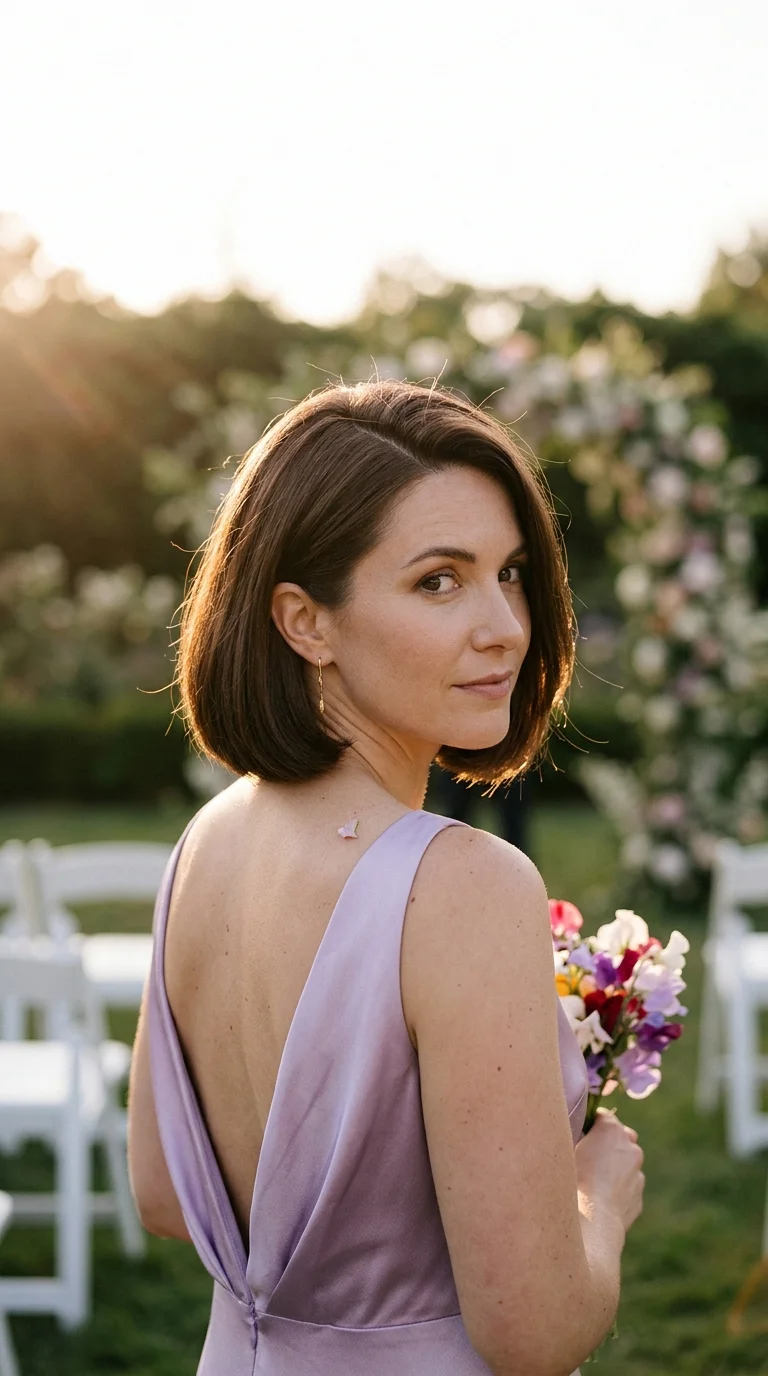
This is more about how the cut is shaped than a new cut entirely.
Your stylist sets a deep side part and cuts the short side so it can tuck neatly behind your ear. That tuck pulls a big chunk of hair out of the silhouette, which instantly makes thick hair look half as wide.
Ask for the tucked side to be thinned a little behind the ear. Otherwise, it can pop back out by mid morning.
The heavy side drapes across, the light side shows off an earring, and the back stays smooth.
Good for weddings, interviews, and anywhere a sleek look matters.
20. Undercut Pixie With a Long Top

Bold, but very practical. The sides and back are buzzed short, and four to six inches of length stays on top.
All the thick hair that used to sit above your ears is gone, so width stops being a problem. The long top can go three ways:
- Swept to one side and smoothed with balm
- Pushed back with a little pomade for evenings
- Left wavy and loose on lazy days
One honest note: this cut needs a clipper touch up every three to four weeks to keep the undercut crisp. Grown out undercut on thick hair turns fuzzy fast.
21. Chin Length Bob With Long Side Bangs

Bangs that sweep long and to one side are kind to thick hair. They lie flat because gravity does most of the work, and they blend into the bob instead of standing apart.
This version pairs those bangs with a chin length bob that has been debulked at the back. Ask your stylist to angle the bangs from your part toward the cheekbone, not straight across. The difference between a cut with that weight taken out and one without is easy to see.
A one length chin bob with nothing taken out. The back puffs into a round shelf, the sides flare past the cheeks, and the bangs sit like a heavy block.
The same length, but with weight removed underneath at the back and sides. The bob curves into the neck, the edges lie close to the jaw, and the long bangs drape to one side.
22. Short Butterfly Cut With Face Framing Layers

Short layers around the face, longer ones behind. Seen from the front, it reads as a short cut. From the back, there is still some length.
That split is useful for thick hair. Face framing layers cut around the cheekbones lift weight away from the front, which is where puffiness bugs most women. The back stays long enough to pull everything down.
Styling detail: roll the front layers away from your face with a medium round brush. Leave the back straight or lightly bent.
Thick hair fans out beautifully with this cut. Fine hair, by comparison, often looks thin at the ends.
23. Bob With Disconnected Under Layers

Disconnected means the under layer and the top layer don’t blend. The bottom section is cut much shorter, sometimes by two or three inches, and the top falls over it.
It sounds technical. The payoff is simple: the hair underneath is what pushes a thick bob out, and now there is far less of it.
The quick mistake to avoid is asking for this with a very short top layer. The shorter bottom will peek out and look choppy in the wrong way. Keep the top at jaw length or longer.
When the bob swings, those shorter pieces show for a second, and it looks a little edgy.
24. Tousled Crop for Coarse Thick Hair

Coarse and thick together is a lot of hair. Each strand is wide, and there are many of them.
The tousled crop leans into that. Everything stays short, around two to three inches on top, and gets cut in a scattered, uneven way so the hair breaks apart. Coarse strands hold that texture all day, which fine hair can’t do.
Products matter more than styling:
- A rich hair oil on damp hair to calm the wiry bits
- A cream wax worked in once dry
Go easy on brushes. Fingers give the best shape.
This crop looks better a little bit messy, the way it falls after a walk outside.
25. Shoulder Grazing Flipped Bob

Thick hair at shoulder length usually flips out on its own. Most women fight that. Here, you let it win.
The bob sits right where the ends touch your shoulders, and the stylist cuts soft layers into the bottom few inches. Those layers help the flip happen evenly instead of in random clumps.
To finish it:
- Blow dry smooth with a paddle brush.
- Turn the ends outward with a round brush or flat iron.
- Mist a light hairspray on your palms and run them over the flip.
It reads retro and polished, and it stays on the short side without exposing your neck.
Short Hair, Minus the Helmet
Thick hair isn’t the enemy of short cuts. A cut that ignores your density is. Once the bulk is handled with hidden layers, an undercut, a tapered nape, or curls cut dry, short hair on thick hair sits close and moves.
Start with whatever feels like the smallest step. That might be a lob with shattered ends or a bob with long bangs. You can always go shorter on the next visit.
When you book, show your stylist two or three photos from this list of short haircuts for thick hair and ask exactly how they plan to remove weight. The answer tells you a lot about whether they understand thick hair.
Save this list to your hair board so it is ready when you finally book that chop.