
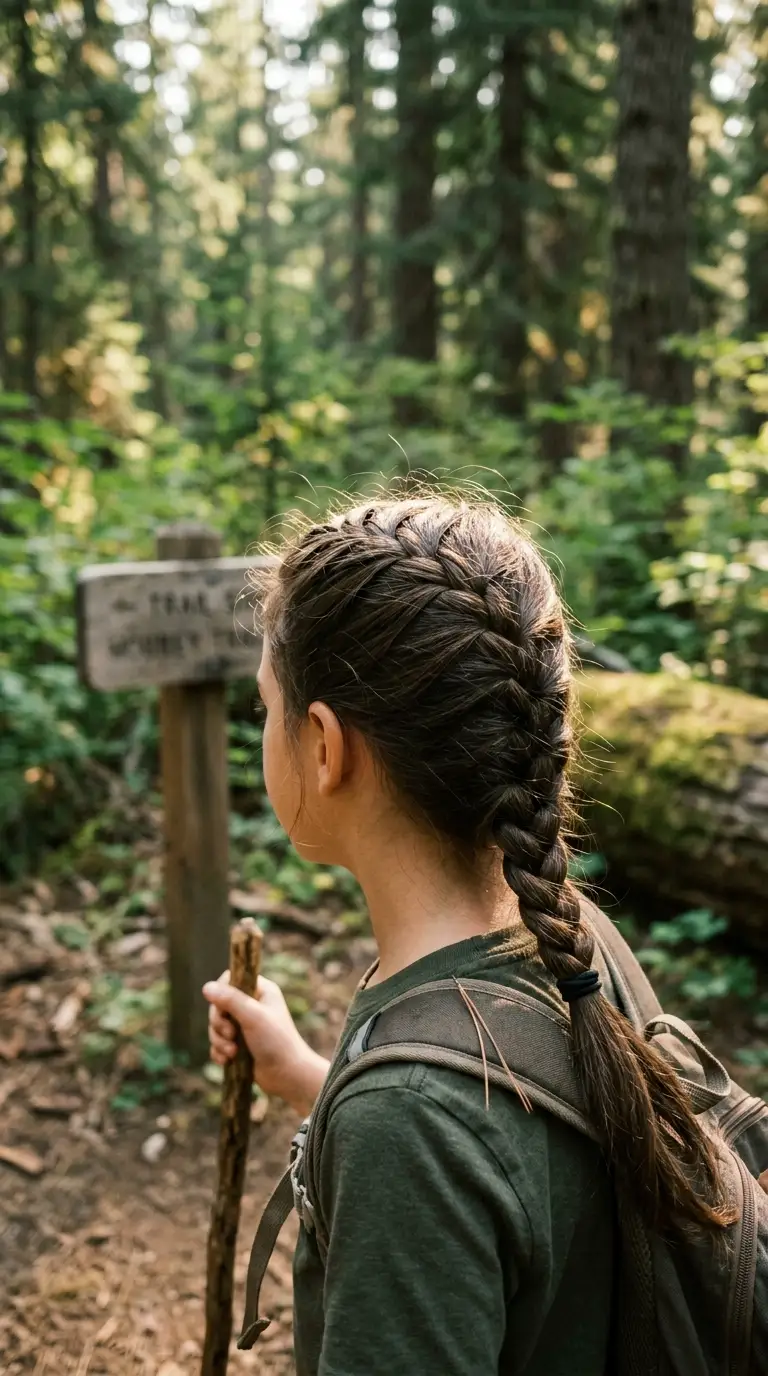
You have watched someone do it a hundred times. Three strands, a little hair added from each side, and somehow a neat braid appears that hugs the head from the forehead all the way down.
Then you try it on your own child, and halfway down the back of her head you have five strands, a lump at the crown, and a kid asking if you are almost done.
Every parent who can French braid started exactly there. The good news is that the motion is the same in every style on this list. Once your hands learn the basic cross and add, you can make a headband, a crown, a bun, a waterfall, and two sporty braids for swim day without learning anything brand new.
These French braid hairstyles for kids start with the classic center braid, broken down step by step for beginners, and build from there. Each one comes with the hair length it needs, how long it takes, and a tip that keeps it gentle on a tender head.
Grab a spray bottle of water, a wide tooth comb, a rat tail comb, a few soft elastics, and a small clip or two. Then pick a show and settle your child on a low stool where you can reach the top of the head without stretching.
1. Classic Center French Braid From Crown to Ends
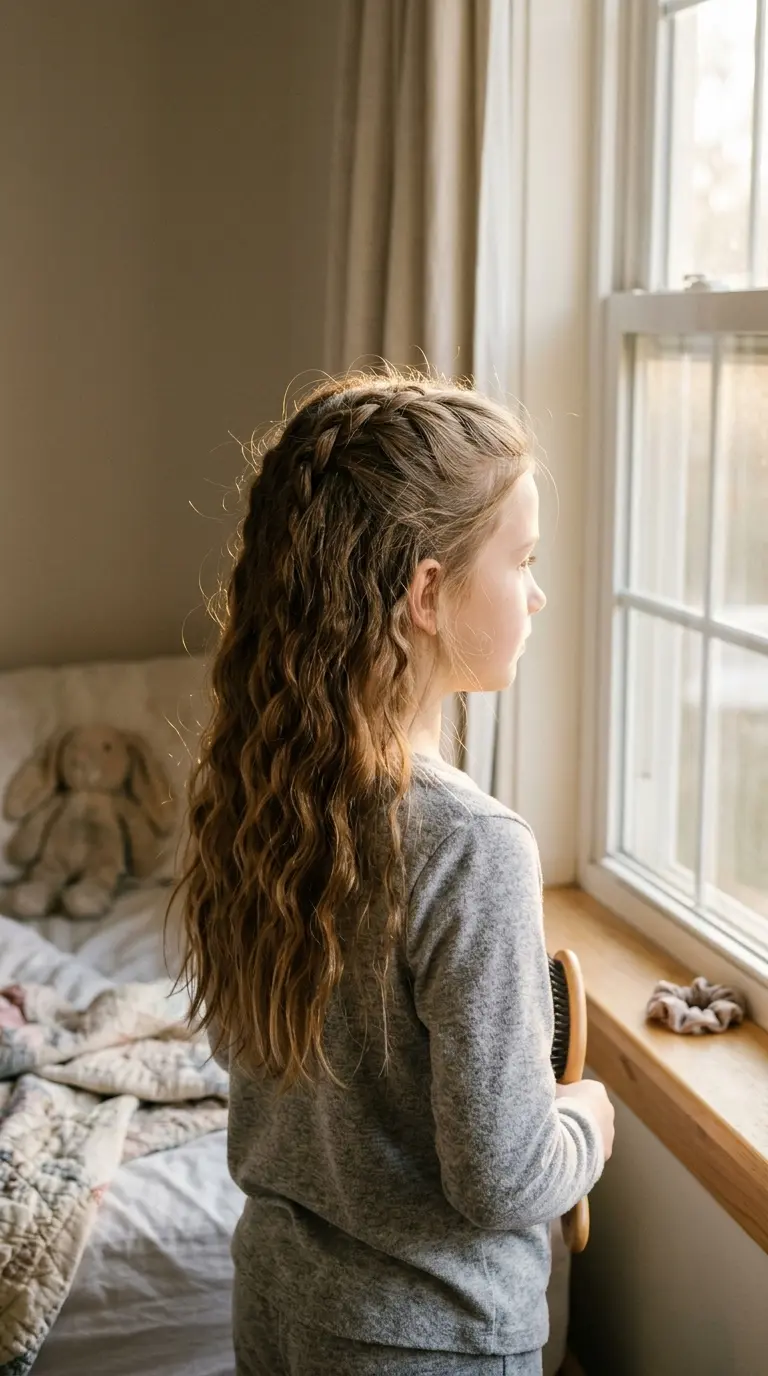
Every other braid on this list is this braid with a small change, so take your time with it.
- Brush out every tangle, then mist the hair until it is damp but not dripping. Damp hair grips better and shows fewer bumps.
- Take a small section at the top of the head, about the width of your three middle fingers, and split it into three equal strands.
- Cross the right strand over the middle, then cross the left strand over the middle. That is one regular braid stitch.
- Now start adding. Before each cross, pick up a thin slice of loose hair from that side and join it to the outside strand. Then cross the bigger strand over the middle.
- Keep going, adding from the right, then the left, until you reach the nape and there is no loose hair left.
- Finish with a plain three strand braid to the ends and tie it off.
Keep your hands close to the head the whole way down. Most lumps happen when your hands drift away from the scalp and the braid loosens.
Quick tip: pick up the new hair with the tip of your pinky finger, sliding it straight back from the hairline to the braid. Clean little slices make the braid look even from far away.
2. Half Up French Braid With the Rest Left Down
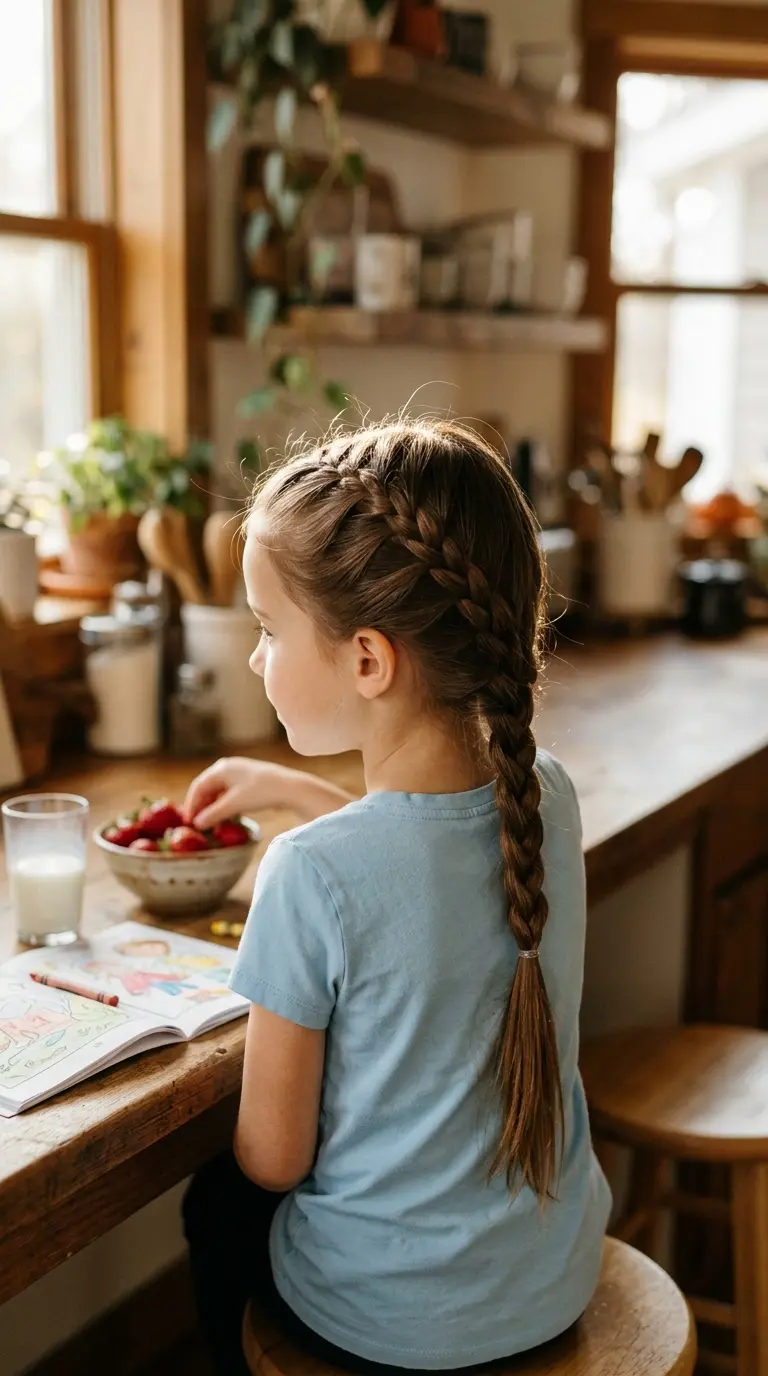
This is the best first French braid for a nervous parent. You only braid the top of the head, so it takes about five minutes and any lumps stay small.
Start at the front hairline just like the classic braid. Add hair only from the top section, roughly the hair above the ears, and stop adding once you reach the crown. Braid a few inches more without adding, then tie it off with a small elastic and let it rest on top of the loose hair.
The front stays out of her eyes all day, and she still gets to swish the long part.
Good to know: if her hair is very fine and the elastic slides, braid down to the crown, then twist the tail once and pin it flat with a bobby pin instead.
3. French Braid Headband Along the Front Hairline
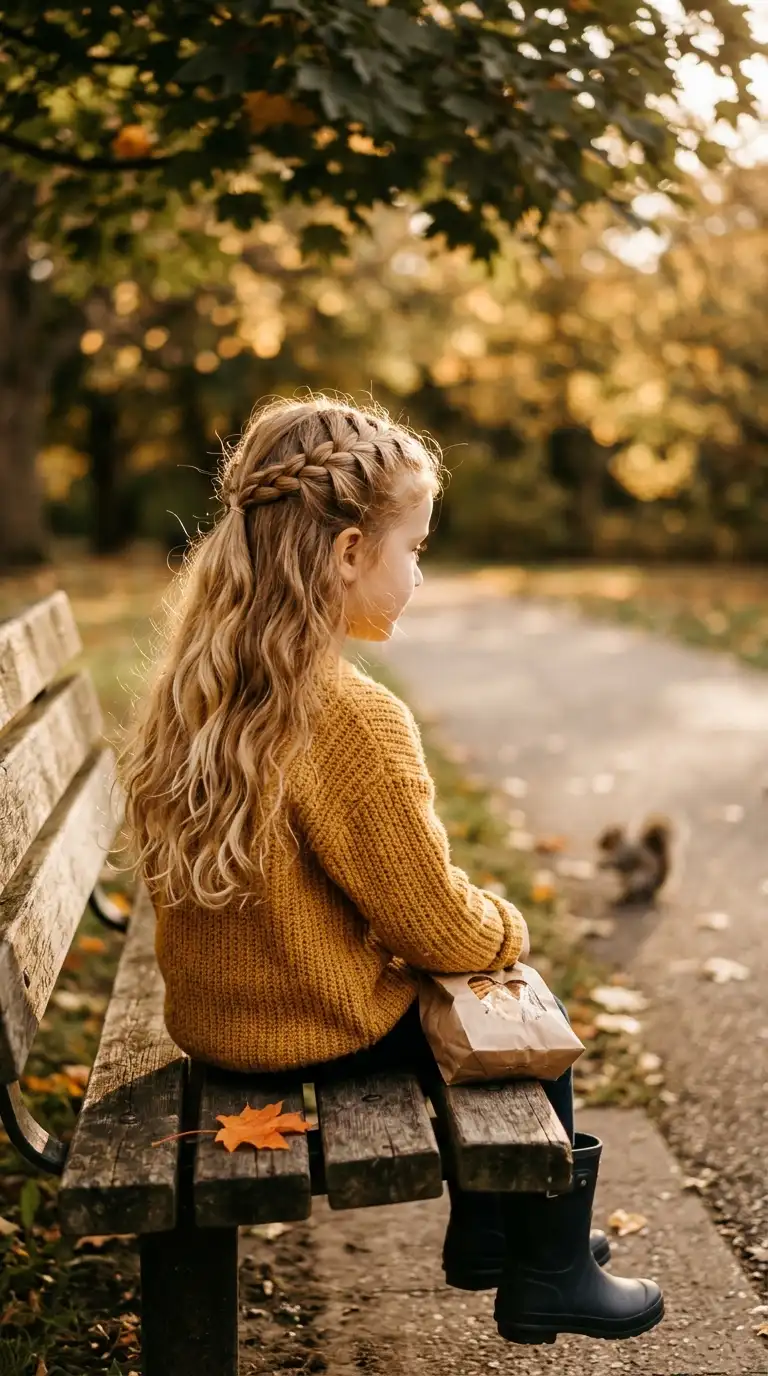
A braided headband does the job of a real headband, except it never slides off at recess or gives her a headache.
Part a strip about two fingers wide from one ear, across the top of the head, to the other ear. Clip the rest of the hair back. Start your braid just above one ear and add hair only from the front side, the side closest to her face. That one sided version is called a lace braid. When you reach the other ear, braid the tail a little further and pin it flat behind the ear.
It is a good style for kids growing out bangs, since it catches every short piece around the face.
4. Side French Braid That Sweeps Over One Shoulder

A side braid feels a little more grown up, and older girls ask for it for family photos and fall outings.
Make a deep side part. Start the braid at the part and angle it toward the opposite ear instead of straight back. Add hair from both sides as usual, but keep steering your hands toward the ear. Once you pass behind the ear, stop adding, bring the braid over the shoulder, and finish it as a regular braid.
The trick is to stand on the side where the braid is going. If you stand behind her, the braid will keep drifting back to the middle.
5. Pancaked French Braid That Looks Twice as Full
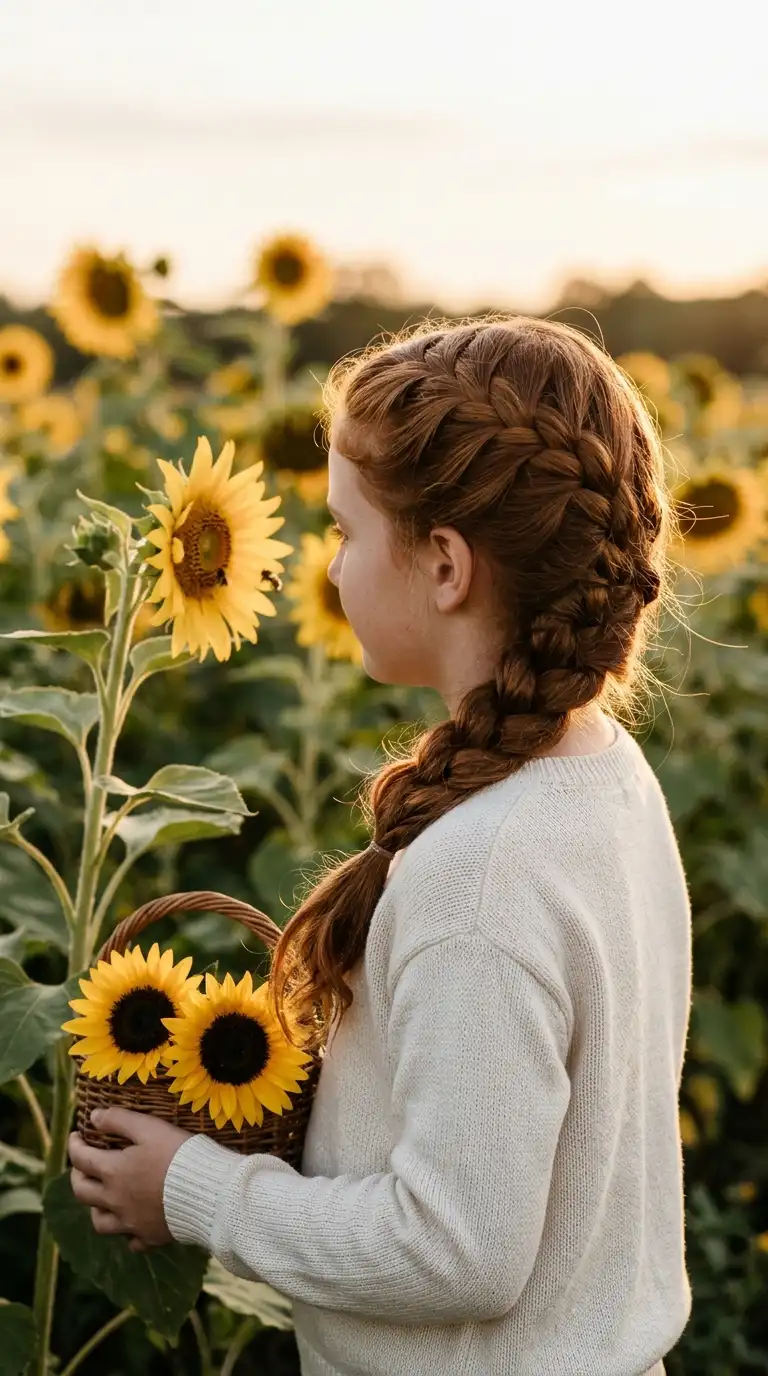
Fine or thin hair can make a French braid look skinny. Pancaking fixes that in about two minutes, and it also hides small mistakes.
Braid a classic French braid a little looser than usual and tie it off. Then start at the bottom and work up. Pinch the outer edge of each loop and gently pull it outward, a little at a time, holding the braid with your other hand so it does not slide. Go one side, then the other, until the braid looks wide and soft.
Pull only the outer edges, never the center of the braid, or the whole thing can loosen and fall apart.
Detangle completely before you start, ends first, then work up to the roots.
Pick up small, even slices of hair so each stitch matches the last one.
Ask how it feels after the first few stitches, while it is easy to redo.
Yanking each cross tight at the hairline, which strains thin baby edges.
Braiding over knots, which turn into hard lumps inside the braid.
Using rubber bands that rip hair on the way out at bedtime.
6. Upside Down French Braid Into a Top Bun
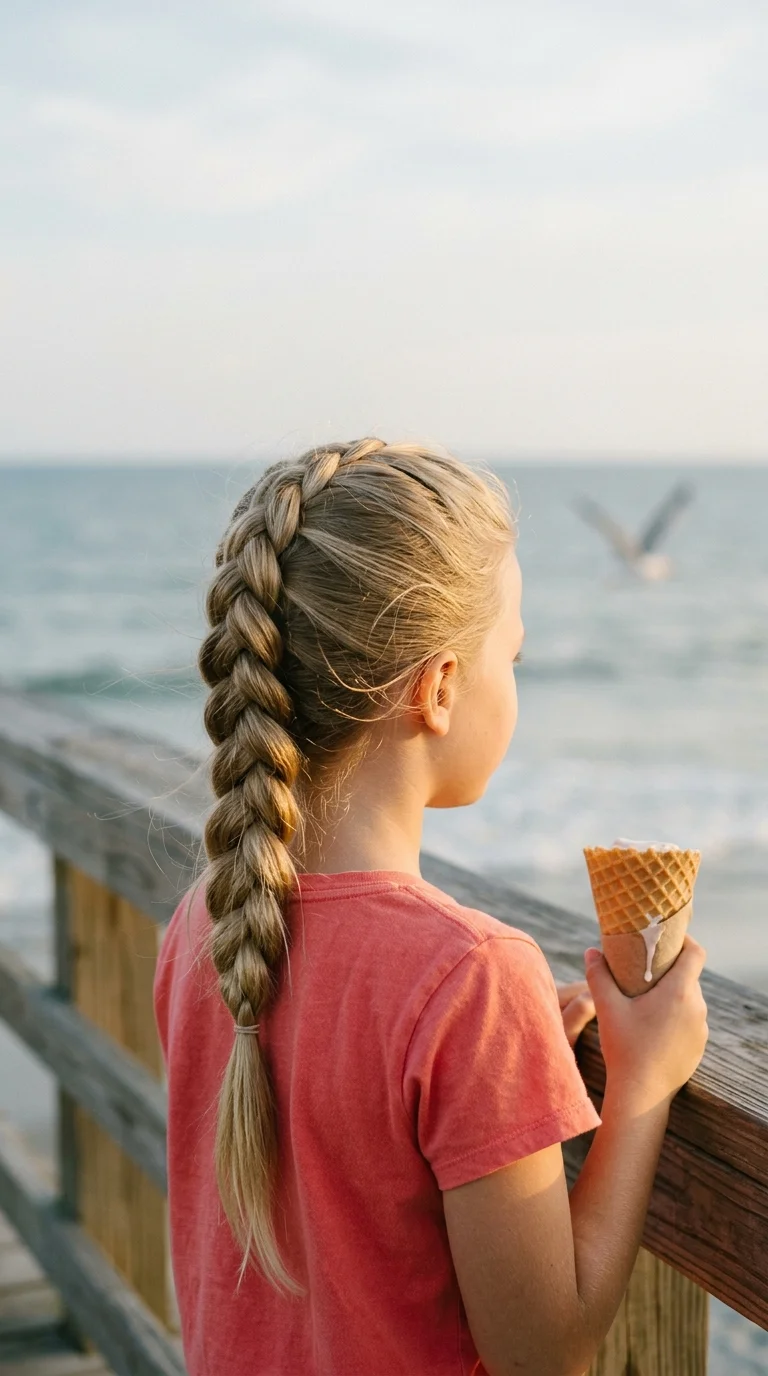
This one looks fancy from behind and keeps every short hair at the nape tucked away, so it is great for dance class and hot days.
Have your child sit and tip her head forward, chin toward her chest. Start a French braid at the nape and braid upward toward the crown, adding hair from each side as you go. When you reach the crown, gather the braid and all the remaining hair into a ponytail on top of the head. Twist the ponytail, wind it around the base, and pin it into a bun.
Your hands will feel backward the first time. Do two or three stitches, check that they look neat, then keep going.
Quick tip: let her tip her head over the edge of the couch or her bed while she watches a tablet. It is much easier on her neck than holding her chin down for ten minutes.
7. Waterfall French Braid With Loose Strands Falling Through
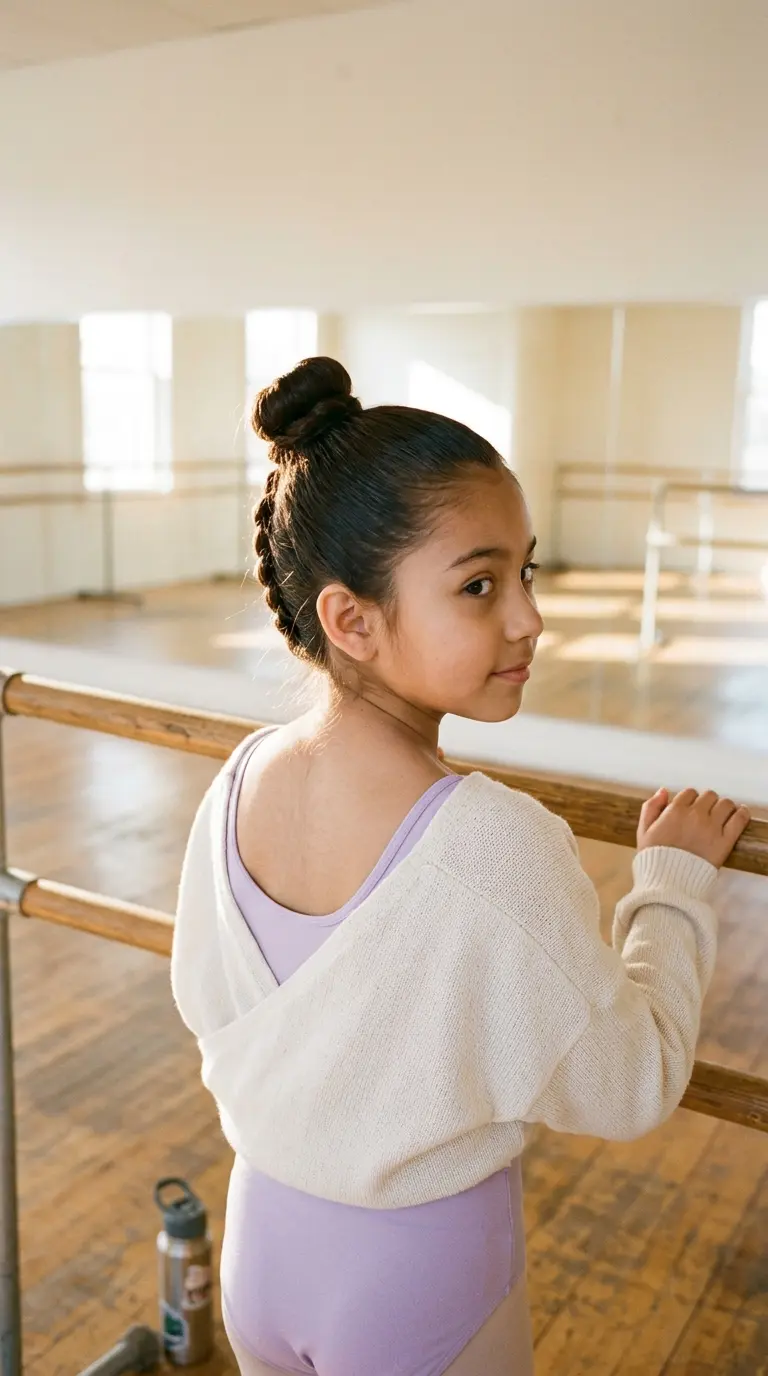
The waterfall braid is the one that gets compliments at weddings and recitals. It is a step up from the classic, so try it after you have done a few side braids.
Start near one temple and braid across the head toward the opposite ear, adding hair only from the top. Here is the change. Each time the bottom strand crosses into the middle, drop it and let it hang down. Pick up a new strand of loose hair right below it to take its place. Keep dropping and replacing as you travel across. Pin the end behind the ear.
Those dropped strands are the waterfall. Curl them with a soft wave for a party, or leave them straight.
Good to know: this works best on straight or wavy hair that is at least shoulder length. On very short hair, the dropped strands are too short to fall nicely.
8. French Braid Crown Wrapped Around the Whole Head
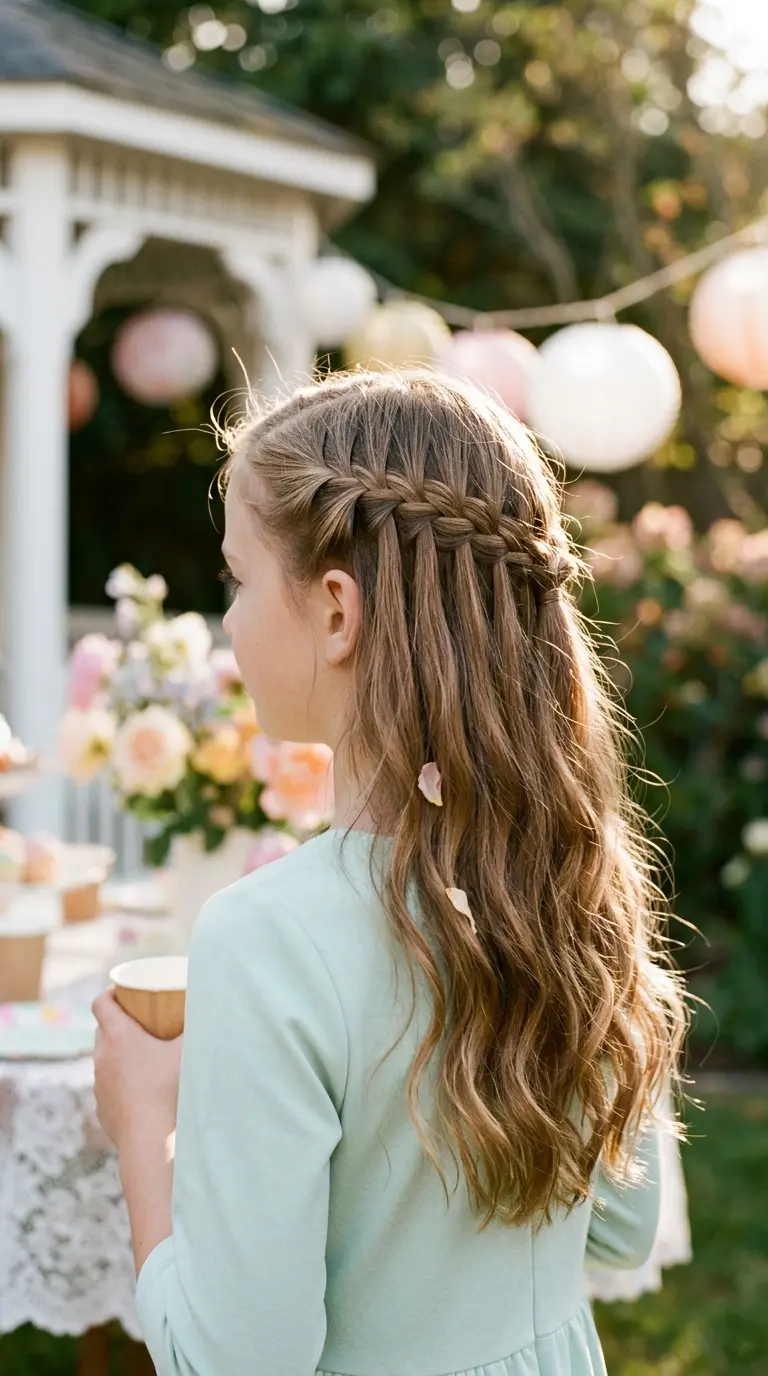
A braided crown is the special occasion style. Flower girls, Easter Sunday, school concerts, and the first day of a new school year.
Make a small circle part at the crown and tie that hair in a little ponytail to keep it out of the way. Start your braid just behind one ear and travel around the head in a circle, close to the hairline, adding hair from the outside and from the ponytail as you go. When you get back to the start, finish with a regular braid and tuck the tail under the crown with a couple of bobby pins.
Turn your child, not yourself. Have her slowly rotate on a spinning stool while you walk the braid around.
It takes about twenty minutes the first time. Give yourself a dress rehearsal the weekend before the big day.
Each strand crosses over the middle. The braid lies flat and smooth against the head, like it is tucked under the hair.
Each strand crosses under the middle. The braid pops up and sits on top of the hair. Same hands, one small switch.
9. Zigzag French Braid That Snakes Down the Back
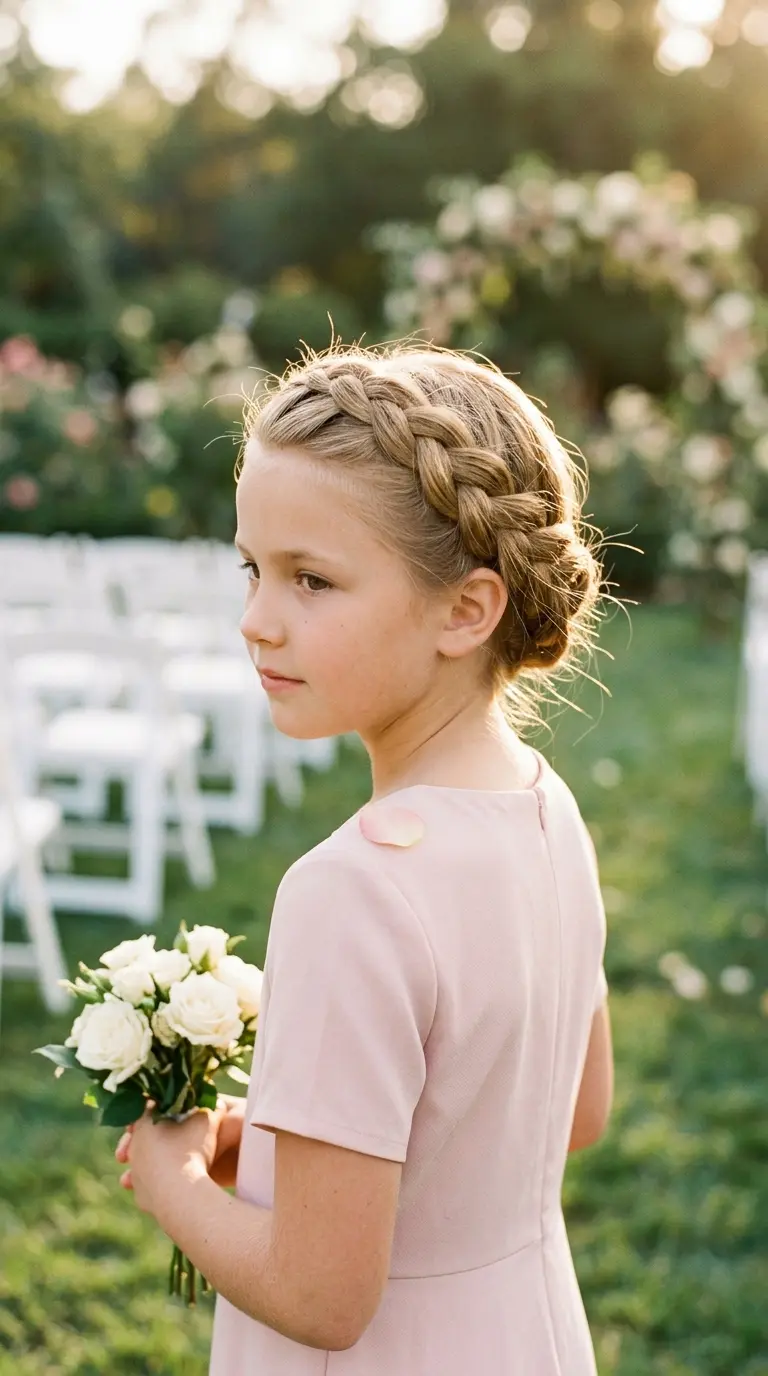
The zigzag braid looks like a puzzle, but it is really just a side braid that changes direction a few times.
Start above one temple and braid toward the opposite ear, adding hair from both sides. When you are about an inch from the ear, turn your hands and braid back the other way. Keep turning every few inches as you work down the head. At the nape, finish with a regular braid.
Make each turn a little wider than you think it should be. Tight turns make a bump, while gentle curves keep the braid smooth.
Kids love this one for school spirit days, especially with a ribbon or a team color elastic at the end.
10. Mini French Braids for Short or Bob Length Hair
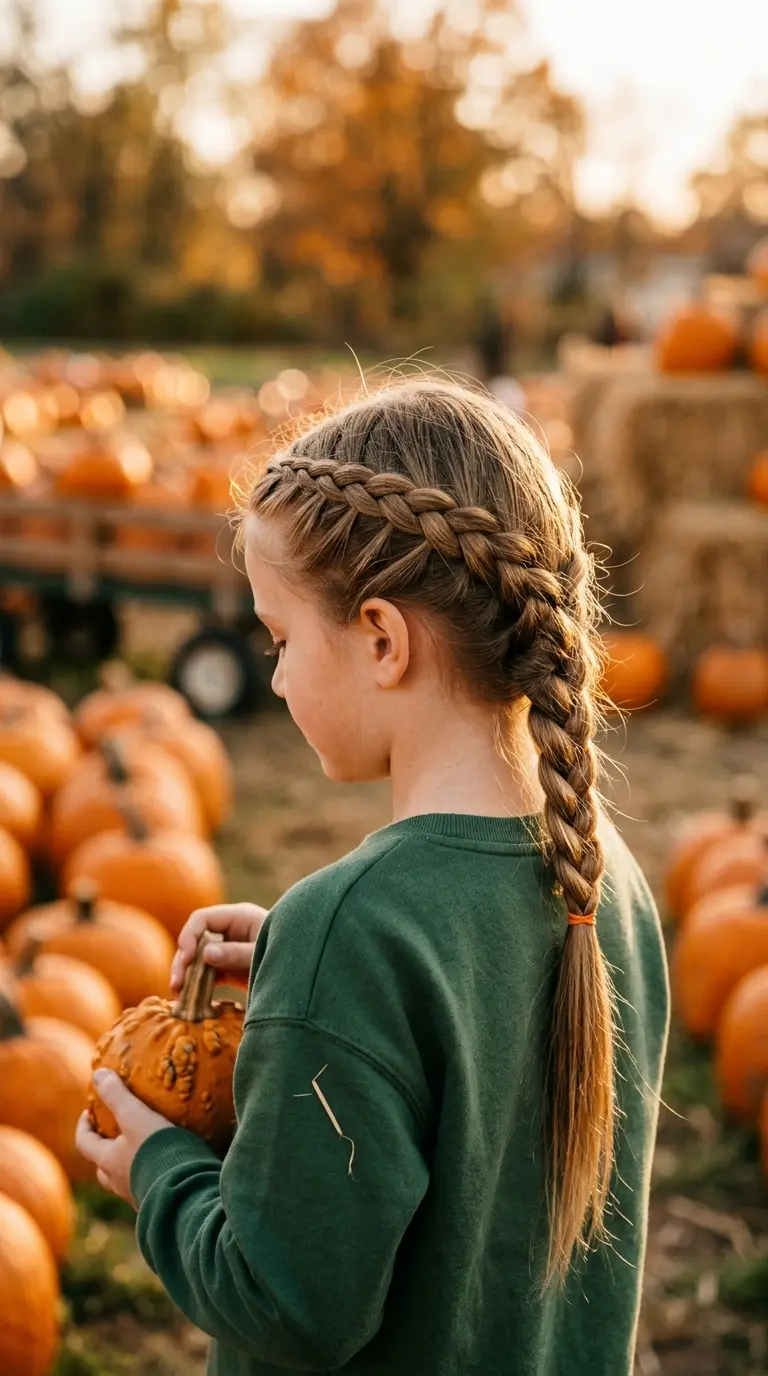
Short hair can French braid too. You just braid smaller sections that never have to reach the back.
Part the hair down the middle. On one side, take a small section at the front hairline and French braid it straight back over the temple, adding thin slices from both sides. Stop just behind the ear and hold the end with a small snap clip or a tiny elastic. Repeat on the other side.
Very short layers will poke out of the braid. A tiny bit of styling cream on your fingertips helps the short pieces stay tucked.
This one also works on toddlers who will only sit for a few minutes, since each braid takes about three minutes.
11. French Braids on Stretched Curly and Coily Hair
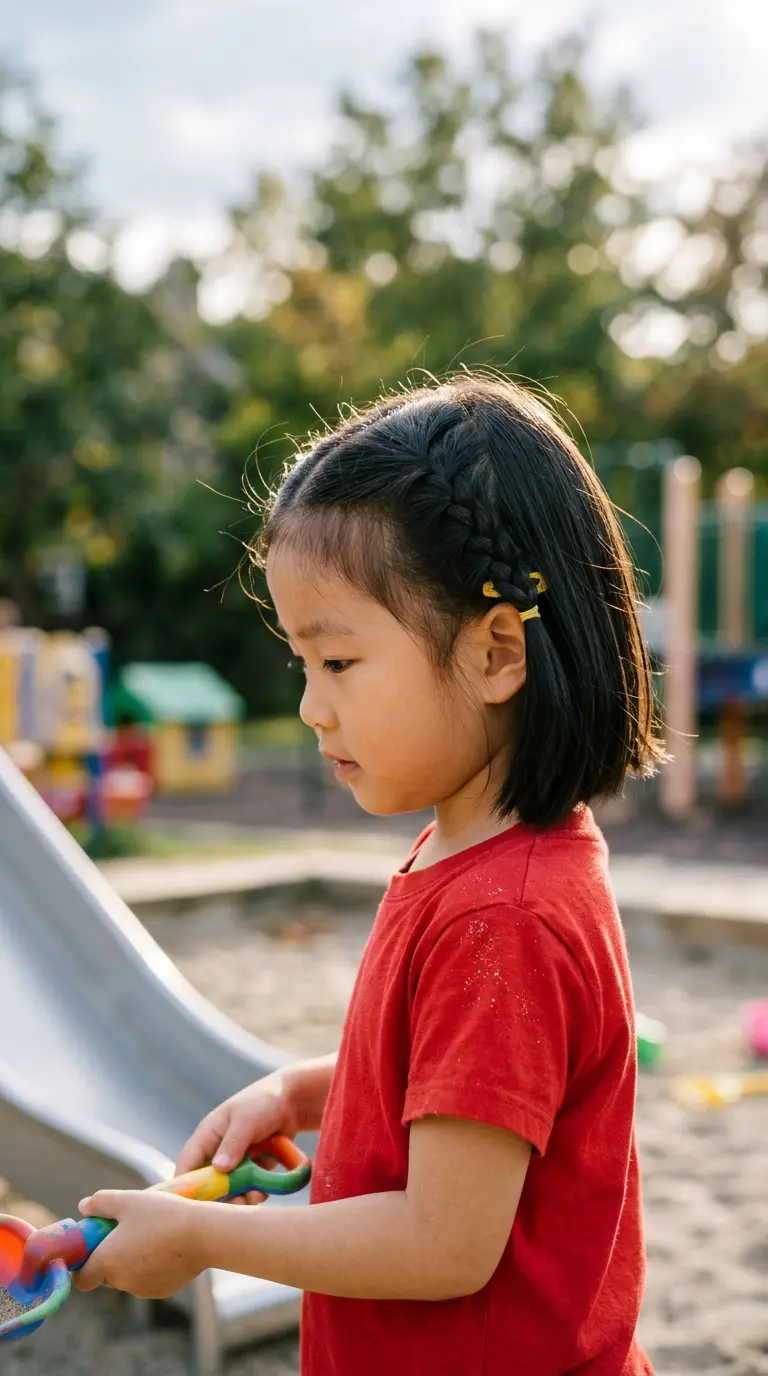
Curly and coily hair holds a French braid beautifully, and the braids can stay in for several days.
Work on hair that has been stretched, either with a blow dryer on low heat with a diffuser, or with a few big braids or twists left in overnight. Stretched hair is far easier to section and gives you longer, smoother braids.
Smooth a little leave in conditioner and a light cream down each section before you start. Braid two French braids from the front hairline straight back, one on each side of a center part. Keep the hairline stitches gentle, since curly edges are delicate.
Good to know: coily hair shrinks a lot when it is wet, so a braid on stretched hair looks much longer than you expect. That is normal, and it is part of why this style lasts.
12. Two French Braids for Swim and Sports Days
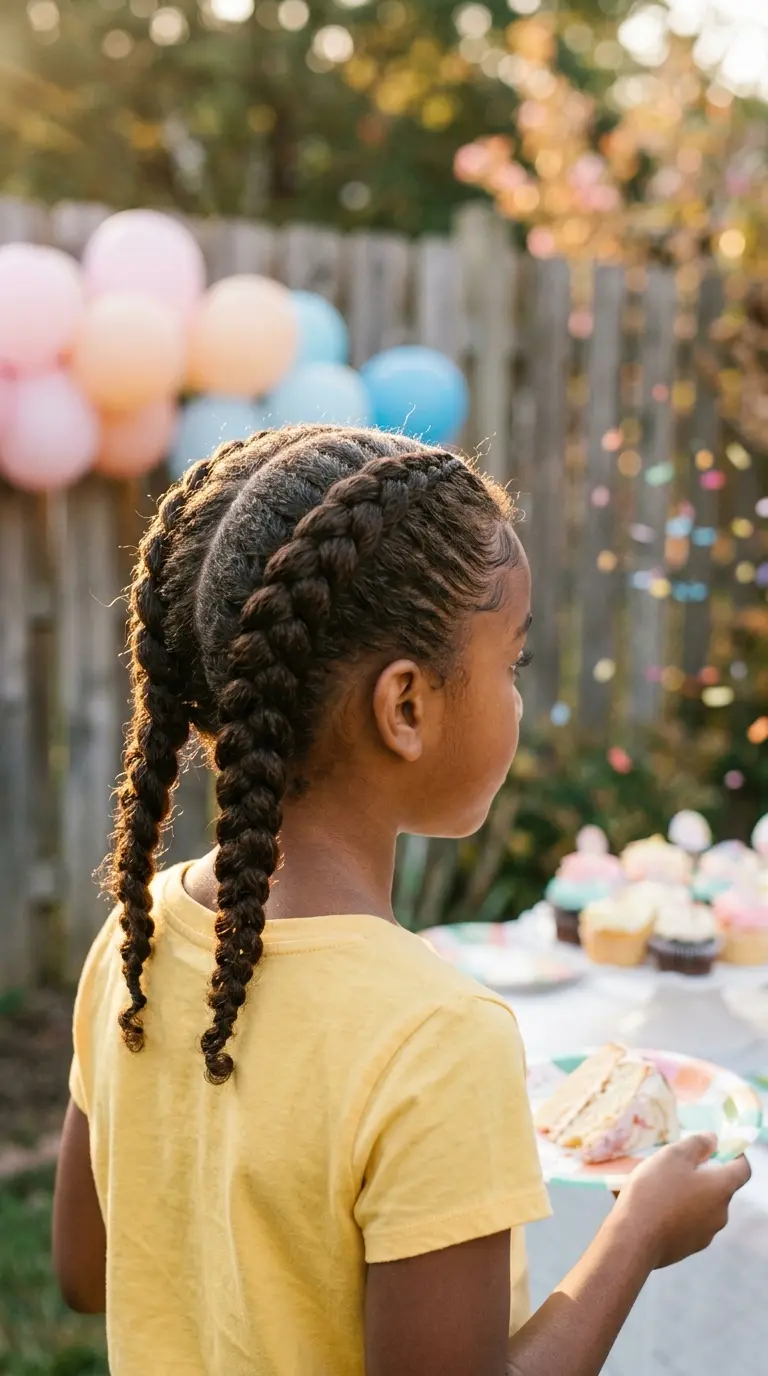
Two French braids are the hair that survives swim lessons, gymnastics, and a full day at camp.
Part the hair straight down the middle from the forehead to the nape. Clip one side out of the way. French braid the other side from the front hairline back, keeping the braid just behind the ear as you go down, and finish with a regular braid to the ends. Then do the second side, checking that both braids start at the same height.
For swimming, braid on damp hair with a little leave in conditioner, so the hair soaks up less chlorine.
Take the braids out the same night after a swim. Wet hair dries slowly inside a braid and can get tangled and smelly by morning.
13. French Braid Down the Middle for Boys With Long Hair
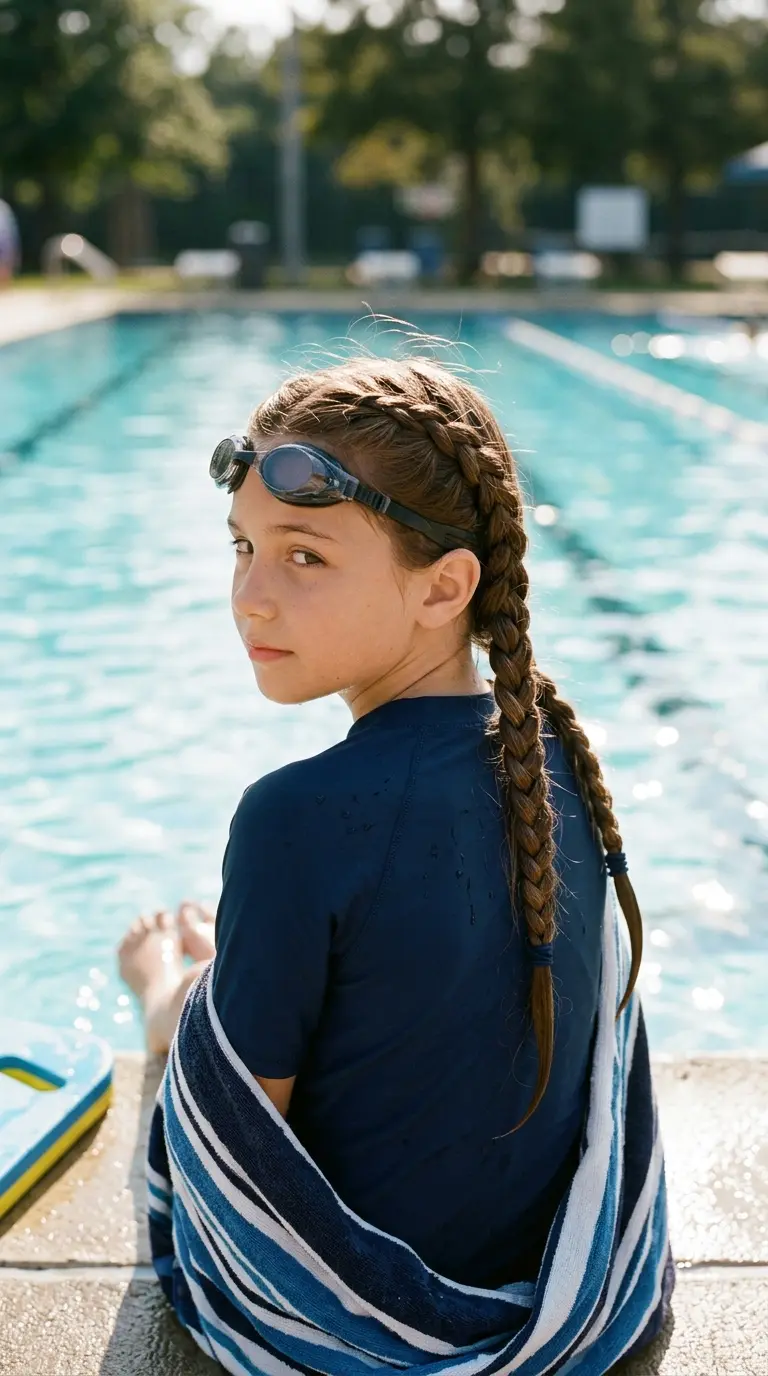
Boys with long hair need a style that keeps it out of their face for sports, hikes, and hot weather, and a single French braid does exactly that.
Brush the hair straight back with no part. Start at the front hairline and braid a classic French braid down the center, adding hair from both sides, and finish to the ends with a plain black elastic. Keep it a little looser at the front so it does not pull while he wears a helmet or a cap.
Many boys like it pancaked slightly so it looks relaxed rather than neat. Ask him how he wants it.
Quick tip: braid it after a shower on Saturday night, and he wakes up with hair that stays tidy all through a weekend tournament.
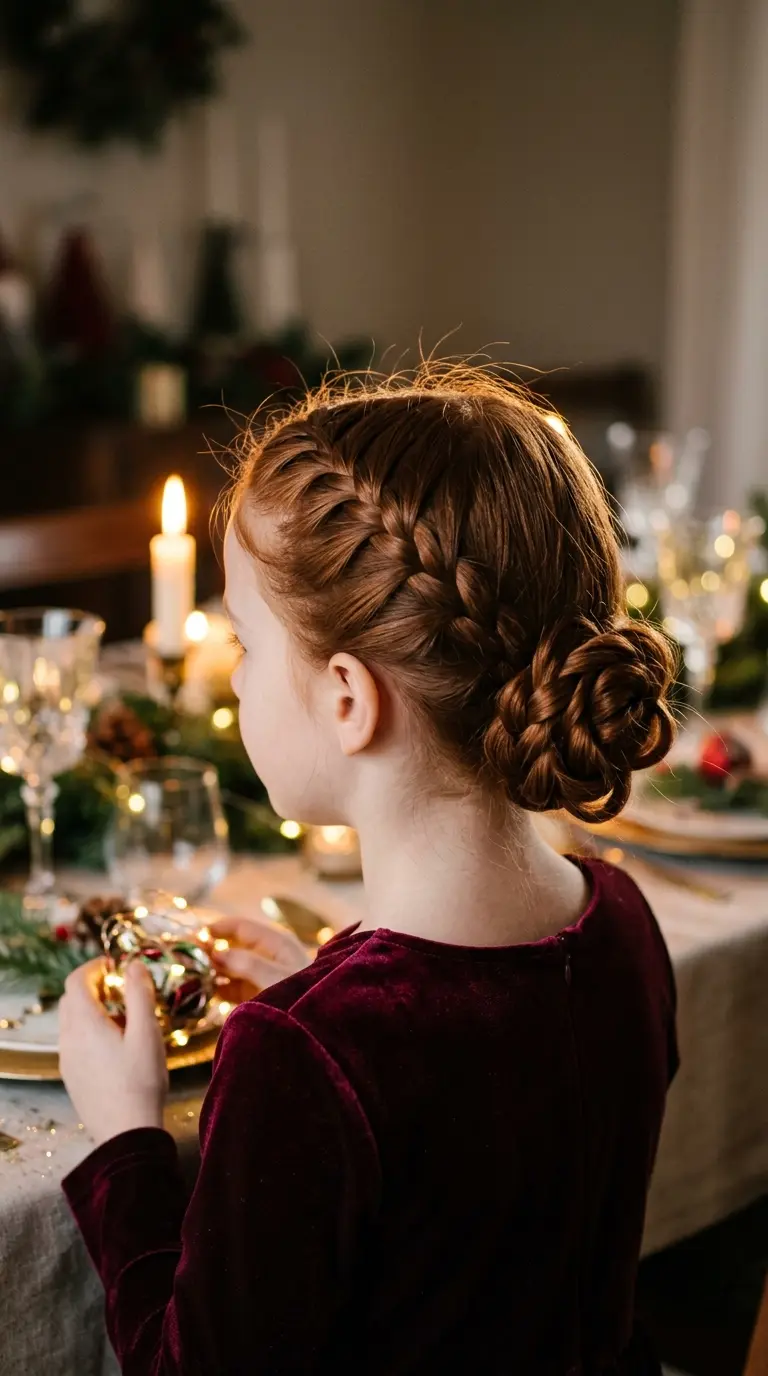
14. French Braid Finished With a Rolled Flower Bun
A braid flower takes the classic French braid and turns the tail into a little rose at the nape. It looks hard. It is not.
Braid a classic French braid down to the nape and keep going with a regular braid to the ends. Tie it off. Now pancake only the loops along one edge of the tail, pulling them out a little wider than usual. Hold the end and wind the tail into a tight coil, with the pulled loops facing out. Those loops become the petals. Pin the coil in place with three or four bobby pins pushed through the center.
It is a lovely style for holiday dinners, recitals, and picture day. Take it down at bedtime so no pins poke during sleep.
Practice the plain three strand braid on a ponytail first, until your hands do it without thinking.
Try your first French braid during a movie night, when nobody is in a hurry and nobody needs to leave the house.
Start with the half up braid, then the classic, then side braids. Save the crown and waterfall for later.
Take a photo of the back each time. By the fourth or fifth try, you will see the stitches getting even.
15. Overnight French Braids for Heatless Morning Waves
This is the French braid that pays you back twice. Braid it at bedtime, and in the morning you get soft waves with no curling iron.
After a bath, let the hair dry until it is just slightly damp. Braid two French braids from the front hairline to the ends, starting each braid right at the part so the waves begin close to the roots. Tie them with soft elastics and cover with a satin scarf or have her sleep on a satin pillowcase.
In the morning, take the braids out gently and break up the waves with your fingers. Do not brush them, or the waves turn into frizz.
If the hair is soaking wet at bedtime, it will still be damp inside the braids in the morning. Slightly damp is the sweet spot.
A French braid should feel snug, never sore. If your child winces, rubs her scalp, or you see small bumps along the hairline, that braid is too tight. Take it out and redo it a little looser. A loose braid with a few bumps is always better than a perfect braid that hurts.
Braid Night, Made Easier
Learning to French braid is a little like learning to tie shoes. It feels clumsy for a week, and then one day your hands just know what to do.
Start small. The half up braid and the classic center braid will teach you the cross and add motion faster than anything else. Move on to side braids, the headband, and two braids for swim days once those feel easy. Keep the crown, the waterfall, and the flower bun for the weekend before a wedding or a recital, when you have time to practice. Work on damp, tangle free hair, keep the hairline gentle, and take the braids down before bed whenever there are pins.
The best French braid hairstyles for kids are the ones your child is proud to show off at school and you can finish before the cartoon ends.
Save this list to your kids’ hairstyles board so the next braid night starts with a plan.